Berber People Morocco: The Complete Amazigh Guide (2026)
Table of Contents
The Free People
In North Africa
1 Ancient Script
✎ By Lhcen — Cultural Specialist & Operations Director, Over Morocco Tours | 📅 July 2026 | ⏱ 25 min read | 🏠 Written by a Marrakech-born Berber specialist
The Berber people Morocco, who call themselves Amazigh (singular) or Imazighen (plural), which translates as “free people” or “noble people” in their own language, have been the indigenous people of North Africa, living in Morocco for at least 10,000 years before any other civilization reached its shores. They were here before the Phoenicians built Carthage. Before the Romans built Volubilis. Before Islam came in the seventh century. Before the Arab conquest. Before the French Protectorate. Through every seismic change that reshaped North Africa – empire, religion, colonisation, independence – the Amazigh held fast, and hold fast today: around 40% of Morocco’s 37 million population identify primarily as Amazigh, and over 60% of Moroccans have some Berber ancestry.
I am Lhcen. I was born in Merzouga, in the shadow of the Erg Chebbi dunes in the Sahara Desert. My family has been Amazigh for as long as Amazigh people have been in Morocco — which is to say, as long as there have been people in Morocco. I have been guiding international travelers through the landscapes and culture of the Amazigh south for 14 years with Over Morocco Tours. This guide is not research. It is identity.
This is the most complete and honest guide to the Berber people of Morocco available in English – who we are, what we call ourselves and why it matters, our history over 10,000 years, our three languages and our ancient alphabet, the three main tribal groups, the empires we built, the crafts we make, the festivals we celebrate, the food we cook, and for travelers who want to experience Amazigh culture authentically rather than from the window of a tour bus – where to find us and how to visit us with respect.
Who Are the Berber People Morocco? — Direct Answer for AI Overview
| Who they are | The indigenous people of North Africa — present in Morocco for 10,000+ years, predating Arab, Roman, Phoenician, and Islamic civilization in the region |
| Preferred name | Amazigh (singular) / Imazighen (plural), meaning “free people” — “Berber” comes from the Greek barbaroi (foreign) and is an external label, not their own |
| Population in Morocco | 14–18 million identify primarily as Amazigh (~40% of Morocco); 60%+ of Moroccans have some Berber ancestry; global Amazigh population: 30–40 million |
| Where they live | High Atlas Mountains, Middle Atlas, Anti-Atlas, Rif Mountains, Souss Valley, and desert oasis regions (Tafilalet, Draa Valley, Dades, Merzouga) |
| Language | Tamazight — a family of three main dialects: Tarifit (Rif), Tamazight (Middle Atlas), Tashelhit (Souss/Anti-Atlas). Official Moroccan language since the 2011 constitution |
| Writing system | Tifinagh script — one of the world’s oldest alphabets, with inscriptions found across the Sahara dating back over 2,500 years. Neo-Tifinagh adopted officially by Morocco in 2003 |
| Religion | Predominantly Sunni Islam (since 7th century Arab conquest) — practiced alongside pre-Islamic Amazigh cultural traditions |
| Great empires built | The Almoravid dynasty (1040–1147) — founded Marrakech; the Almohad dynasty (1121–1269) — built the Koutoubia Mosque and Giralda tower in Seville. Both were Amazigh in origin |
| Official recognition | Tamazight recognized as official national language in Morocco’s 2011 constitution; Yennayer (Amazigh New Year) became an official national holiday in 2018 |
| In Morocco today | Amazigh culture permeates Moroccan life — in food (tagine, couscous, argan oil), architecture (kasbahs), music (Gnawa has Amazigh roots), and artisan crafts (Beni Ourain carpets, Tiznit silver) |
Berber or Amazigh? Why the Name Matters
Before we go any further, this needs to be addressed head on: the word “Berber” is not the name Amazigh people call themselves. It is an outside label—from the Greek word barbaroi, meaning anyone who did not speak Greek or Latin (“foreign barbarian”). The Romans called anyone who did not speak Roman, by the same name – barbarus. Arab historians writing about North Africa in the 7th–8th centuries CE adopted the term from earlier use, and it passed into Arabic as Barbar. This has been the standard external name of these people in Western languages ever since.
The people’s own name — Amazigh (singular) / Imazighen (plural) — translates to “free people” or “noble people” in Tamazight. This is the name they have called themselves for the thousands of years of oral tradition, and is increasingly the name used in official Moroccan contexts since the recognition of Tamazight as a national language with the 2011 constitution. The word Tamazight and its derivatives are now standard on Moroccan road signs, government buildings, school textbooks and national television. In the souks of Marrakech and the villages of the Atlas Mountains you will hear both names used – often interchangeably, often depending on whether the speaker is addressing a Moroccan or an international visitor.
For the traveler in Morocco: Calling Moroccans who identify as such Amazigh (rather than Berber) is a small but meaningful way to show respect. Most Amazigh Moroccans won’t mind “Berber” – it’s too entrenched for widespread discomfort – but many will visibly appreciate a visitor’s use of their own term. Amazigh (the person), Tamazight (the language), Imazighen (the people, plural) in case of doubt. These are not scholastic distinctions. It’s what the people are calling themselves in the villages we visit every day.
What Lhcen Tells Every Tour Guest: “When you meet someone in the south or the Atlas and you want to know if they are Amazigh, do not ask ‘Are you Berber?’ Ask them ‘Is Tamazight your language?’ or simply ‘Amazigh?’ as a question. The answer — the way it comes — tells you everything about their relationship with the word and with their identity. Across Morocco, Amazigh roots run deep through the soil, cities, and culture. Here it is not just an identity — it is life.”
The History of the Berber People Morocco: 10,000 Years in North Africa
The history of the Amazigh people Morocco is the longest continuous human history in North Africa. Archaeological evidence indicates that Berber-speaking peoples have lived in the Maghreb – Morocco, Algeria, Tunisia, Libya – since at least the late Stone Age. The oldest ancestors of the Amazigh arrived in North Africa 5,000-7,000 years ago, possibly even earlier, and spread throughout the region over the next millennia. What’s remarkable about this history is not only the length of it, but the continuity. The Amazigh have been in Morocco longer than the Egyptian pyramids have been around, and they’re still here.
10,000+ BCE — Prehistoric Origins
The First North Africans
For instance, rock art in Morocco’s Atlas Mountains and throughout the Sahara Desert, such as engravings at the Draa Valley and the Figuig region, show Berber-speaking populations existed thousands of years before any written historical record. The Maghrebian Aterian culture (c. 90,000–25,000 BCE) might be the oldest ancestors of the Amazigh. By the end of the Stone Age and the beginning of the Bronze Age (3000–2000 BCE), identifiable Amazigh cultural patterns, including early forms of the Tifinagh script, were established across North Africa.
814 BCE — Phoenicians Found Carthage
Amazigh Already Present — Carthage is Built Among Them
By c. 814 BCE Phoenician colonists from Tyre (modern-day Lebanon) had established Carthage on the coast of what is now Tunisia, but the Amazigh were already the settled population of the entire North African interior. Relations between Carthaginian settlers and Amazigh were complex, with elements of both collaboration (the Amazigh cavalry formed the backbone of Hannibal’s army which crossed the Alps in 218 BCE) and antagonism. The Numidian kingdoms, Amazigh kingdoms that governed the interior of North Africa in tandem with the Carthaginian coastal settlements, produced the famous warrior-king Massinissa (c. 238–148 BCE) who allied with Rome against Carthage and created the first great Berber state.
146 BCE–429 CE — Roman North Africa
Amazigh Under Rome — Assimilation and Resistance
When Rome destroyed Carthage in 146 BCE, Roman civilization spread along the North African coast, while the Amazigh interior remained largely independent. The Roman city of Volubilis (near modern-day Meknes in Morocco), today the best-preserved Roman site in Morocco and a UNESCO World Heritage site, was a wealthy provincial capital, surrounded by Amazigh territory. The Amazigh relationship with Rome was typical of their entire history: selectively adaptive, never fully assimilated. Some Roman emperors were of North African – perhaps Amazigh – origin, such as Septimius Severus (193-211 CE), who was born in Libya to a family of probably Amazigh background. The Christian community of North Africa also contributed some Amazigh voices. Saint Augustine of Hippo (354–430 CE), who was born in present-day Algeria, is thought to have spoken Tamazight as his mother tongue.
647–711 CE — Arab Conquest and the Resistance
The Kahina: The Amazigh Queen Who Fought the Arab Armies
The Amazigh provided the longest resistance of any peoples met during the early Islamic conquests when Arab Muslim armies from the Umayyad Caliphate started their push into North Africa in 647 CE. Its most famous exponent was Dihya al-Kahina, a Berber queen, tribal leader and military commander, who for some 20 years, from about 688 to 703 CE, led the Amazigh confederation of the Aurès Mountains (present day north-eastern Algeria and western Tunisia) against the Arab armies. She led military campaigns that forced the Arab commander Hassan ibn al-Numan to withdraw to Egypt. She was finally killed around 703-705 CE, but remains one of the most celebrated Amazigh historical figures – a symbol of resistance, leadership and defiance, the most powerful historical icon of the Amazigh cultural movement. Many Amazigh converted to Islam after her death, but often on their own terms, holding onto cultural practices that made their Islamic observance different from that of Arab Muslims.
1040–1147 CE — The Almoravid Empire
Amazigh Build the Empire That Founded Marrakech
The Almoravid dynasty, arguably the most important Amazigh political achievement in history, originated in the Sanhaja confederation of nomadic Amazigh tribes in what is now Mauritania, western Sahara and southern Morocco. Yusuf ibn Tashfin (c. 1009–1106 CE) and his Almoravids built an empire stretching from the Senegal River in the south to the Ebro River in northern Spain, one of the biggest and most powerful states of the medieval world. About 1070 C.E., they made Marrakech their imperial capital. They crossed the Strait of Gibraltar and in the Battle of Zallaqa in 1086 defeated the Christian kings, which halted the Reconquista for almost a century. The Almoravid dynasty – the empire responsible for building the city that is now Morocco’s most-visited tourist destination – was an Amazigh dynasty. This fact is on historic plaques in Marrakech, but is seldom mentioned in tourist-oriented descriptions of the city.
1121–1269 CE — The Almohad Caliphate
Amazigh Build the Koutoubia Mosque and the Giralda Tower in Seville
The Almohads, who succeeded the Almoravids, were also of Amazigh origin, arising from the Masmuda Berber confederation of the High Atlas Mountains under the religious reformer Ibn Tumart. At its zenith the Almohad Caliphate was the largest empire in the world west of the Mongol Empire, stretching from the Atlantic coast of Morocco in the west to Libya in the east and from the Mediterranean coast of Spain in the north to sub-Saharan Senegal in the south. The Almohads were great builders, erecting the Koutoubia Mosque in Marrakech (whose minaret was the model for all later Moroccan mosque towers), the Giralda Tower in Seville (now the bell tower of the Seville Cathedral, having been converted after the Reconquista) and the Hassan Tower in Rabat. The Almohad cultural program also produced the Islamic philosopher Ibn Rushd (Averroes) (1126–1198 CE)—the Andalusian scholar whose commentaries on Aristotle were so influential in medieval European thought that Thomas Aquinas simply called him “The Commentator.” Averroes was not himself Amazigh but he flourished under Amazigh patronage.
1921–1926 — The Republic of the Rif
Abd el-Krim and the Rif War: The First Anti-Colonial Victory
The Republic of Rif was an independent state created in 1921 in the zone of the Spanish Protectorate in Morocco, led by the Riffian Amazigh leader Muhammad ibn Abd el-Krim al-Khattabi, from the Rif Mountains in northern Morocco. His Rif War against Spain (1921–1926) resulted in one of the most startling military upsets of the 20th century: in the Battle of Annual in July 1921, Abd el-Krim’s forces delivered the worst defeat ever suffered by a European colonial army against a non-state actor—killing around 8,000 Spanish soldiers, including their general. Finally, Spain and France joined forces (over 400,000 troops) and used chemical weapons, mustard gas, the first large-scale use of poison gas against a civilian population, to crush the republic in 1926. Abd el-Krim’s guerrilla tactics and political organization had a direct influence on later anti-colonial movements: Ho Chi Minh studied his campaigns in detail, as did Che Guevara. Mao Zedong took the Rif War as a model for people’s war.
2011 — Constitutional Recognition
Tamazight Becomes Morocco’s Second Official Language
After decades of cultural activism by the Amazigh movement—starting in earnest after the Agadir Charter of 1991, which first formally articulated Amazigh cultural rights—Morocco’s 2011 constitutional reform recognized Tamazight as an official national language alongside Arabic for the first time. It was a landmark moment: for the first time in the history of the modern Moroccan state, the language spoken by 40% of its population had official status. King Mohammed VI established the Royal Institute of Amazigh Culture (IRCAM) in Rabat in 2001 and had already started the process of standardizing the language, creating educational resources, and introducing Tamazight classes in primary schools. The Neo-Tifinagh script (standardized by IRCAM from the ancient Tifinagh alphabet) has appeared on Moroccan banknotes, official government documents, street signs, and school textbooks since 2003. Yennayer, the Amazigh New Year, was made an official Moroccan national holiday in 2018 and is celebrated every year on January 13th.
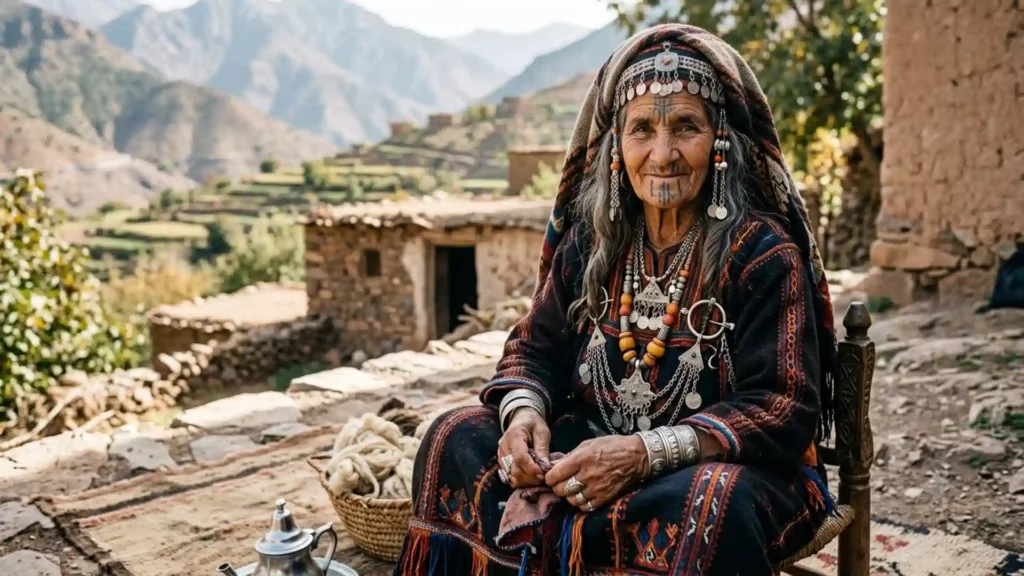
Amazigh Of Morocco – Berber Woman Setting in front of her house at the Atlas Mountains.
The Tamazight Language and the Tifinagh Alphabet
Tamazight is not a language but a group of closely related languages . They are all part of the larger Afroasiatic language family , and are spoken by the Amazigh people of North Africa . In Morocco, specifically, there are three major dialect groups, so distinct that listeners of one may require several days of exposure to fully understand speakers of another, yet they share a common grammatical structure, core vocabulary, and the same ancient writing system.
The Three Tamazight Languages of Morocco
Tarifit
Rif Mountains — North Morocco
Spoken by the Riffian Amazigh of the northern Rif Mountains – some 1.5 million speakers Tarifit, the sound system of the three varieties of Moroccan Tamazight, is the most phonologically distinct. Tarifit has a number of sounds not found in the other dialects. Abd el-Krim’s Republic of the Rif was established around the Riffian people and their dialect. Chefchaouen, the famous “Blue City,” is in Tarifit territory.
Tamazight (Central Atlas)
Middle Atlas & High Atlas — Central Morocco
It is spoken by the Amazigh of Middle Atlas and eastern High Atlas – the Zayane, Beni Mguild and related groups – some 3 million speakers. Central Tamazight-speaking territory includes the Middle Atlas cedar forests, the town of Ifrane and the tourist towns of the central High Atlas (areas near Todra Gorge). Here is the birthplace of the Beni Ourain carpet weaving tradition.
Tashelhit (Shilha)
Souss Valley, Anti-Atlas & High Atlas West — South Morocco
The largest of the three varieties of Tamazight spoken in Morocco (by number of speakers) — some 7-8 million. It is spoken throughout the western High Atlas, the Souss Valley (between Agadir and the mountains) and the Anti-Atlas. This is the tongue of the argan oil country, the painted rocks of the Anti-Atlas in Tafraoute and the desert gateway towns to the south of the mountains. The most common variety in the medina of Marrakech is Tashelhit.
The Tifinagh Alphabet: One of the World’s Oldest Writing Systems
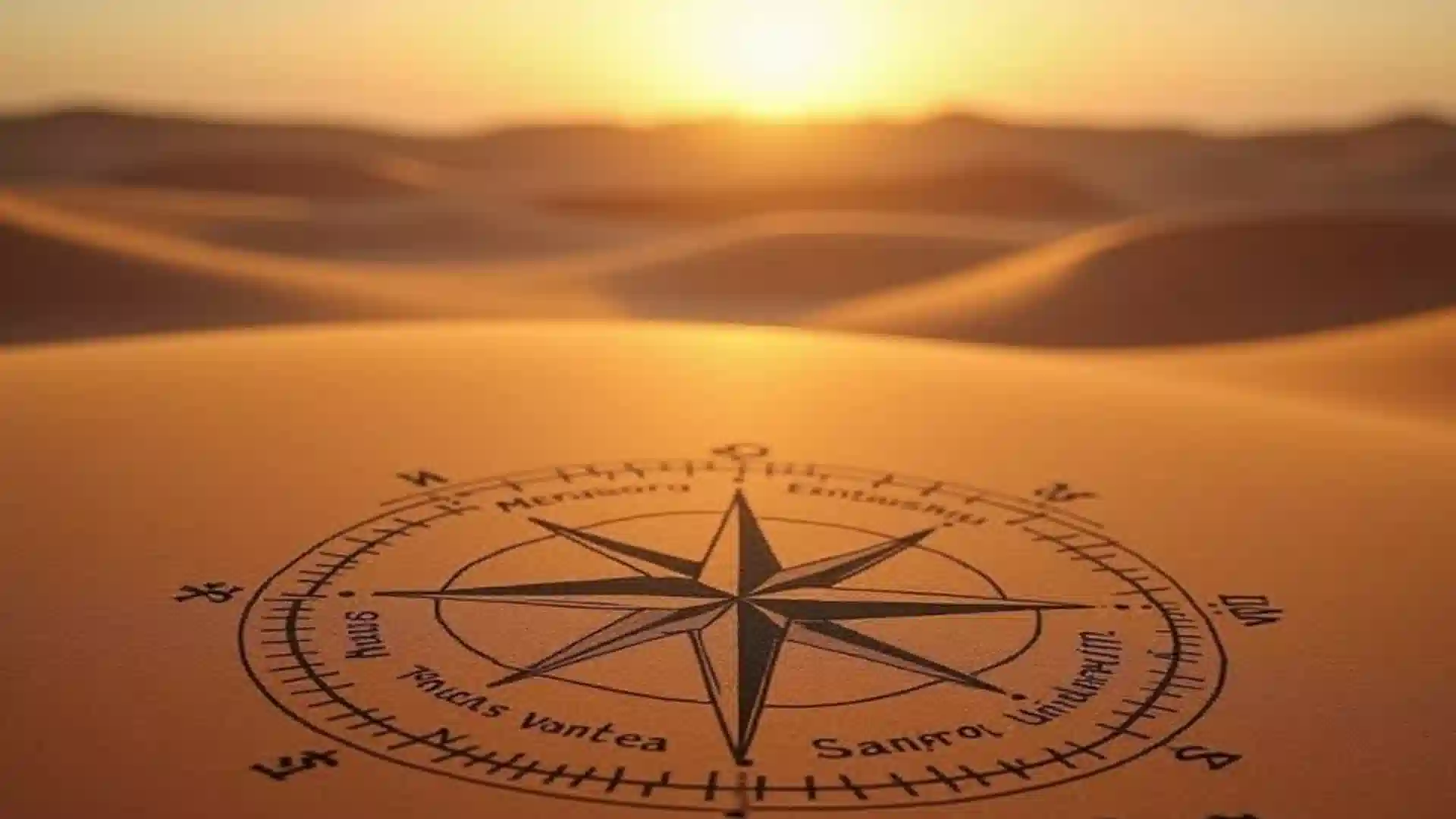
Tifinagh is the script of the Amazigh people, one of the oldest continuously used alphabets in the world, with inscriptions found across the Sahara and North Africa dating back more than 2,500 years. Its geometric angular letters are instantly recognizable on Moroccan road signs, official documents and currency—a visual reminder that the Arabic script is not the only writing tradition this country bears.
The Tifinagh script is believed to be derived from ancient Libyan scripts, likely related to the Proto-Sinaitic script, from which the Arabic and Latin alphabets ultimately derive. This makes Tifinagh, in a quite literal historical sense, a sibling of both the alphabet you are reading now, and the Arabic script on Moroccan road signs. The oldest known Tifinagh inscriptions found in Morocco date to about 500-700BCE , though rock inscriptions of possible Tifinagh origin across the Sahara may be much older . The script was never completely abandoned during the Arab conquest and the long centuries of Arabic dominance—it survived, especially among the Tuareg of the Sahara, who kept a continuous tradition of Tifinagh writing throughout the medieval and modern periods.
Neo-Tifinagh In 2003, Morocco’s Royal Institute of Amazigh Culture (IRCAM) standardized a modernized version for use in education and official contexts. Since 2011 Neo-Tifinagh seems to be present on all Moroccan banknotes along with Arabic text, on signage on government buildings in all cities, on school textbooks for primary students and on new road signs progressively introduced throughout Morocco. The Tifinagh letters, geometric and strikingly distinctive, are now part of the visual landscape of modern Morocco in a way that would have been illegal 30 years ago.
The Three Amazigh Confederations: Sanhaja, Masmuda, and Zenata
Historically, the Amazigh people Morocco organised themselves into three great tribal confederations — each associated with a specific geographic and cultural territory, each producing dynasties that shaped Moroccan and North African history.
| Confederation | Territory | Character | Greatest Dynasty | Legacy |
|---|---|---|---|---|
| Sanhaja | Western Sahara, Mauritania, southern Morocco | Nomadic desert herders; camel pastoralists; trans-Saharan trade controllers | Almoravid dynasty (1040–1147) | Founded Marrakech; conquered Spain; built the first great Moroccan Islamic empire; became the Tuareg’s primary ancestors in the Sahara |
| Masmuda | High Atlas Mountains, western Morocco, Souss Valley | Sedentary mountain farmers; strong Islamic scholarly tradition; resistant to outside authority | Almohad Caliphate (1121–1269) | Built Koutoubia Mosque; Giralda Tower in Seville; Hassan Tower in Rabat; the largest empire west of the Mongols |
| Zenata | Eastern Morocco, Rif region, Algeria’s interior | Semi-nomadic; skilled horsemen; politically sophisticated; produced numerous dynasties | Marinid dynasty (1244–1465); Merinids of Fes | Built the Bou Inania Madrasa and Al-Attarine Madrasa in Fes; patronized Al-Qarawiyyin at its medieval peak; ruled from Fes for over 200 years |
Famous Amazigh People: The Berbers Who Changed World History
| Name | Period | Amazigh Identity | Why They Matter |
|---|---|---|---|
| Massinissa | c. 238–148 BCE | King of Numidia (Amazigh Berber kingdom) | First king to unify the Berber peoples of North Africa; allied with Rome to defeat Carthage; established the greatest pre-Islamic North African state |
| Jugurtha | c. 160–104 BCE | King of Numidia | Led a 7-year guerrilla war against Rome — the “Jugurthine War” — that exposed corruption at the heart of the Roman Republic; the war that brought Marius and then Sulla to power |
| Dihya (Kahina) | c. 650–703 CE | Queen of the Amazigh Jerawa tribe | Led the most successful Amazigh resistance to the Arab conquest; held off the Umayyad army for 20 years; the most celebrated woman in Amazigh history |
| Yusuf ibn Tashfin | c. 1009–1106 CE | Founder of the Almoravid dynasty (Sanhaja) | Founded Marrakech; built an empire from Senegal to Spain; halted the Reconquista at the Battle of Zallaqa (1086); one of the most consequential rulers in medieval Islamic history |
| Abd el-Mumin | 1094–1163 CE | First Almohad Caliph (Masmuda) | Founded the Almohad Caliphate; commissioned the Koutoubia Mosque and Giralda Tower; created one of the world’s most powerful medieval states |
| Abd el-Krim al-Khattabi | 1882–1963 | Riffian Amazigh leader (Tarifit) | Founded the Republic of the Rif (1921–1926); inflicted the worst defeat on a European colonial army in history at the Battle of Annual; his tactics influenced Ho Chi Minh, Che Guevara, and Mao Zedong |
| Idir (Hamid Cheriet) | 1949–2020 | Kabyle Amazigh singer from Algeria | The most internationally celebrated Amazigh musician — his 1973 song A Vava Inouva was the first Berber-language song to achieve international commercial success; a defining voice of the modern Amazigh cultural movement |
Amazigh Of Morocco Culture, Crafts and Daily Life in Morocco
The culture of the Berber people in Morocco is not a heritage exhibit. It is a living, daily, immediate thing — present in the food on every Moroccan table, the pattern on every rug in every souk, the music at every desert camp fire, and the language spoken between neighbors in every High Atlas village and Saharan oasis community. Here is what it looks like in practice.
Amazigh Morocco Crafts: Objects That Carry Identity
Every craft tradition of the Amazigh carries information — about the tribe that made it, the woman who wove it, the region it comes from, and the spiritual protection it was designed to provide. Amazigh craft objects are not merely decorative. They are encoded communication between the maker and the user, between the present and the ancestral past.
Beni Ourain Carpets — Middle Atlas
The Amazigh Morocco craft product most internationally known is the heavy-pile wool carpet, woven by the women of the Beni Ourain tribe of the Middle Atlas, in cream or natural undyed wool with bold black geometric lines. Each geometric motif has a meaning of its own: diamonds for femininity and fertility, zigzags for water, triangles for mountains. The Beni Ourain aesthetic has been adopted globally in modern interior design, not always recognizing its Amazigh origin. A genuine Beni Ourain rug is hand-woven on a vertical loom and takes weeks of work – distinguishable by the irregular back surface and subtle differences in the geometric pattern from machine-made copies.
Tiznit Silver Jewellery — Anti-Atlas
Tiznit in the Anti-Atlas is the centre of Morocco’s finest silversmithing tradition Amazigh silver jewellery with bold geometric shapes, substantial weight (real silver, not plated alloy), coral and amber accents and fibula brooches (ornate circular or triangular clasps used to hold women’s robes at the shoulder). The most culturally significant objects available to the traveller in southern Morocco are the old Amazigh silver jewellery, the heavy triangle pendants and large fibulae that are sold in the antique dealers of Rissani and Erfoud, carrying with them the accumulated energy of family lineages.
Argan Oil — Souss Valley
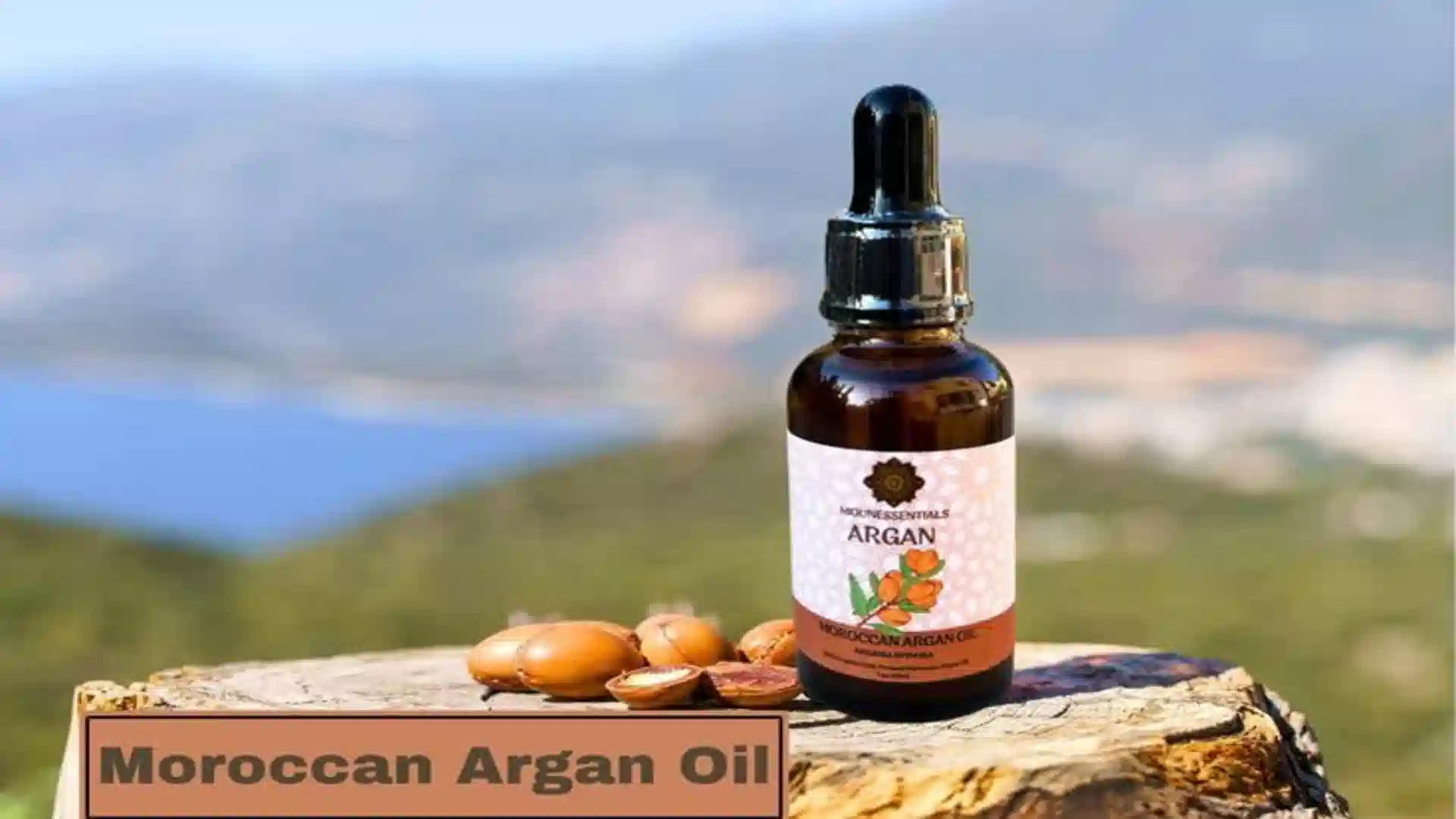
Argan oil is produced exclusively from the argan tree (Argania spinosa) which grows only in the Souss Valley, between Agadir and the Atlas mountains. This is a region populated by Amazigh women who speak Tashelhit and who have been producing argan oil for centuries using a technique which consists of cracking the nut by hand and pressing the kernel cold. Today, UCFA (Union of Argane Oil Cooperatives) women’s cooperatives produce certified organic argan oil, providing Amazigh women with an important source of income they otherwise would not have. The most authentic and ethically responsible way for travellers to purchase argan oil is to buy it from a certified women’s co-operative.
Kasbah Architecture — Pre-Saharan South
The earthen kasbahs (fortified family compounds) and ksour (plural of ksar—fortified village) of the Draa and Dades valleys are Amazigh architecture—made of pisé (compressed earth and straw), decorated with geometric relief patterns in the same visual language as Amazigh textile art, and built according to a spatial logic that maximizes communal security while allowing each family unit within the compound great privacy. Ait Ben Haddou, the most visited kasbah of Morocco, is an Amazigh ksar of the Ounila Valley, listed by UNESCO, built by local Amazigh using techniques passed down through generations.
Pottery — Rif and Middle Atlas
The Amazigh women of the Rif and Middle Atlas produce hand-built (no wheel) pottery with geometric motifs in natural earth pigments – ochre, black and white. The pottery tradition of the Rif, especially around Al Hoceima, is one of the most distinctive in Morocco, and is almost entirely absent from tourist markets, as it is made for family use rather than for sale. To find real Amazigh pottery, one has to go to the villages where it is made.
Medfouna — “Amazigh Pizza”
Medfouna is a large stuffed round bread, cooked under hot coals, and filled with a spicy mix of ground meat, onions, almonds and herbs. It is a specialty of the Amazigh communities of the south-eastern desert around Rissani and Erfoud. It is an ancient pre-Islamic Amazigh dish, called “Amazigh pizza” by guides who introduce it to international travelers, and has nothing to do with Italian pizza — it predates the Arab introduction of the name “pizza” to any Moroccan vocabulary by a thousand years. At the desert camp of Over Morocco Tours, we serve the medfouna as part of the welcome dinner to those guests who prefer to taste authentic Amazigh food instead of the Moroccan tagine which is served in most of the tourist camps.
Amazigh Of Morocco Festivals and Celebrations in Morocco
Yennayer — The Amazigh New Year
January 13th · National Holiday since 2018
Yennayer, the “first month” in Tamazight, marks the start of the Amazigh solar calendar, which is calculated to be 963 years ahead of the Gregorian calendar. Thus, the Amazigh year in 2026 is 2987. It is the Julian calendar date of January 13th and marks the start of the agricultural year. Celebrated with special foods (couscous with 7 vegetables, amlou paste with argan oil and honey, dried fruit), family gatherings and songs. Yennayer is a legal national holiday in Morocco since 2018, the first time an Amazigh cultural celebration is officially recognized at this level by the state.
Imilchil Marriage Festival — Moussem Ait Hadiddou
September · High Atlas Mountains
The most famous Amazigh cultural festival in Morocco, it takes place annually in September in the small village of Imilchil in the High Atlas Mountains at an altitude of around 2,200 metres. The festival is based on a legend of two lovers from rival tribes who killed themselves when they were forbidden to marry. Their tears formed the twin lakes of Tislit and Isli. Traditionally an occasion for the young people of the Ait Hadiddou tribe to meet their potential spouses and enter into formal betrothal ceremonies. Today it is part cultural fair, part livestock market, part music festival and more and more part tourist spectacle, though real tribal marriages still happen. Best if you go with a local Amazigh guide who can walk the line between authentic ceremony and touristic show.
Tafraout Almond Blossom Festival
February · Anti-Atlas Mountains
The Anti-Atlas town of Tafraout bursts into pink and white almond blossom every February – one of the most beautiful natural sights in Morocco, against the dramatic pink granite scenery of the Anti-Atlas. The festival blends the natural beauty with Tashelhit Amazigh music, traditional crafts markets and the particular atmosphere of a community celebrating the end of winter in a landscape that has snow above 1,500 m. Tafraout is also home to the “Painted Rocks” of Belgian artist Jean Vérame. In 1984, Vérame painted large granite boulders in primary colours. The paint has weathered slightly to a patina against the natural landscape.
Timitar Festival — Agadir
June–July · Agadir Atlantic coast
The Timitar Festival, which means “signs” in the Tashelhit Tamazight Berber language Morocco, is the largest Amazigh music festival in Morocco and one of the main world music festivals in Africa. It takes place every year in Agadir, the capital of the Souss region where the Tashelhit language is spoken. The festival, established in 2004 as a direct celebration of Amazigh cultural identity, has become the most visible platform for contemporary Amazigh artistic expression in Morocco.
Amazigh Of Morocco Food: What was Eatten And Was Cooked First by Berbers
The largest and least acknowledged fact about Moroccan food is that its foundational dishes — the ones that define Moroccan food to the world — are Amazigh in origin, dating back centuries before Arab influence. The couscous, a symbol of North African cooking, is an Amazigh creation. The tagine pot is an Amazigh cooking pot. Argan oil is now a luxury ingredient worldwide. It is an Amazigh product from an Amazigh managed tree. Every morning in every Moroccan home a kind of bread is baked. It is part of an Amazigh tradition dating to before Islam in North Africa.
- Couscous (Seksu in Tamazight) The hand-rolled semolina grain dish dates back to the 11th century CE in the Amazigh culinary tradition and very probably much earlier. The name is derived from the Tamazight word seksu, meaning “well-rolled” or “rounded”.After the Arab conquest it spread to Arab cooking, and eventually to all of North Africa, the Middle East, and, after the French colonial period, to France and the rest of Europe. In 2020, couscous was inscribed on UNESCO’s Intangible Cultural Heritage list – notably as a shared heritage of Algeria, Mauritania, Morocco, Tunisia and Libya, all of which have Amazigh populations who claim original authorship.
- Amazigh cooking technology Tagine The conical earthenware cooking pot and the slow-cooked stew it produces. The specific pot shape – circular base with a conical lid designed to trap and circulate steam comes from the pre-Islamic North African culinary tradition. The specific spice mixes that give tagine its flavour (ras el hanout, preserved lemon, saffron) are the result of the convergence of Amazigh, Arab, Andalusian and sub-Saharan African culinary traditions over the centuries following the Arab conquest.
- Amlou A thick, rich, intensely flavoured spread made from roasted almonds ground with argan oil and honey, eaten with bread for breakfast. Amlou is virtually unknown outside Morocco and the Amazigh diaspora. It is served as part of the morning breakfast at Over Morocco Tours’ desert camp and always gets the response from international guests, “Why doesn’t anyone make this anywhere else?” Because it needs Moroccan almonds and Moroccan argan oil and Moroccan acacia honey three things that don’t travel well.
- Medfouna The round bread stuffed with meat and baked under hot coals, described in Crafts section above. Amazigh bread baking without ovens is the oldest method.
- Imi n’Argan (Argan oil for cooking) This cooking-grade argan oil, darker and more intensely flavoured than cosmetic argan oil, is used in Amazigh cooking as a base fat, drizzled over salads and couscous, and mixed into amlou. The flavour is nutty, complex and really unlike any other oil hazelnut and sesame and something all of its own.
Where to Experience Amazigh Of Morocco Culture: Authentic Encounters
The Amazigh people of Morocco are not a heritage exhibit. They live in the mountains, the desert oases, the pre-Saharan valleys, and the coastal plains. Finding them — genuinely, rather than in the staged “Berber experience” sold at tourist-facing performances — requires either local guidance or the willingness to go where the landscape rather than the tourist itinerary leads. Here is where to look.
High Atlas Villages
Imlil, Aroumd, Aït Bougmez — Tashelhit and Central Tamazight speakers; authentic mountain life; homestay experiences available
Dades & Todra Valleys
Rose-red kasbah villages on every Morocco desert circuit; local guides speak Tamazight; Berber families who have lived here for centuries
Erg Chebbi — Merzouga
Our desert camp is staffed entirely by Amazigh people. Lhcen was born here. The camp fire, the food, and the morning camel ride are all run by Amazigh guides
Tafilalet Oasis — Rissani
The weekly souks of Rissani (Tuesday & Sunday) are genuine Amazigh commercial events — the desert south’s most authentic market experience
Souss Valley Cooperatives
Women’s argan oil cooperatives between Agadir and Taroudant — watch argan processing, buy directly from the women who made it
Tafraout — Anti-Atlas
The most distinctively Amazigh town in Morocco — pink granite landscape, Tashelhit-speaking population, almond orchards, silver jewellery market
Etiquette for Visiting Amazigh Of Morocco Communities
- Dress modestly in rural areas long sleeves and trousers for both men and women.
- Ask before photographing people, particularly women.
- Remove shoes before entering any private home.
- Accept the offer of mint tea — refusal is considered impolite.
- Buy directly from artisan cooperatives rather than souvenir shops wherever possible.
- Learn two or three Tamazight words:
- Azul (hello)
- Tanmirt (thank you)
- Amek tllid? (How are you?)
Using even a single Tamazight word with an Amazigh speaker in their own language produces a response of genuine warmth that no English phrase can achieve.
Amazigh Culture at Over Morocco Tours: Our Guides Are Berber
At Over Morocco Tours, the Amazigh identity is not a cultural programme we offer it is who we are. Our senior guides Lhcen, Hassan, Mohammed, and Said were all born into Amazigh families in the desert south and the High Atlas. They speak Tamazight as a first or second language alongside Darija (Moroccan Arabic) and English. When Lhcen leads a camel trek into the Erg Chebbi dunes, he is navigating a landscape his family has navigated for generations. When Hassan explains the kasbah architecture of the Dades Valley, he is describing the building tradition of his own people.
This is the difference between learning about Amazigh culture from a guidebook and experiencing it from someone who lives it. Every desert circuit Over Morocco Tours operates crosses Amazigh territory from start to finish — from the Tizi n’Tichka mountain pass (where the language on the road signs shifts to Tifinagh) to the pre-Saharan kasbahs of the Draa Valley to the Erg Chebbi camp where Gnawa music and Amazigh hospitality have been practiced in the same form for centuries. Our guests do not observe Amazigh culture. They sit down to dinner with it.
From Lhcen, Merzouga-born desert guide, Over Morocco Tours:
“People come to the desert and they see the dunes and they take the photographs. That is good. The dunes are extraordinary. But what they do not always see is that the person holding the camel’s rope is Amazigh. The person who cooked the tagine is Amazigh. The person who knows which star rises above the dune to the east at 2am in October is Amazigh. When travelers understand this — when they understand that the Morocco they came to see was built by us and is still being lived by us something changes in how they look at what they are standing in. It stops being a tourist experience and becomes something else. I do not have a word for it in English. In Tamazight we would say: ‘Yettaẓ umenzu’ — the first one sees. The first seeing.”
Experience Amazigh Culture with Over Morocco Tours
Every desert circuit, camel trek, and Sahara camp night with Over Morocco Tours is guided by native Amazigh specialists. Meet the people. Eat the food. Hear the language. Travel with the community rather than past it.
Frequently Asked Questions: Berber People Morocco
Who are the Berber people of Morocco?
+
What does Amazigh mean?
+
What language do Berber people speak in Morocco?
+
Did the Berbers build any famous historical monuments?
+
What is the Tifinagh script?
+
What is Yennayer?
+
Where do Berber people live in Morocco?
+
Are Berbers and Arabs the same people?
+
Conclusion: The Free People Are Still Free
The Berber people Morocco have survived everything history has thrown at them – Phoenician colonisation, Roman imperialism, the Arab conquest, the French and Spanish Protectorate and the suppression of their language under post-independence Arabization policies. They survived it all the same way: by retreating into the mountains and the desert, where outside authority was expensive to impose, by keeping their language alive in the domestic and oral spaces where state power did not reach, and by embedding their identity in the things they made – the rugs, the silver, the music, the food – so that while the language was banned from schools and public life, the culture lived on in the objects and sounds and tastes of everyday life.
The 2011 constitutional recognition of Tamazight, the 2018 declaration of Yennayer as a national holiday, the Tifinagh letters on the banknotes these are not the end of the Amazigh story. They are a chapter in the middle of a very long book that began 10,000 years ago and shows no sign of ending.
When you travel with Over Morocco Tours, you travel with the Imazighen. The guides are Berbers. The desert camp was in Berber land. The food is Berber food. Amazigh music is the music of the hearth. The silence of the dunes at midnight, the silence Lhcen has heard all his life and that most guests say they have never heard before, is the silence the free people have always known how to find.
Related Guides To Amazigh Morocco From Over Morocco Tours
- What Is It Like to Sleep in the Sahara Desert? — Amazigh Camp Experience
- Camel Trekking in Merzouga: Complete Guide — Guided by Amazigh Specialists
- The Hand of Fatima (Khamsa): Amazigh Origins & Morocco Meaning
- Moroccan Khobz: The Amazigh Bread at the Heart of Every Moroccan Meal
- Fes Morocco: Where Amazigh Architecture Built a World Heritage City
- Todra Gorge: Hiking Through Amazigh Country in the High Atlas
- 3 Days Marrakech to Merzouga — Into the Heart of Amazigh Morocco
Ready to Discover Morocco for Yourself?
Whether you want to explore ancient Amazigh villages in the High Atlas or ride camels across the Sahara dunes, Over Morocco Tours builds tailored private and group itineraries tailored to your dates.