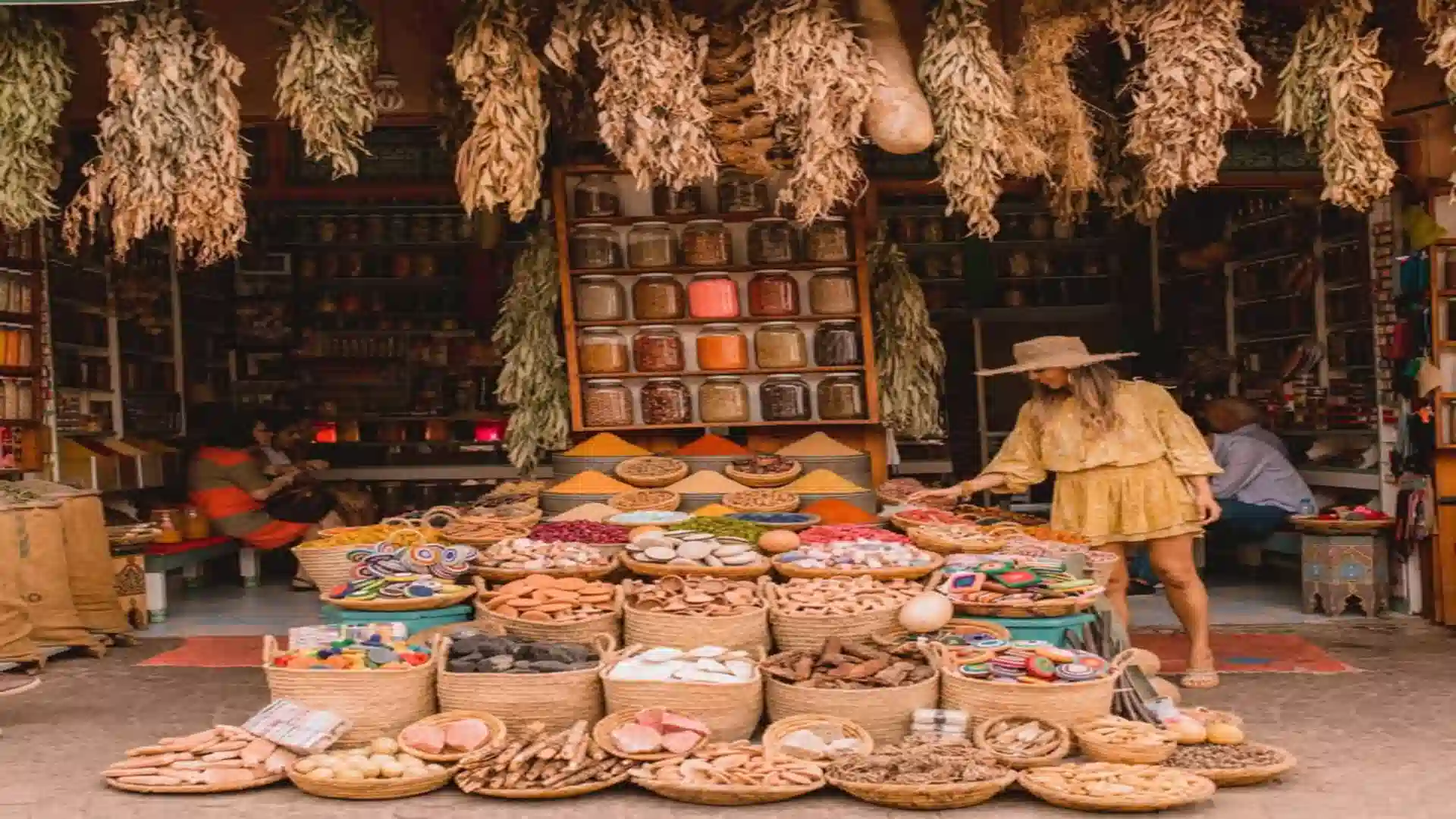
7 Best Souks in Marrakech & Top 15 Things to Buy in Marrakech Souk: Complete 2026 Guide
The best souks in Marrakech are not one market but eighteen different craft quarters inside a UNESCO-listed medina that has been operating continuously since the 11th century, where blacksmiths, carpet weavers, dyers, spice merchants, and silversmiths still work in the same buildings, in the same ways, in the same alleyways their guilds have occupied for a thousand years. Knowing which market sells what, where authentic craft items are made rather than imported, and having a reliable Marrakech souk price guide handy is the difference between coming home with objects you treasure for decades and spending your travel budget on tourist reproductions before reaching the authentic quarters of the medina.
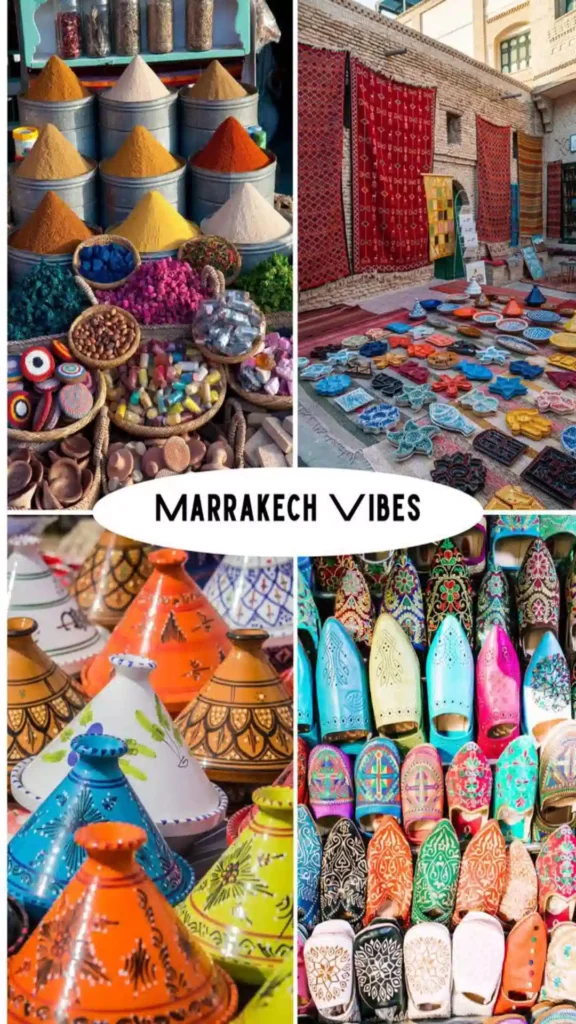
A vivid preview of the sensory overload waiting for you across the 7 best souks in Marrakech.
This guide covers the 7 best authentic souks in Marrakech each one mapped, explained, and detailed to help you navigate masterfully, followed by the top 15 things to buy in Marrakech souk venues. You will find real prices in MAD, step-by-step Marrakech souk haggling tips, key advice on how to avoid scams in Marrakech souks, and essential insider knowledge our guides use every week. Whether this is your first introduction to Marrakech Medina shopping or your fifth return trip, this guide ensures an unforgettable market experience.
Quick Navigation for the Best Souks in Marrakech
→ The 7 Best Authentic Souks
→ Top 15 Things to Buy
→ Fair Price Reference Table
→ Haggling Guide
→ Scams & Fakes to Avoid
→ FAQ
What Is a Souk? Understanding Marrakech Medina ShoppingBefore You Enter
A souk (سوق) is the Arabic word for market, but in Marrakech, it refers to an entire ecosystem of specialist trade quarters built into the organic urban fabric of the medina. The medina is the historic walled neighborhood; the souks are the bustling commercial engine inside it. Think of the medina as the old city and the souks as its living high street, except this high street is a labyrinth of hundreds of narrow alleyways, each dedicated to a single traditional craft.
The souk network driving marrakech medina shopping has operated continuously since the city’s founding in 1070 CE by the Almoravid dynasty. In medieval Islamic urban planning, different trades were clustered deliberately, and noise, aromas, and fire risks determined each guild’s location relative to mosques and houses. The authentic souks marrakech preserves today are not temporary tourist bazaars; they are eighteen trade quarters that have operated for a thousand years in the exact same corridors.
The primary shopping district begins immediately north of Jemaa el-Fnaa square and spreads through approximately 40 hectares of medina fabric. Entrances are narrow, alleys are unlabelled, and smartphone GPS often drops signal once you venture deep inside. Knowing what to buy in marrakech and where each quarter sits transforms a potentially disorienting maze into an exhilarating cultural adventure.
| Souk | Speciality | Distance from Jemaa el-Fnaa | Best Time to Visit |
|---|---|---|---|
| Souk Semmarine | Main thoroughfare for general goods, carpets, and leather | Immediate (0–3 min) | Morning (9–11 AM) |
| Souk des Teinturiers | Dyers’ souk vivid hanging wool skeins | 10–12 min walk | Afternoon (2–5 PM, light best) |
| Souk El Attarine | Spices, argan oil, herbs, perfumes | 5–8 min walk | Morning (best aromas) |
| Souk Cherratine | Best place to buy leather in Marrakech (belts, bags, and babouches) | 8–10 min walk | Morning (craftsmen active) |
| Souk Haddadine | Metalwork lanterns, brass trays, iron doors | 10–15 min walk | Morning (hammering audible) |
| Souk des Bijoutiers | Silver jewelry, Hand of Fatima, Berber pieces | 8–10 min walk | Any time |
| Souk des Tapis / Rahba Lakdima | Carpets, Berber rugs, spices, traditional apothecary | 5–7 min walk | Morning (carpet auctions) |
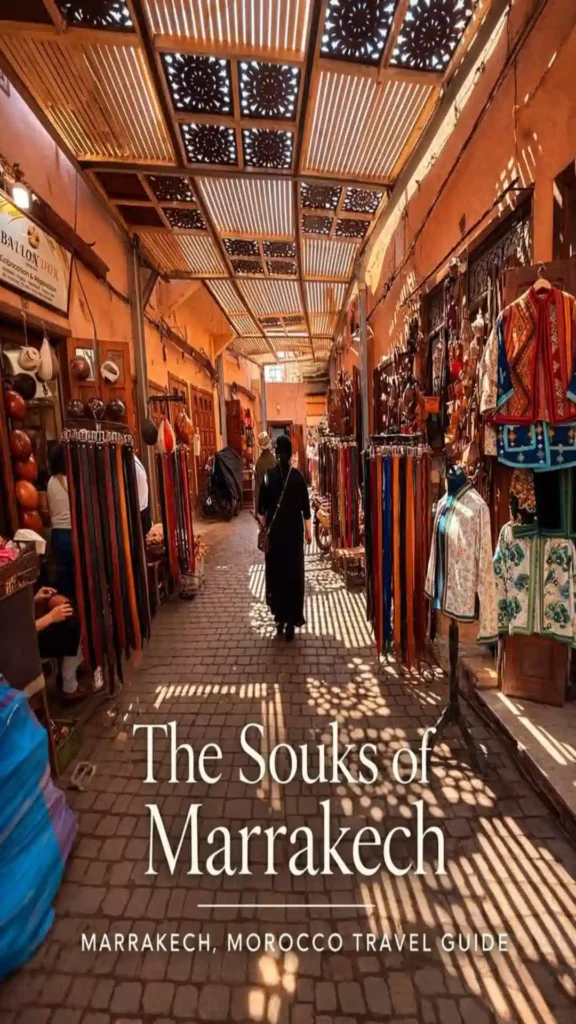
Exploring the sunlit leather stalls hidden within the 7 best souks in Marrakech.
The 7 Best Souks in MarrakechA Local’s Guide for 2026
These are the seven authentic souks Marrakech visitors should target for genuine craft production alongside retail. Here, you can watch artisans work before buying, ensuring goods are authentic. While reaching these sections requires stepping past Souk Semmarine’s busy entrance into quieter passageways, the quality and experience are well worth the walk.
1. Souk Semmarine The Gateway to the Best Souks in Marrakech
Souk Semmarine is the main artery of the entire medina market system a wide covered thoroughfare running north from Jemaa el-Fnaa under a broad iron trellis roof that casts soft, filtered light over every shopfront. It is usually the first market visitors enter and acts as a central landmark for overall orientation.
As the most accessible quarter, it features high foot traffic and tourist-oriented pricing. Browsing here gives you a great overview of items, but walking deeper into specialized quarters usually reveals better rates and handcrafted pieces.
What you’ll find here: Carpets, leather goods, souvenirs, traditional clothing, jewelry, slippers, carved wood items, and brass lamps. Use this artery to gauge choices, then head into side alleys for focused shopping.
Local tip: Side alleys branching left (west) lead directly into Souk El Attarine and Souk des Teinturiers for a quieter, more traditional atmosphere.
2. Souk des Teinturiers: The Dyers’ Quarter in the Medina
The Souk des Teinturiers, the dyers’ souk, is one of the most vibrant spaces in the medina: a series of narrow lanes where freshly dyed skeins of wool and silk hang overhead in deep reds, saffron oranges, bright yellows, and indigo blues, drying naturally under the sky.
This quarter preserves visible traditional production at street level. You can see artisans working near stone vats, stirring natural pigments that give color to the carpets, textiles, and garments sold across the city.
What you’ll find here: Raw dyed wool, silk skeins, hand-dyed scarves, and woven wall hangings crafted nearby.
Photography tip: Afternoon sunlight between 2 and 4 PM brings out the vivid hues of hanging yarn overhead.
3. Souk El Attarine: Spices, Herbs & Authentic Argan Oil Marrakech Medina
Souk El Attarine is the spice and aromatic center of the old city a dense quarter filled with spice merchants, herbalists, and perfumers. Conical displays of ground cumin, Taliouine saffron, ras el hanout, rose petals, and eucalyptus crystals fill the air with rich, unforgettable scents.
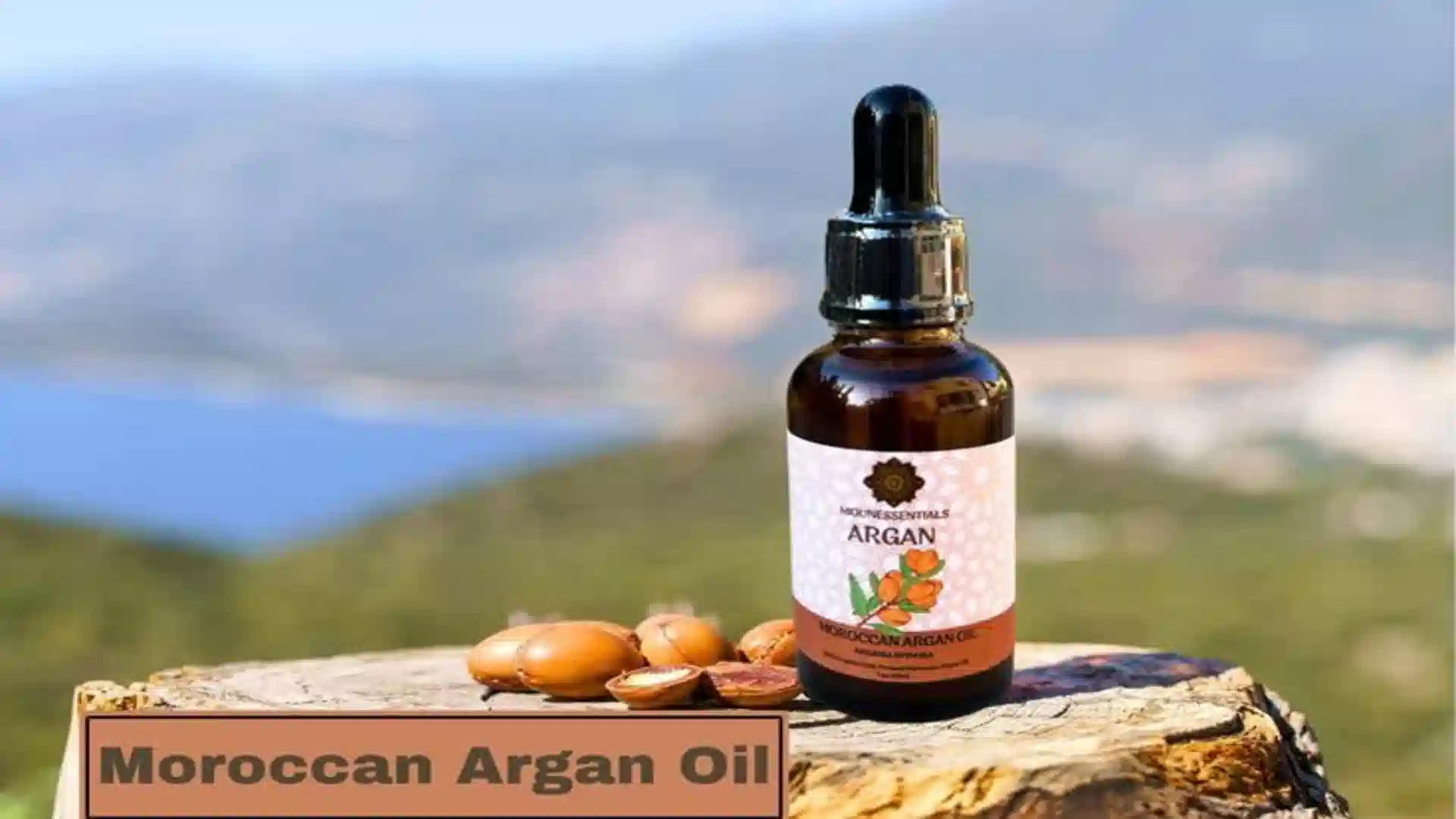
El Attarine is also the top destination to find authentic argan oil marrakech medina suppliers. Look for vendors who clearly distinguish between culinary argan oil (roasted, golden, nutty) and cosmetic argan oil (cold-pressed, amber, restorative), ideally sourced directly from certified fair-trade cooperatives.
What to buy here: Fresh ras el hanout, pure saffron, organic argan oil, black soap (savon beldi), dried rosebuds, and herbal wellness teas.
Nearby landmarks: Located steps from the 16th-century Mouassine Fountain and Mosque complex.
4. Souk Cherratine: The Best Place to Buy Leather in Marrakech
Souk Cherratine is widely recognized as the best place to buy leather in marrakech a specialized zone where tanners, cobblers, and leathercrafters hand-stitch bags, belts, satchels, and babouche slippers directly inside their workshops.
Because shops here sit close to production workshops, prices reflect true craftsmanship rather than heavy tourist markups found near main squares. You can frequently watch artisans cutting, stitching, and finishing pieces on site.
What to buy here: Leather backpacks, travel duffels, tailored belts, stitched poufs, and genuine leather babouche slippers.
Quality check: Genuine leather has a natural earthy scent and flexes smoothly. A light surface fingernail test reveals natural texture rather than synthetic coating.
5. Souk Haddadine: Metalwork & Pierced Brass Lanterns
Souk Haddadine is the metalworkers’ quarter, announced by the rhythmic sound of hammers shaping brass, copper, and iron. Artisans here craft intricate metal lanterns, hand-hammered trays, and decorative hardware using traditional tools.
Handmade brass lamps feature subtle, beautiful variations in their punched geometric designs, creating warm light patterns that mass-produced stamped metal cannot duplicate.
What to buy here: Pierced brass lamps, copper serving trays, iron knockers, and decorative candle holders.
Authenticity check: Look closely at punched perforations: artisan hand-punched holes have tiny, unique variations, whereas factory stampings are uniform and mechanical.
6. Souk des Bijoutiers: Fine Silver & Traditional Jewellery
Souk des Bijoutiers is the silver and jewelry quarter within the historic covered kissarias. Silversmiths here design traditional Hand of Fatima (Khamsa) pendants, Berber fibulas, heavy cuffs, and silver rings blending Amazigh geometric art with classic Moroccan motifs.
Authentic silver items bear official assay marks or purity stamps. Asking vendors ababout the silverrade and testing items ensures a genuine purchase.
What to buy here: Sterling silver Khamsa pendants, engraved cuffs, filigree earrings, and coral-inlaid Berber pieces.
Silver test: Pure silver is non-magnetic. Using a magnet helps confirm that an item is solid silver rather than silver-plated iron or steel.
7. Souk des Tapis & Rahba Lakdima: BerberRugs & Spice Square
Souk des Tapis alongside Rahba Lakdima (Spice Square) forms the centerpiece of carpet trade in the city. This open area brings together rug merchants, herbalists, and apothecaries in one of the medina’s most famous historic squares.
Whether searching for thick wool Beni Ourain rugs, colorful Azilal weaves, or vintage flatweaves, this area offers unmatched variety. Review our detailed Marrakech carpet buying guide 2026 section below before completing high-value rug purchases.
What to buy here: Beni Ourain rugs, flatweave kilims, recycled Boucherouite rugs, natural cosmetics, and herbal remedies.
Carpet check: Turn the rug over to inspect the weave. Hand-knotted rugs show distinct, hand-tied knots on the underside, whereas machine-made versions have uniform textile backing.
Top 15 Things to Buy in Marrakech Souk: Products, Prices & Authenticity
Curating what to buy in Marrakech comes down to quality, cultural heritage, and value. Here is our list of the top 15 items to look for during your trip, including expected price ranges and quality tips for each.
1. Authentic Argan Oil Marrakech Medina
Morocco’s argan tree(Argania spinosa) grows natively. The Argania spinosa, often known as the Moroccan argan tree, is indigenous to the southwestern region of Morocco. Not only is the oil derived from its kernels highly regarded for its culinary applications (roasted kernels have a golden hue and a nutty flavor), but it is also especially prized for its cosmetic applications (cold-pressed, amber in color, and abundant in vitamin E). You may find pure argan oil at traditional pharmacy shops, which provide costs that are reasonable in the area and offer a wonderful quality. in southwestern Morocco. The oil extracted from its kernels is prized globally both for culinary use (roasted kernels, golden hue, nutty flavor) and cosmetic application (cold-pressed, amber tone, rich in vitamin E). Finding pure argan oil in traditional apothecary shops offers exceptional quality at fair local prices.
| Type | Use | Colour | Fair Price (Souk) |
|---|---|---|---|
| Culinary argan oil | Cooking, dipping, salads | Golden yellow | 80–150 MAD / 100 ml |
| Cosmetic argan oil | Skin, hair, nails | Dark amber | 100–200 MAD / 100 ml |
| Amlou (argan almond spread) | Breakfast spread, dip | Rich brown | 40–80 MAD / 200 g |
For those interested in purity, pure cosmetic argan oil has a natural nut aroma that is not overpowering and absorbs well without leaving behind a greasy residue. Purchasing goods from women’s cooperatives guarantees both the quality of the product and the fairness of the working conditions.
2. Moroccan Spices: Ras el Hanout, Saffron & Cumin
Fresh spices are among the best values when discovering things to buy in Marrakech souk stalls. Sourced regionally, these aromatic spices deliver incredible flavor at a fraction of export prices.
Fair market price ranges by weight:
- Ras el Hanout blend: 20–40 MAD per 100 g (quality multi-spice blend)
- Moroccan Cumin: 10–15 MAD per 100 g (rich, earthy aroma)
- Sweet Paprika: 10–15 MAD per 100 g
- Cinnamon sticks: 15–25 MAD per 100 g
- Taliouine Saffron: 80–150 MAD per gram (pure threads)
- Damask Rose Petals: 20–40 MAD per 100 g
Saffron tip: Genuine saffron consists of deep red threads that infuse warm water slowly with a rich golden color. Avoid cheap powders or dyed corn silk substitutes.
3. Moroccan Babouche Slipper: What to buy in Marrakech
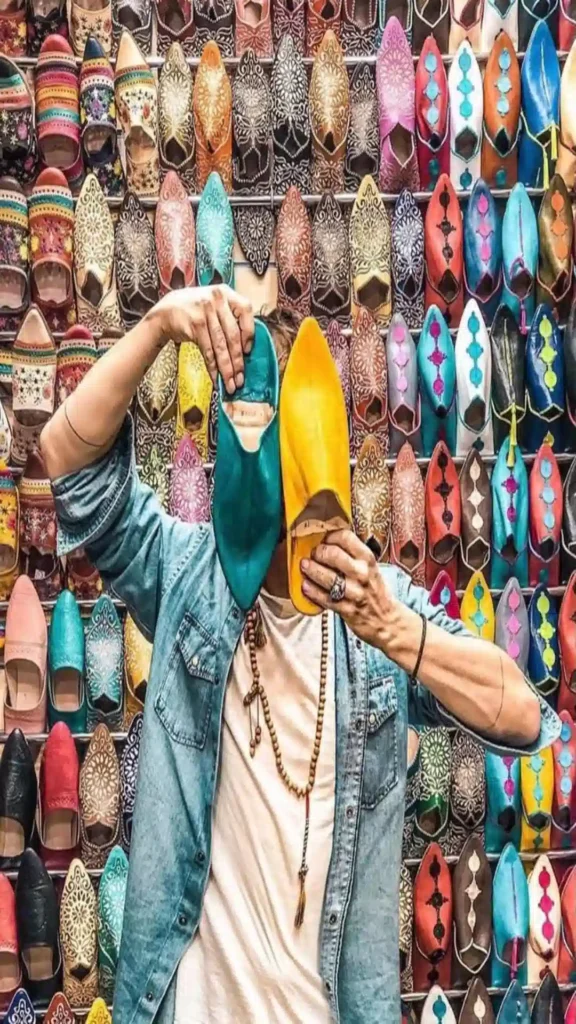
Finding the perfect handcrafted leather babouches inside the famous market alleys of the 7 best souks in Marrakech.
The traditional leather babouche slippers, often known as balgha, are not only fashionable but also quite comfy. Over time, real leather slippers will naturally fit your feet, and they are available in a variety of shapes, including pointed contemporary styles and round-toed classic designs.
- Basic lightweight slippers: 50–100 MAD
- Stitched genuine leather slippers: 100–200 MAD
- Embroidered artisan slippers: 200–400 MAD
Fit note: Always try slippers on for size before purchasing, as handmade sizing varies slightly between cobblers.
4.Handcrafted Leather Bags & Goods with the Best Souks in Marrakech
Exploring the best place to buy leather in Marrakech reveals exceptional values on crossbody bags, totes, travel duffels, and belts crafted from soft goat, cow, or camel leather.
- Small leather clutch or wallet: 80–200 MAD
- Crossbody shoulder bag: 200–500 MAD
- Full-grain leather tote: 400–900 MAD
- Hand-tooled leather belt: 100–250 MAD
Quality test: Authentic leather features unique grain patterns, flexible structure, and clean hand-stitching along stress points.
5. Brass & Copper Lanterns: Authentic Souks Marrakech
Intricately cut metal lanterns create ambient shadow patterns when lit, adding a touch of Moroccan architecture to any room.
- Small brass lantern (15–20 cm): 80–200 MAD
- Medium table lantern (25–35 cm): 150–400 MAD
- Large statement lantern (40–60 cm+): 300–800 MAD
Packing advice: Ask shop owners to pack delicate lanterns carefully in bubble wrap or cardboard for flight transit.
6. Hand-Painted Moroccan Ceramics: Marrakech Medina shopping
Ceramics from Morocco are available in a wide variety of distinct regional styles, such as blue-patterned Fes patterns, colorful Safi pottery, and traditional Marrakech terracotta plates.
- Small decorative serving bowl: 30–80 MAD
- Stovetop tagine cooking pot: 80–200 MAD
- Hand-painted pottery set: 300–800 MAD
Travel tip: Separate serving pieces from heavy luggage walls using clothing layers for cushioned protection.
7. Hand of Fatima (Khamsa) Jewellery
Protection and good fortune are offered by the Khamsa emblem over the entirety of North Africa. It is frequently used in carved brass hardware, silver pendants, and wall hangings, among other applications.
- Sterling silver Khamsa pendant: 100–300 MAD
- Brass Khamsa door knocker: 100–350 MAD
- Ceramic wall-hanging Khamsa: 50–150 MAD
8. Savon Beldi (Moroccan Black Soap)
The use of black soap, which is derived from olive oil and crushed olive pomace, is an integral component of the ancient skin-exfoliation rituals performed at spas and hammams.
- Savon beldi tub (100g): 10–20 MAD
- Kessa exfoliation glove: 10–15 MAD
- Ghassoul volcanic clay (200g): 15–30 MAD
9.Berber Rugs & Handwoven Carpets
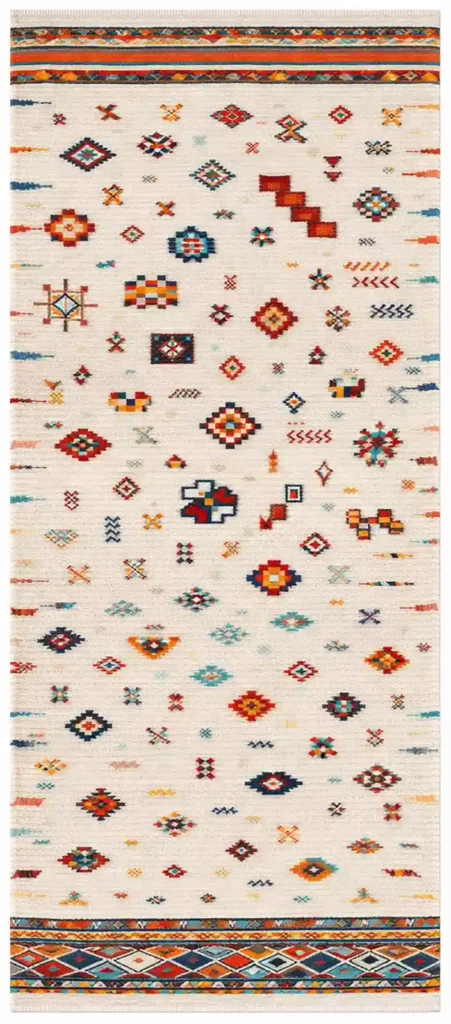
A beautiful cream-colored Moroccan rug adorned with multi-colored handwoven Amazigh geometric patterns.
Our marrakech carpet buying guide 2026 notes that authentic plush Beni Ourain rugs, colorful Azilal textiles, flatweave kilims, and recycled Boucherouite designs remain prized investments for home décor.
- Boucherouite rug (small): 300–700 MAD
- Flatweave Kilim (medium): 400–1,500 MAD
- Beni Ourain wool rug (medium): 2,500–7,000 MAD
Weave test: Check the underside weave structure. Genuine hand-knotted rugs display distinct individual knots across the back surface.
10.Mint Tea Glasses & Silver Teapots
With the help of colorful tea cups and inscribed teapots, you can transport the well-known mint tea culture of Morocco to your very own dining table at home.
- Hand-painted tea glass: 10–25 MAD
- Set of 6 decorative tea glasses: 50–150 MAD
- Moroccan silver-plated teapot: 150–400 MAD
11.Traditional Djellaba Robes
Comfort and style are offered by full-length woven hooded robes, also known as djellabas. These robes can be made of lightweight cotton for the summer or thick wool for the winter. Prices for wool robes with hand trimming range from 300 to 700 MAD.
12. Thuya Wood Carvings & Keepsake Boxes
In addition to producing thick and pleasantly aromatic boxes, chess boards, and carved bowls with warm burl patterns, native Thuya wood also produces chess boards. Small boxes cost between 50 and 150 MAD, whereas intricate marquetry boxes cost between 300 and 800 MAD.
13. Rose Water & Orange Blossom Hydrosols
The natural floral hydrosols that are distilled from Dades Valley roses and bitter orange flowers are known to revitalize the skin and impart a flavorful flavor to classic delicacies. Pure rose water (250 milliliters) costs between 20 and 50 MAD.
14. Traditional Musical Instruments
Handmade Gnawa guembri lutes, Berber bendir frame drums, The Gnawa guembri lutes, the Berber bendir frame drums, and the iron qraqeb castanets are all examples of great working instruments and exhibition pieces. The frame drums range from 150 to 400 MAD.and iron qraqeb castanets make excellent functional instruments and display pieces. Frame drums: 150–400 MAD.
15. With the best souks in Marrakech, you will see the polished Saharan Fossils
Ancient ammonite and orthoceras ocean fossils are utilized in the production of ornamental plates, bookends, and pendants. These fossils are extracted from the ocean near Erfoud. 20–100 MAD for small fossil bits that have been polished.
Marrakech Souk Price Guide 2026: Fair Price Reference Table in MAD
Initial asking prices in high-traffic market zones are starting points for discussion. Keeping this Marrakech souk price guide handy helps you gauge realistic final values for standard artisan goods across the medina.
| Item | Initial Asking Quote | Fair Negotiated Target | Maximum Recommended Price |
|---|---|---|---|
| Argan oil (100ml pure) | 300–500 MAD | 80–150 MAD | 200 MAD |
| Leather Babouche Slippers | 300–500 MAD | 100–250 MAD | 300 MAD |
| Medium Leather Bag | 800–1,500 MAD | 300–600 MAD | 700 MAD |
| Pierced Brass Lantern | 500–900 MAD | 150–350 MAD | 450 MAD |
| Silver Khamsa Pendant | 400–800 MAD | 100–300 MAD | 400 MAD |
| Ras El Hanout (100g) | 60–100 MAD | 20–40 MAD | 60 MAD |
| Ceramic Tagine Pot | 300–600 MAD | 80–200 MAD | 250 MAD |
| Tea Glasses (Set of 6) | 200–350 MAD | 50–120 MAD | 150 MAD |
| Wool Djellaba Robe | 1,000–2,000 MAD | 300–700 MAD | 800 MAD |
| Savon Beldi Black Soap (200g) | 50–100 MAD | 10–20 MAD | 30 MAD |
| Medium Kilim Flatweave | 2,000–5,000 MAD | 400–1,500 MAD | 2,000 MAD |
| Beni Ourain Rug (Medium) | 8,000–20,000 MAD | 3,500–7,000 MAD | 8,000 MAD |
Essential Marrakech Souk Haggling Tips: How to Bargain Like a Pro
Bargaining in traditional markets is a social custom based on mutual respect and friendly conversation. Practicing these proven marrakech souk haggling tips makes negotiations pleasant, enjoyable, and fair for both buyer and artisan.
7 Steps to Easy Market Haggling in the Best Souks in Marrakech
- Accept offered tea warmheartedly. Sharing mint tea is standard hospitality and sets a friendly mood for discussion.
- Browse options comfortably. Look across several items before pointing out your favorite piece to keep bargaining relaxed.
- Ask for the initial price politely. Use local phrases like “Bshal hadchi?” (How much is this?) to start the conversation.
- Propose your initial counteroffer. Suggesting around 40–50% of the initial quote opens balanced dialogue.
- Work steadily toward agreement. Reaching a middle ground near 60–70% of the original asking price offers great value.
- Use “La, shukran” politely. If prices stay above your target, saying “No, thank you” with a warm smile keeps options open.
- Set your budget ahead of time. Knowing your target limit allows you to make calm, clear decisions without pressure.
Useful Moroccan Darija Phrases for Shopping to Use at the Best Souks in Marrakech
| English | Darija | Pronunciation |
|---|---|---|
| How much is this? | Bshal hadchi? | Bsh-hal had-gee |
| Too expensive | Ghali bzzaf | GHAL-ee buh-ZAAF |
| No, thank you | La shukran | LAH shoo-kran |
| Is this good quality? | Mzyan had? | Muh-ZYAN had |
| I will take it. | Ghadi nakhdha | GAH-dee nak-da |
| Final price? | Had akhir thaman? | Had ah-KHEER tha-MAN |
How to Avoid Scams in Marrakech SouksBuyer Awareness Guide
Learning how to avoid scams in Marrakech souks ensures a smooth, fun, and hassle-free shopping trip. Simple awareness helps you easily navigate common sales tricks or mislabeled products.
| Common Scam / Misdirection | How It Works | Simple Prevention Strategy |
|---|---|---|
| Unsolicited Navigation Assistance | Strangers offer unwanted directions to lead tourists toward specific shops for referral fees. | Politely say “La, shukran” and keep walking toward your target street or landmark. |
| Diluted Argan Oil | Cheap vegetable oils are mixed into argan oil and sold as pure cosmetic oil. | Purchase directly from verified cooperatives or trusted traditional herbalists in Souk El Attarine. |
| Imitation Saffron | Dyed safflower or plant fibers presented as premium pure saffron threads. | Select intact red saffron stigmas that release color gradually in warm water. Avoid powdered mixes. |
| Machine Rugs Sold as Hand-Knotted | Factory-made woven carpets sold as hand-tied authentic Berber rugs. | Consult our Marrakech carpet buying guide 2026: flip the rug to confirm individual hand-tied knots on the back. |
| Silver-Plated Base Metal | Plated iron sold at genuine solid silver jewelry prices. | Test with a magnet (silver won’t stick) and look for official silver hallmarks. |
| Unrequested Henna Art | Street vendors start drawing henna on hands without agreement and request payment afterward. | Keep hands relaxed by your side and decline unrequested street services firmly from the start. |
Practical Tips for Marrakech Medina Shopping
Keep Cash Handy
Cash in Moroccan Dirhams (MAD) is preferred across most traditional stalls. Carry smaller bills (20, 50, and 100 MAD notes) for easy daily purchases and small artisan items.
Start Early in the Day
Mornings between 8:30 and 11:00 AM offer cooler temperatures, relaxed walkways, and great opportunities to see craftsmen opening their shops and starting work.
Dress Comfortably
Respect local culture and stay cool by walking through the shaded medina street in lightweight and comfortable clothing covering shoulders and knees.
Enjoy Exploring
Getting slightly off course is part of the charm of medina shopping. Walking toward open landmarks or main walkways easily leads you back to primary squares like Jemaa el-Fnaa.
Related Guides to the Best Souks in Marrakech from Over Morocco Tours
- What Is a Riad in Morocco? Learn how traditional Medina riads offer peaceful stays near the market quarters.
- Complete Moroccan Rug & Carpet Buying Guide In-depth advice for picking authentic handwoven carpets.
- Hand of Fatima (Khamsa): Meaning & Guide to the Symbolism behind Morocco’s traditional protective icon.
- Moroccan Hammam Complete Guide Discover traditional spa treatments and essential bath supplies.
- 25 Best Things to Do in Marrakech Essential highlights for building your ideal itinerary.
- Merzouga vs Zagora Desert Tour Compare desert trip options departing directly from Marrakech.
Frequently Asked Questions: Marrakech Medina Shopping
Where are the best souks in Marrakech located?
The 7 best souks in Marrakech are located just north of Jemaa el-Fnaa square inside the historic medina, including Souk Semmarine, Souk des Teinturiers, Souk El Attarine, Souk Cherratine, Souk Haddadine, Souk des Bijoutiers, and Souk des Tapis at Rahba Lakdima.
What are the top things to buy in Marrakech Souk Quarter?
Popular choices for what to buy in Marrakech include organic argan oil, authentic spices like ras el hanout, leather babouche slippers, brass lamps, ceramics, silver Khamsa jewelry, black soap, and handwoven Berber rugs.
How do I find a reliable Marrakech souk price guide for budgeting?
Our price reference table above lists realistic negotiated rates in MAD for key items, helping you budget accurately for small crafts, leather goods, and high-value carpets.
Is shopping in the Marrakech medina safe for solo visitors?
Yes, exploring the market quarters is safe and welcoming. Keeping a calm pace, politely declining unneeded assistance, and sticking to main walkways makes navigating simple and enjoyable.
What is the difference between the medina and the souks?
The medina refers to the entire historic walled city of Marrakech, whereas the souks are the dedicated craft quarters and street markets operating inside it.
How do I reach the main market entrances from Jemaa el-Fnaa?
Walk straight north from the top side of Jemaa el-Fnaa square to enter Souk Semmarine, the primary covered market street that connects to all major artisan quarters.
When is the best time of day to explore the souks?
Morning hours between 8:30 AM and 11:00 AM provide pleasant temperatures, light crowds, and a wonderful opportunity to watch local craftsmen start their workday.
Explore Marrakech’s Souks With a Licensed Local Guide
Our private Medina walking tours take you through the best souks in Marrakech with experienced local guides who connect you directly with genuine craft artisans, giving you authentic access to dye vats, weaving looms, and traditional workshops across the city.
Combine your city exploration with an unforgettable 3-day Sahara Desert tour from Marrakech, traveling past Ait Ben Haddou and the Dades Valley to sleep under the stars at Erg Chebbi.