Horse Riding in Morocco 2026: All You Need To Know About Every Experience
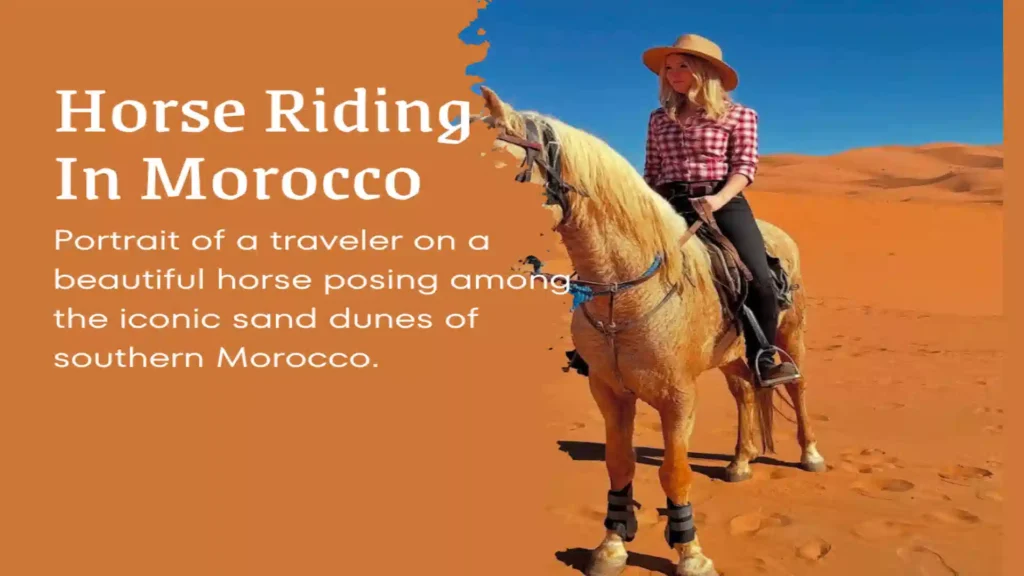
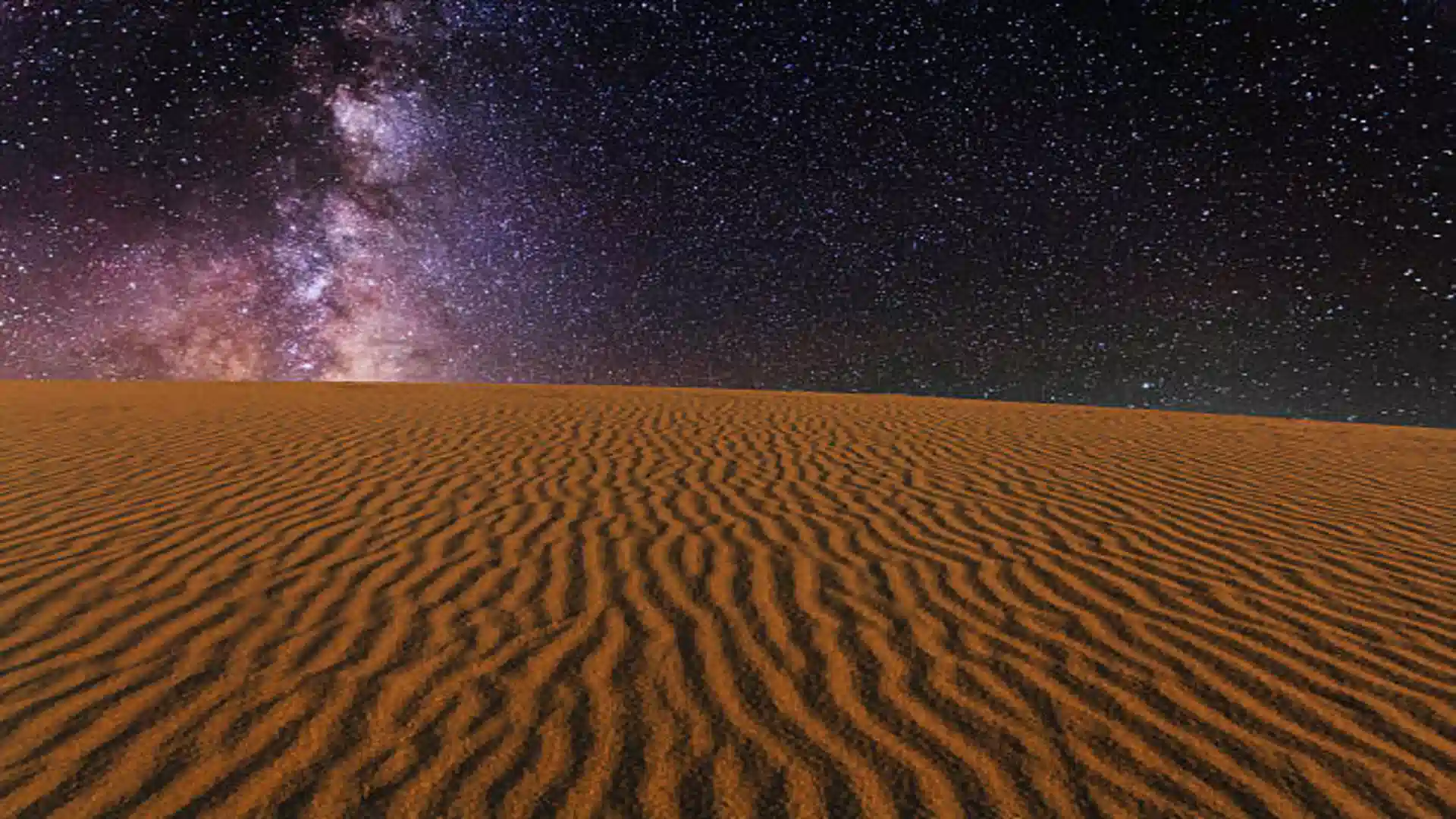
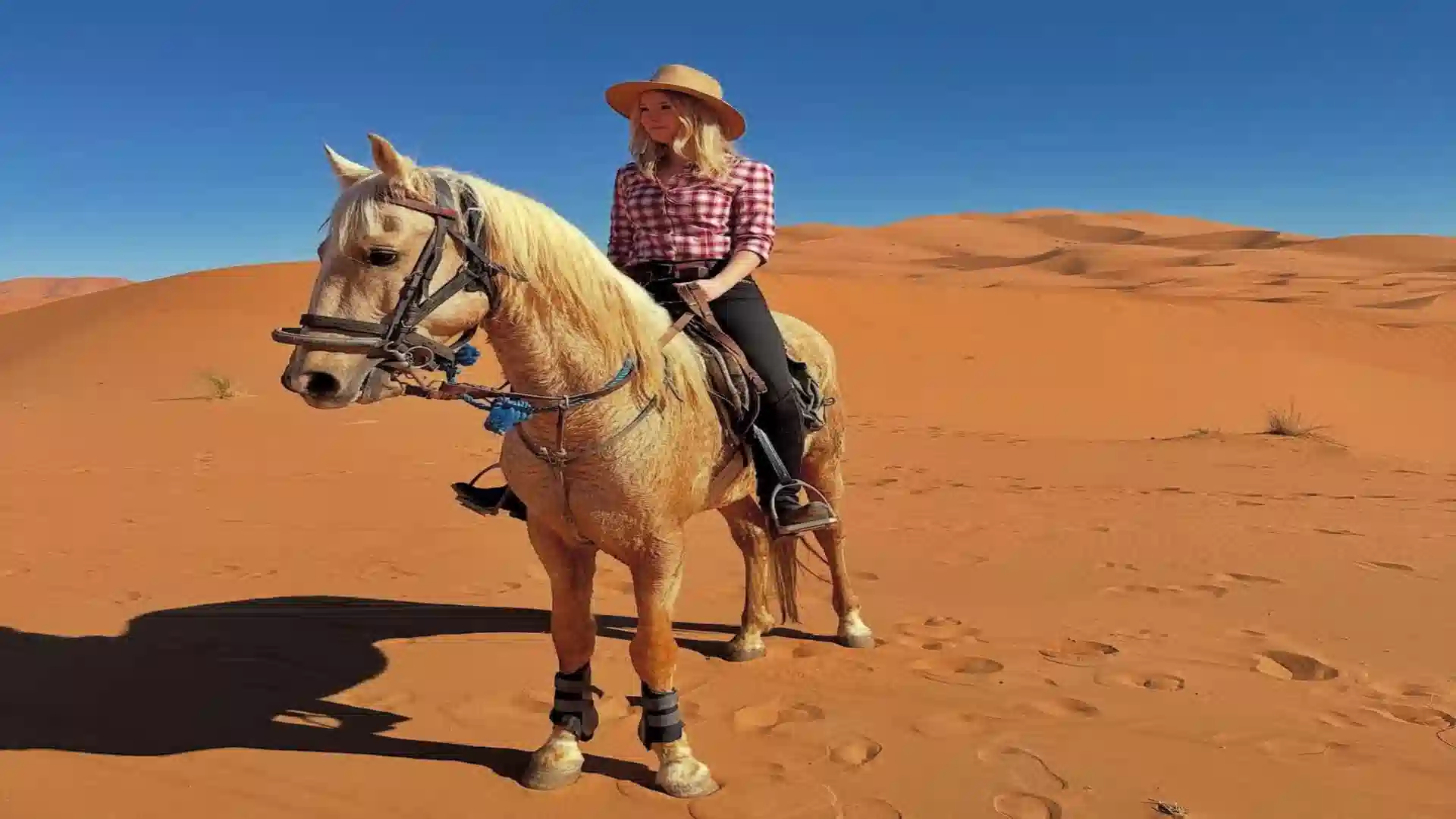
Ready for a ride across the iconic red dunes of Merzouga.
Horse riding in Morocco ranges from a one hour gentle ride through the palm groves of Marrakech’s Palmeraie (from 200-350 MAD) to multi-day Sahara desert trekking on Arab-Barb stallions across the hammada and dunes near Merzouga — one of the most extraordinary equestrian landscapes in the world.
We have experience coordinating activity-based travel in Morocco, and horseback riding is always one of the most memorable activity add-ons travelers can book in conjunction with a desert tour. In particular, the surefootedness, speed, and responsiveness of the Moroccan Barb horse make riding here feel truly different from anywhere else.
This guide includes all the types of horse riding there are in Morocco: Sahara desert treks, Atlas Mountain trails, Atlantic beach rides, day rides around Marrakech, the Fantasia tradition, and what to expect at every level of experience and skill.
Horse Riding in Morocco: Quick Comparison
| Experience Type | Location | Duration | Skill Level | Typical Price |
|---|---|---|---|---|
| Palmeraie palm grove ride | Marrakech | 1–2 hrs | Beginner–intermediate | 200–450 MAD |
| Agafay Desert sunset ride | Marrakech (45 min away) | 2–4 hrs | Beginner–intermediate | 400–700 MAD |
| Beach ride | Essaouira, Agadir, Dakhla | 1–2 hrs | All levels | 300–600 MAD |
| Atlas Mountains day ride | Ourika Valley, Imlil | Half/full day | Intermediate | 500–900 MAD |
| Sahara desert ride | Erg Chebbi, Erg Chigaga edge | 1 hr – full day | Intermediate–advanced | 400–1,200 MAD |
| Multi-day desert horse trek | South Morocco (Ouarzazate–Zagora–Merzouga) | 5–10 days | Intermediate–advanced | €800–2,000+ per person |
| Fantasia show (Tbourida) | Marrakech, festival events | 1–2 hrs spectator | Spectator | 150–400 MAD |
The Moroccan Barb Horse: What Makes It Special
The Moroccan Barb (Berber horse) is Morocco’s indigenous breed, and the very heart of the country’s equestrian culture. It is one of the world’s oldest breeds, originating in North Africa over 3,000 years ago, and is celebrated for its exceptional endurance, surefootedness on rocky mountain terrain, and explosive speed on the open desert gallop. The Barb horse is the best in the Atlas Mountains — sure-footed on rocky switchbacks, steady on narrow mountain trails. Arab-Barb crossbreeds are used for most serious equestrian tours in Morocco. They combine the Barb’s toughness with the Arabian’s refinement and sensitivity.
Key characteristics that shape the riding experience:
- Endurance: Barbs have a history of being bred for long desert crossings with little water and forage – a trait that translates directly to multi-day desert treks that test the limits of standard breeds.
- Surefootedness: The Barb is surefooted on switchbacks in the Atlas Mountains and on rocky hammada terrain. It is capable of handling terrain that is challenging for many European horse breeds, which opens up technical mountain trails to intermediate riders.
- Temperament: Most riding guides describe Moroccan horses as forward, energetic and responsive. They are rewarding for experienced riders and manageable for confident beginners, but worth flagging if you’re a true novice.
- The stallion culture: In Europe, riding centers have more mares and geldings than stallions, but in Morocco, the riding tradition is a stallion tradition, especially for trekking. This horseback trail is on Barb-Arab horses. All three horses were great to ride once we got used to riding Berber x Arab.
Horse Riding In Marrakech: Day Rides and Half-Day Excursions
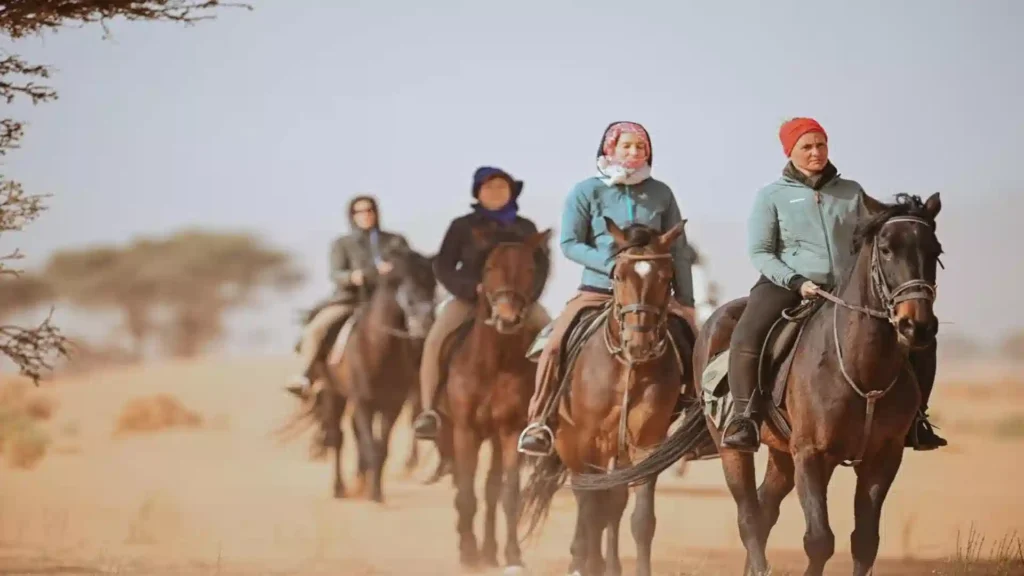
Exploring the ancient trails of the Sahara on responsive Moroccan Barb horses.
The best horse riding in Marrakech is found in the Palmeraie, an oasis of palm trees on the northern edge of the city, and in the Agafay Desert, a rocky moonscape plateau 45 minutes south of the city that provides a genuine desert atmosphere without the multi-day drive to Merzouga. Both options are suitable for beginners and families and both operate with pickup from your riad or hotel.
The Palmeraie Ride
“The best horse riding in Marrakech is in the Palmeraie, an oasis of palm trees on the northern edge of the city, and in the Agafay Desert, a rocky moonscape plateau 45 minutes to the south of the city that provides a real desert feeling without the multi-day drive to Merzouga. Both are beginner and family friendly and both include pick up from your riad or hotel.”
- Duration: 1–2 hours
- Price: 200–450 MAD per person
- Level: Complete beginners welcome; brief lesson before mounting
- Best time: Morning or golden hour before sunset — avoid midday in summer
- What you’ll see: Palm groves, dirt tracks, distant Atlas Mountain views, occasional Berber village stop
The Agafay Desert Ride
The Agafay Desert a huge, stony plateau south of Marrakech with no palm trees, no irrigation, and a truly austere desert character – provides a more dramatic riding backdrop than the Palmeraie, and is gaining in popularity among travelers who want a real desert ride without the 9-hour drive to Merzouga..
- Duration: 2–4 hours, often including a sunset element
- Price: 400–700 MAD per person
- Level: Beginner-friendly to moderate; open terrain allows confident riders more pace
- Combine with: Many operators pair the ride with a Berber tent dinner in the Agafay, making this a strong full-afternoon-and-evening activity
Atlas Mountains Horse Trekking Morocco
The Atlas Mountains offer Morocco’s most technically rewarding riding terrain narrow mountain paths, high-altitude plateaus, sweeping views toward the Sahara, and overnight stops in Berber village guesthouses along ancient trading routes that the Barb horse has navigated for centuries. Trails wind through Berber villages, walnut groves, and high-altitude plateaus with views stretching to the Sahara.
Popular Atlas riding areas For Horse Trekking Morocco:
- Ourika Valley: An accessible day-ride option from Marrakech (1 hour drive), following the river valley and passing traditional Berber villages and terraced agricultural fields.
- Imlil / Toubkal foothills: More challenging terrain around Morocco’s highest peak, Mount Toubkal (4,167 m), with routes available to intermediate and advanced riders.
- Rose Valley (Vallée des Roses, near Kelaat M’Gouna): Seasonal riding at peak bloom (April–May) through rose-cultivated valleys, one of Morocco’s most photogenic equestrian backdrops.
- Saffron Trail (Taliouine area): A high-altitude autumn ride through saffron-growing areas in the Anti-Atlas, combining riding with one of Morocco’s most distinctive agricultural landscapes.
Multi-day Atlas treks typically use a support vehicle for luggage, with riders spending 4–6 hours in the saddle per day and overnight stays in mountain guesthouses or riad-style accommodation in valley villages.
Sahara Desert Horse Riding: The Ultimate Morocco Equestrian Experience
“The most surreal experience was probably the horse riding in Merzouga, galloping across the Sahara dunes with the sky painted in impossible shades of orange and pink by the sun. The silence is deep. Only the breathing of your horse and the faint whisper of sand break it.”
The most spectacular horse riding in Morocco is to ride a Moroccan Barb across the rocky hammada of the Sahara and onto the edge of the Erg Chebbi or Erg Chigaga dunes – and for intermediate and advanced riders, one of the most extraordinary equestrian landscapes in the world.
Day and Half-Day Sahara Desert Horse Riding (Merzouga)
Morocco horseback riding tours over the Erg Chebbi dune field is a wonderful alternative or addition to the traditional camel journey, and it is a perfect activity to do if you are already on a desert vacation to Merzouga.
- Duration: 1–3 hours
- Price: 400–800 MAD
- Level: Intermediate riders comfortable with all gaits; desert terrain requires confidence and balance
- Best time: Sunset or early morning, matching the same timing as the camel trek
- Difference from camel trekking: Horses are faster, more responsive, and allow more terrain coverage than camels — a stronger fit for experienced riders seeking pace and variety
Multi-Day Sahara Horse Treks
The Sahara Horse Trekking Morocco Tour is an experience that begins in Marrakech and lasts for a total of six days. It includes a travel across the Atlas Mountains to the destinations of Ait Ben Haddou and Ouarzazate. The highlight of the trip is the opportunity to go horseback riding in the Sahara Desert for three full days with well-trained Arab or Barb stallions, to camp out beneath the stars, and to listen to traditional Berber music.
Typical multi-day trek structure (Ouarzazate–Zagora–Erg Chigaga format):
- Day 1: Arrive Ouarzazate, meet horses and guides, orientation ride
- Days 2–5: 4–6 hours riding per day across hammada, rocky desert flats, dry river beds, oasis edges, and approaching the Erg Chigaga dunes
- Overnight: Remote desert riads, guesthouses, or tented bivouacs at the dune edge
- Support: A 4WD back-up and luggage transport vehicle accompanies the group, carrying gear so riders travel light
- Return: Transfer back to Ouarzazate or Marrakech by 4×4 on the final day
| Trek Length | Typical Price (per person) | Riding Days | Best Season |
|---|---|---|---|
| 6 days / 5 nights | €800–1,200 | 4–5 riding days | Oct–Nov, Feb–Apr |
| 8 days / 7 nights | €1,000–1,600 | 6 riding days | Oct–Nov, Feb–Apr |
| Custom private (4+ riders) | Varies | Flexible | By arrangement |
Atlantic Beach Horse Riding In Essaouira:
It is primarily concentrated around Essaouira’s expansive and wind-swept Atlantic coastline, Agadir’s resort beach, and the remote surf beach areas around Tamraght and Taghazout. The combination of open sand, Atlantic waves, and a horse beneath you is one of the most viscerally freeing riding experiences in Morocco. Beach horse riding in Morocco is a popular activity in Morocco. Coastal routes traverse cliffs and beaches along the Atlantic coast. Along this stretch of coastline, sea breezes keep summer temperatures bearable and discourage sunbathers, making the beaches ideal for riding.
Horse Riding In Essaouira
Essaouira’s long, flat Atlantic beach is the most established beach riding location in Morocco. It is broad enough for gallops, and it has continuous sea breezes that make riding comfortable even during the summer, when the majority of Morocco’s interior is too hot for protracted activity. In close proximity to the medina or straight from the shore, there are a number of stables that are open for business.
- Duration: 1–2 hours
- Price: 300–600 MAD
- Level: All levels; stable owners match horses to experience
- Combine with: A riad stay in Essaouira and the medina’s gallery and souk exploring, making a natural 1–2 day add-on to a Marrakech-based itinerary
Taghazout and Tamraght (Agadir area)
The surf beach villages north of Agadir offer beach riding with a distinctly different character from Essaouira — smaller-scale operations, quieter beaches, and an increasingly popular combination of surf lesson and horse ride packages.
Fantasia (Tbourida): Morocco’s Equestrian Spectacle
Fantasia, or Tbourida, is Morocco’s traditional equestrian performance teams of horsemen in traditional dress charge in synchronized formation before firing muskets simultaneously at the climax of the gallop, a ceremony with roots in Berber and Arab warrior tradition that has been recognized by UNESCO as an Intangible Cultural Heritage since 2021. This is not horse riding for travelers but one of the most spectacular equestrian shows in the world, and worth planning a trip timing around if you’re visiting Morocco.
What the Fantasia experience involves:
- The performance: Teams of 5–15 horsemen dressed in white djellabas, armed with antique muskets, charge in perfect alignment before firing simultaneously in a single thunderclap — the coordination required is extraordinary.
- Where to see it: Major festivals and moussems (religious celebrations) across Morocco host Fantasia performances; Marrakech and Fes both stage them regularly, and several tourist camps near Marrakech offer staged evening performances.
- UNESCO recognition: Tbourida was recognized by UNESCO as an Intangible Cultural Heritage in 2021, reflecting its deep roots in Moroccan military and ceremonial culture.
- Entry: Staged tourist Fantasia shows near Marrakech typically cost 150–400 MAD and include dinner; authentic moussem performances are free to watch as a spectator.
What Skill Level Do You Need?
Most short rides (Palmeraie, beach, day rides) are accessible to complete beginners with brief on-site instruction, while Sahara desert treks and Atlas Mountain multi-day rides require confident intermediate riders comfortable with all three gaits — canter and gallop are a central part of what makes Morocco’s equestrian landscape worthwhile. Operators generally assess skill level informally on arrival and match horses accordingly.
| Experience Level | Suitable Experiences |
|---|---|
| Complete beginner | Palmeraie (Marrakech), beach rides, Agafay sunset ride — guided at walk with brief instruction |
| Beginner–intermediate | All of the above plus gentle Atlas day rides; can trot and canter comfortably |
| Intermediate | Sahara day rides, full Atlas treks, multi-day desert rides; comfortable at all gaits on varied terrain |
| Advanced | All of the above plus week-long Sahara traversals, technical mountain switchbacks, spirited stallions — every ride in Morocco is open to you |
What to Wear for Horse Riding in Morocco
The same modest dress etiquette that applies generally in Morocco applies to riding — lightweight long trousers are essential (both culturally and practically, since jeans and shorts cause painful friction over multi-hour rides), and a helmet is strongly recommended for anything beyond a very gentle walk. Most serious equestrian tour operators provide helmets; shorter day rides in tourist areas may not, in which case bringing or hiring one is advisable.
Practical packing list for horse riding in Morocco:
- Riding trousers or jodhpurs: Essential for any ride over 30 minutes — bare legs or shorts cause friction burns on a saddle within minutes
- Riding boots or sturdy ankle boots: Both for safety in the stirrup and for comfort walking in medina or camp after dismounting
- A helmet: Riding helmet complying with current EU standards — if possible bring your own for comfort and correct fit
- Sun protection: High-SPF sunscreen, a lightweight long-sleeved shirt, and a hat or buff for below-helmet coverage on exposed desert or mountain terrain
- Warm layer: Desert and mountain temperatures drop quickly after sunset and at altitude, even if midday felt hot
Best Time of Year for Horse Riding in Morocco
October through April is the ideal window for horse riding in Morocco across all three main terrain types — Sahara desert, Atlas Mountains, and Atlantic coast — with the beach riding around Essaouira remaining comfortable year-round due to Atlantic breezes, while the Sahara and mountain routes become uncomfortably hot for extended riding from June through August. This seasonal window aligns with the broader Morocco travel season.
| Season | Desert Riding | Atlas Riding | Beach Riding |
|---|---|---|---|
| Oct–Nov | Ideal | Ideal | Good |
| Dec–Feb | Cold nights, excellent daytime riding | Cold at altitude, possible snow above 2,000 m | Good year-round |
| Mar–May | Perfect | Perfect — spring wildflowers | Good |
| Jun–Aug | Too hot for extended rides | Manageable at altitude | Best (sea breeze keeps it comfortable) |
| Sep | Cooling — last good month | Good | Good |
Frequently Asked Questions About Horse Riding in Morocco
Is horse riding in Morocco suitable for beginners?
Yes for short rides — the Palmeraie in Marrakech and beach rides in Essaouira cater specifically to beginners with pre-ride instruction and calm horses; multi-day Sahara or Atlas treks require genuine intermediate experience.
Are the horses in Morocco well cared for?
Quality varies — reputable operators running established equestrian tour programmes maintain well-conditioned horses; short tourist ride operations vary more widely. Choosing an operator with published reviews specifically mentioning horse welfare is the most reliable filter.
Can I combine horse riding with a camel trek on a desert tour?
Yes — several operators in Merzouga offer combination packages where you ride a horse to the dune edge and switch to a camel for the final approach into camp, or vice versa, combining both classic Sahara experiences in a single afternoon.
What is the Moroccan Barb horse?
The Barb is Morocco’s native horse breed, one of the world’s oldest, originating in North Africa over 3,000 years ago. Most serious riding tours use Arab-Barb crossbreeds that combine the Barb’s desert endurance and surefootedness with the Arabian’s speed and sensitivity.
How much does horse riding cost in Morocco?
Around 200–250 MAD ($20–25 USD) for a one-hour ride in major destinations like Marrakech. Multi-day Sahara treks run €800–2,000+ per person for 6–10 days fully guided and catered.
Is Fantasia (Tbourida) the same as horse riding?
No — Fantasia is a traditional ceremonial performance, not a participatory riding activity. It is a UNESCO-recognized equestrian spectacle involving synchronized charges and musket firing by teams of Moroccan horsemen in traditional dress, best experienced as a spectator at festivals or staged shows near Marrakech.
Final Checklist: Booking Horse Riding in Morocco
- Marrakech day ride: Book the Palmeraie or Agafay option — beginner-friendly, pickup from your riad, from 200–450 MAD, ideal add-on to a Marrakech city day.
- Beach ride: Base yourself in Essaouira for 1–2 nights and book a local stable for a morning Atlantic beach gallop — 300–600 MAD.
- Sahara horse ride: Combine with a Merzouga desert tour — book a 1–3 hour Erg Chebbi edge ride as an alternative or addition to the camel trek; intermediate skill level required.
- Multi-day trek: Book through a specialist equestrian tour operator (Equus-Journeys, Unicorn Trails, or local operators based in Ouarzazate) for a fully guided 6–10 day desert or Atlas Mountains programme.
- Fantasia show: Ask your guide or riad host about local moussem festival dates, or book a staged tourist performance near Marrakech for approximately 150–400 MAD including dinner.
- Best season: October–April for desert and mountain riding; year-round for Essaouira beach rides.
- What to wear: Long riding trousers, closed ankle boots, helmet, sunscreen, and a warm layer for desert nights.
Horse riding in Morocco is one of the few activities that puts you into the landscape rather than simply in front of it — whether you’re walking through a Berber village in the Ourika Valley, cantering across volcanic desert floor toward a horizon of golden dunes, or watching fifty white-robed horsemen charge in perfect unison and fire as one, the connection between Morocco and the horse runs through every part of the country’s history, culture, and landscape.