Things to Do in Marrakech: 25 Best Attractions & Activities (2026)
Marrakech is the city that ruins you for all other cities, for a while. It’s too much too colourful, too loud, too fragrant, too layered, too historically dense – and then suddenly, when the light turns to gold at 4 pm, and the Koutoubia minaret rises above the medina rooftops against the snow-capped Atlas Mountains, it’s just enough. Things to do in Marrakech, ranging from sitting in a cafe and watching the world’s most extraordinary public square come alive at dusk, to losing yourself in souk alleys that haven’t changed their purpose in 400 years, to taking a hot air balloon over the High Atlas at sunrise, to eating the finest couscous of your life in a riad courtyard where the only sound is a fountain.
Marrakech is the most common start and end city for our tours here at Over Morocco Tours. After 14 years of bringing international travelers through the city, our guides know it not as a tourist destination but as a place where people have walked the medina alleys hundreds of times, eaten at the best stalls in every season, and watched travelers arrive skeptical of the chaos and leave already planning their return. This guide is all you need to plan your visit to Marrakech in 2026. The must-see attractions, the off-the-beaten-path places, the souks, the palaces, the day trips, the practical advice, and the honest tips that most travel guides don’t tell you.
Table of Contents
Djemaa el-Fna Square: The Heartbeat of Marrakech Attractions:
Djemaa el-Fna is not a tourist attraction in the traditional sense. It’s a UNESCO Masterpiece of Intangible Cultural Heritage not a building or monument, but what happens in the open air, every day, without a script: storytellers performing in classical Darija Arabic to rapt crowds, Gnawa musicians whose trance rhythms trace back to sub-Saharan Africa, snake charmers working with cobras that have not been defanged (this is Morocco the theatrics are real), acrobats, water sellers in embroidered costumes, and henna artists who are considerably more skilled than their tourist-facing prices suggest.
The square works in two completely different ways. By day it’s a market with fruit juice vendors, dried fruit stalls, spice sellers and a rotating cast of street performers plying their trade. By the evening about 6pm – it is one of the most extraordinary outdoor spectacles in the world: dozens of food stalls appear from nowhere, each with its own tout and its own speciality, and the whole square is filled with smoke, firelight, the smell of cumin and charcoal, and the sound of a hundred simultaneous conversations in Arabic, Berber, French, Spanish and English. Harira in clay bowls, slow-cooked lamb tagine, merguez skewers, snail broth, sheep’s head (optional), fresh-squeezed orange juice (5 MAD a glass).
Jemaa el-Fna Insider Tip: Navigating the Night Market Stalls
If you’re looking around the open-air food courts of Jemaa el-Fna, try not to settle for the very first food stall that aggressively solicits you. Always go for the most lively stalls with a high turnover to get the best and freshest street food. We always suggest a full, purposeful lap of the entire food section before deciding where to sit.
Look for areas filled with local Moroccan families rather than rows of pure tourist groups. At the entrance to each station you will see official numeric signs 1-100 for your reference.
14
23
31
*Note: These three precise spots are consistently recognized across local reviewer circles for maintaining excellent traditional recipe profiles and steady hygiene practices.
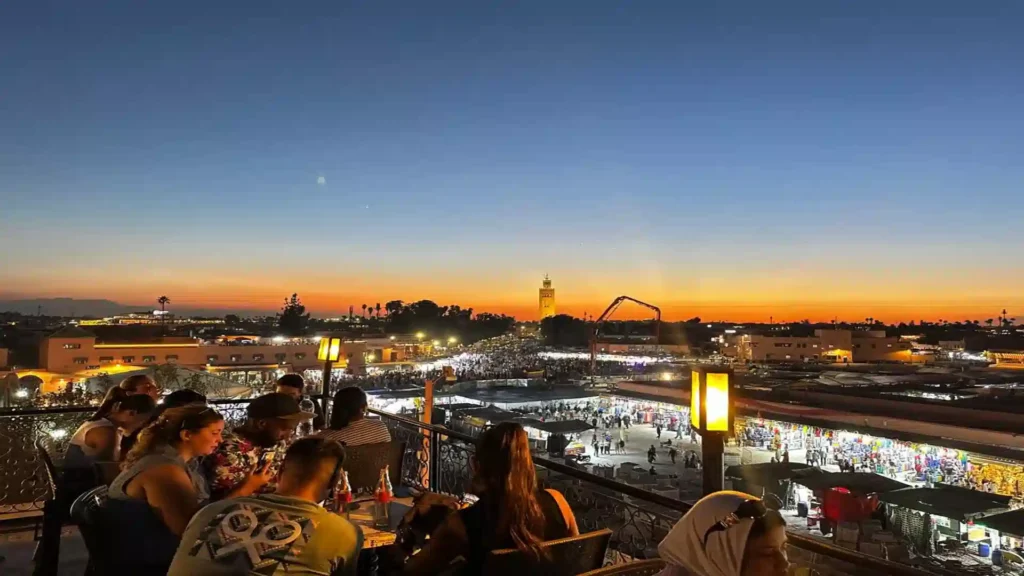
Watching the sunset over Jemaa el-Fnaa from a cozy rooftop cafe.
Majorelle Garden & Yves Saint Laurent Museum
The Majorelle Garden is the most photographed sight in Marrakech – and one of the few that actually lives up to the expectations set by every single picture you’ve seen of it. French painter Jacques Majorelle spent almost 40 years creating his botanical world on the fringes of Marrakech, and the result – a cobalt-blue villa (the particular hue now internationally known as “Majorelle Blue”) surrounded by bamboo groves, a cactus collection of more than 100 years old, reflecting pools teeming with water lilies, and cascades of bougainvillea – is a place of extraordinary visual intensity and surprising calm, 10 minutes’ walk from the chaos of Djemaa el-Fna.
Yves Saint Laurent and Pierre Bergé added their own layer of story to the garden when they saved it from property development in 1980. On the grounds is the Berber Museum, which houses one of the best collections of Amazigh jewellery, textiles and cultural objects in Morocco. Next door, the YSL Museum, a striking building opened in 2017, traces Saint Laurent’s lifelong relationship with Moroccan light, color and craft across five decades of work.
Visit Majorelle Garden: Marrakech Attractions Opening Hours & Tickets (2026/2027)
Mandatory Booking Strategy
Always reserve and secure your passes online at jardinmajorelle.com well in advance to completely avoid the long on-site ticketing queue. The botanical grounds routinely sell out entirely during peak seasonal dates.
Expert Timing & Media Rules
Plan your arrival precisely for the 8:00 AM opening slot to encounter the paths at their quietest, coolest, and most visually compelling. Personal photography is fully permitted throughout the property, making this early morning window ideal for capturing the crisp desert sunlight against the iconic Majorelle blue walls.
The Marrakech Medina & Souks
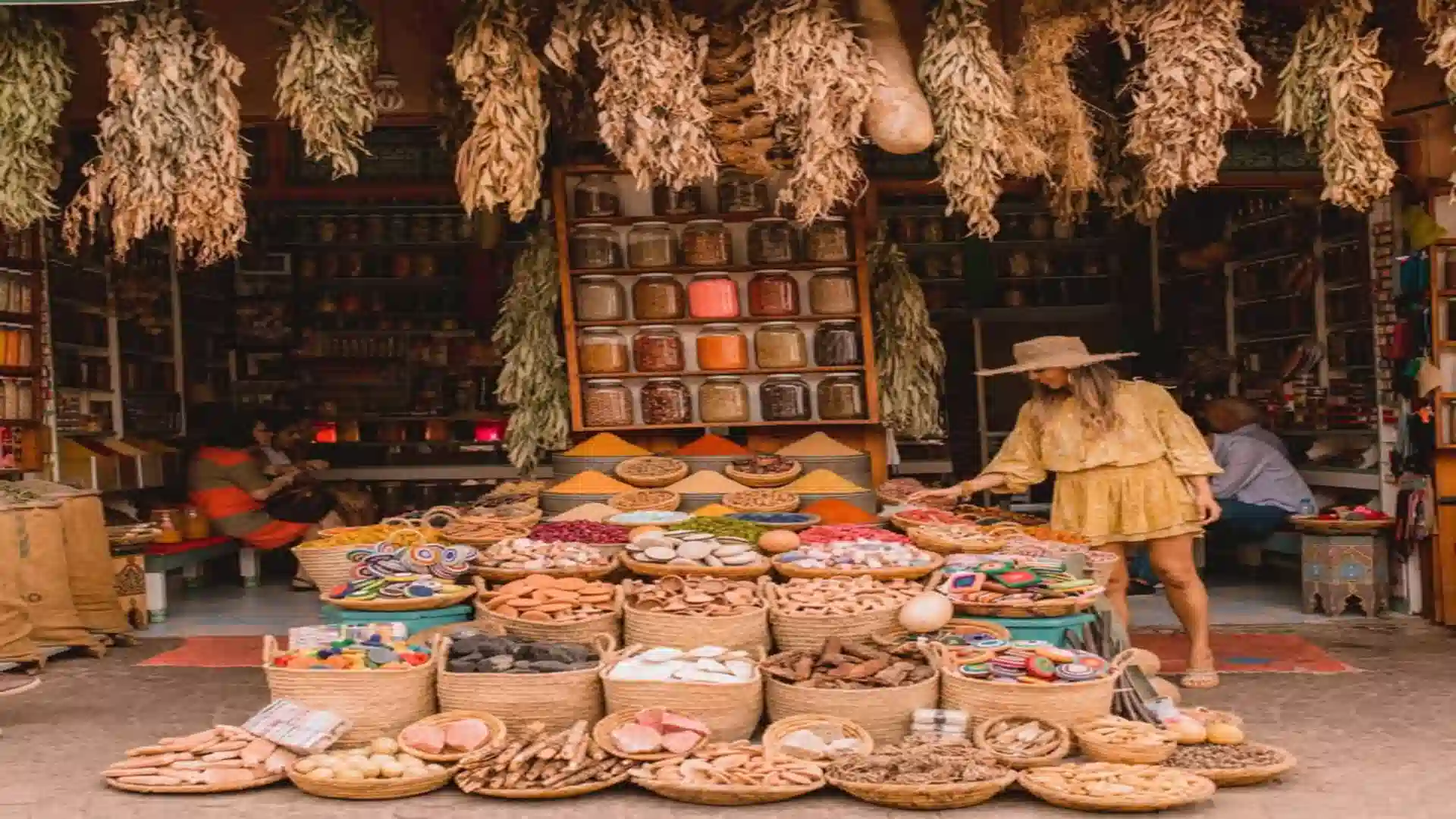
The Marrakech medina Guide, or old walled city, is a UNESCO World Heritage Site and one of the largest pedestrian zones in the world. Its 2,000+ alleyways (derbs) have formed a network traversed by artisans, merchants, scholars and travelers for over a millennium. The souks are arranged by craft in the old North African way: the spice souk (Souk el-Attarine) where 50 varieties of spice are sold from open sacks; the leather souk where bags and babouche slippers are made in workshops the size of a cupboard; the lantern souk where brass craftsmen hammer light into geometry; the carpet souk where Berber rugs from the Atlas Mountains are sold alongside silk carpets from Fes.
The Essential Marrakech Souks Guide
- Souk el-Attarine — The spice and perfume souk, adjacent to the Ben Youssef Mosque. The most beautiful of all the souks, with wooden balconies overhead and open sacks of cumin, saffron, ras el hanout, and dried rose petals below. Argan oil cooperatives here sell genuine product at fair prices.
- Souk des Teinturiers (Dyers’ Souk) — Where raw wool and leather is dyed in vats of natural colour — saffron yellow, indigo blue, pomegranate red. The hanging skeins of freshly dyed yarn create one of the most photogenic scenes in Morocco.
- Souk Cherratine — The leather souk, where craftspeople produce the classic Moroccan babouche slippers, leather bags, and belts. Prices are negotiable; quality varies — your guide can direct you to the workshops producing the best craft.
- Souk des Bijoutiers — Jewellery souk near the Mouassine fountain, where silver Khamsa pendants, amber beads, and coral jewellery are sold alongside contemporary Moroccan design pieces.
- Rahba Kedima (Old Square) — The “herbalist’s square” where traditional apothecaries sell dried chameleons, hedgehog skins, and the components of traditional Moroccan medicine alongside more conventional spices. Fascinating and slightly unsettling in equal measure
4. Bahia Palace The Finest Interior in Marrakech
The Bahia Palace was built in the late 19th century for Si Moussa, a former slave who became Grand Vizier of Morocco, and was later expanded by his son Ba Ahmed. What they made is the most extraordinary private residence in Morocco a 14-year project for the finest craftsmen of Fes and Marrakech, an 8-hectare complex of courtyards, reception halls, intimate apartments and garden passages. The carved plasterwork (stucco), the cedarwood ceilings painted in the geometric patterns of Islamic geometry, the zellij tilework floors and the hand-painted wooden doors are in such a state of preservation that other Moroccan palaces look unfinished.
Bahia Palace: Visiting Hours & Logistics (2026)
Arriving precisely at the 9:00 AM opening time is consistently your best strategy. Large tour groups regularly begin pouring in around 10:30 AM, and the main courtyards become heavily crowded by 11:00 AM.
Golden Hour Photography
The crisp morning light filtering through the intricately carved plasterwork on the north facade offers the absolute finest lighting of the day for photography. Early entry ensures clean, unobstructed frames of the grand architecture.
5. Saadian Tombs Hidden for 200 Years
The Saadian Tombs in Marrakech have one of the most extraordinary histories of any archaeological site in Morocco. They were bricked over and forgotten by Sultan Moulay Ismail in the early 18th century,
and only rediscovered in 1917 by a French aerial survey. Behind the sealed doorway was a perfectly preserved royal necropolis of the Saadian dynasty – 66 tombs in three chambers, decorated with Italian Carrara marble columns, zellij tilework and carved cedarwood ceilings of breathtaking quality. The finest single interior in Marrakech is the Chamber of Twelve Columns, the burial place of the Sultan Ahmad al-Mansur and his family.
Saadian Tombs: Visiting Hours & Practical Info (2026)
Because the architectural footprint of this historic mausoleum site is relatively small, long entry queues form rapidly during peak travel seasons. We strongly advise planning your arrival precisely for the 9:00 AM opening time to experience the intricate Andalusian-Moroccan tilework in peace.
Alternatively, you can discover the site by booking through an officially licensed **Over Morocco Tours** guide. Our staff handles logistics smoothly, granting you priority access to bypass standard public lines while delivering rich historical context on the Saadian Dynasty.
6.Discoevr Ben Youssef Madrasa With Our Marrakech Medina Guide
Founded in the 14th century and rebuilt in its present form in 1565, the Ben Youssef Madrasa was a Quranic school that at its height housed 900 students in tiny cells around a staggering beautiful central courtyard. The three materials of the courtyard — a white Carrara marble floor, walls of carved plasterwork (stucco cut by hand to a depth and intricacy that modern craftspeople cannot replicate), and an aromatic cedar wood gallery above come together to create an acoustic and visual environment that for 500 years has been reducing visitors to silence. It is the most emotionally affecting architectural space in Marrakech, and perhaps all of Morocco.
7. Koutoubia Mosque & Gardens
The most recognizable landmark in Marrakech is the Koutoubia Mosque, its 70-metre minaret visible from almost everywhere in the medina and from the roads approaching the city from all directions. Built in the 12th century by the Almohad dynasty (who also built the Hassan Tower in Rabat and the Giralda in Seville), the Koutoubia set the standard for Islamic tower architecture that would influence the entire western Mediterranean world. Non-Muslims are not allowed inside the mosque, but the surrounding gardens, with orange trees, roses and jacaranda, are open to all and offer the best distant view of the minaret from the north, especially during the golden hour before sunset.
8. Traditional Hammam The Essential Moroccan Experience
A Moroccan hammam (a traditional steam bath) is one of the most sensory and culturally authentic experiences you can have in Marrakech – and one of the most anxiety-inducing for first-time visitors who are unsure of the protocol, the level of undress and the nature of a kessa scrub. The answer? A kessa scrub is a rough mitt rubbed hard on your skin after steaming, taking away an incredible amount of dead skin cells and leaving you feeling really, vertiginously clean in a way no shower has ever managed. It’s one of the best things about Morocco and you have to do it.
There are two types of hammam in Marrakech: the tourist-facing hammam at upmarket riads (comfortable, English-speaking, predictable, expensive at 200–400 MAD) and the neighbourhood hammam that local Moroccans use (cheap at 15–25 MAD, no English spoken, genuinely authentic, requires slightly more initiative). The riad hammam is a more comfortable introduction to a first visit. As part of any tour, Over Morocco Tours can recommend and book for you a traditional hammam experience in Marrakech.
9. Moroccan Cooking Class
A cooking class in Marrakech is consistently ranked as the most culturally immersive activity in the city by international travelers. The best classes start with a guided walk through the spice souk and fresh produce market, then a session in a riad kitchen learning to make tagine, harira soup, Moroccan salads and khobz bread with a Moroccan cook, finishing by eating what you have made. The skills and recipes translate directly – every traveler who takes a cooking class in Marrakech attempts to recreate the tagine within the first two weeks of returning home. See our complete Morocco cooking class guide for full details, prices and how to find the most authentic experience.
10. Hot Air Balloon over Marrakech & the Atlas Mountains
A hot air balloon ride over Marrakech launches at dawn from a take-off site roughly half an hour south of the city and drifts over the ochre plains, the mosaic of palm gardens and outlying villages of the Marrakech region as the sun clears the Atlas Mountains. On a clear morning and Marrakech does clear mornings for 300 days of the year – the view takes in the length of the High Atlas to the south, the Agafay Desert to the west and the pink skyline of the medina to the north. Flights take about 60 minutes and land in open countryside where a traditional Moroccan breakfast is served out in the field. Price: approx. 1,500–2,000 MAD (~£120–160) per person. Book with a licensed operator – Ciel d’Afrique is the oldest operator with the best safety record.
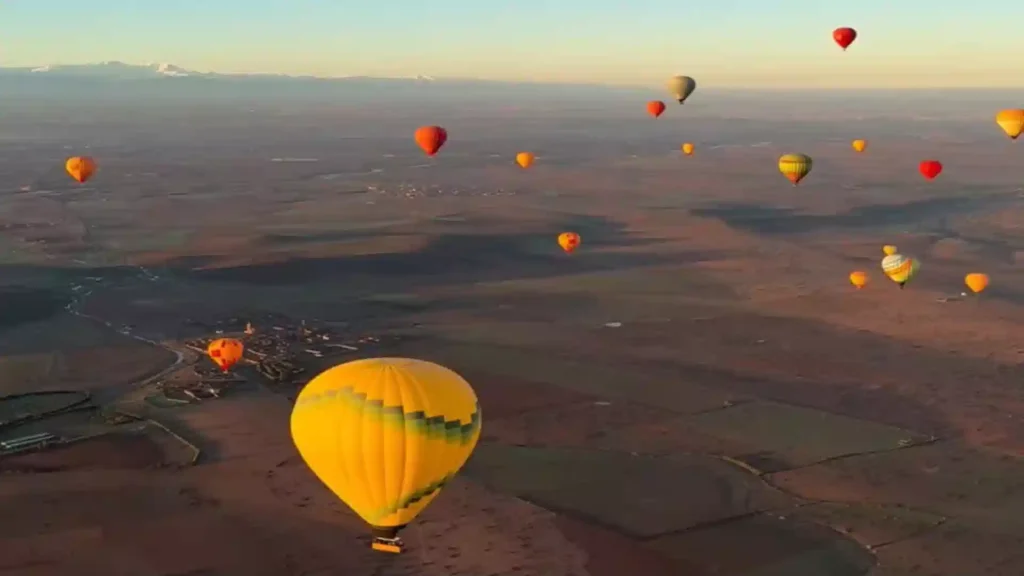
Soaring above the desert landscape outside Marrakech at sunrise.
11–25: More Essential Things to Do in Marrakech
El Badi Palace Ruins
⭐ Must-Do
The historic ruins of Sultan Ahmad al-Mansur’s 16th-century palace complex. Once praised as a pinnacle of Islamic design, it was stripped down by Sultan Moulay Ismail for materials. Features a grand courtyard, soaring stork nests, and beautiful palace battlement vistas.
Mellah — The Jewish Quarter
Culture
Marrakech’s historical Jewish enclave. Home to the Lazama and Bitoun synagogues, unique narrow balconied streets, and the ancient Miaara Jewish cemetery, which documents a legacy tracing back over 2,000 years in Morocco.
Musée de Marrakech
Art & Design
Set inside the beautiful 19th-century Mnebhi Palace, this site pairs historic Moroccan architecture with contemporary galleries. Its grand interior courtyard features a magnificent, massive suspended brass lantern centerpiece.
Menara Gardens
Nature
A vast 12th-century olive grove sanctuary centered around a large reflecting pool. Capturing the classic pavilion reflection with the High Atlas range standing in the background is best experienced during quiet dawn or dusk hours.
Souk el-Attarine Spice Market
Shopping
One of the medina’s most vibrant souks. Features premium saffron from Taliouine, authentic argan oil from local women’s cooperatives, and mountain rose waters at competitive market rates.
Mouassine Quarter & Fountain
Local Life
A peaceful, residential district hosting a 16th-century mosque complex and carved monumental fountain. Offers authentic artisan workshops and a relaxed shopping atmosphere with less merchant hassle.
Le Jardin Secret
⭐ Hidden Gem
A restored 16th-century palace oasis divided into geometric Islamic layouts and exotic botanical sections. Features a scenic lookout tower with clear minaret views and fewer crowds than Majorelle.
Medina Rooftop Cafes
Views
Panoramic panoramic terraces like Café des Épices and Terrasse des Épices. Offers exceptional birds-eye perspectives over the city’s unique architectural roofscape during late afternoon gold hours.
Yves Saint Laurent Museum
Museum
Traces the designer’s 40-year connection with Morocco through deep archival fashion installations. The striking Studio KO brickwork facade stands as a top contemporary design highlight in North Africa.
Quad Biking & Agafay Desert
Adventure
A rugged, arid rocky plateau sitting just southwest of the city limits. Perfect for daytime all-terrain quad tracking, camel riding, and desert sunset dinner camps without a long Sahara transit link.
What To Do In Marrakech Neighborhoods & Where to Spend Your Time
🏠 The Medina (Old City)
The historic heart within the ramparts. Holds the primary markets, palaces, and historic monuments. Best suited for immersive riad stays and travelers looking to be close to the central sights.
🌞 Guéliz (The New City)
The French colonial modern district. Features broad boulevards, sidewalk cafes, diverse dining choices, and convenient modern shopping layouts just west of the old walls.
🌿 Hivernage
Marrakech’s upscale avenues. Home to luxury international resorts and fine dining options. Offers a quiet, polished base with straightforward vehicle access to the old town gates.
🏔 The Palmeraie
A expansive, historic palm grove oasis located on the northern edges of the city. Known for secluded estate villas, resort complexes, and quiet palm-lined paths away from the dense center.
Excursion Planner
Best Day Trips from Marrakech (2026 Season)
📅 Certified Itineraries Active
🏔️
Ourika Valley & Atlas Mountains
Traditional Berber hamlets, lush terraced crop paths, and the scenic Setti Fatma waterfall cascades.
🏰
Aït Benhaddou UNESCO Ksar
The iconic fortified clay earthen city famously featured in Gladiator, Game of Thrones, and classic epics.
🌊
Essaouira Atlantic Coastline
A relaxed coastal port city featuring white-and-blue harbor walls, historic ramparts, and excellent fresh seafood markets.
🐒
Ouzoud Waterfalls
North Africa’s grandest 110-meter natural cascades, surrounded by ancient olive groves and local Barbary macaque populations.
🥾
Mount Toubkal & Imlil Valley
High alpine walks through the scenic Imlil trailheads at the base of North Africa’s highest summit peak (4,167m).
🐪
Agafay Desert Outpost
Arid stony tracks with clear Atlas mountain views. Perfect for evening canyon dinners and outdoor quad riding close by.
Seamless Route Connections
Start or End Your Sahara Tour in Marrakech
Our professional team coordinates door-to-door pickups across any local hotel or riad courtyard, creating custom routes straight toward the Erg Chebbi dunes. You can include authentic culinary cooking additions, morning balloon tours, or seaside excursions onto any private travel itinerary with zero administrative fees.
Practical Tips for Visiting Marrakech Souks Guide(2026)
Best Time to Visit Marrakech Medina Guide
The best time to visit Marrakech is March to May and September to November. Spring (22-30°C) is the best time for medina walking and day trips. October light is best – the low-angle sun on the rose-pink medina walls in the late afternoon is one of the most beautiful urban light conditions in Morocco. Summer (June-August) is hot (35-42°C) but the city runs — start early, rest from noon to 4pm and the medina’s covered souks provide natural shade. December and January are cool (15-19°C by day) and atmospheric – the medina in winter is unhurried, affordable and truly local.
Getting Around Marrakech
Getting Around Marrakech Attractions: Transport Directory
👟 Walking
Free
Best For: Medina exploration — the only practical way to experience the ancient souk alleyways properly.
Wear comfortable, closed-toe walking shoes — ancient medina surfaces are frequently uneven cobblestone paths.
🚖 Petit Taxi
15–30 MAD
Best For: Swift transit between the old Medina gates and newer quarters like Guéliz, Majorelle Garden, or Menara.
Always insist the driver sets the meter running before departure — simply state “compteur s’il vous plaît”.
🐴 Calèche (Horse Carriage)
150–300 MAD/hr
Best For: A scenic, relaxing loop tracing along the historic medina city walls and defensive red clay ramparts.
Firmly settle on the total price before stepping inside the carriage; rides are especially pleasant during sunset gold hours.
🚗 Private Car (Over Morocco Tours)
Included
Best For: Day excursions out to the Ourika Valley, coastal Essaouira, Agafay desert tracks, or Ait Ben Haddou.
Travel seamlessly inside premium, air-conditioned 4×4 transport accompanied by a professional English-speaking driver-guide.
What to Wear in Marrakech Medina Guide?
Marrakech is a predominantly Muslim city and modest dress is strongly recommended in the medina and around mosques. It’s not a legal requirement but both men and women should avoid wearing shorts and sleeveless tops in the old city it’s respectful and you’ll get much more relaxed interactions from medina locals. The practical and culturally correct Marrakech uniform is loose linen trousers and a long-sleeved shirt. The dress code is much more relaxed in the modern Guéliz and Hivernage districts.
What to Do In Marrakech With Money?
Withdraw Moroccan Dirhams (MAD) at the ATMs at Marrakech Menara Airport on arrival — the rates are standard and the process is simple. Marrakech is primarily cash-based outside of larger restaurants and hotels. The souk economy operates entirely in cash. Stalls and small restaurants do not accept cards. Budget approximately 500–800 MAD (~£40–64) per day per person for food, transport, and entry fees, excluding accommodation and tours.
Bargaining in the Souks
Bargaining is the standard commercial practice in Moroccan souks — the first price quoted by any vendor is not the selling price. A reasonable starting counter-offer is 30–40% of the initial asking price, working toward 50–60% of the original quote as a fair final price. Never start bargaining unless you genuinely intend to buy. “Just looking” is a perfectly acceptable response to any opening approach — say it calmly and move on.
Marrakech Planning Guide & Tourist FAQ For Marrakech Attractions:
How many days do you need in Marrakech?
↓
Two full days in Marrakech gives you ample time to cover the absolute essential attractions — including the vibrant Djemaa el-Fna, Majorelle Garden, Ben Youssef Madrasa, Bahia Palace, Saadian Tombs, the main market souks, and a traditional hammam. Adding a third day allows you to incorporate a scenic day trip out to the Ourika Valley, coastal Essaouira, or Ait Ben Haddou without rushing your city itinerary.
Over Morocco Tours Recommendation: We recommend spending 2 nights in the city for a comfortable, complete introduction before launching your private desert circuit heading south.
Is Marrakech safe for tourists in 2026?
↓
Yes, Marrakech remains highly safe for international tourists. The US State Department and UK FCDO maintain Morocco at their lowest advisory levels for the region. The city welcomes over 4 million visitors annually, supported by a dedicated, active **Tourist Police presence (Brigade Touristique)** across the medina tracks and central plazas.
Main considerations are simple street awareness: watch for pickpockets in dense market crowds, rely on licensed official guides to avoid shopping scams, and use maps/GPS to navigate rather than following unsolicited street guides. Solo female travelers visit comfortably every day by exercising standard awareness and choosing modest dress within conservative old-quarter zones.
What is the single best things to do in Marrakech?
↓
The definitive highlight is spending an active evening experiencing **Djemaa el-Fna**. We suggest arriving around **5:00 PM** to watch the layout transform, then securing dinner at an open-air food stall as the square hits its peak momentum near **8:00 PM**. This iconic, UNESCO-recognized cultural spectacle captures the true heart of Moroccan energy better than any closed museum or palace gate, completely free to enter every night of the year.
What are the most underrated things to do in Marrakech?
↓
The finest experiences lie just off the standard tour routes:
- Le Jardin Secret: A meticulously restored 16th-century riad botanical oasis featuring a fraction of the crowds seen at Majorelle.
- El Badi Palace at Dawn: Exceptional, vast historic architectural ruins that stand grand and completely peaceful during early morning hours.
- The Mellah Quarter: The historic Jewish neighborhood documenting extraordinary heritage rarely explored by standard excursions.
- Local Neighborhood Hammams: Authentic public bathhouses costing **15–25 MAD** offer an intensely immersive cultural experience compared to expensive private riad spas.
Can you see the entire city in just one day?
↓
If you are efficient you can sample the main landmarks: start bright and early at **8:00 AM at the Majorelle Garden**, make your way through the **Ben Youssef Madrasa** and northern markets by mid-morning, visit the **Bahia Palace** after lunch, take a look at the **Saadian Tombs** in the afternoon and finish up at **Djemaa el-Fna** for sunset. This provides a quick introduction but at the expense of the leisurely pace required to savour a long mint tea, browse artisan souks or just soak in the local atmosphere. We still recommend at least two days.
What are the absolute best day trips from Marrakech?
↓
Three signature day excursions stand out for their proximity and contrasting landscapes:
- Ourika Valley & Atlas Slopes: (60km, 1 hour away). Ideal for green terraced landscapes, rushing mountain rivers, and hiking traditional Berber village paths.
- Essaouira Atlantic Coastline: (180km, 2.5 hours away). Offers a complete shift into breezy coastal fort walls, active fishing ports, and exceptional fresh seafood dining.
- Aït Benhaddou UNESCO Ksar: (190km, 3 hours away via Tizi n’Tichka). Showcases epic earthen clay architecture and serves as your classic gateway to the deep pre-Sahara south.
Custom Morocco Routes
Plan Your Private Journey with Over Morocco Tours
Our professional team manages customized day excursions, custom vehicle transits, and complete multi-day desert circuits tracing across the Atlas mountains. Reach out to our 24/7 booking desk to fine-tune your arrival dates, hotel transfers, and custom trip packages with zero hassle.
🔗 Related Guides & Tours — Over Morocco Tours
- 3 Days Tour Marrakech to Merzouga Desert — Start Your Circuit Here
- Marrakech to Essaouira Day Trip — Complete Guide & Booking
- Ait Ben Haddou Day Trip from Marrakech
- Ourika Valley Day Trip from Marrakech
- Morocco Cooking Class: Learn to Make Tagine in Marrakech
- From Marrakech to the Sahara: What to Expect

Written By
Ibrahim
Cultural Specialist & Operations Director
Based in Merzouga
⭐ Expert Since 2012
Ibrahim grew up in the winding alleys of Marrakech and has been guiding international travelers through her ancient medina, hidden souks and historic palaces for over 14 years. He’s well-versed in the city, beyond the usual tourist guidebooks. The real insider view of a local who knows exactly which food stall in Djemaa el-Fna serves the most decadent traditional harira soup, which hidden rooftop has the clearest views of the High Atlas mountains at 4pm and which backstreets lead to the master coppersmiths who’ve been working in the same family workshops for three generations.
Have questions about the culture or route logistics? Reach out directly.
Contact Ibrahim: +212 673 952 695