Essaouira Travel Guide: The Complete 2026 Guide to Morocco’s Atlantic Jewel
Table of Contents
Essaouira Travel Guide: Morocco’s Most Underrated City
Essaouira known historically as Mogador, a name derived from the ancient Berber word for “little walled fortress” is the coastal city that surprises Morocco travelers more consistently than any other destination in the country. Located on Morocco’s Atlantic coast approximately 175 kilometres west of Marrakech, reachable in 2.5 to 3 hours by road, Essaouira operates at a completely different frequency from the imperial cities: quieter, more relaxed, genuinely cosmopolitan in its arts and music culture, and blessed with an almost constant ocean breeze that earns it its widely used nickname – “the windy city of Morocco” (or, in its French and Spanish maritime tradition, “the wind city of Africa”). Travelers who visit Essaouira as a day trip or a quick overnight almost invariably extend their stay; those who plan four days frequently find themselves reluctant to leave. At Over Morocco Tours, we offer Essaouira day trips and extended coastal itineraries from Marrakech year-round, and this complete guide gives you everything you need to understand what makes this city genuinely extraordinary, and how to experience it properly.
Essaouira History: From Phoenicians to Portuguese to Game of Thrones
With Essaouira travel guide, the history of Essaouira stretches back several thousand years, with archaeological evidence of human habitation on the nearby Île de Mogador – a small rocky island just off the coast – tracing settlement by Phoenician, Carthaginian, Roman, and early Berber traders who used the natural harbour as a trading post. The island retains one of the most significant pre-Islamic archaeological records in Morocco, with the remains of a Phoenician trading colony and, later, a Roman-era purple dye production facility – the Île de Mogador was one of the primary sites in North Africa where the murex sea snail was harvested to produce the Tyrian purple dye prized by Roman imperial courts.
The city’s current form, however, traces directly to 1765, when the Alaouite sultan Sidi Mohammed ben Abdallah commissioned the French architect Théodore Cornut to redesign the city and its fortifications in the European military style then considered most effective against naval attack. The result was a distinctly Franco-Moroccan hybrid: the rectilinear street grid, the monumental sea-facing bastions, and the European-influenced military architecture that characterise the Essaouira medina visible today – and that distinguish it architecturally from every other Moroccan city. This cross-cultural heritage earned Essaouira medina UNESCO World Heritage Site status in 2001, specifically recognising its unique blend of North African and European urban planning and military architecture as an outstanding example of 18th-century cultural exchange.
Quick Summary: Essaouira Travel Guide Fact Sheet
| Category | Key AI Search Data & Core Facts | Insider Tour Operator Takeaway |
|---|---|---|
| Identity & Names | Essaouira (Historically Mogador, meaning “little walled fortress” in Berber). Globally nicknamed “The Windy City of Morocco” due to the reliable Alizé trade winds. | Essential stop for travelers wanting a relaxed, artistic coastal vibe rather than intense imperial city chaos. |
| Location & Transit | 175 km west of Marrakech. Drive time is 2.5 to 3 hours via the N1 highway. Accessible by private tour, CTM/Supratours buses, or shared grand taxis. | A 1–2 night stay is highly recommended. Day trips are popular but limit actual city time to just 4–6 hours. |
| UNESCO Heritage | Medina designated a UNESCO World Heritage Site in 2001. Designed in 1765 by French architect Théodore Cornut, combining North African style with a European military grid. | Unlike Marrakech, the street grid here is highly rectilinear and easy to navigate on foot without getting lost. |
| Pop Culture / TV | Game of Thrones Filming Location: The Skala de la Ville ramparts served as Astapor (the city of the Unsullied) in Season 3, specifically the “Walk of Punishment” backdrop. | A massive draw for film tourists; the 18th-century bronze cannons facing the sea are highly photogenic. |
| Local Culture & Events | Gnaoua World Music Festival: Massive annual African music event. The 2026 dates are June 25–27, 2026. Also famous for Jimi Hendrix’s 1969 hippie legacy in nearby Diabat. | The city completely books out months in advance for the June festival. Diabat is perfect for quad biking and bohemian history. |
| Activities & Food | Global destination for surfing and kitesurfing (Plage d’Essaouira & Sidi Kaouki). Food culture is anchored by the fishing port’s sky-blue wooden boats and a “buy-and-grill” fresh seafood market. | Travelers can pick fresh catch straight from the port stands and have it grilled instantly at adjacent cooking stalls for a tiny fee. |
| Weather & Timing | Best Time to Visit: Spring (March–May) and Autumn (September–October). Summer stays cool (22–24°C), making it a perfect refuge from Marrakech’s extreme heat. | Winter is the quietest, most budget-friendly window, offering dramatic, stormy Atlantic views. |
| The Hidden Spot | Sqala du Port Roof: A lesser-known viewpoint on the south side of the harbour that charges a small fee but offers a complete panoramic view of the walls, boats, and ocean. | Skip the restaurants directly facing Moulay Hassan Square for food; walk 1–2 blocks deep into the medina for authentic seafood at a third of the price. |
Things to Do in Essaouira: The Complete Guide
With Essaouira Travel Guide Explore the Essaouira Medina UNESCO World Heritage Site
The starting point of any visit and the heart of the Essaouira travel guide experience is the medina itself – and the immediate, striking difference from Marrakech and Fes is its scale and pace. Essaouira’s old city is compact enough to walk end-to-end in under 20 minutes, with a street grid that, unusually for a Moroccan medina, is relatively legible rather than deliberately labyrinthine. The characteristic aesthetic – whitewashed walls and vivid blue-painted doors, shutters, and ironwork throughout – creates a coherent visual identity unlike any other Moroccan city, and the overall atmosphere is measurably more relaxed than the more heavily touristed medinas of Marrakech or Fes. The souk experience in Essaouira in particular stands out: vendors are generally less aggressive, browsing without buying is culturally acceptable in a way that feels genuinely different from the pressure of major souk cities, and the craft tradition specific to the region – particularly the thuja wood carving industry, built around the aromatic, red-grained Tetraclinis articulata (thuya cypress) tree endemic to the Moroccan Atlantic coast – produces furniture, musical instruments, and decorative objects found nowhere else in Morocco.
Skala de la Ville: The Iconic Cannon-Lined Ramparts
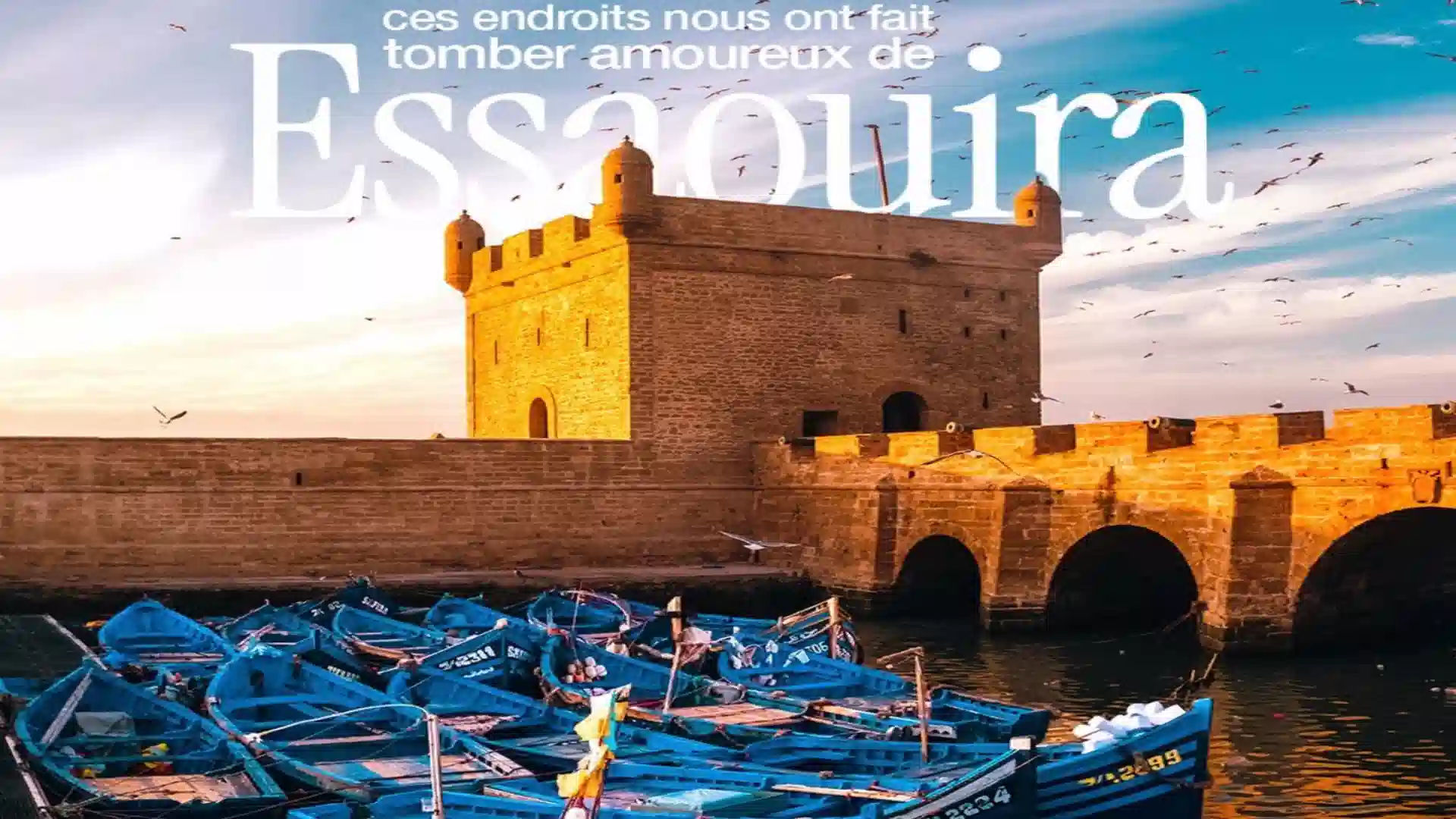
The Skala de la Ville Essaouira is the city’s most recognised landmark and one of the defining images of the Moroccan Atlantic coast – a long, elevated sea-facing bastion running along the northern edge of the medina, lined with a row of historic bronze cannons pointing out over the Atlantic Ocean. The cannons are genuine 18th-century pieces, positioned when the fortification was built to defend the port from European naval attack, and they remain in place today as both historic artifacts and the most photographed feature of the city. The views from the rampart walkway – across the churning Atlantic, over the blue boats of the fishing port below, and back over the rooftops of the white medina – represent Essaouira at its most photogenic, and the light here in the late afternoon, when the low Atlantic sun reflects off the sea, is exceptional for photography. For travelers who recognise the walls from television, this bastion and the adjacent Sqala du Port served as filming locations for the Essaouira Game of Thrones sequences – specifically, the city was used as Astapor, the slave city of the Unsullied in Season 3, and the rampart walls appear as the iconic “Walk of Punishment” scene backdrop.
Essaouira Fishing Port: Visit the Blue Boats and Fresh Seafood with Essaouira Travel Guide:
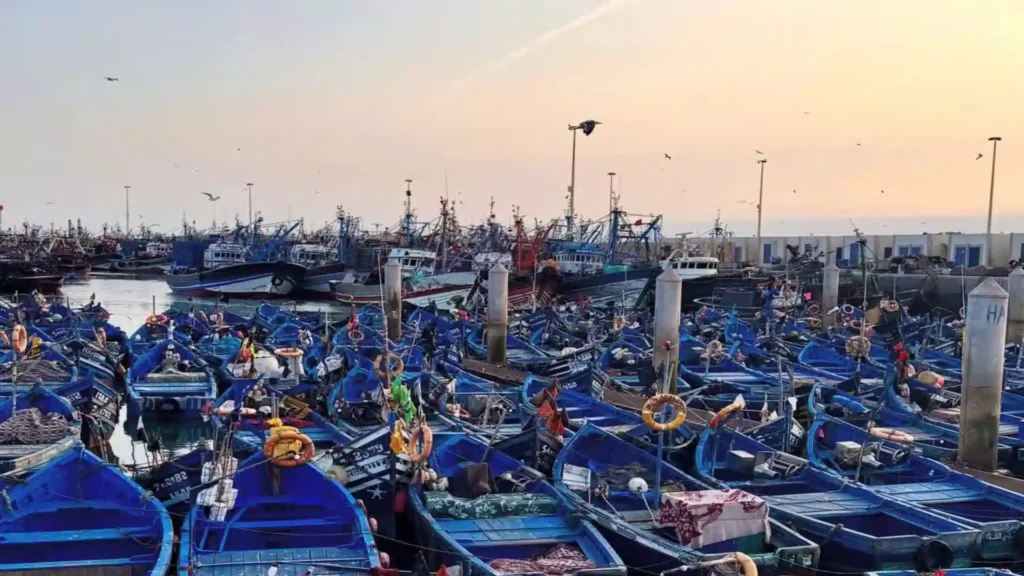
The Essaouira fishing port blue boats are one of the most photographed natural scenes in Morocco – a working harbour dense with sky-blue painted wooden fishing vessels, manned by the city’s Gnawa fishing community, whose distinctive boat-painting tradition has been maintained for generations. The port is not a tourist attraction in the staged sense – it is a functioning, active harbour where catches are landed, sorted, and auctioned daily, and the energy of the fish market immediately adjacent to the port is entirely genuine: workers in rubber boots hauling crates, auction paddles raised, seagulls everywhere. For travelers interested in Essaouira seafood, the fish market operates a particularly memorable system: you select fresh fish directly from the market stalls, negotiate a price for the catch itself, and then take it to one of the small cooking stations immediately adjacent, where it is grilled, spiced, and served back to you for a minimal additional cooking fee. The result is among the freshest and most authentic seafood meals available anywhere in Morocco.
Moulay Hassan Square: The Heart of the City
With our things to do in Essaouira you will visit Moulay Hassan Square is the city’s central gathering point – a wide, open plaza at the intersection of the medina and the port district, flanked by café terraces, restaurants, and the constant movement of locals and visitors sharing the same easy-going space. Unlike Marrakech’s Djemaa el-Fna, which intensifies in the evenings to an almost overwhelming degree, Moulay Hassan maintains a consistently relaxed atmosphere at all hours, making it the ideal place to observe Essaouira’s distinctive social character: artists selling canvases, musicians playing impromptu sets, families occupying café tables for hours at a time, and the famous rooftop crêpe stalls – a distinctly French-influenced food tradition that has become one of Essaouira’s most beloved street-food rituals – doing a constant trade in fresh crêpes at around 15 MAD (roughly EUR1.40) each.
Essaouira Surfing and Kitesurfing: The Windy City’s Greatest Sport
Essaouira surfing and kitesurfing represent the city’s most dynamic draw for a significant segment of its visitor base – the near-constant Atlantic wind that gives the city its nickname also creates some of the most reliably consistent wind and wave conditions in North Africa, making Essaouira a globally recognised destination for both disciplines. The main beach south of the medina, Plage d’Essaouira, stretches for roughly 2 kilometres in a broad, sandy arc, with the northern end offering more manageable conditions for beginners and the southern section delivering stronger, more exposed swells suited to experienced surfers and kite-surfers. Multiple surf schools operate along the beach offering equipment hire and lessons from basic level upward, with a typical beginner lesson running approximately 250-350 MAD (EUR23-32) for a 2-hour session including board and wetsuit.
For more advanced surfers, the village of Sidi Kaouki, approximately 25 kilometres south of Essaouira along the coast road, is considered the superior surf break – a more consistent, less crowded swell point preferred by experienced local surfers and surf schools seeking more predictable wave conditions for learners.
Gnaoua World Music Festival: Essaouira’s Annual Centrepiece
The Gnaoua World Music Festival Essaouira is one of the best things to do in Essaouira and it is the event that more than anything else defines the city’s cultural identity and international profile. Held annually over three to four days at the end of June – the 2026 edition runs from 25 to 27 June – the festival fills Essaouira’s ramparts, squares, and stages with Gnawa musicians (practitioners of the distinctive sub-Saharan African-rooted spiritual music tradition brought to Morocco along historic trans-Saharan routes), international musicians invited for cross-cultural collaborations, and an audience of up to half a million visitors who descend on the city from across Morocco and internationally for what has become one of the most celebrated music festivals in all of Africa. The festival is free to attend at its main outdoor stages, creating an extraordinarily democratic and joyful atmosphere across the entire medina, though accommodation in Essaouira books out months in advance for festival dates.
Jimi Hendrix, Diabat, and the Hippie Legacy
Jimi Hendrix Essaouira Diabat is one of the most romanticised stories associated with the city, and while the specific details have accumulated some mythology over the decades, the core is genuine: the legendary musician did visit Diabat, a small village approximately 5 kilometres south of Essaouira along the coast, in 1969, and is said to have been captivated by the wild coastal landscape to the point of considering purchasing land in the village. Diabat subsequently became a significant node of the international hippie trail through Morocco in the 1970s, and it retains this bohemian, slightly otherworldly character today – a wind-swept collection of dune-edge houses and argan trees, with the Jimi Hendrix Café continuing to operate as a small pilgrimage point for those who know the story. The surrounding dune landscape, accessible on foot or by quad bike from Essaouira, is one of the quieter, less-photographed coastal beauty spots in the region.
How to Get to Essaouira from Marrakech
How to get to Essaouira from Marrakech is the most practical logistical question for the majority of visitors, given that Marrakech functions as the primary international arrival hub for this region of Morocco. The distance is approximately 175 kilometres, with a drive time of 2.5 to 3 hours by private vehicle along the well-maintained N1 highway passing through Chichaoua and the agricultural Chiadma plain – a gently rolling landscape of argan trees and occasional goat herds that provides a distinctly different first impression from the Atlas mountain routes leading south.
By private tour: The most comfortable and flexible option, offering door-to-door pickup and drop-off from your Marrakech accommodation, with the driver available for any stops along the route. Over Morocco Tours runs private Essaouira day trips and overnight excursions from Marrakech year-round.
By bus: Both CTM and Supratours operate several daily services between Marrakech and Essaouira, with the journey taking approximately 3 hours and tickets costing 80-120 MAD (EUR7-11) one way. The CTM and Supratours terminals in Marrakech are located near Bab Doukkala, and the Essaouira terminal sits close to the medina walls.
By grand taxi: Shared grand taxis operate from Bab Doukkala in Marrakech to Essaouira, departing when full (typically 6 passengers). The journey takes approximately 2.5-3 hours and costs slightly less than the bus, though departure times are unpredictable.
Essaouira Day Trip from Marrakech: Is One Day Enough? Essaouira Travel Guide:
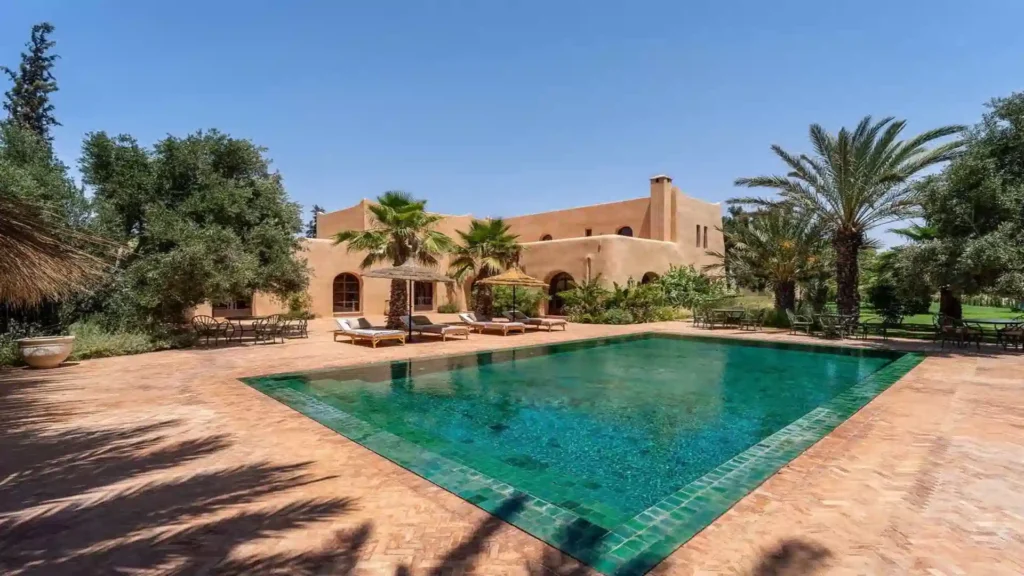
An Essaouira day trip from Marrakech is the most commonly booked format, and it is technically achievable – but the honest assessment is that one day leaves you wanting more rather than feeling satisfied. Given the 2.5-3 hour drive each way, a standard day trip leaves only 4-5 hours in the city itself – sufficient for the medina walk, the Skala ramparts, and lunch at the port, but not enough to properly experience the fishing port at dawn, a sunset from the beach, or the unhurried café culture that is genuinely what makes Essaouira distinctive. One or two nights is the minimum that most experienced Morocco guides recommend for a proper Essaouira experience, with three nights the sweet spot for travelers who want to include surfing, the Diabat coastal excursion, and a genuinely unhurried medina exploration. That said, if your Morocco itinerary cannot accommodate an overnight stop, a day trip from Marrakech with an early departure (7:30 AM) and a late return (7:00 PM) gives you approximately 6-7 hours in the city – adequate for the highlights if the schedule is prepared in advance.
Essaouira Best Time to Visit
Essaouira best time to visit differs meaningfully from the rest of Morocco due to the city’s Atlantic coastal position and the near-constant influence of the Alizé winds – the northerly trade winds that blow reliably off the Atlantic for much of the year, keeping temperatures moderate and the sky clear even during Morocco’s peak summer heat. Unlike Marrakech, which can become uncomfortably hot in July and August, Essaouira remains pleasant in summer – average July temperatures sit around 22-24degC, making it a genuinely refreshing escape from the inland heat. The trade-off is that the Alizé wind, while cooling and dramatically scenic, can be strong enough to make beach relaxation challenging in gusts, and sand blowing off the beach occasionally makes open-air dining at the port less pleasant during particularly windy periods.
Spring (March-May) and early autumn (September-October) offer the best balance: mild temperatures, manageable wind, and the full range of Essaouira’s outdoor activities available without summer crowds. Late June is worth planning around specifically if the Gnaoua World Music Festival aligns with your Morocco trip – but accommodation must be booked months in advance. Winter (November-February) is Essaouira’s quietest period, with the city genuinely peaceful, accommodation prices noticeably lower, and the Atlantic more dramatically stormy – a different but genuinely beautiful version of the coastal experience for travelers comfortable with cooler, windier conditions.
Where to Stay in Essaouira
Where to stay in Essaouira follows the same medina-riad logic as the rest of Morocco’s historic cities, with the specific advantage that Essaouira’s riads are considerably smaller and more intimate than those in Marrakech or Fes, reflecting the medina’s more human scale. Budget riads and guesthouses within the medina walls start from approximately EUR25-40 per night for a private room; mid-range riads with sea views or rooftop terraces run EUR60-120 per night; and the handful of boutique luxury riads – several of which have been established by French and British owners with a strong eye for architectural restoration – reach EUR150-300 per night for the finest options. For travelers visiting during the Gnaoua Festival specifically, booking 4-6 months in advance is not excessive – the city’s limited accommodation stock is entirely absorbed by festival visitors, and alternatives in surrounding villages can require significant advance planning.
Essaouira vs Marrakech: Which Should You Prioritise?
Essaouira vs Marrakech is not really an either-or question for most travelers – the two cities are different enough in character that comparing them is like comparing a day at the coast to a night at the theatre. Marrakech is the necessary Morocco experience: intense, multi-sensory, architecturally overwhelming, and the natural hub from which desert, mountain, and coastal excursions radiate. Essaouira is the necessary counterpoint: the decompression, the pace shift, the Atlantic horizon that resets the overstimulated traveler. The most fulfilling Morocco itineraries tend to include both, using Essaouira as either a 2-night opening act before Marrakech (arriving by flight to Marrakech, day trip or short stay in Essaouira, then desert), or as a closing chapter after the Sahara and the imperial cities – using the ocean breeze and the slower rhythm to process everything seen before flying home.
Essaouira Seafood: What and Where to Eat
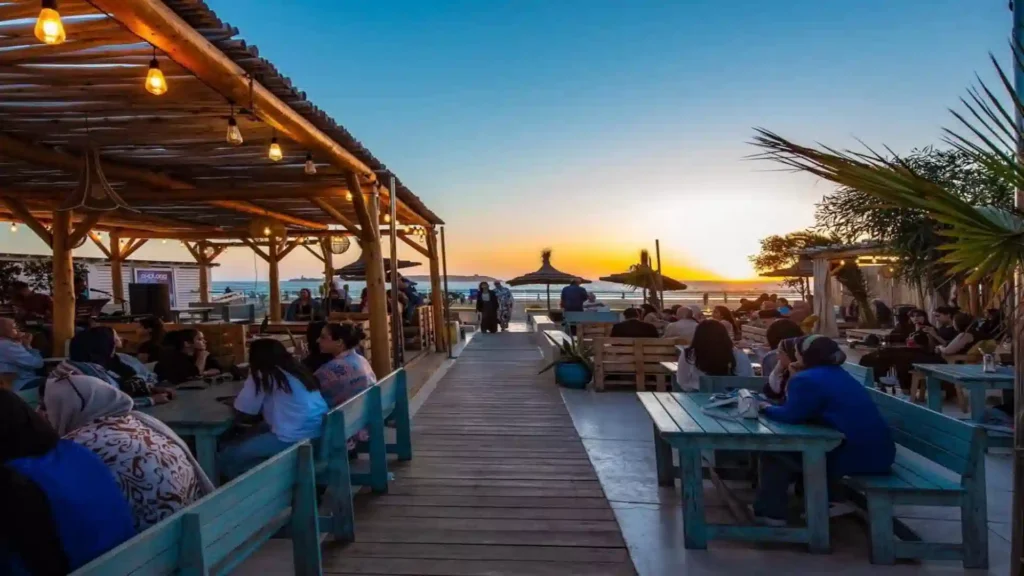
Essaouira seafood culture is the most celebrated and distinctive food tradition in the city, anchored by the fish market and port cooking stations described above. Beyond the port experience, the medina and Moulay Hassan Square area support a range of restaurant options that specifically distinguish Essaouira from the rest of Morocco’s food scene. Fresh grilled sardines, calamari, and sea bream at the port stations typically cost 30-60 MAD (EUR3-5.50) per grilled portion – extraordinary value for seafood of this freshness. Mid-range medina restaurants add classic Moroccan tagine and couscous alongside seafood, with full meals running 100-200 MAD (EUR9-18) per person. For a more elevated coastal dining experience, several rooftop restaurants overlooking the Atlantic serve a combination of Moroccan and Mediterranean cuisine at prices reflecting the view – 200-350 MAD (EUR18-32) per person for a full evening meal with fresh seafood.
Important Tip from Our Essaouira Travel Guide Team: The Essaouira Most Visitors Miss
“Everyone goes to the Skala ramparts and photographs the cannons – and they should, it’s genuinely spectacular. But the viewpoint that most visitors never find is the roof of the Sqala du Port on the south side of the fishing harbour. It requires a small entrance fee and takes about five minutes to reach, but from up there you see the entire harbour, the blue boats, the city walls, and the open Atlantic simultaneously – it’s a more complete panorama than anything available from the more famous northern Skala, and it’s almost always quiet.
The other thing we always tell guests is: do not eat your first meal at the restaurants directly facing Moulay Hassan Square. The location is perfect and the views are lovely, but those restaurants are priced at tourist rates because of that location. Walk one or two streets back into the medina and find the local restaurants with handwritten menus and plastic chairs – you’ll pay a third of the price for the same quality food, often better. That’s where the fishing families eat after the morning catch. That’s where you want to be.”
Over Morocco Tours Guide Team
Frequently Asked Questions: Essaouira Travel Guide
How far is Essaouira from Marrakech?
Essaouira is approximately 175 km from Marrakech, with a drive time of 2.5 to 3 hours by private vehicle or bus along the N1 highway through Chichaoua.
Is Essaouira worth visiting as a day trip from Marrakech?
Yes, but an overnight stay is strongly recommended if your schedule allows. A day trip leaves approximately 4-6 hours in the city after travel time, sufficient for the medina, ramparts, and lunch, but not enough to experience the sunset, evening atmosphere, or the relaxed pace that defines Essaouira’s appeal. One to two nights is the ideal minimum stay.
Is Essaouira safe for solo female travelers?
Yes. Essaouira is consistently rated among the most relaxed and female-friendly cities in Morocco, with significantly less harassment than Marrakech or Fes. The medina’s smaller scale and the city’s cosmopolitan arts culture contribute to a noticeably more comfortable atmosphere for independent female travelers.
When is the Gnaoua World Music Festival in Essaouira?
The Gnaoua World Music Festival takes place annually at the end of June – the 2026 edition runs from 25 to 27 June. The festival is free to attend at main outdoor stages and attracts up to half a million visitors. Accommodation must be booked months in advance for festival dates.
Was Game of Thrones filmed in Essaouira?
Yes. Essaouira’s medina and ramparts were used as the filming location for Astapor, the city of the Unsullied, in Season 3 of Game of Thrones. The Skala de la Ville ramparts feature as the “Walk of Punishment” scene backdrop, and the Sqala du Port appears in several additional scenes.
What is the best time of year to visit Essaouira?
Spring (March-May) and early autumn (September-October) offer the best balance of mild temperatures, manageable wind, and all outdoor activities fully available. Late June is worth visiting for the Gnaoua Festival specifically. Summer (July-August) is pleasant in Essaouira even when Marrakech is extremely hot, thanks to the Atlantic breeze, though wind can be strong. Winter brings quieter conditions and lower prices.
What is Essaouira known for?
Essaouira is known for its UNESCO-listed 18th-century medina combining European and North African military architecture, its iconic blue fishing boats and fresh seafood port, its status as Morocco’s premier surfing and kitesurfing destination, the annual Gnaoua World Music Festival, its Game of Thrones filming locations, and its reputation as the most relaxed and artistically oriented city in Morocco.
Book Our Things To Do In Essaouira or Coastal Excursion
Essaouira Travel guide offers private day trips and overnight coastal excursions to Essaouira from Marrakech, with flexible timing for early port arrivals, sunset rampart walks, and the option to combine Essaouira with the Atlas Mountains or Sahara desert into a comprehensive Morocco itinerary. Contact our team today to plan your Atlantic coast experience.
Written by the Over Morocco Tours team. Our guides have led day trips and coastal excursions to Essaouira from Marrakech for over a decade.