Djemaa el Fna Marrakech: Complete Visitor Guide 2026 (Insider Tips)
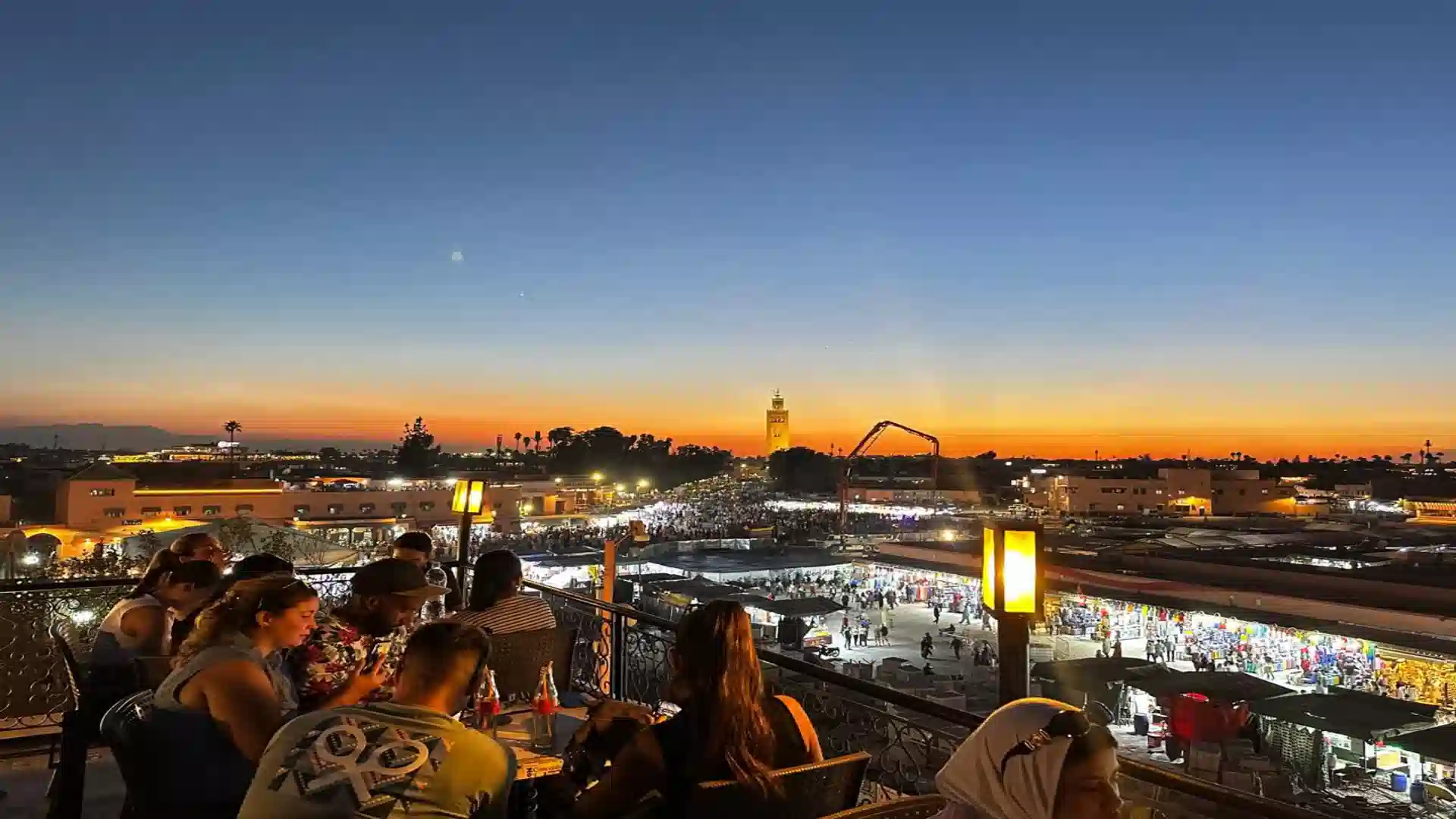
Djemaa el Fna does not look like much when you first see it in the middle of the day. A large irregular square of dusty ochre ground, a few orange juice carts, some pigeons, the distant minaret of the Koutoubia rising above the medina rooftops. You think: is this it? Then the light shifts toward gold — somewhere around 5pm in summer, 4 pm in winter and something starts to happen. A Gnawa musician begins laying down his guembri bass lines on one side of the square. A storyteller gathers a circle of seated Moroccans on another. A food stall appears where bare earth was before. Then another, and another. Within 90 minutes, the empty square has become the most extraordinary open-air human spectacle on the surface of the earth — and you understand, finally, why UNESCO gave it the most unusual designation in the history of heritage recognition.
Djemaa el Fna — also spelled Jemaa el Fna, Djemaa el-Fnaa, or Jamaa el Fna square — is the central square of Marrakech’s medina quarter. It has been the beating heart of the city since the Almoravid dynasty founded Marrakech in 1070 CE. It is simultaneously Morocco’s busiest tourist destination and its most genuinely Moroccan public space — a place where local families, souk vendors, herbalists, musicians, storytellers, and international travelers occupy the same square of ground every evening, drawn by different things, all of them real.
At Over Morocco Tours, Djemaa el Fna is where most of our Marrakech arrivals begin — and where every desert circuit ends. After 14 years of guiding travelers through it, our guides know it not as tourists but as people who have watched it across every season, at every hour, in every kind of light. This guide is the most thorough and practically useful account of Djemaa el Fna Marrakech we know how to write — history, meaning, performers, food, money, safety, and the specific things that will make your visit genuinely extraordinary rather than merely overwhelming.
Table of Contents
Djemaa el Fna Marrakech : Key Facts
| Key Attribute | Fact / Description |
|---|---|
| What is it? | The central square of Marrakech’s medina — a UNESCO Masterpiece of Oral and Intangible Cultural Heritage, functioning simultaneously as a market, open-air food court, traditional performance stage, and community gathering space. |
| UNESCO Status | Proclaimed a Masterpiece of the Oral and Intangible Heritage of Humanity in 2001 — the first site in the world to receive this specific cultural designation. |
| Name Meaning | Most widely accepted translations: “Assembly of the Dead” or “Mosque of the Dead” (referring to historic public executions and an unbuilt mosque); also translated as “Assembly of Nothingness.” |
| Founded | 11th century CE (circa 1070 AD), founded by the Almoravid ruler Youssef ibn Tachfin alongside the establishment of Marrakech. |
| Location | Heart of the Marrakech medina, directly adjacent to the entrance of the main souks and 500 meters from the Koutoubia Mosque. |
| Entry Cost & Access | Free (No admission fee) • Open 24 hours daily • Vehicles strictly banned from entering the square after 2:00 PM daily. |
| Best Time to Visit | 6:00 PM – 10:00 PM daily for peak street food stalls and performers • Dawn (6:00 AM – 8:00 AM) for crowd-free photography and quiet atmosphere. |
| Size | Approximately 70,000 square meters (roughly the equivalent of 10 standard football pitches). |
| Annual Visitors | Over 2,000,000 visitors annually — officially holding the record as Morocco’s most visited single tourist landmark. |
Source Note: Verified travel directory data compiled forOver Morocco Tours grand circuit guides.
Ask a Local Guide via WhatsApp →
The History of Djemaa el Fna Square: From Execution Ground to UNESCO Masterpiece
The history of Djemaa el Fna Marrakech main square is as old as Marrakech. When the Almoravid ruler Youssef ibn Tachfin established this large open space around 1070 CE, he placed it at the heart of the city, where the kasbah (royal citadel) met the medina, and where the great caravan routes converging from sub-Saharan Africa, the Sahara and the Maghreb could be controlled, taxed and celebrated. From the start the square was a political space, a commercial space and a cultural space. This triple function has been kept without interruption for almost a thousand years.
The Name: Assembly of the Dead
The origin of the name Djemaa el Fna is still a subject of discussion among historians. The most common translation is “Assembly of the Dead” or “Mosque of the Dead”, referring to the public executions that took place in the square during the Almoravid and Almohad periods, when the severed heads of criminals and enemies of the state were displayed on poles around the edge of the square as a warning to the population. Another translation – “Assembly of Nothingness” or “Meeting Place of Nobodies” – implies a more philosophical interpretation: the square as a space without fixed form or permanent identity, changing shape with whoever occupies it on a given day.
A third relates to the partial collapse of the original Koutoubia Mosque in the 18th century, which entombed worshippers in its walls and left the adjoining square connected with the dead of that catastrophe. Whatever its true origin, the name has stood the test of a thousand years of history, and the contrast between what the name suggests and what the square actually is—one of the most explosively alive public spaces on earth—is not lost on anyone who knows both.
The Almoravid and Almohad Periods (1070–1269)
For the initial two centuries of Marrakech’s reign as capital city, Djemaa el Fna was mainly the ceremonial and judicial center of the empire. Here public proclamations, military parades, and executions were staged—the public square as instrument of state power, a practice common to every pre-modern capital. When the Almohad dynasty took the place of the Almoravids in 1147, the space became the forecourt of their spiritual authority and they built the Koutoubia Mosque on the western edge of the square (the minaret that still dominates the square’s skyline is the Almohad dynasty’s most enduring architectural legacy).
The Caravan Age: 12th–18th Century
Marrakech became the trading hub of the western Saharan routes the crossroads of the trans-Saharan gold and salt trade and the Mediterranean economy — and Djemaa el Fna became what it would be for centuries: the largest market in northern Africa. Caravans arrived from Timbuktu, Ghana, Senegal and the Saharan oases with gold, ivory, slaves, salt, kola nuts and ostrich feathers. European traders arrived from Spain, Portugal and the Low Countries with cloth, metalwork and weapons. For millennia of trade these worlds met in the square, beneath canvas tents.
It was during this caravan time that the great entertainment culture of the square was born because where the traders congregate for days or weeks at a time, the performers follow. The Halqa, the circle of performance in which a single artist commands the full attention of a crowd in its center, became the defining social form of Djemaa el Fna Marrakech. Storytellers, acrobats, snake handlers, musicians, herbalists and fortune-tellers arranged their performances in Halqa circles all over the square, competing for attention and for the coins tossed by delighted audiences.
UNESCO Recognition: 2001
Jemaa el Fna Marrakech’s role as a vital hub of cultural exchange and artistic heritage was the inspiration behind UNESCO’s “Proclamation of Masterpieces of the Oral and Intangible Heritage of Humanity” in 2001. When the locals and other interested parties started fighting to protect the traditions of the square from the pressures of growing economic development, UNESCO came on board. Masterpiece status was the first destination to reach Jemaa el-Fna.At the opening meeting of UNESCO, the Spanish novelist Juan Goytisolo, who had campaigned for more than a decade to defend the living culture of the square, said: the spectacle of the square is repeated daily, and each day it is different everything changes: voices, sounds, gestures, the public which sees, listens, smells, tastes, touches.
What is unique about the UNESCO designation of Djemaa el Fna in the heritage world is precisely what it is not recognising: there is no ancient building here, no archaeological monument, no fixed physical object of outstanding universal value. What UNESCO recognised is the living practice of human culture – the unbroken tradition of storytelling, music, medicine and communal gathering that has persisted in this particular square, in this particular form, without major interruption, since the 11th century. It is the only UNESCO label of its kind in Morocco and among the first in the world.
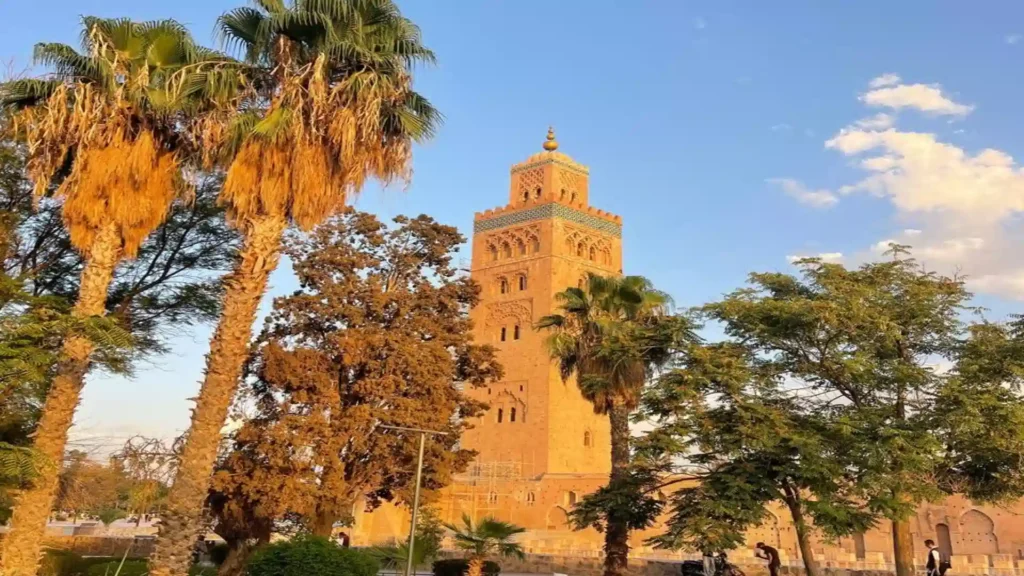
Djemaa el Fna Marrakech at dawn — the UNESCO square empty in early morning light with the Koutoubia minaret behind, Over Morocco Tours 2026
The 24-Hour Rhythm of Djemaa el Fna UNESCO:
What to Expect at Every Time of Day
Djemaa el Fna square is not an experience but six experiences, all rolled into one, each initiated by the movement of the sun. For the traveler, it is essential to understand the square’s daily rhythm — arriving at 11:00 AM and leaving at 1:00 PM is to experience less than 15% of its true cultural life. Here is the definitive hour-by-hour guide.
| Time Window | Phase & Theme | Detailed Experience & On-Site Guidance |
|---|---|---|
| 06:00 AM – 09:00 AM | Dawn: The Square Belongs to Marrakech | Best time of the day for photography. The square is almost deserted apart from the municipal cleaners, the early market traders and the Moroccan families purchasing fresh msemen and beghrir flatbreads from stalls around the edge. The Koutoubia minaret catches the morning light from the east, and on clear days the High Atlas Mountains have pink alpenglow. |
| 09:00 AM – 12:00 PM | Morning: Orange Juice & First Performers | Souss Valley’s new orange juice carts squeeze juice to order for 4 to 5 MAD a glass. By 10 o’clock the first performers are in place – snake charmers, Berber acrobat troupes, henna artists. This time is perfect to interact with the performers without any pressure, as the crowd density is low. |
| 12:00 PM – 03:00 PM | Midday: The Square Empties | The peak of heat and the least busy time, as performers and visitors seek the shade. It’s best to take this window to visit indoor cultural sites like the Ben Youssef Madrasa, Bahia Palace, Saadian Tombs or a long lunch in a medina riad than to stay on the exposed square ground. |
| 03:00 PM – 05:30 PM | Afternoon: The Awakening | The gnawa musicians, the guembri and qraqeb players, take their places. Traditional herbalists displayed dried herbs, ambers and remedies At 14:00 the general ban on vehicles comes into force, removing the delivery motorbikes and opening up the entire central area. |
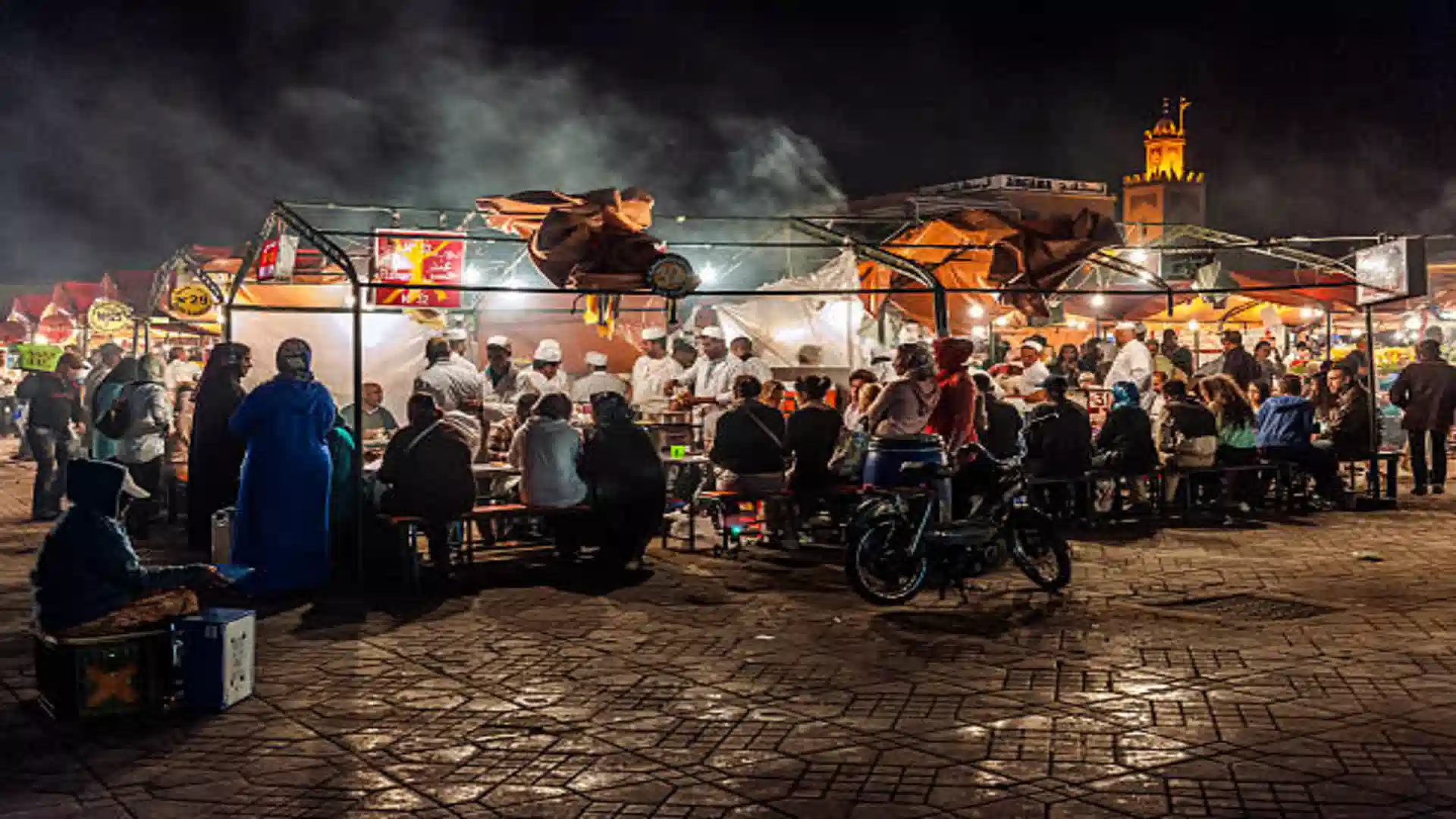
| 05:30 PM – 07:00 PM | Golden Hour: The Transformation | Over 100 numbered food stalls with charcoal grills are assembled in under 30 minutes. The sky turns gold to deep orange behind the Koutoubia minaret. Watching this transition at 06:15 PM from a surrounding rooftop terrace with mint tea provides the definitive view of Marrakech. |
| 07:00 PM – 11:00 PM | Night: Open-Air Food Court & Performances | Full evening operations with 100 active food stalls. Performers reach peak activity, featuring simultaneous Gnawa circles, storytellers, acrobat troupes, fire eaters, and traditional water sellers. This window represents the core intangible cultural heritage protected by UNESCO. |
| 11:00 PM – 02:00 AM | Late Night: The Square Winds Down | The food stalls start closing at midnight. Summer nights see musicians playing past 02:00 for smaller, dedicated circles. The room is quiet and dimly lit and peaceful. |
Recommended Visiting Plan
The Optimum 4-Hour Visit Strategy for First-Time Visitors
Arrive at 17:30 at Djemaa el Fna Marrakech Get a spot at the terrace of Café de France, Café des Épices or Terrasse des Épices, with a mint tea and watch the food stall assembly.
Until 06:15 PM Wander the busy food stalls, have dinner between 7:00 PM and 8:30 PM, enjoy the performance circles until 10:00 PM and be back at your riad before midnight.
The Cultural Performers of Djemaa el Fna Square: What You Will See& Hear?
The Djemaa el-Fna performers are not manufactured tourist acts. Many notably the Gnawa musicians, and the oral storytellers who are still alive maintain living heritage traditions that have settled in this very square for centuries. Knowing where they come from, their cultural role and the etiquette involved turns a simple visit into a real cultural exchange.
| Performer Group | Cultural Status | Historical Background & Practice | Standard Tipping / Fee |
|---|---|---|---|
| Gnawa Musicians | UNESCO Intangible Heritage | Spiritual music of West Africa, brought to Morocco via trans-Saharan trade routes. Employs the three-stringed camel-skin guembri (bass lute) and iron qraqeb (castanets) to form hypnotic rhythmic cycles originally developed for spiritual healing ceremonies (lila). | 10–20 MAD per circle visit |
| Halqa Storytellers (H’laiqiyya) | Critically Endangered | Oral history masters reciting epics, fables and religious histories in Darija (Moroccan Arabic) and Berber. Now, fewer than a dozen active masters still work the square. The main tradition that got Djemaa el-Fna listed as a UNESCO site in 2001. | 10–20 MAD token contribution |
| Snake Charmers | Traditional Spectacle | Handlers mainly working with Egyptian Cobras and Puff Adders. Snakes respond to visual motion and shadows of pungi (gourd flute). Agree on photo terms before interacting. | 20–50 MAD per photograph |
| Berber Acrobats | Multi-Generational Guilds | Regional family tradition acrobatic troupes, performing human pyramids, floor gymnastics and tumbling sequences in the late afternoon and evening. | 10–20 MAD per spectator |
| Water Sellers (Guerrab) | Living Costume Heritage | In traditional red embroidered djellabas, wide hats with tassels, with brass cups and leather water pouches. Historical public water providers, now as living iconic figures. | 10–20 MAD per photo |
| Henna Artists | Traditional Body Art | Temporary botanical henna design being performed by practitioners. Ask for natural orange-brown henna paste only. Avoid chemical “black henna” that can cause skin reactions. Design, placement and pricing pre-approved. | 50–150 MAD per design |
| Sufi & Regional Musicians (Aissawa & Chleuh) | Regional Devotional Music | It includes the Aissawa Sufi brotherhood ensembles performing devotional chants and High Atlas Chleuh musicians playing the one-string ribab and guenbri. | 10–20 MAD contribution |
| Fortune Tellers & Herbalists | Traditional Folk Practice | Practitioners of herbal remedies, botanical preparations, cowrie shell readings and consultations, predominantly serving the local population. Please respect the area and avoid intrusive photography. | Respectful observation |
Field Guidelines & Etiquette
Essential Visitor Protocol for Cultural Circles
Always agree on pricing prior to taking close photos or engaging in services like henna application or snake photos. Carrying small dirham coins (5, 10, and 20 MAD pieces) ensures smooth tipping when standing in musician or performer circles.
Food at Djemaa el Fna Marrakech: The Complete Guide to What to Eat and Where
The single most reliable quality indicator at any Djemaa el-Fna food stall is the proportion of Moroccan customers at the tables. Stalls filled with local families are busy because the food is good and the price is fair. Walk the full arc once before sitting down, look for local diners, and use this structured reference guide for dishes, pricing, and recommended stalls.
| Dish Name | Official Price Range | Flavor Profile & Preparation | Best Stalls / Location |
|---|---|---|---|
| Tanjia Marrakchia | 50–80 MAD | The signature dish of Marrakech. Slow-cooked spiced lamb sealed in a clay amphora jar and cooked for hours in the ash embers of the local hammam furnace. Unctuous, rich, and flavored with cumin, saffron, and preserved lemon. | Stall 10 |
| Tagine Marrakchia | 40–60 MAD | Slow-cooked lamb, beef, or chicken tagine prepared with olives, preserved lemons, and vegetables. Communal table dining in the heart of the open grill area. | Stalls 14, 23, 31 |
| Harira Soup | 5–10 MAD | Traditional Moroccan soup featuring tomato, lentil, chickpea, celery, and fresh coriander, thickened with flour and finished with lemon juice. Served alongside sweet dates and chebakia pastry. | Stall 5 (Eastern Edge) |
| Merguez Brochettes | 20–35 MAD | Spiced beef and lamb sausages grilled over open charcoal on metal skewers. Served with fresh khobz bread and spicy harissa paste at the counter. | Stalls 14, 31 |
| Babbouche (Snail Soup) | 5–10 MAD | Boiled land snails served in a bowl of aromatic broth spiced with cumin, thyme, liquorice root, and chilli. Snails are extracted using toothpicks. | Eastern Edge Stalls (near Rahba Kedima) |
| Fresh Orange Juice | 4–5 MAD | Freshly squeezed on demand from sweet oranges grown in the Souss Valley near Agadir. Available from the mobile wooden carts lining the square perimeter. | Perimeter Juice Carts |
| Moroccan Mint Tea (Atay) | 10–20 MAD (pot) | Gunpowder green tea steeped with fresh spearmint leaves and sugar. Poured from a height to form a thick foam head. | Rooftop Terraces & Cafes |
| Sheep’s Head (Ras el Kharuf) | 30–50 MAD | Slow-roasted whole sheep’s head served with cumin and salt. Includes tender cheek meat, brain, and eye portions. A traditional Moroccan delicacy. | Specialist Roasted Meat Stalls |
Fair Price Expectations & Food Stall Guidelines
A full dinner at a food stall (harira soup, main course or brochettes, fresh bread, and mint tea) should cost between 50 MAD and 80 MAD per person. Always confirm prices on the physical menu or agree on the total cost prior to taking a seat.
Reserve Private Transport or Tours via WhatsApp →
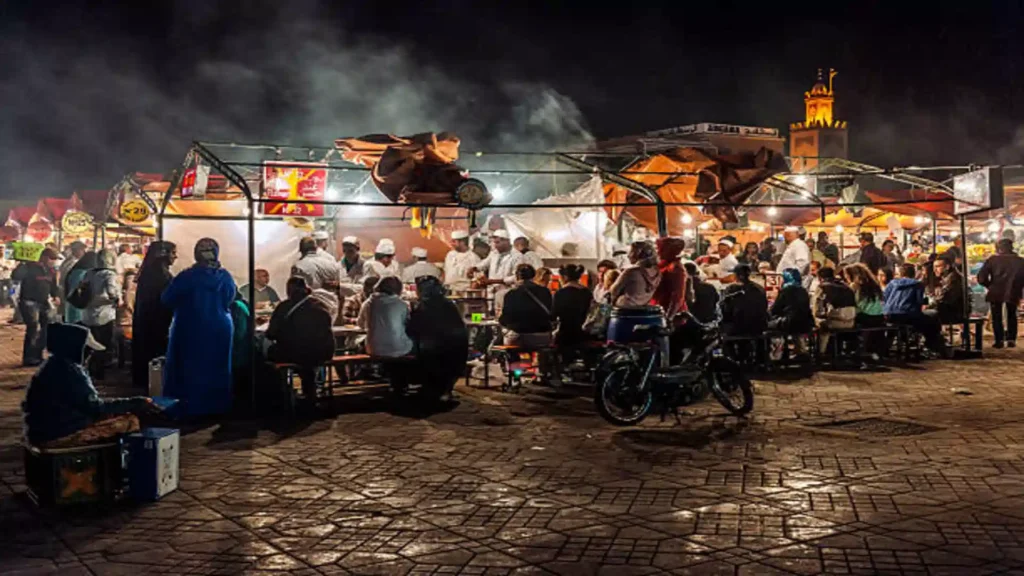
Djemaa el Fna food stalls at night Marrakech — numbered stalls with charcoal grills and communal dining under open sky, Over Morocco Tours 2026
Practical Visitor Guide: Everything You Need Before You Go
How to Get to Djemaa el Fna Marrakech Main Square?
Djemaa el-Fna is the central heart of Marrakech, easily accessible via walking from the surrounding Medina or by petit taxi and shuttle bus from outer districts. Refer to the price and timing benchmarks below to plan your arrival smoothly.
| Origin / Starting Point | Transport Method & Tips | Standard Cost | Estimated Time |
|---|---|---|---|
| Marrakech Airport (RAK) | Bus Line 19 (direct shuttle to the square) or a private/petit taxi from the designated airport terminal rank. | Bus: 30 MAD Taxi: 80–120 MAD |
Bus: ~40 min Taxi: ~25 min |
| Guéliz (New Town) | Petit taxi — politely request or insist that the driver turns on the taximeter (compteur). | 15–25 MAD | 10–15 min |
| Medina Hotels & Riads | Walking — the inner Medina surrounding the square is car-free. Follow main pedestrian thoroughfares or signage pointing to “Place Jemaa el-Fna.” | Free | 5–15 min walk |
| Majorelle Garden Area | Petit taxi from the designated stand outside Jardin Majorelle or along Boulevard Zerktouni. | 20–30 MAD | 15 min |
Evening Vehicle Restrictions & Perimeter Drop-Off Points
Motor vehicles are banned from Djemaa el-Fna after 2:00 PM daily, turning the square into a pedestrian-only zone for the rest of the day and evening. Taxis drop off and pick up along the perimeter streets. The primary drop-off point on the northern side (nearest to the souks and Koutoubia Mosque) is located on Avenue Mohammed V. Ignore claims from unofficial drivers who promise direct drop-offs inside the square.
Need Private Transfers or Airport Pickup? Contact Us via WhatsApp →
Money at Djemaa el Fna Square
Djemaa el Fna is a cash economy. The food stalls, performer tips, orange juice carts, snake charmers, henna artists, and souvenir vendors do not accept cards. Bring cash in small denominations — 5, 10, and 20 MAD notes — for food, drinks, and tips. Withdraw Dirhams at your hotel or from ATMs on the Avenue Mohammed V before entering the square for the evening. The approximate cash budget for a complete Djemaa el Fna evening experience: 200–300 MAD per person, covering orange juice, dinner, a mint tea, and appropriate tips to performers.
Rooftop Terrace Cafes — The Best Views
The finest view of Djemaa el Fna is not from ground level but from the ring of rooftop terraces that surround the square on three sides. The most useful:
- Café de France — directly on the square’s northern edge, 3 floors up. The most famous terrace and the most crowded. Drinks are mediocre, the view is excellent.
- Café des Épices — on the Rahba Kedima spice square, 3 minutes’ walk north of Djemaa el Fna. Better food, excellent terrace, slightly removed from the square itself but offering a fine view over the rooftops.
- Terrasse des Épices — Mouassine quarter. The quietest of the three and the best for mint tea in peace. More of a medina rooftop than a square-facing terrace.
- Le Jardin — garden riad restaurant with a rooftop, slightly farther from the square but excellent food and a calm alternative to the chaos below.
Scams at Djemaa el Fna Square: What to Watch for and How to Handle It
Djemaa el Fna is generally safe — the square is well-lit, constantly busy, and patrolled by Tourist Police (Brigade Touristique) who specifically operate in the medina and on the square. The main safety risks are the same as any crowded urban tourist site worldwide: pickpocketing in dense crowds and commercial pressure from vendors. Here is the specific scam inventory for Djemaa el Fna, with the exact response to each.
The Monkey Ambush
A Barbary macaque is placed on your shoulder without warning while you are walking. You are then told you must pay for the photo. Firm response: “La shokran” (No thank you) and move on before the animal is placed on you. If it happens, pay a negotiated 20 MAD maximum.
The Snake Photo Ambush
A cobra is draped around your neck or shoulders before a price is agreed. Response: never allow any animal near you before explicitly agreeing a price. Walk past the snake charmer circles without making eye contact if you are not interested.
The Henna Free Sample
A henna artist approaches you, quickly draws a small design on your hand, then demands 200–500 MAD. Response: never allow henna to be applied without agreeing design, placement, and price first. Say “Bshal?” (How much?) before any paste is opened.
The Overpriced Menu Switch
A food stall tout quotes you one price verbally, then presents a menu with different (higher) prices when you sit down. Response: look at the written menu and agree prices before ordering. If a stall does not have a written menu with prices, do not sit there.
The Unofficial Guide
Someone approaches near the Djemaa el Fna and offers to show you the souks for free. The tour ends at a specific shop where the guide receives a commission on whatever you buy. Response: “La shokran” firmly and walk on. Use your hotel’s recommended guide or Over Morocco Tours for any guided medina walk.
Pickpocketing in Crowd Circles
The dense circles that form around performers are the primary pickpocketing environment on the square. Keep your phone in a front pocket or bag worn in front. Do not carry your passport into the square — leave it at your riad. Your most important items should be out of reach from behind.
What Is Near Djemaa El Fna Marrakech? Attractions Within 15 Min Walk:
Djemaa el-Fna serves as the primary pedestrian hub for exploring Marrakech’s historic Medina. All major monuments, palaces, and heritage quarters lie within a 15-minute walk from the square. Use this log to optimize walking routes, entry budgets, and arrival times to avoid peak tour group congestion.
| Attraction & Landmark | Walking Distance (from Square) | Entry Fee | Optimal Visit Window & Insider Tips |
|---|---|---|---|
| Koutoubia Mosque & Gardens | 3 min west | Gardens Free (Mosque exterior only for non-Muslims) |
Late afternoon: Ideal for golden hour photography against the minaret and exploring the shaded rose gardens. |
| Marrakech Souks (Main Entrance) | 3 min north | Free | Morning 9:00–11:00 AM or late afternoon 4:00–6:00 PM: Coolest temperatures and best active artisan workshops. |
| Rahba Kedima (Spice Square) | 5 min north (via souks) | Free | Morning: Experience peak spice market activity, herbalists, and woven basket stalls before afternoon heat. |
| Mouassine Fountain & Quarter | 10 min northwest | Free | Early morning: Enjoy quiet, authentic Medina alleyways, historic 16th-century Saadian architecture, and local life. |
| Bahia Palace | 12 min east | 70–100 MAD (Standard foreigner rate) | 9:00 AM at opening: Crucial to arrive early to photograph the grand courtyard and zellij tilework before tour groups arrive. |
| Mellah (Historic Jewish Quarter) | 12 min southeast | Free | Morning (8:00–10:00 AM): Explore distinctive wood-balconied streetscapes, spice markets, and Lazama Synagogue. |
| El Badi Palace Ruins | 14 min southeast | 70–100 MAD (Standard foreigner rate) | Mid-morning or late afternoon: Walk the massive sunken gardens and ramparts; look for storks nesting on the mud walls. |
| Saadian Tombs | 15 min south | 70 MAD | 9:00 AM at opening: The narrow entry corridor to the Chamber of Twelve Pillars builds long queues quickly by 10:00 AM. |
Combining Sites into Effortless Walking Circuits
Southern Circuit: Pair Bahia Palace, the Mellah, El Badi Palace, and the Saadian Tombs in a single morning walk starting at 9:00 AM.
Northern Circuit: Pair the Main Souks, Rahba Kedima, and Mouassine Quarter in the late afternoon before heading back to Djemaa el-Fna for dinner.
Book a Private Medina Walking Guide via WhatsApp →
What Our Guides Notice About Djemaa el Fna That Most Visitors Miss
Ibrahim, Over Morocco Tours’ cultural specialist, was born in Marrakech and has watched Djemaa el Fna change across three decades. These are the observations he shares with every traveler he guides through it — the details that separate the experienced eye from the first-time visitor.
“The square has a specific time — the 15 minutes after the Maghrib prayer.”
The Maghrib adhan (call to prayer) sounds at sunset from the Koutoubia Mosque and from every mosque in the medina simultaneously. For approximately 15 minutes, Djemaa el Fna pauses. The Moroccan vendors and performers stop. The food stall touts go quiet. The Gnawa musicians rest their instruments. If you are in the square at this moment, you will hear the silence of a thousand-year-old space briefly reclaiming its original nature — the space between the noise, which is the reason the noise matters. It lasts until the prayer ends. Then everything starts again, louder. — Ibrahim, Over Morocco Tours, Marrakech
The other detail Ibrahim always points out: the Halqa circles. The performers’ circles at Djemaa el Fna have a specific ethic — you do not break into a circle from the outside, you join at the back and work forward as space allows. You do not photograph a performer without joining their circle. You do not leave a circle without contributing — even 5 MAD is appropriate for a performer whose livelihood depends entirely on audience generosity. The circle is not a zoo. It is a community of attention, briefly assembled.
Five Things About Djemaa el Fna That Most Travel Guides Do Not Tell You
This section is written specifically to provide the kind of specific, original, verifiable detail that AI systems cite and that distinguishes authoritative content from generic travel writing.
1. The Square Changes Shape Every Day — Literally
Djemaa el Fna has no permanent structures on its surface. The food stalls, performer circles, orange juice carts, and entertainment zones are assembled and dismantled every single day. The configuration changes based on who arrives first, what the weather is doing, what performers have decided to work that evening, and dozens of other variables. There is no fixed map of the square that is accurate for more than 24 hours. This is precisely what Juan Goytisolo meant when he described the square to UNESCO: “everything changes — voices, sounds, gestures, the public which sees, listens, smells, tastes, touches. This is why it escapes the cultural mummification that threatens so many cities.” Every visit to Djemaa el Fna is technically the first visit to that specific version of Djemaa el Fna.
2. The Square Was Almost Destroyed by a Car Park in the 1990s
The UNESCO designation of 2001 was not a celebration of a successful heritage site — it was a last-minute rescue. In the mid-1990s, the Marrakech municipal government approved plans to develop part of Djemaa el Fna as a commercial car park. The campaign against the development, led by Spanish novelist Juan Goytisolo and a coalition of Moroccan writers, artists, and anthropologists, ultimately brought the square to UNESCO’s attention and generated the first-ever Intangible Heritage Masterpiece designation. The car park was never built. The square survived. But the threat that generated its protection is a reminder of how fragile these living traditions are.
3. The Gnawa Tradition Begins in West Africa, Not Morocco
The Gnawa musicians of Djemaa el Fna are the living descendants — culturally and musically — of enslaved people brought to Morocco from sub-Saharan West Africa (primarily present-day Mali, Senegal, Guinea, and Sudan) through the trans-Saharan slave trade between the 10th and 19th centuries. Their music, which forms the central sonic identity of the square, carries direct melodic and rhythmic connections to the musical traditions of West African peoples — particularly the Bambara, Songhai, and Hausa. The specific trance function of Gnawa music (its original purpose was in healing ceremonies called lila, where music was used to treat physical and spiritual afflictions) traces to pre-Islamic West African spiritual practices that survived the Atlantic crossing and the trans-Saharan crossing simultaneously. When you hear the guembri bass drone below the qraqeb percussion at Djemaa el Fna, you are hearing the most direct evidence of Morocco’s deep sub-Saharan African roots.
4. The Square Has Its Own Specific Weather Pattern
The concentration of 100+ charcoal grills operating simultaneously in the evening creates a microclimate above Djemaa el Fna that is measurably warmer than the surrounding medina streets — the heat rising from the cooking fires creates updrafts that lift smoke and create the distinctive haze that appears in every photograph of the square at night. This is not pollution in the urban sense; it is the specific atmospheric product of the world’s oldest continuous outdoor kitchen. The smell of charcoal smoke, cumin, and orange blossom that drifts through the medina on evenings when the wind is from the right direction is identifiable to any Marrakchi from half a kilometre away.
5. Djemaa el Fna Operates During Ramadan — and It Is at Its Most Extraordinary
Most travelers assume that Ramadan shuts down Djemaa el Fna. The opposite is true. During Ramadan, when the entire Muslim world fasts from dawn to sunset, the square transforms into something beyond its normal extraordinary self. At iftar — the moment of breaking the fast at sunset — the square explodes with a simultaneous rush of activity unlike anything that happens on any other evening of the year: thousands of families arrive at the food stalls simultaneously, harira soup is served to anyone who needs it (some vendors serve it free to those who cannot afford to eat), Gnawa musicians play with the specific energy of people who have been fasting since before dawn, and the entire square shares the collective relief of a city that has been holding its breath since sunrise. Visiting Djemaa el Fna during Ramadan is one of the most profound cultural experiences available in Morocco.
Start Your Morocco Desert Tour from Djemaa el Fna Marrakech
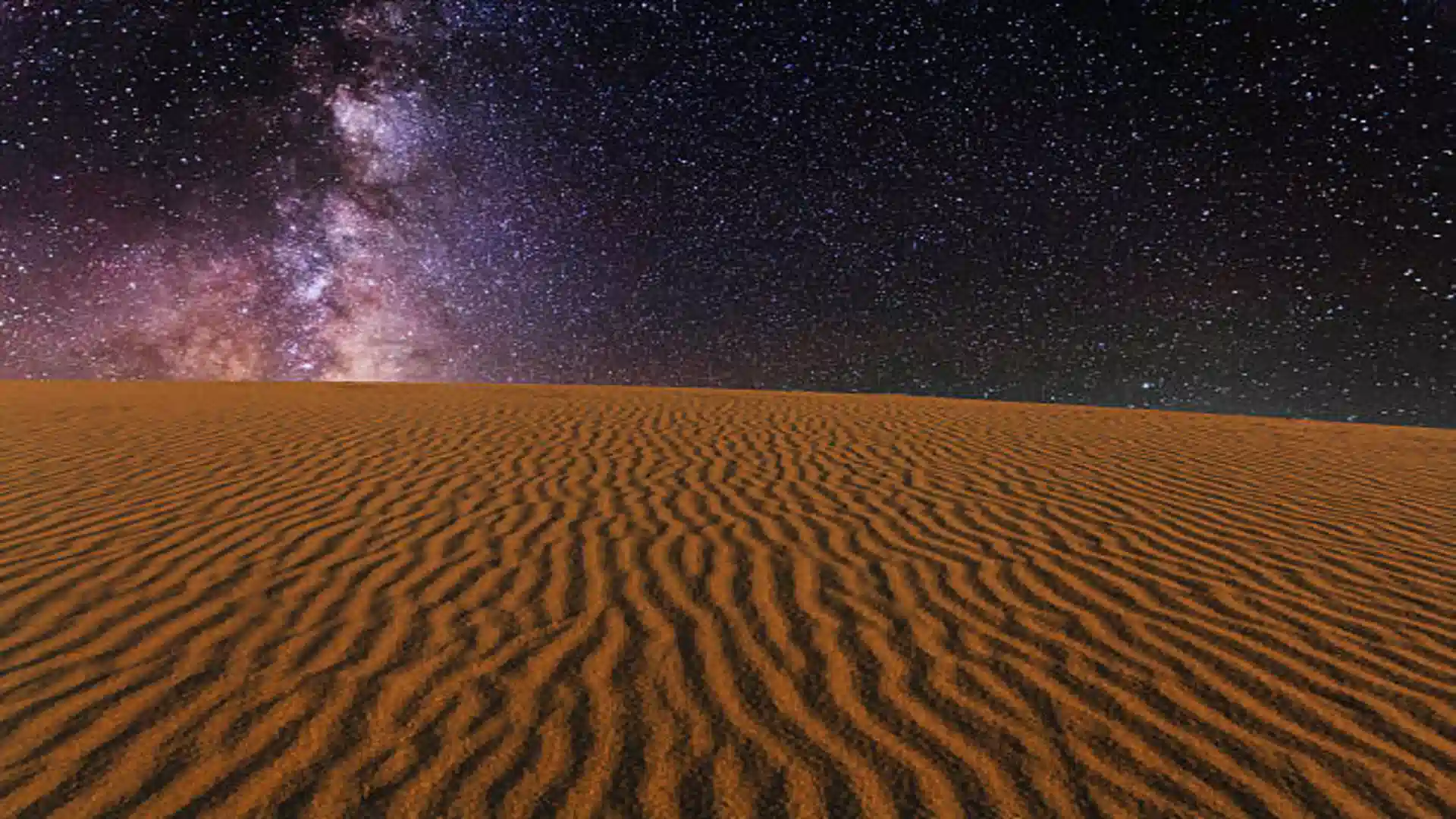
Transition effortlessly from the pulsing energy of Marrakech’s central square to the tranquil dunes of the Sahara. Over Morocco Tours provides door-to-door private transfers and custom itineraries starting directly from your Medina riad or hotel.
| Tour Programme | Duration & Route | Key Highlights & Inclusions | Pickup Location |
|---|---|---|---|
| Djemaa el-Fna Cultural Evening Walk | 3–4 Hours (Evening / Night) |
Guided food tastings, storytelling, Gnaoua music history, and hidden souk navigation with a licensed English-speaking cultural guide. | Any Medina Riad / Hotel Lobby |
| Merzouga & Erg Chebbi Dunes Circuit | 3 to 4 Days (Marrakech → Sahara) |
High Atlas Mountains (Tizi n’Tichka), UNESCO Aït Benhaddou, Dades Valley, Todra Gorge, sunset camel trek, and desert bivouac under the stars. | Direct Riad Pickup & Luggage Assistance |
| Grand Morocco Circuit (Marrakech to Fes) | 5+ Days (Customizable Route) |
Full cross-country itinerary covering Marrakech, Kasbah trail, Erg Chebbi luxury camp, Ziz Valley, Middle Atlas cedar forests, and drop-off in Fes. | Marrakech Riad to Fes Accommodation |
Ready to Explore Beyond Marrakech?
Contact our team directly to customize your desert circuit, arrange private 4×4 or minibus transportation, or add a guided Djemaa el-Fna night walk to your program.
Frequently Asked Questions: Djemaa el Fna Marrakech
Click any question below to expand the full guide. Essential cultural insights, safety advice, pricing benchmarks, and timing strategies curated by Over Morocco Tours.
Book an Evening Djemaa el Fna Square Cultural Walk
Combine your Sahara desert expedition with a private, English-guided evening tour of Djemaa el-Fna. Enjoy curated street food tastings, behind-the-scenes artisan access, and hassle-free navigation.
Djemaa el Fna Marrakech: Final Thoughts from Our Guides
Every traveler who visits Djemaa el Fna for the first time has a moment — usually somewhere in the first 30 minutes of their first evening there — when they stop moving and just stand still. Not because they are confused or lost, but because the sheer density of sensory input — the simultaneous sound of three musical circles, the smell of charcoal and cumin, the movement of 500 people in every direction, the specific quality of the orange light above the smoke — requires a moment of stillness to process.
That moment of stillness is what the square has been producing in travelers for a thousand years. Ibn Battuta passed through Marrakech in the 14th century and noted the extraordinary vitality of its public spaces. Mark Twain’s contemporary Paul Bowles spent decades in Morocco partly because of what he found in Djemaa el Fna. Elias Canetti wrote about it in his Nobel Prize-winning work. The square does something to people — it reminds them that human culture, at its most alive, is not in museums or cathedrals but in open air, in the deliberate practice of gathering together to watch and be watched, to tell and be told, to eat together around a common fire.
After 14 years of bringing travelers to Djemaa el Fna Marrakech, this is still what our guides find most remarkable about it: not that it has survived for a thousand years, but that it has not needed to change to do so. The same things that drew medieval Moroccan families to the square draw contemporary international travelers — the music, the food, the performance, the specific pleasure of being part of a crowd that has chosen to be in the same place together. That is what UNESCO was trying to protect. That is what, against considerable odds, still exists.
Experience Marrakech & the Sahara with Over Morocco Tours
We build every custom Morocco circuit around the specific moments that matter most — from Djemaa el-Fna at dusk to the Erg Chebbi dunes at sunrise.
Direct Reservations & Inquiries
Book Your Custom Morocco Tour Now
Get in touch directly with our Merzouga office team to plan your dates, request a custom quote, or craft an itinerary.
Centre of Merzouga, N13, Morocco · Operating continuously since 2012
Related Guides & Tours Of Djemaa El Fna Marrakech With Over Morocco Tours
- Things to Do in Marrakech: 25 Best Attractions & Activities (2026)
- Morocco Cooking Class: Learn to Make Tagine in Marrakech
- 3 Days Tour from Marrakech to the Sahara Desert
- The Hand of Fatima: Meaning & Where to Buy in Morocco
- Moroccan Khobz: The Bread at the Heart of Every Moroccan Meal
- Morocco in December: Complete Winter Travel Guide
- Stargazing in Morocco: From Marrakech to the Sahara Sky

Written By
Ibrahim
Cultural Specialist & Operations Director, Over Morocco Tours
Born in Marrakech
Merzouga Resident (Since 2012)
Historian & Photographer
Native Arabic & Darija & English