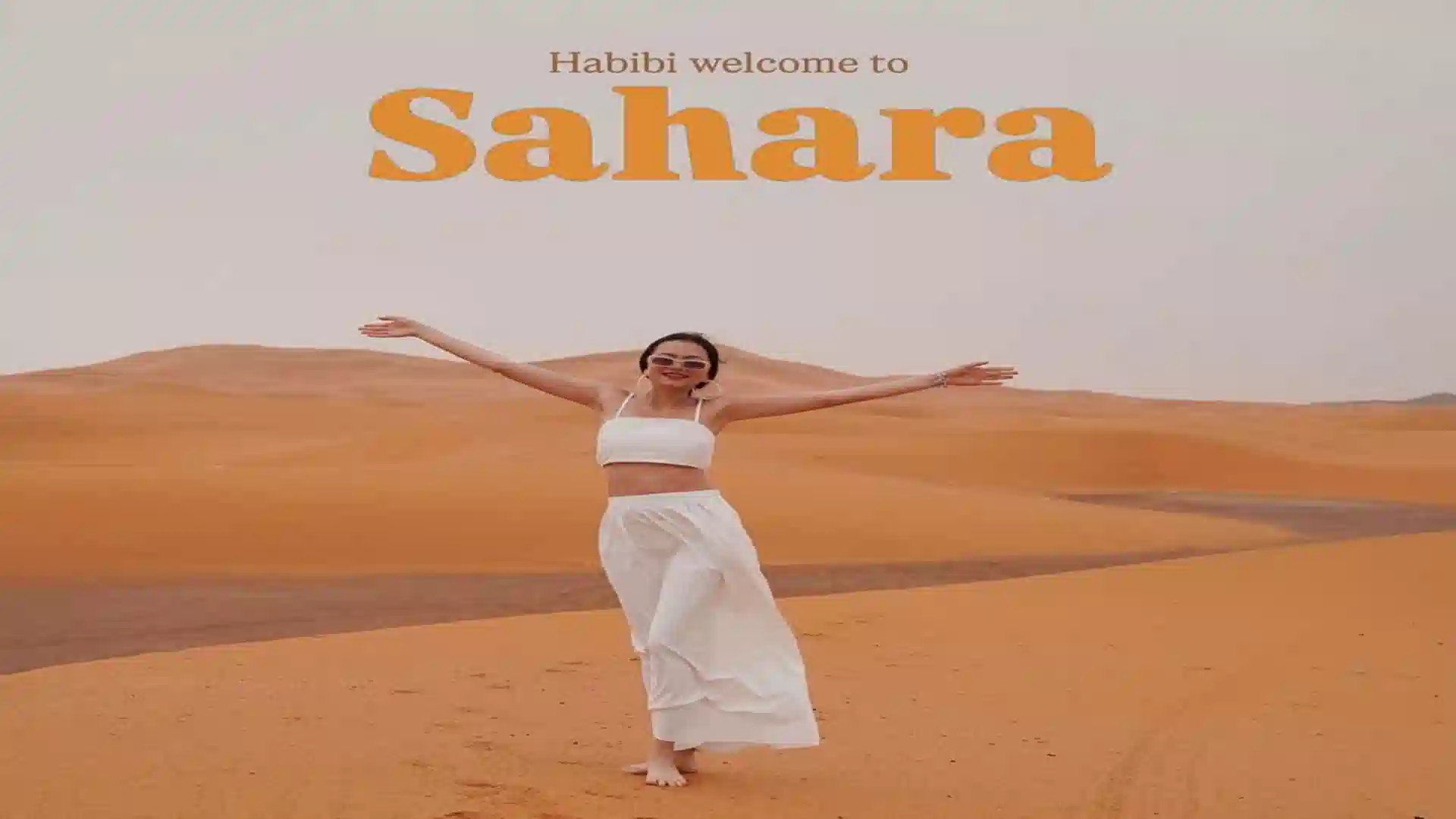

Morocco in December: Is It Worth Visiting? Complete 2026 Winter Guide
Morocco in December is the travel choice that rewards the traveler willing to look beyond the obvious. While the majority of international visitors schedule their Morocco trip during the peak spring window of March through May, December delivers an experience that is in many ways more extraordinary — and almost always less expensive, less crowded, and more atmospherically intense than anything the high season offers.
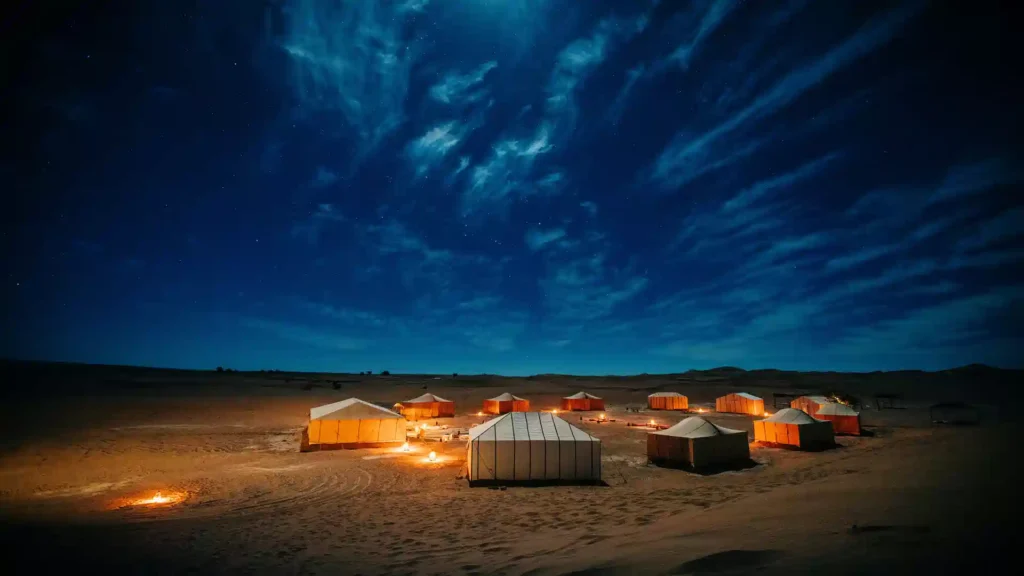
The Sahara Desert in December produces the finest stargazing of the entire year — winter’s exceptionally low atmospheric humidity creates sky transparency that approaches the theoretical maximum for ground-level astronomical observation. Snow occasionally dusts the summits of the High Atlas Mountains while the Erg Chebbi dunes remain explorable by day in temperatures of 18–22°C. The medinas of Fes and Marrakech, stripped of the crowds that characterize March and October, reveal their authentic daily rhythms — the school children, the artisans, the souk vendors for whom the medina is a workplace rather than a theatre. And for travelers who visit around Christmas or New Year, Morocco in December offers the most genuinely memorable alternative to a European festive holiday that we know of: a New Year’s Eve around a Sahara campfire, under 4,500 stars, in complete silence, in one of the world’s most extraordinary natural environments.
At Over Morocco Tours, we guide guests through the Moroccan Sahara every December — and we watch the same transformation happen year after year: travelers who arrived slightly anxious about winter temperatures leave describing it as the finest trip they have ever taken. This guide gives you everything you need to plan your own Morocco in December experience: temperatures by city, what to wear, the best itineraries, honest advice about the cold, and why the Sahara in winter is not a compromise — it is an upgrade.
Seasonal Data Dashboard
Table of Contents
Morocco Weather in December: Climate, Logistics & Operational Metrics
An authoritative baseline analysis of regional climate parameters, destination safety thresholds, economic pricing margins, and astronomical forecasting metrics for travelers planning a winter route across Morocco.
| Destination / Parameter | December Temperature Profile | Logistical Scope & Operational Realities |
|---|---|---|
| Marrakech | Day: 19°C | Night: 5°C | Pleasantly mild daytime environment. Immediate thermal drops occur postsunset. Periodic clear-weather winter precipitation can manifest. |
| Fes | Day: 15°C | Night: 4°C | Cool, profoundly crisp ambient conditions inside ancient structures. Low-lying morning radiative fog impacts visibility occasionally. |
| Casablanca | Day: 17°C | Night: 8°C | Dominated by a mild Atlantic maritime microclimate. Characterized by intermittent oceanic rainfall events throughout mid-winter. |
| Merzouga (Sahara) | Day: 18°C–22°C | Night: 2°C–6°C | Extreme daily temperature ranges. Bright, high-clarity sun during daylight hours shifts immediately into near-freezing evening desert baseline conditions. Heavy insulated bedding required. |
| High Atlas Mountain Passes | Elevations Face Snow Risks | Active alpine snowfall can obstruct the Tizi n’Tichka transit corridor. The deployment of high-clearance 4×4 vehicles equipped with tire chains is heavily mandated from December through February. |
Tourist Density Analysis
Low Density Volume: Measured data reflects 40% to 60% fewer active independent travelers inside major cultural medinas relative to peak spring seasonal benchmarks.
Economic Tariffs & Pricing
15% to 30% Reductions: Operating costs across commercial flight routings, luxury riad accommodations, and tailored private desert itineraries sit well below high-season rate bars.
Atmospheric Visibility Metrics
Peak Celestial Stargazing: Minimal humidity curves across the Sahara platform generate the highest atmospheric transparency ratings of the calendar year.
Solar Daylight Allotment
~10 Hours Stable Exposure: Daily sun cycles stabilize effectively around a 7:30 AM astronomical sunrise and wrap close to a 5:45 PM winter sunset sequence.
Holiday Logistics Advisory: While early to mid-December offers unparalleled quiet and premium pricing structures, the final week of December surrounding Christmas and New Year features high celebratory demand. Cities and luxury Sahara camps host signature galas, which require reservations several months in advance.
Is Morocco Worth Visiting in December? The Honest Answer
Morocco in December is absolutely worth visiting — but with clear-eyed expectations about what winter travel involves. The honest answer to “is Morocco good in December?” is: yes, for the right traveler and the right itinerary. Morocco in December is not the same experience as Morocco in April. The light is different, the temperatures are different, the crowds are different, and the emotional character of the journey is different. In most of those differences, December wins.
What December Gets Right That April Misses
- The Sahara stargazing sky — December produces the clearest night sky of the entire year above Erg Chebbi. Winter’s exceptionally low atmospheric humidity creates transparency that approaches the theoretical maximum for ground-level observation. The winter Milky Way — featuring Orion, the Pleiades, Perseus, and Gemini at their highest and most brilliant — is extraordinary from a Bortle Class 2 site like our desert camp.
- The Atlas Mountains under snow — The Tizi n’Tichka pass at 2,260 metres carries snow from late November through February. Crossing it in December — snow-white peaks above, the warm ocher tones of the pre-Saharan valley below — is one of the most dramatic visual transitions in Morocco travel and one that simply does not exist in spring.
- Empty medinas — Walking the Fes el-Bali medina in December, when the souk vendors are relaxed, the alleys are unhurried, and the ancient architectural details are not obscured by tour groups five abreast, is a fundamentally different and more authentic experience than the same walk in peak season.
- Lower costs everywhere — Flights from the UK to Marrakech in December are typically £60–100 return rather than the £120–200 of spring peak. Riad rates drop 20–35%. Tour pricing is lower. The December traveler gets the same extraordinary experience for meaningfully less money.
- Genuine local life — December in Morocco is not a tourism-oriented month. The festivals, the souks, the daily rhythms of the cities exist for Moroccans, not for visitors. The winter traveler experiences Morocco as a place people actually live rather than as a backdrop for tourism.
What December Requires That April Does Not
- Warm clothing — Desert nights in December drop to 2–6°C. Atlas mountain roads may require chains. The Fes medina in early morning is cold enough to require a proper jacket. None of this is insurmountable — it simply requires packing for it.
- Flexibility on the Atlas crossing — Snow on the Tizi n’Tichka pass occasionally closes the road for 24–48 hours. Over Morocco Tours always carries chains and monitors conditions, and we have alternative routes for extreme weather. But the possibility of a day’s delay at a gorge guesthouse below the snow line is worth acknowledging in advance.
- Shorter daylight hours — With approximately 10 hours of daylight (sunrise 7:30am, sunset 5:45pm), December circuits require slightly more careful timing of driving days to ensure each stop is reached in good light.
✓
Our Honest Assessment & Local Expert Verdict
A December itinerary is frequently one of the most gratifying experiences we provide for tourists who plan thoughtfully and embrace North Africa’s raw, stunning seasonal nature in mid-winter rather than battling against it.
The extreme contrast of clean snowcaps covering the High Atlas mountains, warm sunlight desert sands throughout the day, wonderfully bright stargazing evenings, uncrowded old medinas, and very competitive off-peak pricing models creates an experience that the usual visitor completely misses. This unique atmospheric window is what our winter guests usually describe as the best journey they have ever had.
Authoritative Evaluation:
Recommended for couples, independent photography excursions, and luxury cultural tours looking for minimal local crowd volume, high celestial visibility ratings, and premium local riad values.
Morocco December Weather: Temperature Guide by City and Region
Morocco in December temperature has dramatically different weather in different parts of the country — understanding the regional variation is essential to packing correctly and setting accurate expectations. Here is the complete temperature breakdown by destination.
The Sahara Desert Morocco in December: Warmer Than You Think by Day
The most important misconception about visiting Morocco in December — particularly for travelers planning a Sahara circuit — is that the desert is cold throughout the day. It is not. The Erg Chebbi dune field at Merzouga receives strong winter sunshine from approximately 8:00am through 5:00pm, and daytime temperatures consistently reach 18–22°C — warm enough for a t-shirt during the afternoon camel trek, warm enough to sit outside at the camp terrace for lunch. The cold arrives rapidly after sunset: within 90 minutes of the sun going down, temperatures drop from 18°C to 8°C. By midnight they are at 3–5°C, and by 3am on the coldest nights they approach 0°C.
This diurnal temperature range — the gap between the warm day and the cold night
is one of the defining characteristics of desert climate. In December it is at its maximum. The practical result: your camel trek at 3:00pm is warm and comfortable in a light layer. Your stargazing at midnight requires a down jacket, thick socks, and the wool blanket from your tent. Both are extraordinary experiences. The transition between them is part of what makes the Sahara desert Morocco Weather in December so viscerally memorable.
Pros and Cons of Visiting Morocco in December
Distinct Advantages vs. Ground Realities OF Morocco in December
An authoritative data baseline balancing high-yield seasonal opportunities against regional cold weather realities for precise winter route alignment.
✓
Primary Seasonal Advantages
- Optimal Celestial Visibility: Lowest annualized atmospheric humidity curves generate maximum night sky transparency indices across the Erg Chebbi dune platforms.
- High-Contrast Topography: Early alpine snowfall on the High Atlas ridges yields the most dramatic visual and photographic contrasts of the calendar year.
- Diminished Foot Traffic Volume: Measured data reflects 40% to 60% fewer active independent travelers relative to spring seasonal peaks, leaving historic medinas feeling exceptionally authentic.
- Economic Efficiency Tariffs: Inbound flights and luxury riad accommodation rates settle between 15% to 30% below standardized high-season price ceilings.
- Temperate Desert Daylight: Predictable Saharan daytime baselines (18°C–22°C) establish perfectly comfortable thermal conditions for extended camel trekking.
- Atmospheric Medina Microclimates: Morning radiative fog across the northern valley floors creates an extraordinary, timeless environment inside the Fes corridors.
- Premium Holiday Alternatives: Spending Christmas and New Year within the Sahara presents a highly memorable, completely distinct alternative to conventional European winter festivities.
- Enhanced Campfire Integration: Freezing ambient desert nights elevate traditional open fires from novelty features into genuinely necessary structural requirements.
- Low-Angle Solar Radiance: Creative photography benefits significantly from sustained, low-angle golden solar hours spanning the entire winter day length.
- Tranquil Hospitality Environments: Internal riad courtyards and botanical gardens across Marrakech maintain an uncrowded, peaceful luxury atmosphere.
- Local Regional Intimacy: Key valleys like the Rose Valley (Kelaa M’Gouna) run purely local regional tempos, entirely unbothered by commercial mass tour operators.
✗
On-Ground Challenges & Risks
- Severe Desert Night Drops: Saharan overnight values plunging to 0°C–5°C by 3:00 AM mandate specialized high-insulation layering and proper thermal apparel.
- Alpine Transit Vulnerability: The Tizi n’Tichka High Atlas Pass faces structural snow accumulations, forcing intermittent corridor closures spanning 24 to 48 hours.
- Inland Precipitation Vectors: Both Fes and Marrakech present elevated winter rain metrics; robust windproof and waterproof outer shells are highly essential.
- Compressed Daylight Windows: Operational schedules must account for ~10 hours of solar visibility, restricting long-distance driving legs to shorter travel brackets.
- Variable Riad Climate Systems: Historical boutique properties and remote mountain guesthouses frequently lack centralized heating lines; verify layout status prior to final check-in.
- Gorge Thermal Deficits: Valley floors inside Dades and Todra drop significant heat under early shadows; specifically request rooms fitted with localized heating configurations.
- Unheated Pool Thermal Drops: Unheated outdoor riad swimming pools across central Marrakech drop below comfortable usage thresholds throughout mid-winter.
- Weather-Dependent Flight Variables: High-altitude adventure activities, such as morning sunrise hot air balloon charters, face sudden, strict safety cancellations during wind or rainfall shifts.
Strategic Logistics Summary:
The data conclusively demonstrates that December acts as an elite travel window yielding unrivaled crowd mitigation, superior fiscal margins, and unparalleled astronomical observation profiles. Maximizing this operational window relies entirely on proactive climate preparation—specifically involving structural vehicle logistics across alpine passes and verified heating configurations inside deep valley regions.
Morocco in December Temperature: City by City Experience Guide
Marrakech in December
Marrakech in December is mild, manageable, and genuinely beautiful. The famous rose-pink walls of the medina are at their most saturated in winter’s clear low-angle light. The Djemaa el-Fna square — Morocco’s UNESCO Intangible Cultural Heritage central plaza — runs its full programme of food stalls, musicians, snake charmers, and storytellers year-round; in December, with thinner tourist crowds, the square feels more authentically Moroccan and less like a performance for visitors. The Majorelle Garden, typically crowded in spring, is peaceful in December — the cobalt-blue pavilions and bare winter garden have a specific spare beauty that the summer abundance obscures. The souks are quieter. The artisans are easier to talk to. The mint tea is more urgently appreciated.
The main December consideration in Marrakech is rain — the city receives its highest rainfall in November and December, averaging 8–10 rainy days per month. Most rain falls as short afternoon showers rather than all-day downpours, and Marrakech’s medina is navigable in rain (the covered souk streets are dry). But a waterproof layer is genuinely necessary.
Fes in December
Of all Morocco’s major cities, Fes in December rewards the winter visitor most distinctly. The medina’s narrow streets are often laced with morning mist that settles in the valley between the two hills the city occupies — and the Chouara tanneries, viewed from a leather shop terrace through a morning fog that softens the colours of the dye vats, are more beautiful in December than in any other season. The cold and quiet of the medina in December allows you to hear sounds that the spring crowds obscure: the rhythmic hammer of copper craftsmen, the call to prayer echoing between ancient walls, the creak of a loaded donkey cart on cobblestones. Fes in winter is the closest Morocco offers to time travel.
The Sahara Desert in December
The Sahara desert in December is the highlight of any Morocco winter travel itinerary — and the destination where the seasonal shift from summer to winter is most dramatically positive. The daytime camel trek at 3:00pm crosses dunes in warm winter sunshine, the golden light at low angle casting shadows longer and more dramatic than any summer equivalent. The campfire that evening is not decorative — it is the evening’s social centre, and the cold that makes it necessary also makes the warmth of it, the smell of woodsmoke and mint tea, and the intimacy it creates among guests and guides deeply felt. The night sky above Erg Chebbi in December is the finest of the year. Orion transits directly overhead at midnight — the most recognisable constellation in the sky, and in winter, the highest in the sky it ever gets from Morocco’s latitude.
Essential Winter Desert Camp Intel
The Secret to Perfect Sleep in the Sahara: Solar-Powered Electric Blankets
When planning an overland itinerary to the dunes, the sharp drop in overnight temperatures is often a surprise. While our traditional heavy wool bedding provides excellent insulation, ambient air temperatures between 3:00 AM and 5:00 AM can still cause discomfort for winter travelers.
To address this, we equip our private luxury glamping tents with premium, solar-powered electric blankets throughout the winter months (December, January, and February). This single feature is consistently rated by our guests as the most valuable asset of their entire desert circuit, ensuring a warm, restorative night’s rest that rivals home comfort.
✓ Luxury Glamping Packages: Included automatically at no additional tariff.
Standard Camp Bookings: Available as a selective reservation add-on.
Morocco for Christmas and New Year: What to Expect
Morocco in December for Christmas and New Year is one of the most sought-after experiences among travelers who want an extraordinary alternative to the standard European festive holiday — and one of the most consistently life-affirming experiences our guides describe guiding.
Christmas in Morocco
Morocco is a Muslim-majority country, and Christmas is not a public holiday or a religious observance. However, the country’s long tradition of international tourism means that major hotels, riads, and restaurants in Marrakech, Fes, and Casablanca acknowledge the season with festive decorations and special Christmas menus for international guests. Over Morocco Tours operates full tours throughout the Christmas period — December 24th and 25th are no different from any other day on the Moroccan calendar, which actually works in the traveler’s favour: the Atlas pass, the desert road, and the dunes are open and uncrowded on Christmas Day itself. Spending Christmas morning on the Erg Chebbi dunes, camel riding back to Merzouga after a Sahara sunrise, is the kind of Christmas Day memory that takes decades to fade.
New Year’s Eve in the Sahara Desert
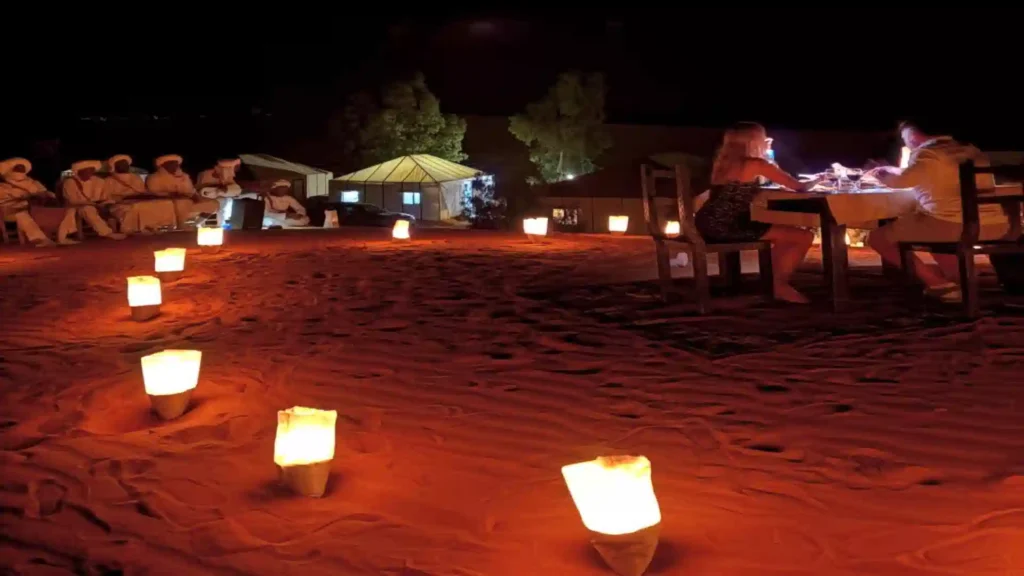
New Year’s Eve at our Erg Chebbi desert camp is the single most requested special-occasion booking we receive throughout the year. The structure of the evening is straightforward: camel trek into the dunes at sunset (December 31st), dinner at the camp as the stars appear, Gnawa music and campfire as midnight approaches, and the moment the year turns — in complete silence, in the Sahara Desert, with 4,500 stars overhead and the Milky Way arching above the dunes — is unlike any New Year’s Eve experience available anywhere in Europe. No fireworks, no crowds, no countdown screen. Just the desert, the stars, the fire, and the specific feeling of being in one of the world’s most extraordinary places at one of the year’s most symbolic moments. New Year’s Eve at Erg Chebbi books out months in advance — contact us early if this is your target date.
Exclusive Winter Gala Allocation
New Year’s Eve 2026 / 2027 at Erg Chebbi: An Intimate Saharan Celebration
Celebrate the transition into the new year surrounded by the silent majesty of the Erg Chebbi dunes. Over Morocco Tours operates highly tailored, private New Year’s Eve desert camp itineraries designed specifically for discerning travelers looking to avoid overcrowded mainstream corporate packages.
A premium, authentic localized gathering welcoming the midnight hour under the stars.
Enjoy exclusive acoustic desert soundscapes performed live by master traditional musicians.
Saddle up early on New Year’s morning to view the initial sunbeams clearing the high sand ridges.
Operational Limits & Access
Max 10 Guests Per Camp
Strictly capped allocation to guarantee uncompromised privacy, comfort, and premium hospitality standards.
Reservation Window: Booking pathways open exactly 6 months in advance. Due to high annual demand, spaces fill completely before late autumn.
Secure Your Dates Via WhatsApp
Direct Line Support: +212 673 952 695
The optimal Morocco December itinerary plays specifically to the season’s strengths — the Atlas snow, the desert warmth, the winter stargazing, and the uncrowded medinas — while structuring the driving days to account for shorter daylight hours and occasional mountain weather.
| Timeline | Operational Routing Path | December Seasonal Highlights & Microclimates | Overnight Node |
|---|---|---|---|
| Day 1 | Marrakech → Ait Ben Haddou → Ouarzazate → Dades Gorge | Spectacular snow-covered alpine vistas traversing the High Atlas ridges. Experience the ancient earthen kasbah of Ait Ben Haddou illuminated in crisp winter solar light, completely free of large commercial tour buses. | Dades Valley Guesthouse |
| Day 2 | Dades Gorge → Todra Gorge → Erfoud → Merzouga | View early morning ground frost tracing the narrowest vertical limestone canyon walls of Todra. Enjoy an unhurried, peaceful canyon trek. Arrive on the edge of the Sahara perfectly timed for a sunset camel expedition. | Premium Desert Camp ★ |
| Day 3 | Sahara Sunrise → Nomadic Cultural Activities → Merzouga Exploration | Capitalize on the elite astronomical window providing the clearest night skies of the year, with the Orion constellation highly visible overhead at midnight. Enjoy pleasantly warm, sunlit desert afternoons. | Traditional Merzouga Riad |
| Day 4 | Merzouga → Ziz Valley → Midelt → Ifrane | Observe the vast palm groves of the Ziz Valley showcasing deep winter color schemes. Drive upward past the Middle Atlas cedar forests, often surrounded by pristine seasonal alpine snow blankets near Ifrane. | Ifrane / Azrou Mountain Lodge |
| Day 5 | Ifrane → Cedar Forest Trails → Fes Arrival | Encounter wild Barbary macaques within the historic Azrou cedar reserves. Arrive to witness the ancient architectural landscape of Fes blanketed in dense winter fog—the most atmospheric setting of the year. | Boutique Fes Riad |
| Day 6 | Full Medina Guided Expedition — Fes | Document the iconic Chouara Tanneries sitting beneath crisp morning river mist. Photograph the intricate Bou Inania Madrasa in calm, uncrowded winter light. Experience the historic souks at a relaxed, authentic local pace. | Boutique Fes Riad |
| Day 7 | Fes Departure / Selective Return Hub | Conclude the expedition with a direct outbound flight from Fes-Saïss Airport (FEZ), or execute the highway return link back to Marrakech with your private driver team. | Circuit Complete |
Critical Winter Logistics Directive — Shorter Daylight Adjustments
We highly mandate departing Marrakech no later than 7:30 AM on Day 1. This proactive scheduling ensures safe transit completion and arrival at the Dades Gorge node prior to twilight (~5:30 PM).
Throughout December, the compressed daytime window requires that both the Tizi n’Tichka High Atlas traverse and the Ait Ben Haddou archaeological site tour be fully completed within the initial 7 driving hours. The Over Morocco Tours operations desk automatically recalculates and realigns all seasonal winter departures for these constraints—your assigned private guide will connect with you the prior evening to finalize your exact departure call.
What to Pack for Morocco in December: Complete Winter Packing List
Equipment & Preparation
Pack For Morocco In December: Thermal Layering Protocols & Gear Specifications
Correctly packing for extreme thermal swings is the single most important factor determining your on-ground comfort. A typical December sequence moves rapidly from 20°C in the afternoon Sahara sun down to 3°C on the dune crests by midnight.
Alpine & Desert Night Essentials
- Down Jacket / Puffer: Completely mandatory for open desert nights and high-altitude High Atlas mountain crossings.
- Fleece Mid-Layer: Designed for the rapid twilight transition hours running from sunset until 10:00 PM.
- Thermal Base Layers: High-insulation tops and bottoms. Highly recommended for sleeping comfortably in standard desert camps.
- Insulated Hat & Gloves: Essential for protecting extremities during midnight stargazing and alpine pass stops.
- Thick Wool Socks: Cold desert sand strips body heat instantly; standard thin socks are insufficient for night walking.
- Traditional Berber Tagelmust / Scarf: Essential for blocking freezing midnight winds along the shifting dune crests.
Daytime Transit & Urban Wear
- Lightweight Long-Sleeve Shirts: Daytime Sahara settings reach comfortable baselines (18°C–22°C), requiring easily removable layers.
- Long Trousers: Always mandatory for cultural respect inside historic medinas and protection during camel trekking.
- Waterproof Outer Shell: Critical for handling sudden rain fronts in Marrakech, Fes, and coastal Casablanca.
- High-Grip Walking Shoes: Centuries-old medina cobblestone paths become exceptionally slick when wet.
- Broad Spectrum Sunscreen (SPF 50+): Winter desert solar radiation curves remain deceptively intense.
- UV400 Polarized Sunglasses: Mitigates intense winter glare reflecting off desert sand and white mountain snow.
Specialized Photography Equipment
- Wide-Angle Optics: Optimized for documenting the crisp winter Milky Way clarity and snow-draped High Atlas horizons.
- Spare Camera Batteries (x2 Minimum): Sub-freezing desert environments deplete lithium-ion cells at double the normal rate.
- Robust Travel Tripod: Non-negotiable structural requirement for sharp, long-exposure night sky capture.
- Heavy-Duty Ziplock Bags: Essential for shielding fragile electronic camera bodies from unexpected rain and micro-fine Sahara dust.
- Microfiber Lens Cloths: Constant winds bring airborne dust particles and light moisture that cloud glass optics daily.
- High-Capacity Power Bank: Fully charged baseline. Remote desert camps operate limited solar power capture configurations in winter.
Practical Logistics & Security
- Liquid Cash (Moroccan Dirham): Best obtained immediately via terminal ATMs at Marrakech (RAK) or Fes (FEZ) airports upon landing.
- Comprehensive Travel Insurance: Must explicitly include winter weather delay clauses to cover occasional alpine pass closures.
- Headlamp with Red-Light Mode: Critical for moving around desert camps at night without ruining your night vision or disturbing others.
- Compact Daypack (Maximum 30L): Sized perfectly to carry overnight essentials on your camel trek, leaving main luggage secure with your driver.
- Universal Power Adapter: Compatible with Type C and E European standard socket designs found throughout Morocco.
- Prescription Medical Supplies: Ensure full allocation coverage for the entire trip length, as remote pharmacies have limited stock.
Why Book Your December Morocco Tour with Over Morocco Tours
Winter Morocco travel requires a level of logistical expertise and local knowledge that matters more in December than in any other month. Over Morocco Tours has been operating desert circuits in all weather conditions since 2012 — including every winter since we opened. Our drivers know the Atlas road conditions in real time, our desert camp is equipped with winter heating, and our guides plan December departures with the seasonal adjustments that make the difference between a comfortable journey and a cold, rushed one.
We Monitor Weather and Road Conditions Daily
Mohammed, our senior driver-guide, checks the Tizi n’Tichka road conditions every morning during the winter months through a combination of local police radio, regional weather services, and a network of contacts at the summit hotels and petrol stations. If snow creates a genuine closure risk on your departure day, we contact you the evening before with a revised route plan — typically via the lower Tizi n’Test pass (alternative southern route) or a temporary hotel at the gorge while we wait for the pass to clear. This has happened fewer than 10 times in 14 years of winter operation. When it does happen, our preparation means it becomes an unexpected adventure rather than a crisis.
Our December Desert Camp Is Winter-Ready
Over Morocco Tours’ Erg Chebbi glamping camp is equipped for winter with electric blankets (solar-powered), additional wool blanket layers, a properly maintained campfire every evening, hot water bottles available on request, and a camp cook who adjusts the menu for cold-weather comfort — the December version of our desert dinner includes a warming harira soup starter, a heavier lamb tagine, and a richer dessert than the lighter summer menu. The entire experience is calibrated for the season.
★★★★★TripAdvisor • 10.0 Superb Baseline
Authentic Guest Sentiment — Seasonal Winter Morocco In December“Visiting Morocco with Mohammed and Said was an amazing experience. Their warmth and hospitality made the trip enjoyable and interesting. The music and landscapes of Morocco are mesmerizing — and the desert in winter was something we simply could not have imagined before we were there.”
— Verified TripAdvisor Review
Private Expedition Group Documentation / Over Morocco Tours
Morocco in December: Essential Travel Intel & Ground Realities
Direct answers from our operational team addressing microclimates, route logistics, packing realities, and holiday scheduling across the kingdom during the mid-winter calendar.
Is Morocco warm in December?
Morocco in December exhibits highly contrasting temperatures depending strictly on your geographical region. Marrakech maintains daytime averages of 19°C before plunging to a cold 5°C overnight—offering mild, pleasant conditions for urban sightseeing but demanding heavy insulation layers after dark. The Sahara Desert at Merzouga provides crisp, bright sunshine by day (18°C–22°C) alongside severe night drops (2°C–6°C, shifting closer to 0°C). Coastal hubs like Casablanca and Essaouira level out at 17°C by day under heavy maritime currents.
In summary: December is entirely unsuited for a standard beach or swimming holiday, but it remains one of the most comfortable, clear windows for overland desert touring, historical medina tracking, and archaeological discovery—provided you dress for the cold winter evenings.
Is the Sahara Desert cold in December?
The Sahara experiences profound thermal volatility in mid-winter: perfectly clear, warm days paired with freezing desert nights. Daylight metrics across Erg Chebbi hover beautifully around 18°C–22°C, meaning a light shirt is completely adequate for afternoon camel tracking. However, once the sun sets, the temperature curve breaks down rapidly—plunging from 18°C to 8°C within 90 minutes.
By midnight, the desert air rests at 3°C–5°C, and by 3:00 AM on peak winter cycles, it approaches 0°C, occasionally leaving visible morning ground frost on the sand dunes. These stargazing hours mandate down coats, thermal base linings, and specialized heavy wool socks. To ensure absolute guest comfort, Over Morocco Tours builds premium solar-powered electric blankets into all of our signature luxury glamping setups throughout the winter season.
Can you do a camel trek in Morocco in December?
Absolutely. Camel trekking across December is not only completely operational but is frequently favored over the intense heat of summer. Our afternoon camel caravans depart slightly earlier, around 3:00 PM to 3:30 PM, tracking perfectly into the low-angle golden hour ahead of the 5:45 PM winter sunset. This ride occurs during the day’s peak temperate window (~18°C–20°C).
The return morning trek leaves just after sunrise (~7:30 AM); while the air is crisp and cool, the horizontal winter solar rays provide unparalleled clarity for panoramic photography. Over Morocco Tours runs full, uncompromised camel riding and camp logistics across December, January, and February with premium gear standards.
Is Morocco good for Christmas and New Year?
Morocco represents a stellar, highly distinct holiday alternative. As a Muslim-majority nation, December 24th and 25th are normal operational working days rather than public closures. This means national parks, mountain passes, historic monuments, and desert infrastructure stay fully active and uncrowded. Spending Christmas Day navigating the snow peaks of the High Atlas or tracing the silence of the Erg Chebbi dunes is a profoundly memorable experience.
For New Year’s Eve, our specialized desert camps provide a tailored midnight mint tea ceremony, authentic live Berber campfires, and vibrant traditional acoustic music under an infinite winter sky. Because our signature New Year allocations are kept small to preserve an intimate atmosphere, these dates book out months in advance.
How crowded is Morocco in December?
Is Morocco cheaper in December?
Yes. Traveling through Morocco in December yields significant financial efficiencies, generally saving you 15% to 30% across baseline travel outlays relative to high-season tariffs. For example, standard budget flights from European aviation hubs to Marrakech regularly price out at £60–£100 in mid-winter compared to £120–£200 during peak spring months. High-end riad boutique spaces in urban Fes and Marrakech scale back their base rates by 20% to 35%.
*Operational Note: The strict exception covers the immediate festive holiday brackets (Christmas Week from Dec 23–27 and New Year’s Week from Dec 29–Jan 2), where specific luxury riads and boutique desert camps apply a localized seasonal supplement.
What should I pack for Morocco in December?
Strategic thermal layering is your most critical priority. Essential apparel includes a high-loft down puffer jacket for mountain transits and open desert starlight hours, a durable fleece mid-layer, and a reliable windproof/waterproof outer shell for handling city rain. Long trousers are highly recommended across all terrains for cultural considerations and saddle comfort during camel rides.
Be sure to pack thermal base layers, a thick knit hat, insulated gloves, and dense wool socks to protect against cold desert sand. Protect yourself from the crisp daytime solar reflection with SPF 50+ sunscreen and UV400 sunglasses. For camera gear, always carry at least two spare batteries (as the sub-freezing night air drains lithium cells at twice the normal rate) and a stable travel tripod for clear Milky Way long-exposures.
Will the Atlas Mountain pass be open in December?
The vital Tizi n’Tichka Pass (2,260m) is fully operational and maintained throughout the vast majority of December. However, it can face temporary weather closures lasting 12 to 48 hours during heavy alpine snowstorms, which typically roll through the high peaks a few times each winter.
Our operations desk tracks mountain weather metrics and real-time pass updates daily, and all Over Morocco Tours 4×4 vehicles carry specialized snow chains as standard protocol. In the rare event of an active blizzard blocking the pass, we deploy proven backup solutions: either rerouting along the lower Tizi n’Test corridor via Taroudant or coordinating a comfortable overnight stay at an authentic foothills guesthouse just below the snow line until safety crews clear the tarmac. Over 14 years of dedicated winter guiding, route disruptions have remained exceptionally rare, with all adjustments safely resolved inside a 24-hour window.
Book Your Morocco in December Tour with Over Morocco Tours — 2026
Morocco in December is not a compromise. It is not the “off-season option” for travelers who could not get spring dates. It is a specific, seasonally distinct Morocco experience — one with snow on the Atlas, frost on the Sahara sand at 3am, the finest stargazing sky of the year, uncrowded medinas, lower prices, and the specific atmospheric character of a country settling into winter — that a growing number of experienced travelers specifically choose over the spring peak precisely because it delivers something the high season cannot.
At Over Morocco Tours, we have guided travelers through Morocco every December since 2012. We know this country in winter better than almost any operator. Our desert camp is winter-ready. Our drivers know the mountain roads in snow. Our guides know how to calibrate the daylight hours, the camel trek timing, and the camp fire to make the cold not an obstacle but the defining element of the experience.
If you are considering Morocco in December — for Christmas, for New Year, or simply because you want to see Morocco as it truly is rather than as it is when 18 million tourists are looking at it simultaneously — contact us. We will build you an itinerary specifically designed for the season.
🔗 Related Guides and Tours — Over Morocco Tours
- 3 Days Tour Marrakech to Merzouga — Best Short December Circuit
- 5 Days Marrakech to Merzouga and Fes — Most Popular December Itinerary
- Camel Trekking in Merzouga: Complete Guide — Winter Edition
- Stargazing in Morocco: Why December Is the Best Month
- Sleeping in the Sahara Desert: What to Expect in Winter
- Morocco Tours from the UK — December Holiday Guide

Verified Route Expert
Written by Mohammed
Senior Desert Circuit Guide & Driver, Over Morocco Tours
Atlas Mountain Road Specialist
December Desert Camp Expert
14 Winters Guiding Experience
Mohammed has guided every winter season since Over Morocco Tours launched in 2012. He has navigated the high mountain passes during deep snow falls on the Tizi n’Tichka, managed logistics through sub-zero morning frost on the Erg Chebbi dunes, and hosted hundreds of travelers around our traditional New Year’s Eve campfires. His deep understanding of Morocco’s winter climate—from tracking evolving mountain pass conditions to adjusting camp logistics for the colder night temperatures—makes him one of the team’s most trusted advisors for anyone planning a December circuit.