25 Essential Sahara Desert Facts: Science, Wildlife, and Geography
The Sahara is one of those places that most people think they already know: endless sand, extreme heat, and not much else. This first impression is almost entirely changed by acquaintance with the facts. It’s not sand for the most part. It was green in the memory of man. Its dust fertilizes a rain forest on another continent. And it hosts more people, more wildlife, and more history than its reputation as an empty wasteland would ever suggest.
This detailed guide presents 25 deep-dive Sahara Desert facts organized by theme, covering everything from its true geological scale and shifting paleoclimate to its unique ecology, historic trade networks, and modern travel practicalities.
Sahara Desert Facts: The Quick Version
- Size: Roughly 9.2 million square kilometers, an answer to how big is the sahara desert that equals the landmass of the United States or China.
- Ranking: The world’s largest hot desert (Antarctica and the Arctic are technically larger but classified as cold deserts).
- Countries: Spans parts of 11 countries, including Morocco, Algeria, Tunisia, Libya, Egypt, Sudan, Chad, Niger, Mali, Mauritania, and Western Sahara.
- Composition: Only around 20 to 25 percent is sand dunes the rest consists of rocky plateaus, gravel plains, dry valleys, and mountain ranges.
- Recent History: Experienced a lush green Sahara African humid period as recently as 5,000 to 11,000 years ago.
- Population: Home to an estimated 2.5 million residents across diverse nomadic and settled desert cultures.
Facts About the Sahara’s Size and Geography
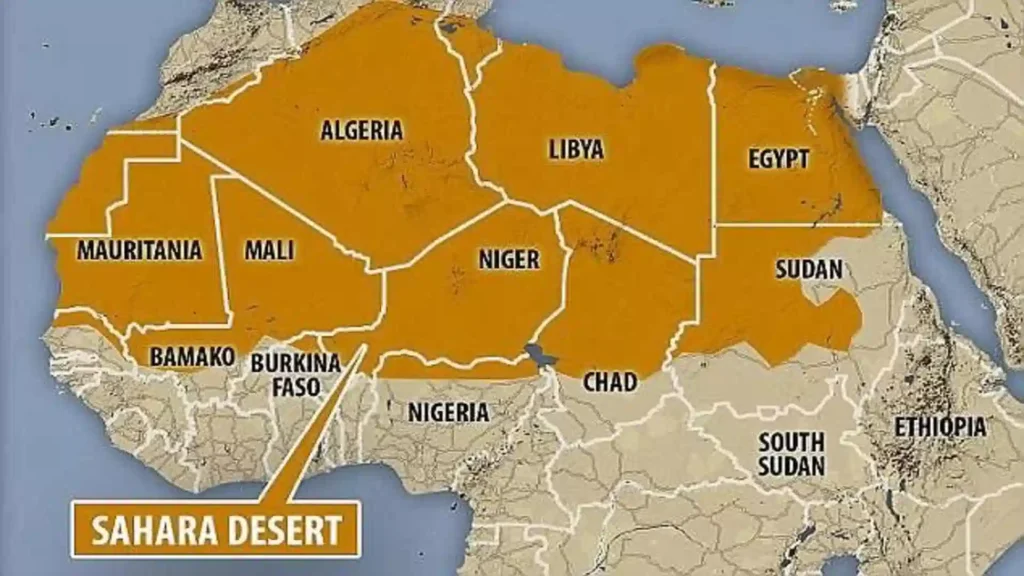
Understanding the vast expanse: Essential Sahara Desert facts spanning across North African nations.
When assessing key Sahara Desert facts, understanding physical geography and spatial scale provides vital context. The desert dominates North Africa, shaping climate patterns, human migration, and ecological corridors across the entire continent.
1. It Is Roughly the Size of the Entire United States
When travelers ask how big is the Sahara Desert , the numbers are astounding. Spanning approximately 9.2 million square kilometers, the Sahara covers nearly 31 percent of the African continent. It stretches 4,800 kilometers from the Atlantic coast of Morocco and Mauritania eastward to the Red Sea and spans 1,800 kilometers from Mediterranean shores south to the semi-arid Sahel zone.
2. Most of It Is Not Actually Sand
Despite iconic cinematic imagery, sand dune fields (known as ergs) make up only 20 to 25 percent of the Sahara’s vast surface. The overwhelming majority of the terrain consists of wind-swept rocky plateaus (hamada), vast stone and gravel plains (reg), dry riverbeds (wadis), and high mountain massifs such as the Tibesti and Ahaggar ranges.
3. It Spans 11 Sovereign Territories
The borders of the Sahara cross Morocco, Algeria, Tunisia, Libya, Egypt, Sudan, Chad, Niger, Mali, Mauritania, and Western Sahara. It stands as one of the few natural geographic features on Earth that dictates transcontinental geopolitics, environmental stability, and regional transport infrastructure across multiple nations simultaneously.
4. Large Portions Once Deep Underwater
The Tans-Saharan Seaway was a period of time that occurred millions of years ago, and during that time period, shallow prehistoric oceans drowned wide stretches of North Africa. The preservation of marine fossils, coral structures, and full skeletons of ancient basilosaurus whales in desert locations such as Egypt’s Wadi Al Hitan (Whale Valley) provides concrete evidence of significant geological upheavals that have occurred throughout the history of the Earth.
5. Morocco’s Tallest Dunes Reach 150 Meters High
The Erg Chebbi dunes Merzouga, in southeastern Morocco, represent one of the most accessible and striking dune fields in the world. Sculpted continuously by shifting winds, these wind-blown wind accumulations reach heights exceeding 150 meters, creating a dramatic golden sea of sand along the Algerian border.
| Geographic Terrain Type | Arabic Term | Percentage of Sahara | Key Physical Characteristics |
|---|---|---|---|
| Sand Seas / Dune Fields | Erg | 20% – 25% | Vast shifting sand dunes, star dunes, and sweeping crests sculpted by atmospheric winds. |
| Rocky Stone Plateaus | Hamada | 40% – 45% | Barren, elevated bedrock plateaus stripped of sand by intense long-term wind erosion. |
| Gravel & Pebble Plains | Reg/Serir | 30% | Flat open plains carpeted with dark, tightly packed gravel and polished desert pavement stones. |
| Mountain Systems & Salt Basins | Adrar / Chott | 5% – 10% | Volcanic peaks (Emi Koussi reaches 3,415 m) and dry, crusted salt flats below sea level. |
The Sahara Desert Facts: Climate and Weather
The severe climate of North Africa creates some of the most challenging living conditions on the planet. Examining Sahara Desert weather extreme temperatures reveals how humidity gaps, solar radiation, and continental wind patterns drive incredible day-to-night thermal shifts.
6. Temperatures Swing Dramatically Between Day and Night
The dynamics behind Sahara Desert weather extreme temperatures stem from a complete lack of ambient atmospheric humidity. Without water vapor or cloud cover to trap infrared thermal energy, daytime summer temperatures exceeding 50°C can plunge to freezing (0°C) or lower overnight. Sand radiates stored surface heat rapidly back into the clear sky as soon as the sun sets.
7. It Does Occasionally Snow on Sand Dunes
Long-term meteorological studies have shown that the Sahara Desert has grown by about ten percent since systematic recording began in the early 1900s. The process of desertification is characterized by the progressive transformation of semi-arid Sahelian grasslands into dry deserts. This transformation is driven by a mix of natural climatic cycles that span many decades, shifting monsoon rain belts, and climate pressures that are caused by humans.
8. Saharan Dust Fertilizes the Amazon Rainforest
One of the most remarkable global ecological connections involves transatlantic mineral transport. Strong high-altitude atmospheric winds carry over 180 million tons of nutrient-rich Saharan dust across the Atlantic Ocean every year. Depositing in the Amazon Basin, phosphorus rich dust sourced from ancient dried lake beds in Chad’s Bodélé Depression nourishes nutrient-depleted rainforest soils thousands of miles away.
9. The Sahara Is Expanding Southward
According to the findings of long-term meteorological research, the Sahara Desert has grown by around ten percent since the beginning of systematic monitoring in the early 20th century. Desertification is the process by which semi-arid Sahelian grasslands gradually transform into dry deserts. This process is caused by a combination of natural climatic cycles that span many decades, shifting monsoon rain belts, and climate pressures that are pushed by humans.
10. Rain Is Exceptionally Rare But Causes Severe Flash Floods
Core regions of the central Sahara receive under 25 millimeters of rainfall annually, with some remote hyper arid zones going years without a single drop. However, when rare localized convection storms dump rain onto baked, unabsorbing soil, torrential flash floods surge rapidly down dry wadis, creating dangerous water currents.
Facts About the “Green Sahara” and Paleoclimate Cycles
One of the most mind bending Sahara Desert facts is that North Africa was not always an arid wasteland. Paleoclimatologists have proven that vast savanna ecosystems, massive river systems, and freshwater lakes once covered regions now buried in sand.
11. The Sahara Was Green Within Human Memory
During the well-documented green Sahara African humid period (approximately 11,000 to 5,000 years ago), orbital shifts strengthened African monsoon systems. Strong seasonal rains transformed the barren landscape into vibrant tropical savannas, oak woodlands, and interconnected river systems, supporting thriving populations of hippos, crocodiles, elephants, and ancient human pastoral communities.
12. Ancient Rock Art Preserves a Lost Savanna World
There are thousands of prehistoric petroglyphs and cave paintings buried throughout desert plateaus, the most renowned of which may be seen at Tassili n’Ajjer National Park in Algeria. These paintings and petroglyphs give vivid artistic evidence of prehistoric times. In regions that do not receive any precipitation at the present time, highly detailed rock art shows animals such as hunters, swimming figures, cow herds, giraffes, and rhinos.
13. The Sahara Cycles Between Wet and Dry Every 20,000 Years
Every twenty thousand years, the natural wobbles of the Earth’s orbit, known as axial precession, cause a regular change in the angle of the incoming solar radiation, which in turn causes North African temperature patterns to shift. According to the projections of climate experts, natural orbital cycles will ultimately bring tropical monsoon rains back to the north, which would result in the restoration of a lush, green environment thousands of years farther in the future.
Facts About Sahara Desert Wildlife and Evolutionary Adaptations
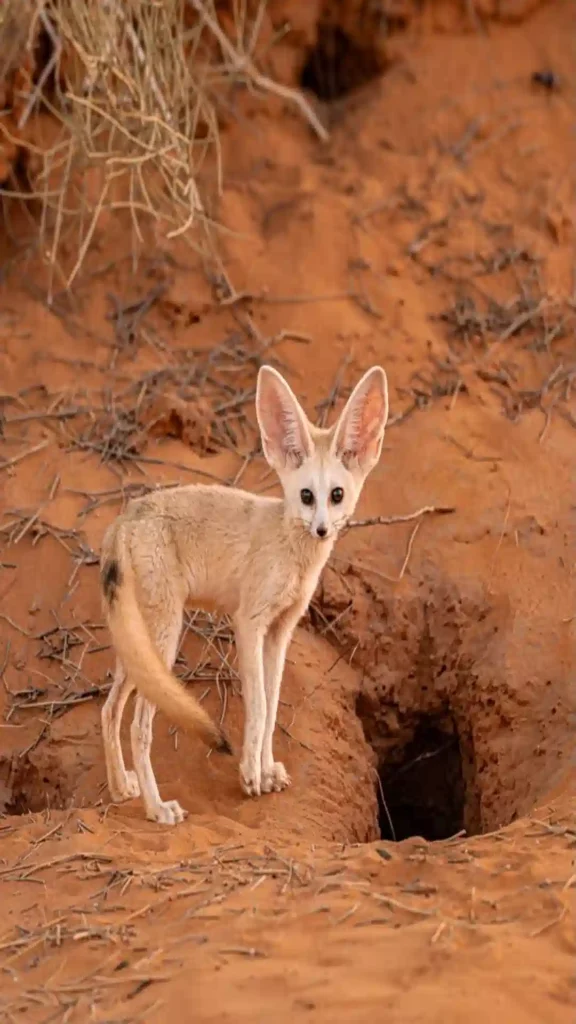
Unique wildlife: The fennec fox’s large ears help dissipate heat, illustrating amazing biological Sahara Desert facts.
Despite severe heat and water scarcity, specialized Sahara Desert wildlife animals have evolved impressive biological strategies to survive. From specialized renal conservation to nocturnal behaviors, desert species thrive across hyperarid terrain.
14. The Fennec Fox Features Remarkable Desert Adaptations
Examining fennec fox desert adaptations shows how natural selection solves heat exposure. As the world’s smallest canid, the fennec fox possesses enormously oversized ears measuring up to half its body length. These ears dissipate excess body heat via specialized blood vessels while detecting prey movement deep under the sand. Thick fur on their paw pads prevents thermal burns from sun-baked ground.
15. Relict Populations of Desert Crocodiles Survive in Mountain Pools
In remote volcanic massifs and permanent gueltas (rock pools) in Mauritania and Chad, isolated populations of West African dwarf crocodiles survive. These relict reptiles adapt to drying seasons by entering estivation, a state of dormancy inside underground burrows during the hottest, driest months.
16. Dromedary Camels Were Introduced from Arabia
Although single-humped dromedaries symbolize North African travel today, they are not native to the continent. Introduced from Arabia around 2,000 years ago, camels transformed continental logistics through specialized adaptations: storing fat in humps, sealing nostril slits against sandstorms, and surviving weeks without drinking water.
17. The Addax Antelope Never Needs to Drink Standing Water
One of the ungulates that has adapted the best to dry environments is the addax antelope, which is in a state of critical endangered status. They are able to travel to deep desert regions that are far beyond the reach of surface water holes because they obtain all of the essential hydration directly from desert succulents, tubors, and morning dew gathered on scrub leaves.
| Species Name | Primary Ecological Zone | Key Evolutionary Survival Adaptation |
|---|---|---|
| Fennec Fox (Vulpes zerda) | Sand Seas (Ergs) & Dunes | Radiative cooling through massive ears, pad fur protection, and nocturnal hunting. |
| Dromedary Camel (Camelus dromedarius) | Gravel Plains & Desert Corridors | Oval red blood cells, fat storage humps, and water loss resistance up to 30% body weight. |
| Sahara Horned Viper (Cerastes cerastes) | Loose Sand Fields & Scrubland | Sidewinding locomotion minimizes sand contact; it ambushes prey while buried in sand. |
| Addax Antelope (Addax nasomaculatus) | Remote Deep Sand Basins | Extracts all metabolic moisture from plants; coat color changes from brown to white by season. |
Facts About the People, Trade, and History of the Sahara
For millennia, human societies have adapted to the harsh conditions of desert existence. The human history of North Africa provides a wealth of information on resiliency and creativity, ranging from ancient trading networks to astronomical study.
18. Roughly 2.5 Million People Call the Sahara Home
In contrast to the perception of the Sahara as a desolate region, it is home to thriving indigenous cultures. The Amazigh (Berber), Tuareg, Bedouin, and Sahrawi peoples are examples of nomadic and semi-nomadic cultures that have gained profound traditional ecological knowledge. These peoples have survived for centuries in oasis towns and along ancient migratory routes.
19. Trans Saharan Routes Powered Continental Wealth
Exploring trans-Saharan trade routes history reveals how organized camel caravans linked Sub-Saharan West Africa with Mediterranean ports. Historic trading cities such as Sijilmasa in Morocco, Timbuktu in Mali, and Chinguetti in Mauritania accumulated vast wealth by trading gold, rock salt, textiles, spices, and manuscripts.
20. The Word “Sahara” Literally Means “Desert”
Linguistically, the name is derived directly from the plural Arabic noun ṣaḥrāʾ (صحراء), which simply means “desert” or “wilderness.” Therefore , the common phrase ” Sahara Desert ” is a linguistic pleonasm , which literally means ” Desert Desert . “
21. Hyper Arid Basins Are Prime Locations for Meteorite Discovery
Researchers value North Africa for sahara desert meteorites discovery. The arid climate prevents chemical weathering, while pale gravel plains make dark extraterrestrial rocks easily visible. Thousands of documented space rocks including rare lunar meteorites and Martian achondrites, have been recovered across flat desert plateaus.
Practical Guide to Visiting the Sahara Desert
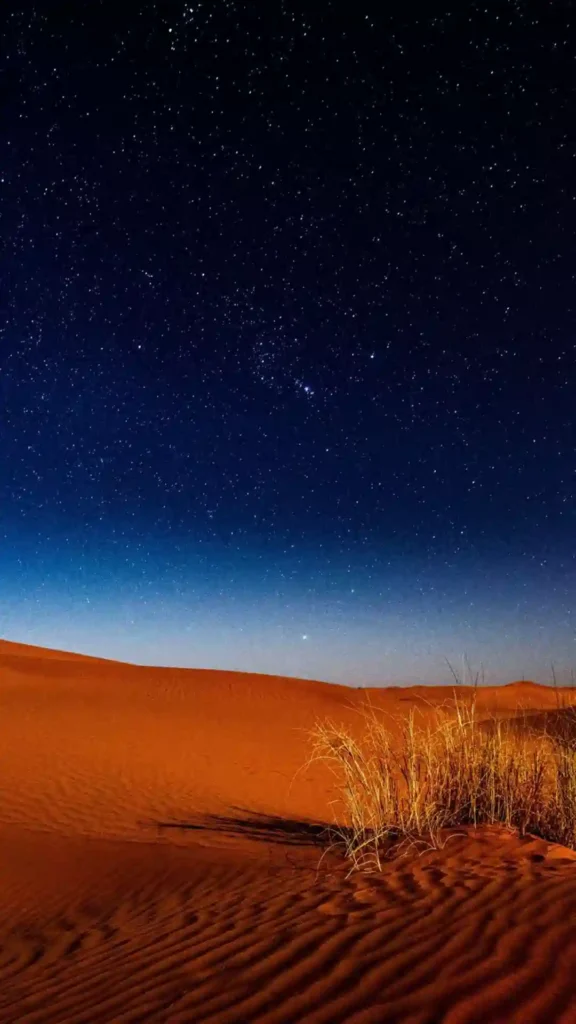
Stargazing highlights: Zero light pollution reveals brilliant constellations, key among nocturnal Sahara Desert facts.
If you are a traveler that wants a taste of North Africa and careful planning of logistics, the sand dunes are a safe and rewarding expedition.
22. Morocco Offers Exceptional Access to the Sand Dunes
Selecting a structured Morocco desert tour itinerary provides one of the safest and most accessible ways to enter the desert. Highlights like the Erg Chebbi dunes, Merzouga, and Erg Chigaga allow visitors to ride camels and stay in desert camps without requiring full-scale wilderness expeditions.
23. The Night Sky Provides Unmatched Stargazing Conditions
Experience stargazing sahara desert night sky conditions in areas with zero light pollution and ultra-clear air. The Milky Way, shooting stars, and complete constellations appear with breathtaking clarity over the sand dunes.
24. Desert Quietness Is a Deep Physical Experience
In distant dune camps, visitors frequently comment on the eerie quiet that pervades the area. The absence of metropolitan noise and traffic contributes to the creation of an environment that is unlike any other on the planet, one that is both peaceful and unforgettable.
25. Sunset Camel Treks Offer Timeless Desert Views
Riding camels across open sand dunes remains the quintessential desert adventure. Traveling at a peaceful, steady pace allows visitors to witness shifting colors across the golden landscape as the sun dips below the horizon.
Frequently Asked Questions About the Sahara Desert Facts
Is the Sahara the largest desert in the world?
In terms of scorching deserts, the Sahara is the biggest in the world. Despite this, polar deserts such as Antarctica and the Arctic are bigger in total because of the extremely low levels of yearly precipitation that they get.
Was the Sahara always a desert?
No. During the African Humid Period roughly 11,000 to 5,000 years ago, monsoon rains transformed the region into a green savanna filled with lakes, rivers, and diverse wildlife.
How many people live in the Sahara Desert today?
It is believed that there are over 2.5 million people living in the desert areas of North Africa. These groups include Amazigh, Tuareg, and Bedouin populations, in addition to established oasis cities.
Does it ever freeze or snow in the Sahara?
Indeed. During the winter months, high-elevation regions encounter temperatures that are below freezing overnight, and there have been confirmed instances of snowfall that are extremely uncommon in Ain Sefra, Algeria.
Which destination is best for a tourist desert trip?
The country of Morocco is often regarded as the optimal destination for tourists. A number of locations, such as Merzouga, offer convenient access to magnificent sand dunes, luxurious desert camps, and knowledgeable, experienced guides.
Related Guides and Tour Itineraries to the Sahara Desert Facts
- Camel Trek Morocco: Complete Guide to Trekking Erg Chebbi
- Atlas Mountains & Desert Routes Travel Map
- Best Time to Visit Morocco: Weather and Seasonal Insights
- Where is the Sahara Desert in Morocco
Popular Tours for the Sahara Desert Facts
Experience the Sahara Desert Facts Firsthand
Reading about the Sahara is just the beginning. Let our team arrange your custom private tour, from luxury desert camps under the stars to sunset camel rides across the golden dunes.