The Ultimate Morocco Food Tour Itinerary: Taste Morocco Like a Local
Booking a comprehensive Morocco food tour is the ultimate way to experience the cultural heart of North Africa. Moroccan gastronomy is not a single, uniform culinary tradition; it is a complex, centuries-old tapestry woven from Amazigh (Berber), Arab, Andalusian, and Mediterranean influences. For the independent luxury traveler, experiencing this rich culinary heritage requires moving far beyond the standardized buffet tables of large tour buses. To truly taste Morocco like a local, you need an agile, custom private transit strategy that allows you to stop at remote mountain villages, roadside clay-oven grills, and hidden medina alleyways that remain completely inaccessible to mass commercial tourism groups.
This comprehensive culinary roadmap provides a fully customizable multi-day itinerary designed specifically for travelers utilizing private transport fleets to unlock authentic gastronomic secrets. Designing a custom Morocco food tour allows you to experience the country at your own pace while enjoying world-class hospitality.
Table of Contents
1. Fes: The Architectural Hub of Traditional Imperial Gastronomy
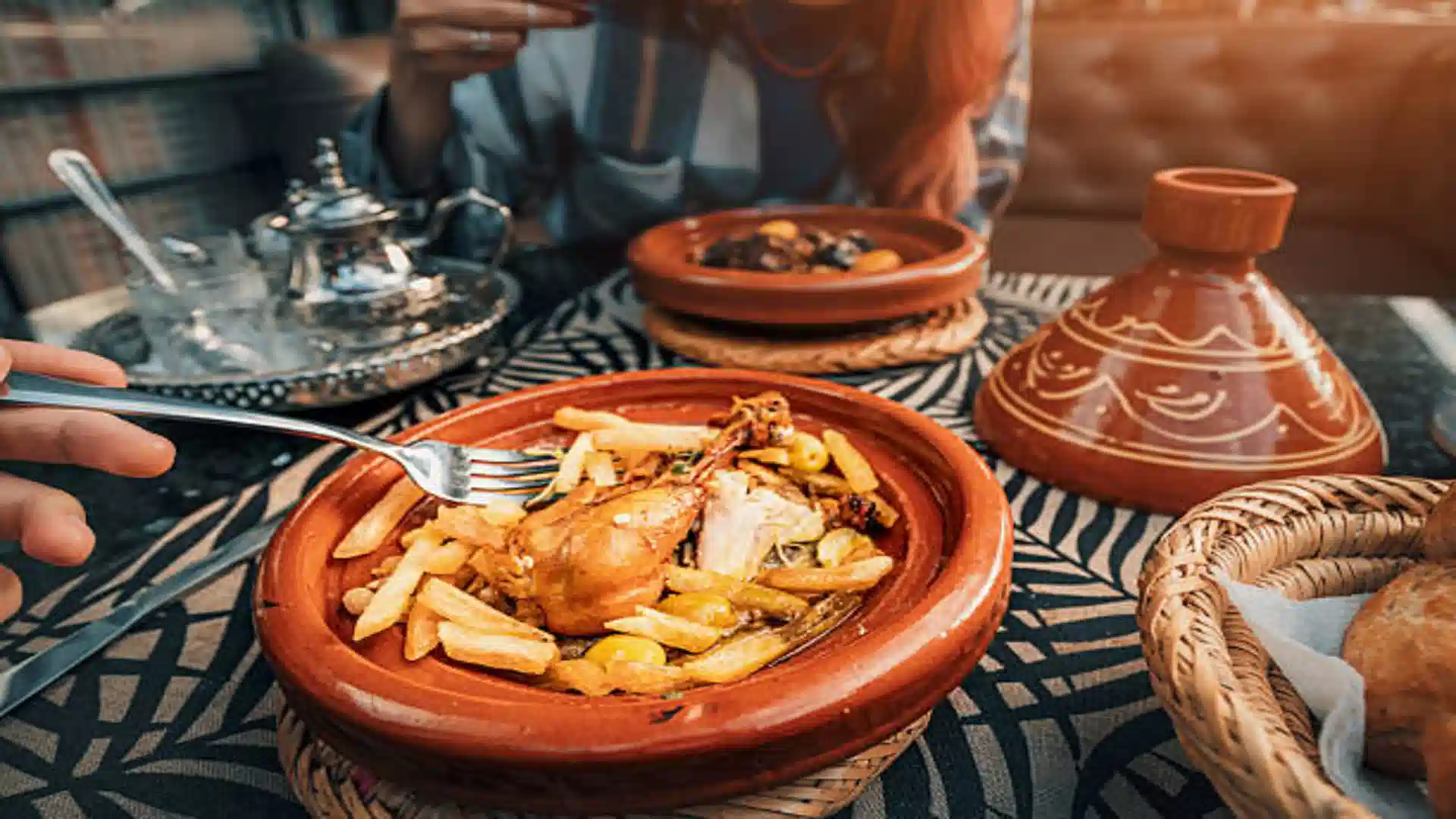
As the historic and intellectual heart of the Kingdom, Fes preserves the most complex, aristocratic recipes within Moroccan culinary history. Navigating the sprawling, car-free labyrinth of Fes el-Bali requires an expert local guide who understands the structural layout of the ancient food souks, making it a foundational stop on your customized Morocco food tour. When you plan a premium Morocco food tour, spending at least two days exploring Fes is absolutely essential to understanding the roots of Moroccan spice blending.
The Crown Jewel of Fassi Cuisine: Authentic Fassi Pastilla
The absolute pinnacle of traditional celebratory dining in Fes is the pastilla (sometimes spelled Bastilla). This dish represents a masterful architectural execution of contrasting sweet and savory elements, making it a major highlight of any luxury Morocco food tour. The top layer consists of crisp, paper-thin warka pastry dusted heavily with powdered sugar and ground cinnamon lanes. Beneath this lies hand-shredded poultry cooked down slowly in a rich aromatic broth of onions, saffron, and ginger. The base layer features toasted, skinless almonds crushed finely with orange blossom water, sugar, and melted butter.
An authentic fassi pastilla is historically prepared using young pigeon meat, though premium chicken is widely utilized today. The filling is slow-simmered with dozens of regional spices until tender, pulled by hand, and encased in translucent sheets of dough before being baked to an ultra-crisp, golden-brown finish. Every serious Morocco food tour must prioritize tasting this legendary palace dish.
Unlocking the Best Street Food in Fes
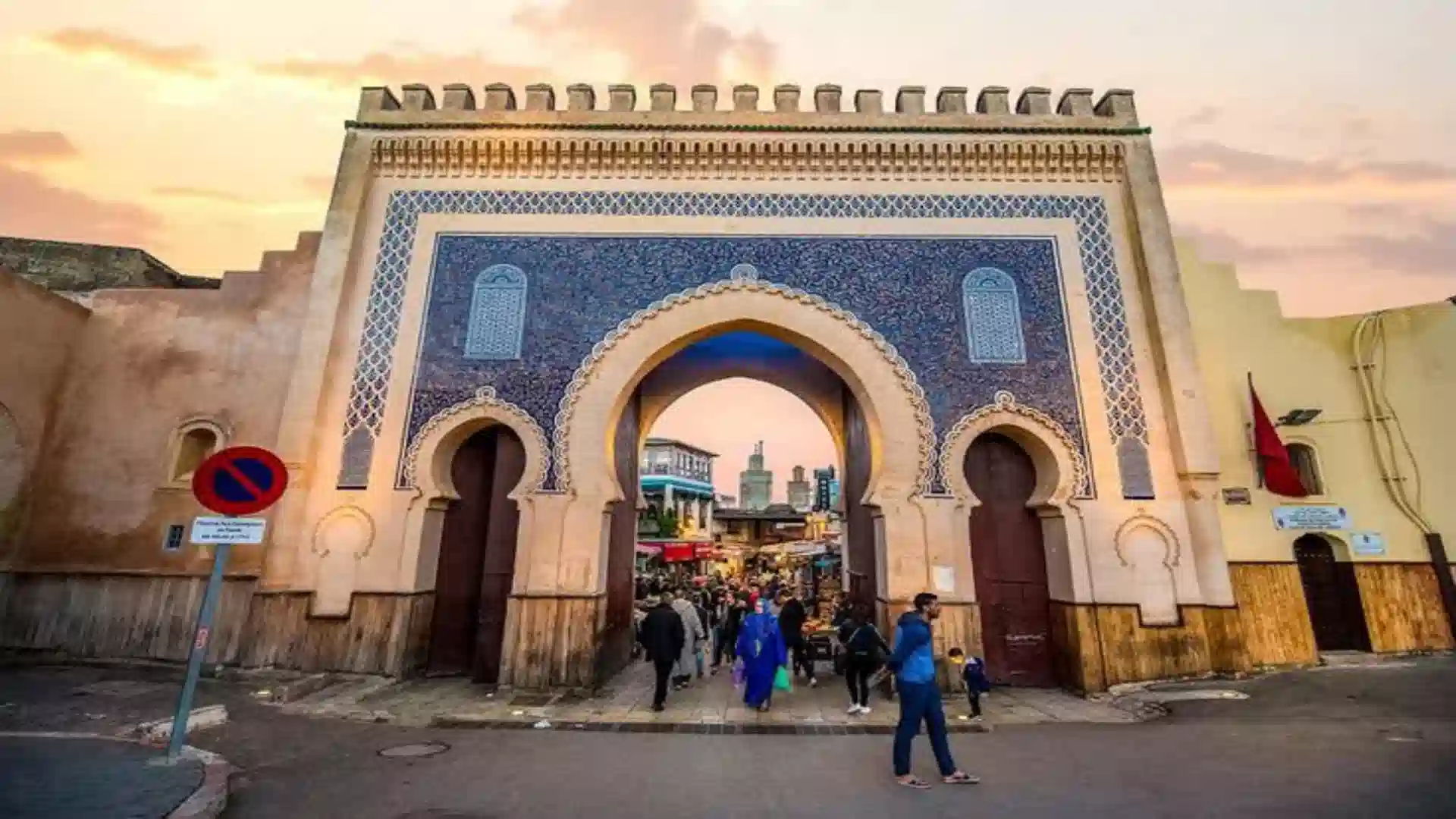
When stepping out of your private luxury vehicle at the Bab Boujloud gate during your Morocco food tour, your walking exploration should target the small, specialized stalls hidden deep within the Tala’a Kebira axis. To experience the absolute best street food in fes, prioritize these specific regional delicacies:
- Maachou Lamb Specialty: Tucked away in the historical markets, specialized family stalls slow-cook whole lamb heads overnight in clay pit ovens. The resulting meat is incredibly tender, falling cleanly off the bone, and is served simply with coarse sea salt, cumin, and hot khobz bread.
- Khlea (Spiced Preserved Beef): A historic preservation marvel, Khlea consists of strips of beef cured in garlic, cumin, and coriander, dried thoroughly in the sun, and then cooked down and preserved in a blend of beef tallow and olive oil. It is most authentically consumed at breakfast, sizzled gently in a clay tajine with fresh country eggs.
- Svenj: Traditional Moroccan donuts, fried fresh to order in large, iron cauldrons. Crisp on the exterior and airy inside, they are strung together with wild palm fronds for easy transport.
- Maakouda Potato Cakes: These are savory, golden-fried potato discs seasoned heavily with cumin, garlic, and fresh coriander. Locals tuck them inside fresh crusty bread with a smear of spicy harissa sauce for a quick, filling street food lunch.
- Babbouche Snail Soup: Cooked in a deep, aromatic broth infused with over fifteen different wild herbs and spices—including aniseed, licorice root, thyme, and hot peppers—this warming soup is a beloved local remedy for digestion and a staple of late-night medina markets.
Private Driver Morocco Tour Note: Fes el-Bali contains over 9,000 narrow alleys completely closed to motorized vehicles. Your private driver will drop you at the optimal secure entry gate (such as Batha or Bab Boujloud) to meet your professional local walking guide, ensuring a seamless transition from your luxury air-conditioned vehicle directly into the historical heart of the medina on your custom Morocco food tour.
2. Midelt and the Middle Atlas: Roadside Taverns and Alpine Rivers
Leaving the imperial north behind, your custom route ascends into the Middle Atlas mountains. This geographical transition completely changes the culinary landscape, moving from complex palace dishes to rustic, high-altitude comfort food centered around open-fire cooking and freshwater ecosystems. This mountainous stretch perfectly illustrates why a private driver morocco tour is indispensable for true food lovers embarking on a professional Morocco food tour, allowing you to stop spontaneously at tiny, unmarked mountainside grills.
The Art of Roadside Charcoal-Grilled Kefta and Mechoui
As your private 4×4 travels along the scenic mountain passes through the cedar forests of Azrou and the high plains of Midelt, your custom Morocco food tour bypasses standard tourist rest stops in favor of authentic roadside butcher shops.
In these mountain communities, the culinary experience is beautifully direct. You select your specific cut of grass-fed High Atlas lamb or beef directly from the butcher. The meat is ground fresh on the spot, seasoned heavily with wild cumin, onions, sweet paprika, and finely chopped mint, and shaped into Kefta skewers.
The skewers are grilled immediately over raw holm-oak charcoal right on the roadside, ensuring the fats render cleanly into the fire, infusing the meat with a rich, smoky profile. This is accompanied by Taktouka—a vibrant, warm salad composed of fire-roasted bell peppers, tomatoes, garlic, and unrefined olive oil cooked down slowly in heavy cast-iron skillets. Choosing a private fleet custom stop on your Morocco food tour allows you to hand-select fresh-cut meats from local valley butchers and experience traditional open-air charcoal grills side-by-side with local Atlas transit drivers.
High-Altitude Agriculture and Indigenous Terroir Products
The Middle and High Atlas regions are also the agricultural backbone of traditional Moroccan culinary experiences. Driving through these valleys on your specialized Morocco food tour, you will see terraced orchards and fields that yield unique local ingredients:
- Taliouine Saffron: The high plateaus of the south-central Atlas produce some of the most potent, premium saffron threads in the world. Harvested by hand at dawn, this spice provides an intense crimson color and deep earthiness to high-end festival tagines.
- Wild Mountain Honey: Local beekeepers set up wooden hives along the rocky slopes, harvesting distinct varietals of raw honey infused with wild thyme, rosemary, and lavender flowers.
- Meknes Olive Groves: The low foothills surrounding the mountains are covered in thousands of ancient olive trees. The hand-pressed oils produced here are thick, slightly peppery, and serve as the golden base for nearly every single authentic slow-cooked dish you will experience on a premium Morocco food tour.
3. Merzouga and the Sahara: Volcanic Sand-Baked Bread and Nomadic Spices
As the mountainous terrain drops down into the sweeping orange dunes of Erg Chebbi, the culinary traditions shift dramatically to mirror the resourceful, brilliant survival strategies of the nomadic indigenous communities. For many travelers, encountering authentic sahara desert traditional food under a canopy of desert stars is the most unforgettable chapter of their entire morocco custom itinerary and dedicated Morocco food tour.
Madfouna: The Iconic Sand-Baked “Berber Pizza”
The absolute highlight of Saharan traditional food is Madfouna, an ancient, heavy flatbread stuffed with rich ingredients and baked directly beneath the desert floor. People often wonder how is berber pizza made, and the process is a beautiful tradition passed down through generations of desert nomads. Experiencing this preparation firsthand is a core highlight of a professional Morocco food tour.
A robust, leavened durum wheat dough is rolled flat and stuffed with minced beef, eggs, and almonds. Next, a pit is dug in the Saharan sand where hard desert wood is burned down completely to glowing white embers. The stuffed dough is placed directly onto the hot volcanic sand bed and covered cleanly with hot ash. After roughly 40 minutes of slow, insulated baking, the bread is unearthed, dusted clean, and sliced fresh for guests. The outer crust achieves a deep, smoky, wood-fired crispness while the interior remains intensely juicy and aromatic, making it a standout meal on your Morocco food tour.
Sahara Desert Traditional Food Elements
When staying at a premium desert camp accessible via your agency’s specialized off-road 4×4 fleet during your customized Morocco food tour, your evening meal under the stars should center on traditional Saharan slow-cooking:
- Tajine Abadir: A nomadic mountain and desert tajine where a heavy clay vessel is loaded with root vegetables, camel meat, and wild thyme, then buried entirely in hot coals for several hours.
- Authentic Saharan Mint Tea Ritual: Unlike the sweet mint tea of the north, the desert preparation utilizes a smaller pot, a higher concentration of wild green tea leaves, and intense boiling over open embers to create a deeply concentrated, bitter, and frothy digestive beverage served in small glasses.
- Harira Soup with Dates: While famously used to break the daily fast during holy celebrations, a rich, thick bowl of lentil, chickpea, and tomato-based Harira soup is served nightly in the desert. It is balanced beautifully by a side plate of sweet, local Medjool dates harvested directly from the nearby Tafilalet oasis, offering a perfect recovery meal on your comprehensive Morocco food tour.
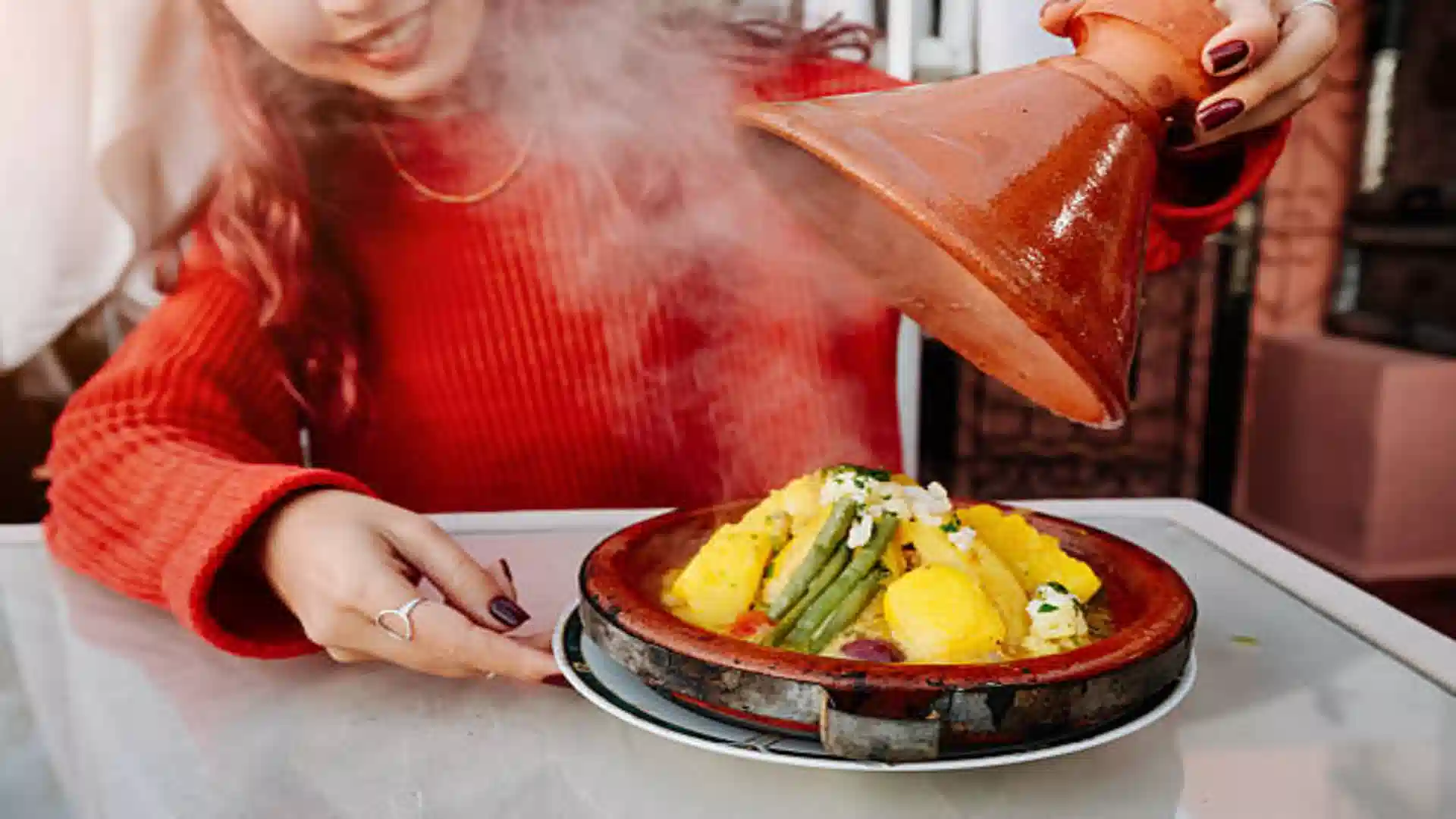
4. Marrakech and the Atlantic Coast: Imperial Street Performance and Fresh Coastal Harvests
Your private Morocco food tour transit route moves westward, crossing back through the dramatic landscapes toward the high-energy souks of Marrakech before terminating at the pristine Atlantic fishing ports of Essaouira.
The Nightly Feast of Marrakech Medina Food Tour
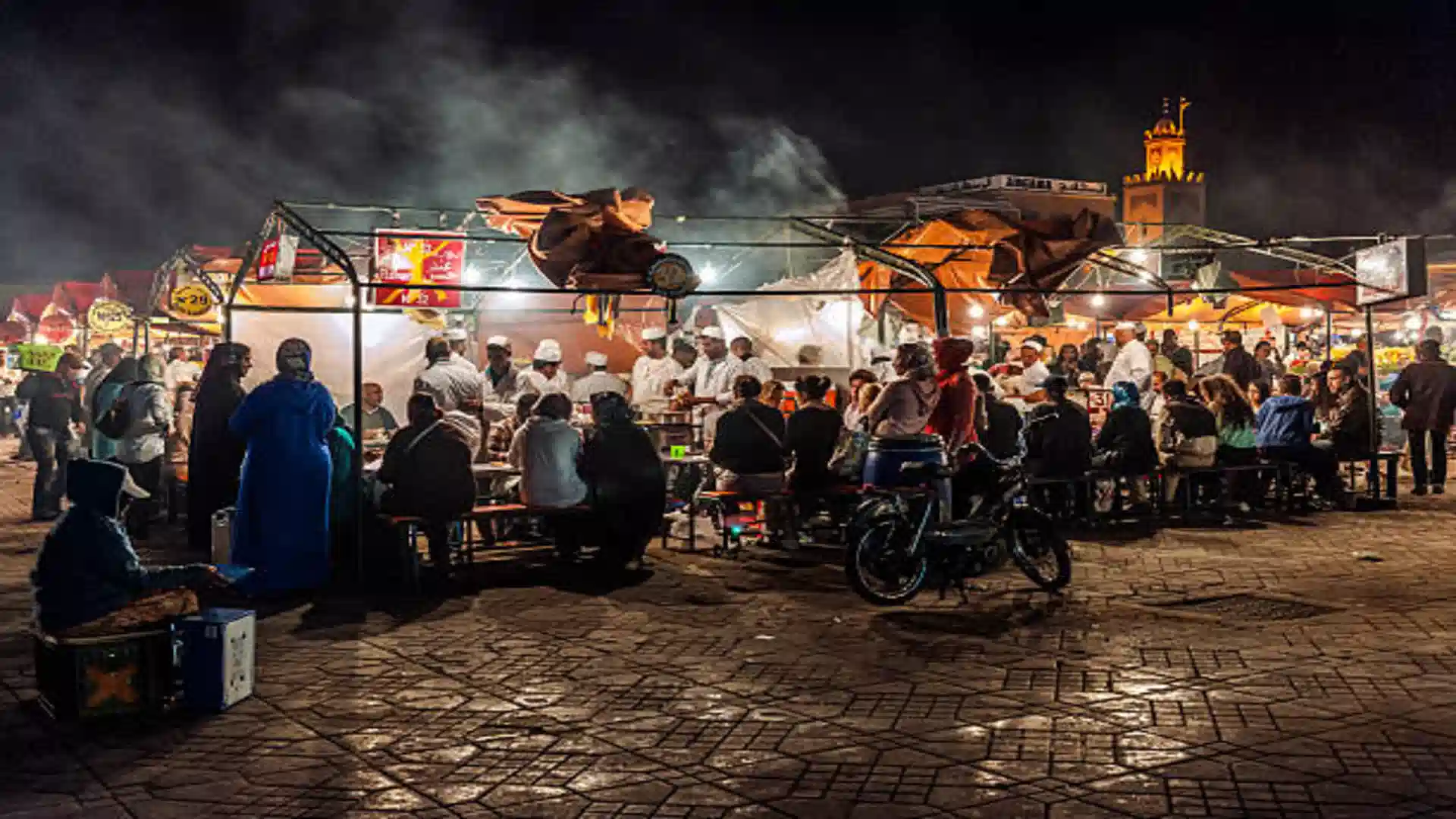
As the sun sets over the red city, the historic Jemaa el-Fnaa square transforms into the world’s largest open-air street food market. To navigate this high-energy environment safely and authentically, look past the generic tourist menus and target the highly specialized stalls that focus on just one iconic dish during your marrakech medina food tour. This location is often considered the most vibrant night of any luxury Morocco food tour:
- Tanjia Marrakchia: The definitive dish of Marrakech. Cuts of beef shin, garlic, saffron, cumin, preserved lemon, and unrefined smen (aged, salted butter) are sealed tightly inside an amphora-shaped clay jar. The jar is brought down to the local public bathhouse, where it is buried deep within the hot wood ashes that heat the water. It slow-simmers for over six hours, melting the collagen until the beef is meltingly tender and bathing in a rich, gelatinous, citrus-spiced sauce.
- Mechoui Alleys: Step down into the historic subterranean clay ovens where whole sheep are suspended vertically over smoldering wood fires. The meat cooks slowly in its own rendering fat until the skin turns into a crisp, lacquer-like shell while the meat remains completely succulent.
- Bissara (Fava Bean Soup): Served primarily from small, bustling morning stalls, this thick, creamy soup made from dried fava beans is heavily drizzled with extra virgin olive oil, dusted with hot cumin and chili flakes, and eaten steaming hot with fresh clay-oven flatbread, providing an amazing breakfast stop on your custom Morocco food tour.
Essaouira Fresh Seafood Spots
A comfortable drive along the straight western highway in your private vehicle brings you to the white-washed ramparts of Essaouira, the perfect coastal conclusion to an immersive Morocco food tour. The culinary theme here transitions immediately from deep earth spices to vibrant, hyper-fresh oceanic harvests.
Skip the formal beachfront restaurants and walk straight down to the bustling blue-boat fishing port to uncover the best essaouira fresh seafood spots. Here, local open-air wooden grills line the docks. You select your lunch directly from the ice beds of the morning catch: fresh-caught sardines, sea bass, red snapper, sea urchins, and local calamari.
The seafood is thrown directly onto hot iron grates with nothing more than coarse sea salt and a squeeze of fresh lemon juice, grilled over hardwood charcoal, and served alongside cold, crisp Moroccan salad and fresh crusty bread. This refreshing experience adds incredible variety to your tailored Morocco food tour itinerary.
Why Private Transport is the Only Way to Taste Morocco Like a Local
To truly experience this comprehensive culinary map, absolute itinerary flexibility is non-negotiable. Large group travel forces visitors into sanitized, high-volume commercial dining spaces designed for speed rather than authenticity.
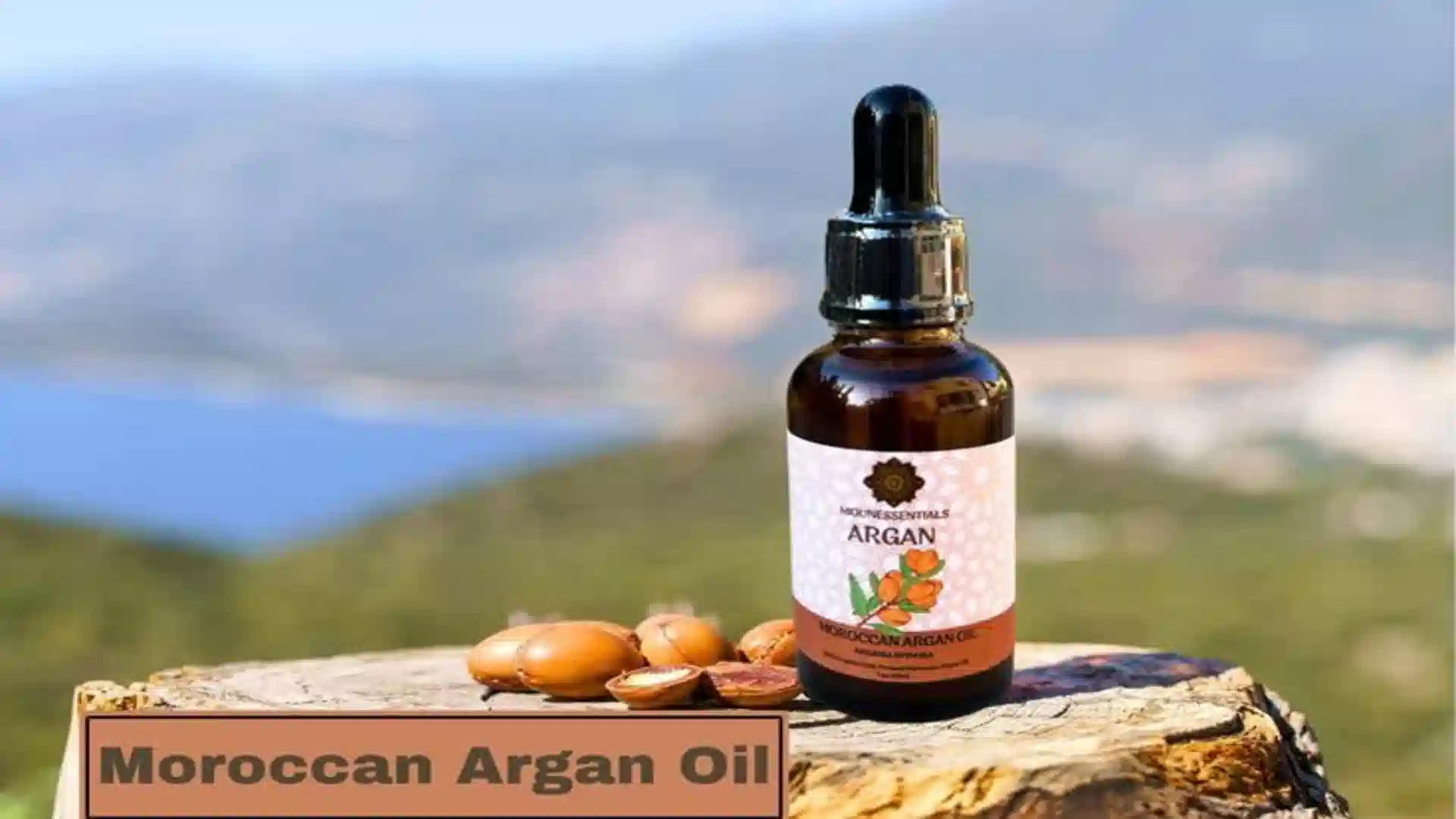
When you book a morocco custom itinerary with a professional private transit company, your entire travel experience is optimized around authentic discovery. A modern, premium fleet of air-conditioned vehicles provides the physical infrastructure to comfortably traverse rugged mountain terrain, while elite local drivers ensure you can seamlessly communicate with village artisans, market merchants, and local chefs. Whether you want to pull off the road spontaneously to watch a family grind fresh argan oil by hand, or take a specialized detour into a remote valley for a private cooking class, private transport transforms your travel from a basic sightseeing trip into a deep, life-changing culinary immersion. A premium Morocco food tour requires this exact blend of elite transport and deep local expertise to be executed successfully.
A Deep Dive into Moroccan Culinary History and Spice Blending Artistry
To fully appreciate a luxury Morocco food tour, one must understand the ancestral spice trade that transformed the country’s kitchens into a world-class gastronomic capital. For over a thousand years, caravans crossed the Sahara Desert, trading gold and textiles for precious aromatic roots, seeds, and barks. This constant cultural exchange birthed a highly sophisticated spice blending methodology that forms the foundation of all traditional moroccan culinary experiences today. When exploring the souks on your tailored Morocco food tour, the history of these spice trails comes to life through your senses.
The Mystery of Ras El Hanout
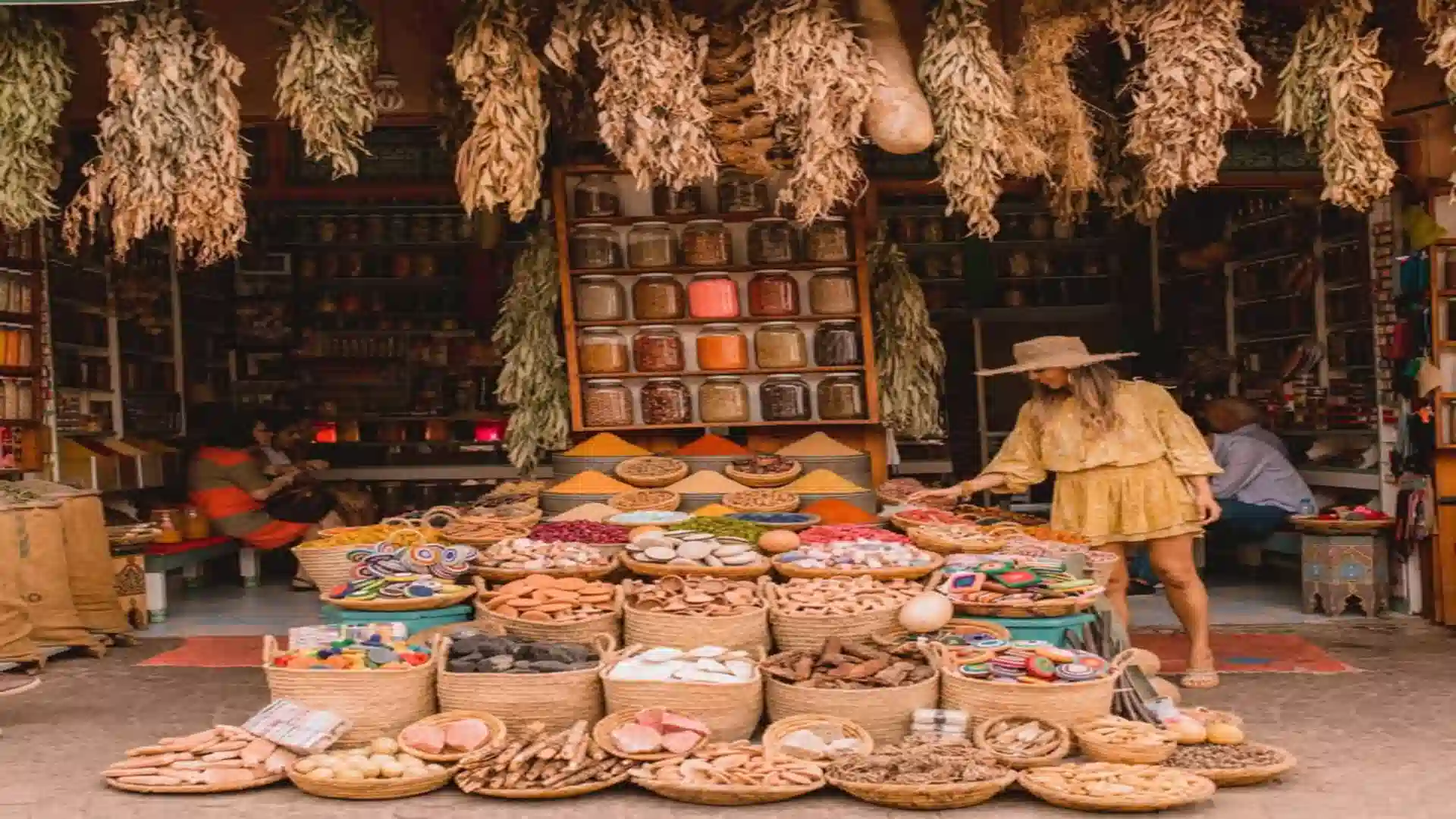
Walk into any spice stall within the ancient spice markets of Fes or Marrakech during your customized Morocco food tour, and you will be confronted by towering, colorful cones of ground spices. The most legendary blend is Ras El Hanout, a phrase which translates literally to “the head of the shop.” This name implies that the blend represents the absolute finest ingredients the spice merchant has to offer.
A master spice artisan crafts their signature Ras El Hanout using anywhere from twelve to over thirty individual spices, meticulously toasted and ground separately to preserve their essential oils. While family recipes are guarded like state secrets, an authentic premium blend encountered on a Morocco food tour typically balances:
Warm Base Notes: Ground ginger, turmeric, and sweet cinnamon bark.
Aromatic Mid-Notes: Cardamom pods, nutmeg, mace, and allspice.
Pungent and Earthy Highlights: Black pepper, cloves, coriander seeds, and ash tree berries.
Exotic Additions: Rare additions like dried lavender buds, rosebuds, and wild cubeb pepper.
Unlike spice mixtures in other global cuisines, Ras El Hanout is not designed to add intense chili heat. Instead, it adds an incredibly deep, complex, warm aroma that acts as the flavoring anchor for slow-cooked winter game, rich lamb Mrouzia tagines, and traditional celebratory couscous. Discovering these flavor profiles is what makes an authentic Morocco food tour so rewarding for international culinary enthusiasts.
Preservation as a Culinary Art Form
Historically, Morocco’s extreme geographical diversity—ranging from snow-capped peaks to scorching desert sands—forced local communities to master complex food preservation techniques. What began as a vital survival mechanism evolved over the centuries into a deliberate art form that defines the modern flavor profile of Moroccan cuisine, offering an incredible educational component to your custom Morocco food tour.
- Smen (Aged Cultured Butter): This is a traditional fermented butter that carries a pungent, sharp profile similar to fine blue cheese. Fresh country butter is clarified, kneaded repeatedly with wild thyme infusions, heavily salted, and sealed inside airtight clay jars buried underground. Aged for months or even decades, a single teaspoon of smen added to a tagine provides an incomparable savory depth that you will learn to identify on your regional Morocco food tour.
- Hamed M’serel (Preserved Lemons): Local Beldi lemons are split open, packed tightly with coarse sea salt, and submerged in their own juices for at least forty days. The fermentation process completely softens the rind, removes the harsh bitterness, and creates an intense, mellow, salty-tart citrus profile that is mandatory for authentic chicken and olive tagines. Tasting these authentic ingredients is a core goal of any premium Morocco food tour.
Understanding Traditional Dining Etiquette and Communal Customs
To fully taste Morocco like a local, you must embrace the traditional social customs that surround the dinner table. In Moroccan culture, a meal is never a rushed, purely physical act of consumption—it is a sacred ritual of hospitality, community connection, and profound sharing, which forms the true spirit of every immersive Morocco food tour.
The Low Round Table and Hand-Eating Rituals
In traditional households and local medina taverns visited along your personalized Morocco food tour route, meals are served on low, round wooden tables called a Mida. Diners sit closely together on plush cushions or low sofas, emphasizing absolute equality and shared community during the feast.
Knives, forks, and spoons are traditionally absent from an authentic communal table. Instead, diners utilize their right hand exclusively, using their thumb and first two fingers to expertly pinch meat and vegetables from the communal clay dish. The left hand is considered impure and remains off the table.
Crucially, a round loaf of fresh Khobz (Moroccan flatbread) is placed before every diner. Pieces of this crusty, absorbent bread serve as your primary utensil throughout your Morocco food tour. You use the bread to cleanly scoop up thick sauces, secure tender pieces of slow-cooked meat, and carry food safely to your mouth without spilling a single drop.
The Sacred Friday Couscous Gathering
While travelers on a standard Morocco food tour can order couscous any day of the week at tourist-oriented restaurants, the authentic consumption of this national dish is strictly tied to Friday, the holy day of Islam.
The preparation of a true Friday couscous takes several hours of meticulous labor. The semolina grains are rubbed by hand with oil and water, then placed into a perforated metal pot (Keskas) fitted directly over a deep, boiling cauldron of meat and vegetable broth. The grain is steamed multiple times, removed between cycles to be fluffed by hand with cold water and smen, ensuring the final texture is incredibly light, airy, and soft.
Following Friday prayers, extended families gather around a single, massive ceramic platter. The mountain of fluffy steamed semolina is topped carefully with slow-cooked beef or lamb, ringed by seven sacred seasonal vegetables (including sweet pumpkin, carrots, zucchini, cabbage, and turnips), and drenched in rich, aromatic broth. Sharing this meal with locals represents the absolute peak cultural immersion available on an authentic Morocco food tour.
Frequently Asked Questions (FAQ)
What is the most famous food in Morocco?
The most famous Moroccan dish globally is Couscous, traditionally prepared on Fridays by steaming semolina grain multiple times over a rich meat and seven-vegetable broth. However, for everyday culinary depth, the Tajine—a slow-cooked stew named after the conical clay vessel it is prepared in—is the defining staple of the country and a primary focus of any professional Morocco food tour.
Why does a Morocco food tour require a private driver?
An authentic Morocco food tour requires private transport because the country’s best, most historic culinary secrets are highly localized and scattered across remote regions, such as roadside grills in the Middle Atlas or traditional sand-baked bread in the Sahara Desert. Private drivers allow you to bypass rigid commercial tourist trails and stop directly at authentic, small-scale local providers.
Is the street food in Fes and Marrakech safe for international travelers?
Yes, the street food in the historic medinas of Fes and Marrakech is highly safe, provided you follow the local layout: eat at stalls that display high turnover with local Moroccan families, ensure your meats are grilled fresh to order over high heat, and drink bottled or filtered water throughout your Morocco food tour journey.
What is the difference between Northern and Southern Moroccan food?
Northern Moroccan cuisine features heavy Andalusian and Mediterranean influences, utilizing delicate fresh herbs, fish, and sweet-and-savory combinations like the Fassi Pastilla. Southern and Saharan cuisine relies heavily on rugged, earthier elements, emphasizing nomadic flatbreads like Madfouna, hearty camel stews, and bold desert spice combinations designed for preservation, making a comprehensive Morocco food tour an incredibly diverse journey.
Can vegetarians comfortably enjoy a Morocco food tour?
Absolutely. While Moroccan cuisine features spectacular meat dishes, it is heavily rooted in agriculture. A traditional meal always kicks off with an array of cooked and raw salads, including smoky Zaalouk (eggplant dip), sweet tomato jams, and spiced lentils. Most operators designing a customized Morocco food tour can easily modify itineraries to feature entirely vegetarian-friendly tagines and couscous platters.
Recommended Tours & Related Guides
Our Recommended Custom Itineraries
4-Day Desert Culinary Adventure from Fes to Marrakech: Discover sand-baked Berber pizza and high-altitude mountain grills with your own private 4×4 fleet on this compact Morocco food tour option.
7-Day Imperial Cities and Coastal Food Route: A luxury private transit tour connecting the traditional palace recipes of Fes, the street theater of Marrakech, and the fresh seafood of Essaouira for the ultimate comprehensive Morocco food tour experience.
Related Travel Guides
How to Navigate Morocco’s High-Speed Train System: Read our complete guide on using the Al Boraq high-speed rail network for seamless transit between Tangier, Rabat, and Casablanca.
Meet Our Team of Expert Local Drivers and Bilingual Guides: Learn more about how our professional drivers, fluent in English and Italian, help you unlock authentic local experiences safely and comfortably on your tailored Morocco food tour.
Visualizing Your Gastronomic Route
To get a true sense of the visual diversity you will encounter along this curated route, browse the landscapes and real-world dining environments below:
For deeper historical context regarding global culinary preservation movements and the science of food fermentation, you can explore the UNESCO Intangible Cultural Heritage Lists which protect traditional Mediterranean dietary systems, or review the World Food Travel Association research guidelines on sustainable culinary tourism development to learn how a certified Morocco food tour supports rural communities.
Design Your Custom Moroccan Food Route Now
Don’t compromise your travel experience by viewing Morocco through the crowded window of a commercial tour bus. Get in touch with our operations team today to secure a modern, air-conditioned vehicle fleet and an elite bilingual driver to map out your completely personalized luxury culinary route. Booking a specialized, private Morocco food tour with us lets you turn your travel dreams into a seamless, delicious reality.