Camel Trek Morocco: The Complete Guide to Trekking Erg Chebbi & the Sahara
Almost every Morocco itinerary that heads into the Sahara eventually asks the same question: what does a camel trek Morocco actually involve, and how long should it be? A one hour sunset ride and a full 3 day camel trek through Merzouga are hardly the same activity! One is a photo opportunity, the other is a real, physically demanding journey into the dunes, sleeping under a sky with almost no light pollution, and riding for hours between camps most tourists never see.
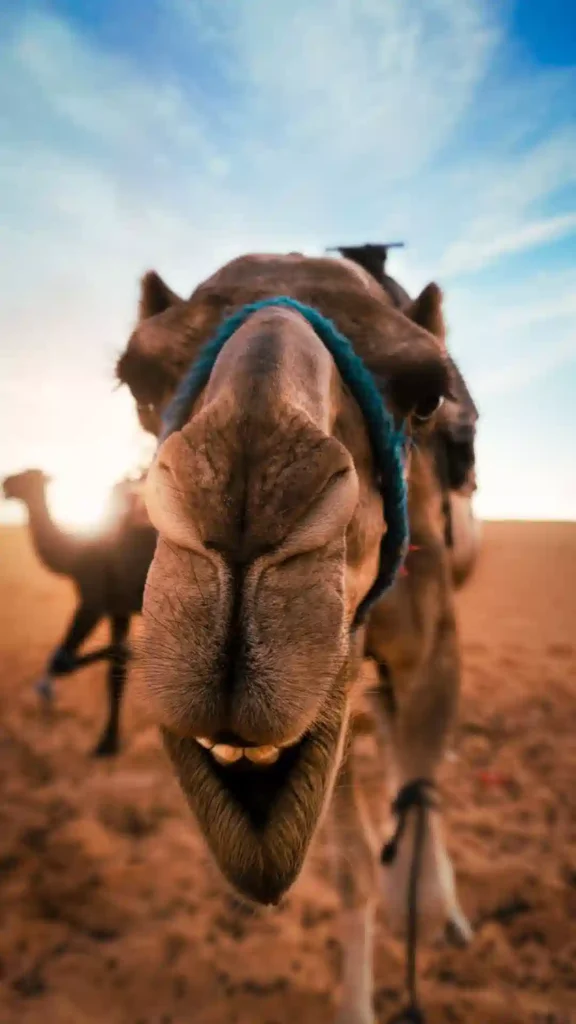
Get up close with your gentle companion on an unforgettable camel trek in Morocco.
This guide covers everything worth knowing about a camel trek in Morocco: the difference between a camel trek Erg Chebbi and the quieter dunes further south, exactly what a 3 day camel trek Morocco itinerary looks like hour by hour, what to pack, how to choose a trek that matches your fitness and time, and the ethical questions worth understanding before you book.
Quick Answer: Camel Trek Morocco at a Glance
- Most popular option: A one-night camel trek into Erg Chebbi near Merzouga, with a sunset ride out and sunrise ride back
- Most immersive option: A 3 day camel trek Merzouga itinerary, riding deeper into the dunes with two nights at more remote camps
- Quieter alternative: A camel trek from Zagora into Erg Chigaga, further south and far less visited than Erg Chebbi
- How long you actually ride: Typically 1–2 hours to reach an overnight camp; longer, multi-day treks cover more ground each day
- Best time of year: October through April, when daytime desert heat is manageable for both riders and camels
- Not required, but common: Most desert tours build a camel trek into the itinerary automatically a 4×4 transfer alternative is usually available for those who prefer not to ride
What Is a Camel Trek in Morocco, Exactly?
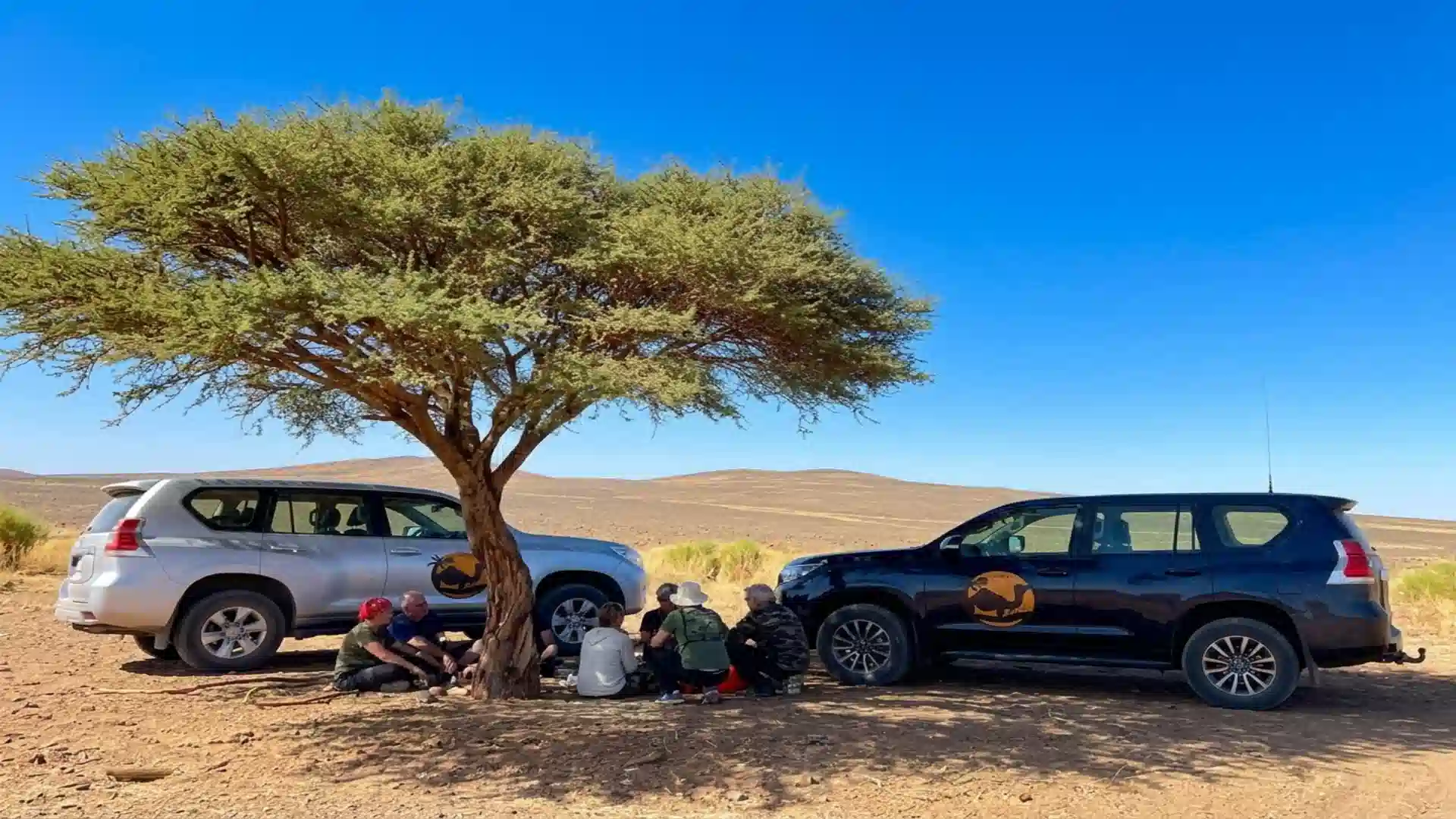
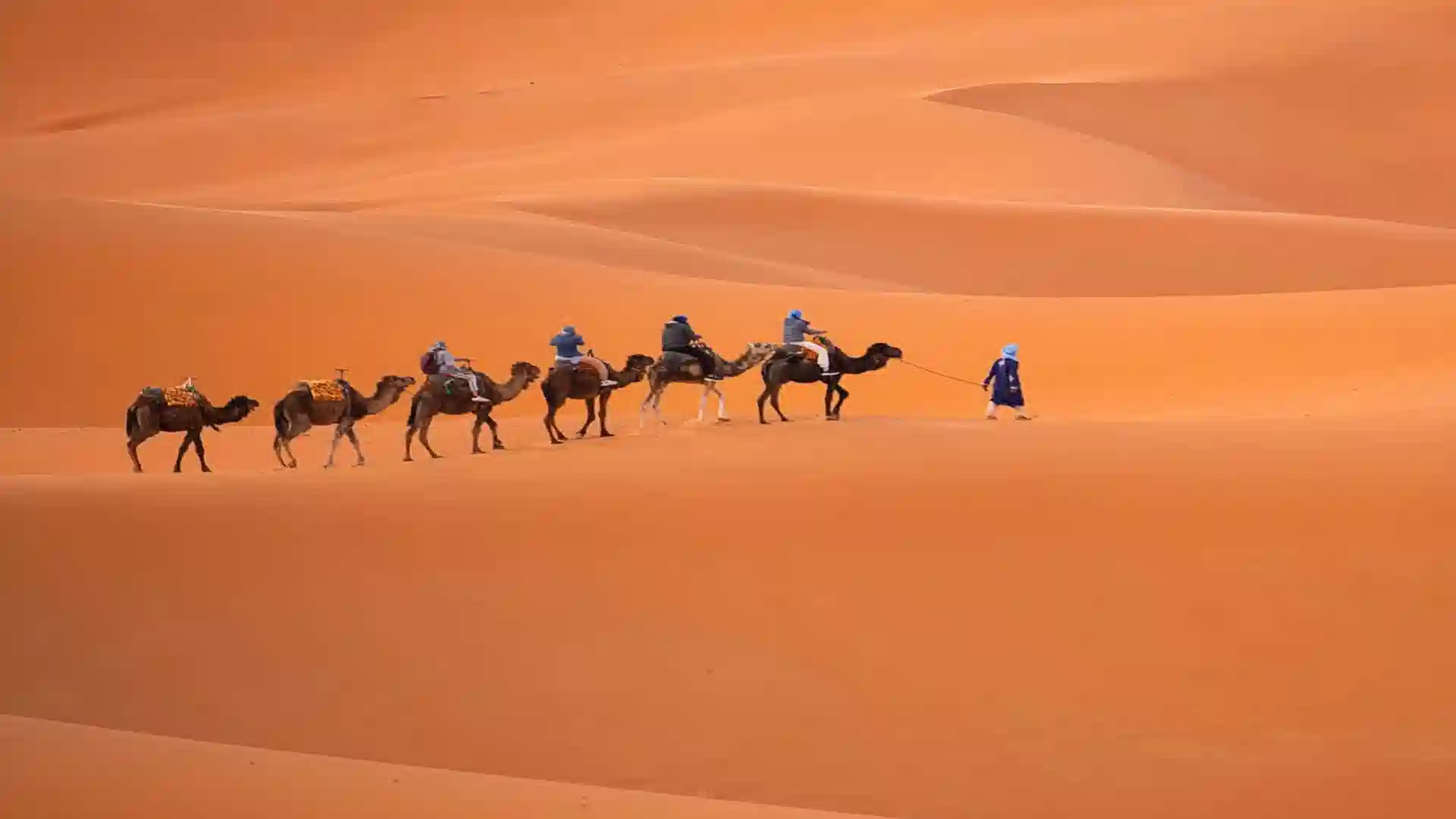
A camel trek in Morocco is an organized ride, usually led by a local guide, that takes travelers from the edge of the Sahara into the dune fields themselves, typically ending at a desert camp for the night. The camels,, technically dromedaries, single-humped and native to North Africa, are led in a line (a caravan) rather than ridden independently, with a guide walking or riding alongside. This isn’t a theme-park activity; the dunes at Erg Chebbi genuinely stretch for miles, and once you’re an hour into the ride, the modern world disappears almost completely no roads, no power lines, no other tour groups in sight, just sand, wind-carved ridgelines, and silence.
Most travelers experience their camel trek in Morocco as part of a wider multi-day desert tour, usually departing from Marrakech, Fes, or Casablanca, with the ride itself forming the final leg of the day’s journey. You travel by vehicle for most of the distance, then swap to camel for the last stretch into the dunes where no vehicle can easily follow.
The History Behind Morocco’s Camel Caravans
Long before it became a tourist activity, the camel caravan was the backbone of trans-Saharan trade for centuries, moving salt, gold, textiles, and enslaved people between West Africa and Morocco’s imperial cities. Towns like Sijilmasa, near modern-day Rissani close to Merzouga, once served as major staging points on these routes, where caravans of hundreds of camels would assemble before setting out on journeys across the desert that could take weeks. The economic and cultural exchange along these routes shaped much of southern Morocco’s architecture, music, and demographics, including the Gnawa musical tradition still performed at desert camps today, which traces its roots to West African communities who arrived along these same caravan paths.
Today’s tourist camel treks are a direct, if much shorter, descendant of that history the same animals, the same basic caravan formation, and often the same Berber and Sahrawi families whose ancestors worked these routes for generations, now guiding visitors through a small fraction of the distances their forebears once covered on foot and camelback for a living.
Camel Trek Erg Chebbi vs Erg Chigaga: Which Dunes to Choose
Morocco has two main dune fields where camel treks are organized, and choosing between them shapes the whole character of the trip.
| Dune Field | Gateway Town | Character |
|---|---|---|
| Erg Chebbi | Merzouga | Morocco’s tallest dunes (up to 150 m), the most popular and most accessible, with the widest choice of camps |
| Erg Chigaga | Zagora / M’Hamid | More remote, requiring a longer drive to reach, with noticeably fewer other travelers |
A camel trek Erg Chebbi is the default for most first-time visitors, largely because Merzouga is easier to reach from Marrakech and Fes on the well-trodden multi-day circuit and because the dunes here are indeed the highest and most dramatic in the country. Further south near Zagora, Erg Chigaga is more appealing to repeat visitors or travelers specifically seeking a quieter, less-touristed dune field the trade-off is a longer drive to reach it and generally fewer places to camp.
How Long Should Your Camel Trek Morocco Be?
The right trek length depends entirely on how central the desert is to your trip and how much riding you actually want to do.
| Trek Length | What It Involves | Best For |
|---|---|---|
| 1-hour sunset ride | A short loop from the edge of the dunes and back, timed for sunset | Travelers with very limited time who still want the classic photo and experience |
| Overnight (1 night) | Ride out at sunset, camp overnight, and ride back at sunrise roughly 1–2 hours of riding total. | The standard choice for most multi-day desert tours |
| 3 day camel trek Morocco | Multiple riding legs over three days, reaching more remote parts of the dune field with two nights at different camps | Travelers who want the desert to be the centerpiece of their trip, not just one stop among many |
The single-night option remains by far the most common way travelers experience a camel trek in Morocco, since it fits neatly into a broader 3-to-7-day itinerary alongside the Atlas Mountains and imperial cities. A dedicated 3 days camel trek Merzouga package is a different kind of trip entirely, closer to a small expedition than a single activity, and best suited to travelers who have already decided the Sahara is the priority of their visit rather than one stop on a longer circuit.
What Actually Happens on a Camel Trek in Morocco, Step by Step
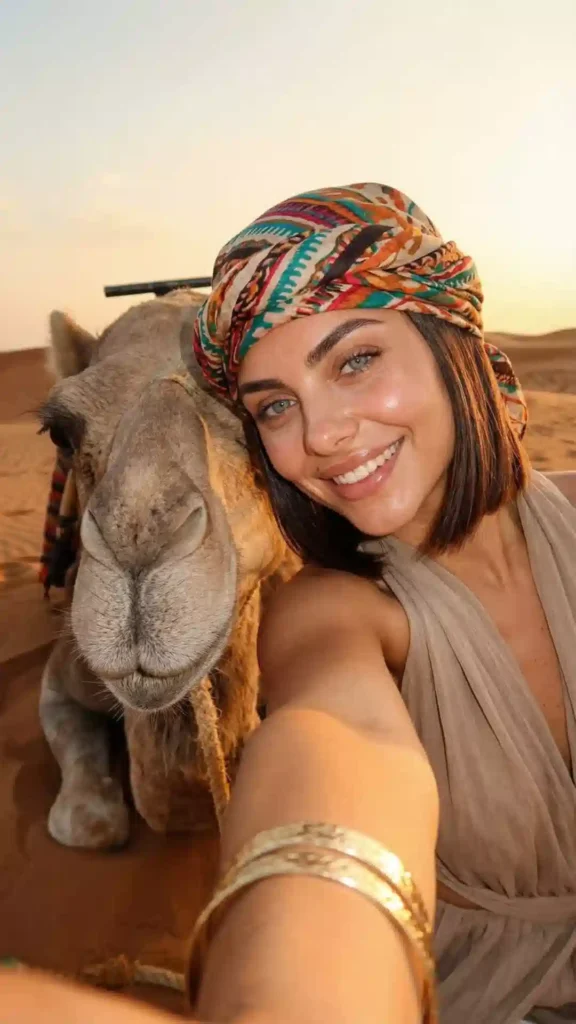
Unforgettable personal moments and selfies with your camel during a camel trek in Morocco.
1. Meeting the Camels
Treks usually begin at a small staging area at the edge of the dunes with the camels sitting and waiting, each already fitted with a saddle blanket and simple wooden or padded saddle. A guide delivers a brief safety talk, then assigns each rider a camel. The most difficult part is usually climbing on and off, as the camel rises and falls in a distinctive two-stage motion that takes first-timers by surprise.
2. The Ride Out
The camels are tied together and are led in a caravan, single file, with a guide walking beside them or riding the lead camel. It’s a slow, rhythmic pace, more like a gentle rocking than anything jarring. Most riders find the first ten minutes the strangest, but a surprisingly quick adjustment follows. The ride out is usually timed so you arrive at the overnight camp around sunset, when the dunes glow deep gold and orange and the temperature starts to fall from the heat of the day.
3. Arrival at Camp
Camps in the desert vary from very simple communal tents to individual tents with proper beds. Nearly all have a communal dining tent where the group gathers for dinner. Usually there is time to climb a nearby dune before full darkness falls, watch the last light fade, and settle into camp before dinner is served.
4. Dinner and Music Around the Fire
Most camps serve a traditional Moroccan dinner, usually a tagine cooked over the fire, followed by live drumming and singing by the camp staff, often in the Gnawa musical style with its roots in sub-Saharan West Africa. This is often the most social part of the evening, with guests and staff all around the same fire.
5. Stargazing and Sleep
With no artificial light for miles, the night sky over the dunes is genuinely one of the clearest most travelers will ever see the Milky Way is visible to the naked eye on clear nights, and camps far from Merzouga’s small cluster of lights offer an even darker sky. Some camps offer “star bed” setups where guests sleep directly under the open sky rather than inside a tent.
6. Sunrise and the Ride Back
Most treks wake guests before dawn for a short walk or climb to a nearby dune crest to see sunrise over the desert, widely considered the single best photo opportunity of the entire trip. Breakfast at camp, then the camels are saddled up again for the return journey, arriving at the pick up point normally by mid-morning.
7. Optional Add-On Activities
Depending on the operator and the length of your stay, camps often offer additional activities beyond the ride itself: sandboarding down the steeper dune faces, a short 4×4 excursion to visit a nearby nomadic family or well, or simply extra time to walk the dunes alone at your own pace, away from the group, which many travelers describe as one of the most reflective parts of the whole experience.
8. Saying Goodbye to the Camels
Back at the staging area, camels are unsaddled and led off by their handlers, who typically live in small settlements at the edge of the dunes and work these routes daily or near-daily throughout the tourist season. A small tip for the camel handlers and camp staff, while not mandatory, is customary and genuinely appreciated given how physically demanding their work is.
Inside a 3 Day Camel Trek in Merzouga
For travelers who want the Sahara to be more than a single overnight, a proper 3 day camel trek Morocco itinerary covers considerably more ground and reaches parts of Erg Chebbi that a one-night trip never touches.
| Day | What Happens |
|---|---|
| Day 1 | Depart Merzouga by camel in the afternoon, riding roughly 2–3 hours deeper into the dunes than a standard overnight trek, reaching a more remote camp for sunset and the first night. |
| Day 2 | A full day exploring the dune field on foot and by camel, often including a visit to a smaller nomadic settlement or well, before continuing to a second, different camp for the night |
| Day 3 | A final sunrise, breakfast, and the return ride back to Merzouga, arriving by late morning |
Because it involves considerably more time in the saddle than a standard overnight trek, a genuine 3-day itinerary is worth approaching honestly: expect real physical fatigue by the second day, particularly in the legs and lower back, and pack accordingly. It rewards travelers specifically drawn to the idea of a slower, more expedition-style desert experience rather than those simply wanting the classic sunset-camp-sunrise photo set.
Desert Camp Types: What to Expect at the End of the Ride
| Camp Type | What’s Included |
|---|---|
| Standard shared camp | Simple tents with mattresses and blankets, shared bathroom facilities, communal dinner |
| Luxury desert camp | Individual tents with proper beds, private en-suite bathrooms, sometimes electricity, full dinner service |
| Star-bed camp | An open-air bed setup directly on the dunes, for sleeping under the open sky rather than inside a tent |
Camp comfort is one of the biggest cost variables across different camel trek packages, and it’s worth clarifying which type is included before booking some tour listings are vague about whether “desert camp” means a shared tent with a communal squat toilet or a private setup with an en-suite bathroom.
What to Pack for a Camel Trek In Morocco
- A warm layer: Desert nights drop sharply in temperature year-round, even in summer a fleece or jacket is essential regardless of season.
- A headscarf or buff: Useful for sun protection during the ride and for covering your face if the wind picks up sand.
- Closed shoes: Sandals fill with sand quickly trainers or light hiking shoes are far more practical for walking around camp and climbing dunes.
- Sunscreen and a hat: Desert sun exposure is intense, even in cooler months.
- A headlamp or small flashlight: Camps are lit minimally after dark, and a light makes navigating to the bathroom tent much easier.
- A small daypack: For carrying water, a camera, and layers during the ride itself, since your main luggage typically travels separately by vehicle.
- Padded cycling shorts or similar (optional): Some travelers find these genuinely helpful for longer rides, particularly on a multi-day trek.
For the full breakdown of what to bring for the rest of a Morocco trip beyond the desert leg, see our Morocco packing list.
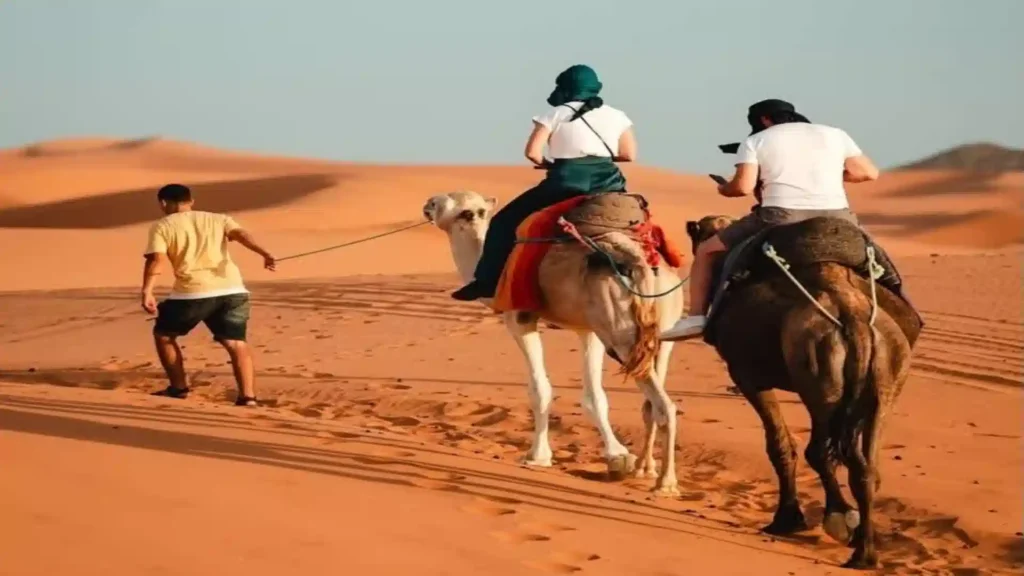
Experience an authentic guided camel trek in Morocco led by experienced local Berber guides.
Is a Camel Trek Comfortable? What First-Timers Should Know
For most first-time riders, the most physically strange part of the experience is the first fifteen to twenty minutes the camel’s gait has a definite rocking motion from front to back rather than side to side, which takes a bit of getting used to. It’s not uncommon to experience some soreness in the inner thighs and lower back after about an hour in the saddle, particularly if the rider isn’t used to horseback riding either.
The activity is generally regarded as safe and easily doable for most fitness levels, including children and senior travelers, as the pace is slow and camels are led, not independently controlled. Pregnant travelers and those with serious back or hip problems should check with a doctor before booking, and it’s worth letting your guide know about any physical issues beforehand so the pace and route can be adjusted if needed.
If you don’t want to ride, most operators will provide a 4×4 transfer to the same desert camp, so no one has to miss out on the overnight desert experience.
Best Time of Year for a Camel Trek in Morocco
| Season | Conditions |
|---|---|
| October–April | The most comfortable window daytime heat is manageable, though nights are genuinely cold and require warm layers |
| May–September | Daytime temperatures regularly exceed 40°C, making midday activity genuinely difficult treks are usually timed around early morning and evening |
For a full month-by-month breakdown of conditions across the whole country, see our best time to visit Morocco guide.
Camel Welfare: What Responsible Travelers Should Know
Camel welfare is a legitimate consideration worth thinking about before booking, and standards genuinely vary between operators. Reputable camps limit riding time per animal, rotate camels rather than overworking the same ones daily, and provide adequate water, rest, and shade. Signs of a well-run operation include camels that appear well-fed and calm rather than visibly thin or distressed, guides who handle the animals gently, and reasonable group sizes rather than large caravans pushed for maximum daily turnover.
As a traveler, asking a tour operator directly about their camel care practices before booking is a reasonable and increasingly common question, and an operator confident in their standards should be able to answer clearly rather than deflect it.
How to Choose the Right Camel Trek for You
| If You Want… | Choose |
|---|---|
| The classic desert experience with limited time | A one-night overnight trek near Merzouga |
| The Sahara to be the centerpiece of your trip | A 3 day camel trek Merzouga itinerary |
| Fewer other travelers around | A trek into Erg Chigaga from Zagora |
| Maximum comfort at camp | A luxury camp with private en-suite tents |
| Sleeping under the open sky | A star-bed camp option |
Most travelers combine their camel trek with a wider Morocco itinerary rather than booking it as a standalone activity. For the full route most desert-bound trips follow, see our Atlas Mountains and Merzouga desert itinerary guide.
What Does a Camel Trek in Morocco Cost?
The cost of a camel trek in Morocco depends on the quality of the camp, the size of your group, and whether you book it as a separate add-on or as part of a longer multi-day tour. A shared standard camp overnight trek is usually at the lower end of this scale, a private luxury camp with en-suite facilities costs more, and a multi-day trek with multiple camps and a smaller group size costs even more due to the extra guiding time, food, and camel care involved.
Photography Tips for Your Camel Trek In Morocco
The dunes photograph best during the golden hour just before sunset and the hour after sunrise, as the low, warm light highlights the ridgelines and shadow patterns on the sand in a way that flat midday light cannot match. A few practical tips make a real difference: bring a lens cloth or cover for your camera, since fine sand gets into everything given the chance; shoot low, close to the sand, to exaggerate the scale of the dunes against the sky; and don’t skip the mid-ride shots of the camel caravan itself silhouetted against the horizon, which are consistently among the most-shared images from any Morocco trip. A phone with a wide-angle lens or a dedicated camera both work well here the scenery does most of the work regardless of equipment.
What Travelers Say About Their Camel Trek Merzouga
“I was genuinely nervous about the camel ride beforehand, but it turned out to be one of the calmest, most meditative parts of the whole trip. Watching the sun set over Erg Chebbi from Camelback is something I’ll remember for the rest of my life.”
— Solo traveler, UK
“We did the 3-day trek and it was genuinely more physically demanding than we expected, but completely worth it. The second camp felt like nobody else in the world existed just us, the guides, and the dunes for miles.”
— Couple from Germany
“Our kids (8 and 11) both handled the overnight trek without any issues and still talk about it as their favorite part of Morocco. The staff at camp were fantastic with them, especially during the music around the fire.”
— Family of four, Canada
“The sunrise camel ride back was even better than the sunset ride out, if I’m honest the light and the cool morning air made it feel completely different from the evening before.”
— Retired traveler, Australia
Frequently Asked Questions About Camel Trekking in Morocco
Is camel trekking in Morocco safe for beginners?
Yes, camels are led by an experienced guide instead of being ridden individually. The pace is slow, and no prior riding experience is necessary. It is suitable for most fitness levels, including children and older travelers.
How long does a typical camel trek to a desert camp take?
A standard overnight trek near Merzouga typically involves 1 to 2 hours of riding each way, while a multi-day trek covers considerably more ground across several riding legs.
What’s the difference between a camel trek at Erg Chebbi and Erg Chigaga?
Erg Chebbi, near Merzouga, has Morocco’s tallest and most accessible dunes with the widest range of camps, while Erg Chigaga, near Zagora, is more remote and significantly less visited, at the cost of a longer drive to reach it.
Do I have to ride a camel to visit a desert camp?
No, most tour operators offer a 4×4 transfer to the same desert camp as an alternative for travelers who prefer not to ride, so the overnight desert experience remains accessible either way.
Is a 3-day camel trek physically demanding?
It’s noticeably more demanding than a single overnight trek, with real physical fatigue common by the second day, particularly in the legs and lower back, it suits travelers specifically drawn to a slower, expedition-style desert experience.
What should I wear for a camel trek?
Loose, comfortable clothing, closed shoes rather than sandals, a headscarf or buff for sun and wind protection, and a warm layer for the cold desert night are all worth packing regardless of the season.
When is the best time of year for a camel trek in Morocco?
October through April offers the most comfortable daytime conditions; from May through September, daytime heat regularly exceeds 40°C, and treks are typically scheduled around the cooler early morning and evening hours instead.
Are camels well treated on these treks?
Standards vary by operator, but reputable camps limit riding time per animal, rotate camels, and provide adequate water and rest — it’s reasonable to ask a tour operator directly about their camel care practices before booking.
Related Guides to Camel Trek Morocco
- Atlas Morocco Map: The Complete Guide to the Atlas Mountains & Desert Routes
- The Best Time to Visit Morocco: A Month-by-Month Guide
- The Complete Morocco Packing List for 2026
- What to Do in Morocco: The Complete Guide to Where to Go & What to See
Related Tours to Camel Trek in Morocco
Ready for Your Own Camel Trek Morocco Into the Sahara?
Every one of our desert tours includes a genuine camel trek, an overnight in Erg Chebbi, and a local guide who knows the dunes properly whether you want one unforgettable night or a full multi-day expedition.