Is Marrakech Worth Visiting? An Honest 2026 Guide to the Red City
Short answer: yes, but not for the reasons most brochures claim. If you are planning a trip to Morocco Marrakech, the question is, does it live up to the legendary hype? Marrakech is iconic, but it’s not the most relaxing, historic, or even beautiful city in Morocco, depending on whom you ask. It’s the country’s best-connected gateway to everything else worth seeing, wrapped around an ancient medina that is genuinely unlike anywhere else on earth, for better and occasionally for worse.
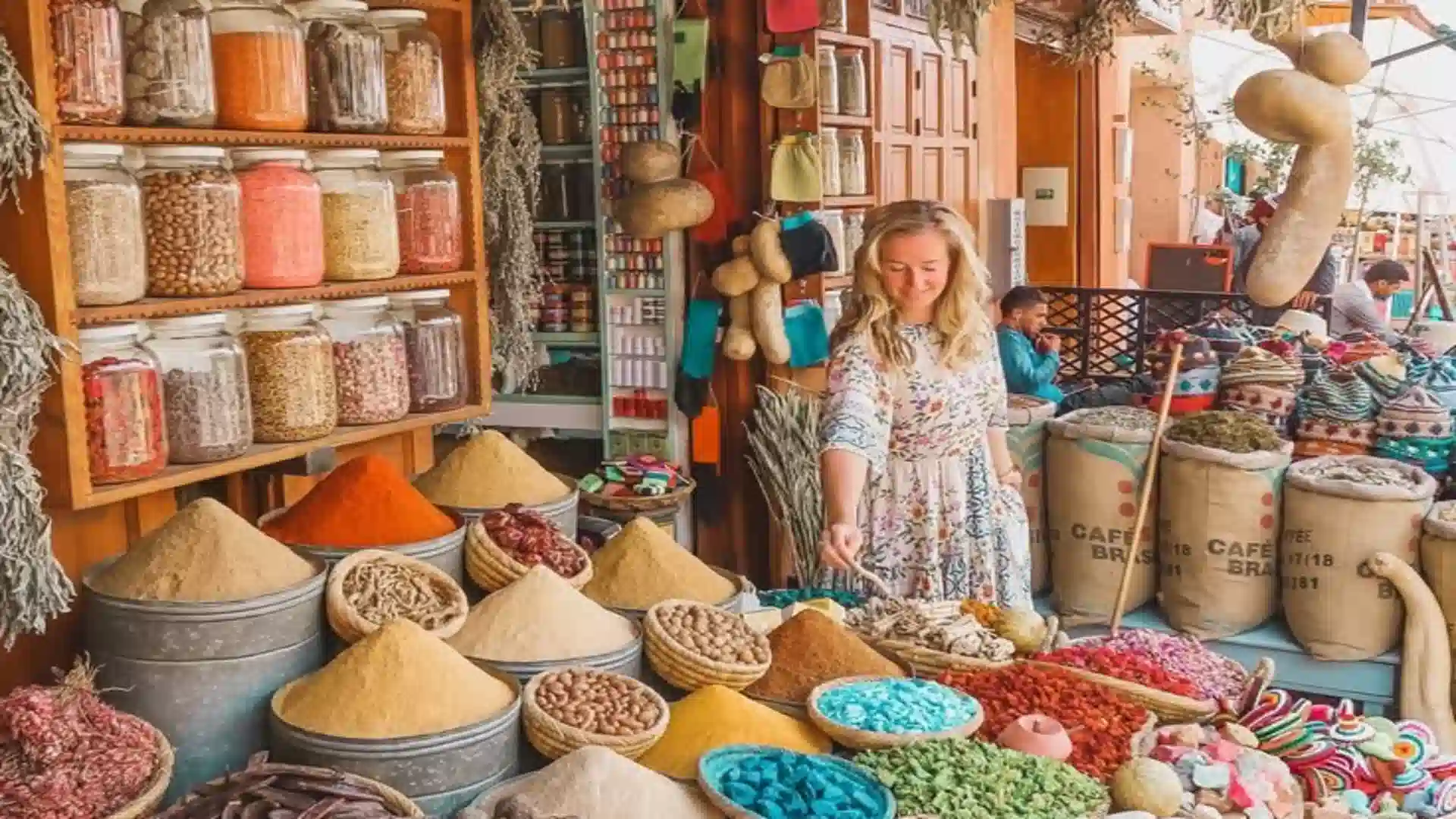
Rich aromas and vibrant colors at local spice shops reveal why Marrakech is worth visiting at every corner.
Quick Answer: Is Marrakech Worth Visiting?
- Verdict: Yes, as a cultural anchor and travel hub, especially for those who choose to visit Marrakech Morocco as part of a broader itinerary rather than a full week-long isolated trip.
- Best for: First-time visitors exploring Morocco Marrakech, travelers combining urban exploration with the Atlas Mountains or Sahara; foodies; and market enthusiasts.
- Skip or shorten if you want an exclusively slow, quiet retreat with minimal hustle, or you’ve already spent extensive time in similar high-intensity medina cities.
- Ideal length when visiting Marrakech: 2–3 days is ideal to see the main Marrakech points of interest without medina fatigue setting in.
- Biggest single reason to go: It’s the easiest, fastest, and most atmospheric gateway to the High Atlas Mountains and the Sahara Desert.
What’s Genuinely Worth It When You Visit Marrakech, Morocco?
Jemaa el-Fnaa at Dusk, Not at Noon
Everyone tells you to see Jemaa el-Fnaa when you visit Marrakech Morocco, but the difference between visiting at 1pm and visiting at 7pm is night and day. By day it’s a fairly ordinary plaza with orange juice stalls. As the sun drops, food carts roll in, the smoke from the grills rises against the golden sky, and the square fills with musicians, storytellers, and genuine local energy. This central hub is one of the essential **Marrakech points of interest** worth planning your evening around.
The Medina’s Quieter Corners
The souks nearest Jemaa el-Fnaa are the most crowded and heavily commercialized. However, when visiting Marrakech, taking a short walk further into the medina toward the Ben Youssef Madrasa or the dyers’ souk reveals a completely different atmosphere. Here, the crowds thin out, and the ancient city of Marrakech starts to feel like the living, working neighborhood it actually is.
Rooftop Views Over the Koutoubia
Almost every traditional riad and café in the medina features a rooftop terrace. The Koutoubia Mosque’s historic minaret visible across much of the skyline serves as the ultimate visual anchor in Morocco Marrakech. Enjoying a quiet mint tea up top at golden hour is often the exact moment the magic of the city clicks for travelers.
The Unmatched Gateway Position
This is the core argument for why is Marrakech worth visiting: nowhere else in the region puts you within a two-hour drive of both the high peaks of the Atlas Mountains and the scenic mountain passes leading down to the Sahara. If your journey across Morocco includes Marrakech, nature, desert camps, or mountain trekking, this city is your most efficient launchpad.
What’s Overrated When Visiting Marrakech
- The Jardin Majorelle at midday: Undoubtedly striking, but compact and densely packed during peak hours. Buy a timed ticket for early morning if you want to enjoy this famous stop among Marrakech points of interest peacefully.
- Expecting “hassle-free” shopping without effort: Friendly bargaining is an intrinsic element of social life in the city of Marrakech. Expect it, budget time for it, and treat negotiations with humor rather than frustration.
- Rushed one-day medina checklist tours: The walled city rewards slow exploration far more than a frantic checklist tour. You’ll remember hidden artisan courtyards long after you forget the crowded rooms of a palace you rushed through.
- Confining your entire vacation to the city center: Spending a full week strictly inside the medina can be tiring. The best way to visit Marrakech Morocco is to pair 2–3 days in the urban center with trips into the surrounding countryside.
Who Should Visit Marrakech, Morocco and Who Should Skip It
| Traveler Type | Is Marrakech Worth Visiting? | Why |
|---|---|---|
| First-time Morocco visitor | Yes. | Offers incredible international flight connections and functions as the primary hub for Morocco Marrakech travel. |
| Desert or Atlas Mountains seeker | Yes. | The absolute best geographic starting point for excursions into nature and desert landscapes. |
| Food, design, and market lovers | Yes. | Home to iconic Marrakech points of interest, artisanal crafts, world-class dining, and unmatched market vibrancy. |
| Travelers seeking total solitude | Shorten it. | The fast pace in the city of Marrakech can be intense; spend 2 days here, then head to coastal Essaouira or mountain villages. |
| Return travelers to Morocco | Optional | Great for food and luxury riads, but northern destinations like Fes, Chefchaouen, or Tangier offer fresh perspectives. |
How Many Days Do You Need When Visiting Marrakech?
Two to three days is the ideal sweet spot for most travelers when deciding to visit Marrakech Morocco. This provides ample time to immerse yourself in the medina, marvel at Jemaa el-Fnaa during both day and night, explore major Marrakech points of interest, and savor fine cuisine without feeling overwhelmed. While a single day works if you are using the city purely as a transit stop, spending at least 48 hours allows the real character of Morocco Marrakech to emerge.
| Time Available | What to Prioritize in the City of Marrakech |
|---|---|
| 1 day | Jemaa el-Fnaa (dusk), Bahia Palace, and a sunset rooftop dinner overlooking the Koutoubia Mosque. |
| 2–3 days | The above, plus the Jardin Majorelle, Saadian Tombs, Ben Youssef Madrasa, an authentic hammam, and guided souk walks. |
| 4+ days | Add day trips into the Ourika Valley or Imlil in the High Atlas, and split accommodation between the historic medina and modern Gueliz. |
If you’re mapping out a comprehensive itinerary, check out our in-depth post on what to do in Morocco and where to go. We also break down seamless transit routes in our Atlas Mountains and Merzouga desert itinerary guide.
Is Marrakech Worth Visiting? The Definitive Deep-Dive Guide
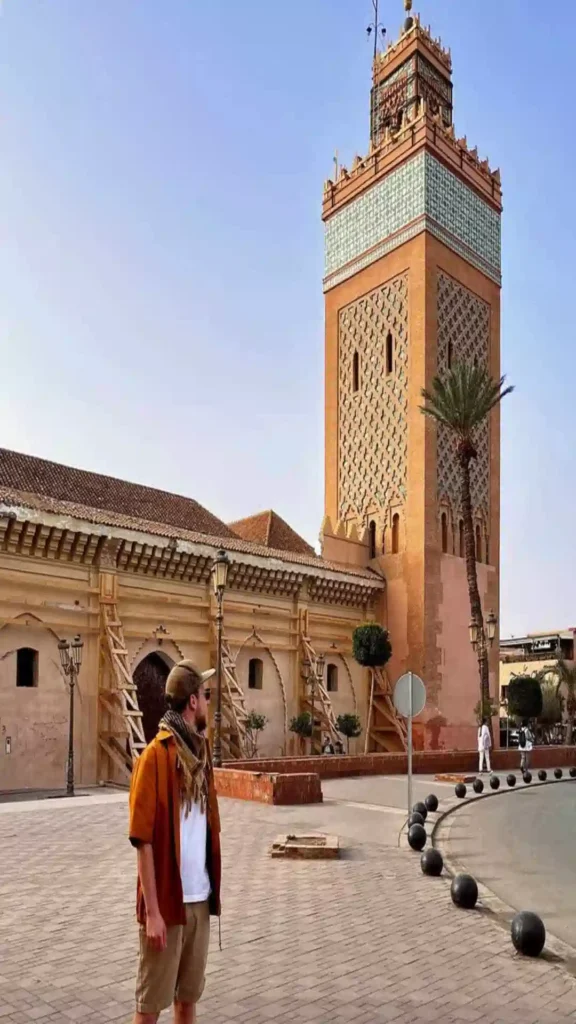
Marveling at ancient Saadian-era architecture and intricate tilework shows why Marrakech is worth visiting at every corner.
When people ask, “Is Marrakech worth visiting?” they are rarely asking about geography or statistics. They want to know if the sensory overload, the romanticized images seen on social media, and the reputational complexity of the red city translate into a genuinely rewarding travel experience. To answer this honestly, one must evaluate the city of Marrakech across multiple dimensions: its historical legacy, cultural richness, logistical realities, safety, culinary landscape, and how it compares to other iconic destinations in North Africa.
Known historically as the “Red City” (Al-Hamra) due to the distinctive pinkish-red clay used to construct its ancient walls and buildings, **Morocco Marrakech** occupies a mythical status in the global travel imagination. For centuries, it served as a major political, economic, and cultural capital for imperial dynasties, as well as a bustling crossroads for trade caravans bringing gold, spices, and textiles across the Sahara Desert. Today, as you visit Marrakech Morocco, you step directly into a living historical tapestry where ancient traditions collide with modern luxury.
1. Unpacking the Medina: Sensory Marvel or Overwhelming Chaos?
The heart and soul of any trip when visiting Marrakech resides inside its ancient UNESCO World Heritage-listed medina. Enclosed by nearly 20 kilometers of monumental ramparts built in the 12th century by the Almoravid dynasty, the medina is a labyrinthine maze of thousands of narrow alleys, bustling souks, hidden courtyards, and residential neighborhoods.
For many travelers, stepping into the medina is an unforgettable highlight. The air is thick with the scent of toasted cumin, cedarwood, fresh mint, and leather. Artisans sit in open stalls hammering brass lamps, weaving wool blankets, dye-staining leather goods, and hand-carving cedar wood using techniques passed down through generations. It is an immersive physical environment that few modern cities on Earth can replicate.
However, this intensity is precisely why the question “is Marrakech worth visiting?” elicits mixed reactions. The medina is not a quiet open-air museum; it is a dense, working urban habitat. Motorbikes zoom past pedestrians in narrow passageways, vendors call out energetically to showcase their wares, and navigating without getting lost can feel nearly impossible at first. Travelers who thrive on spontaneity, sensory detail, and high energy fall in love with the medina immediately. Conversely, those who require structured signposts, quiet surroundings, and absolute predictability may feel overwhelmed during their first 24 hours.
2. Architectural Treasures & Key Marrakech Points of Interest
Beyond the vibrant souks, the sheer concentration of architectural and historical landmarks firmly reinforces why you should **visit Marrakech Morocco**. The city of Marrakech boasts architectural achievements that span centuries of Moroccan craft and Islamic design:
- Ben Youssef Madrasa: Originally founded in the 14th century and beautifully reconstructed during the Saadian era, this former Islamic college is an absolute masterpiece of Moorish architecture. Its central courtyard features exquisite zellij tilework, intricate carved stucco, and aromatic cedar wood details. It stands as one of the most breathtaking Marrakech points of interest.
- Bahia Palace: Sprawling over eight hectares, this late 19th-century palace was built to capture the essence of Islamic and Moroccan architectural styles. Featuring grand open courtyards, painted wood ceilings, and serene garden plazas, it offers a glimpse into the luxurious lives of 19th-century Moroccan viziers.
- The Saadian Tombs: Sealed for centuries and rediscovered in 1917, these royal tombs date back to the reign of Sultan Ahmad al-Mansur. The Chamber of the Twelve Pillars, crafted with Italian Carrara marble and delicate honeycomb plasterwork, is a towering highlight of historic Morocco Marrakech.
- Koutoubia Mosque: Standing at nearly 70 meters in height, the minaret of the Koutoubia is the undisputed symbol of the **city of Marrakech**. Built in the 12th century under the Almohad dynasty, its proportion and design directly influenced famous structures like the Giralda in Seville and the Hassan Tower in Rabat.
- Jardin Majorelle & Yves Saint Laurent Museum: Designed by French painter Jacques Majorelle in the 1920s and later saved from real estate development by fashion icon Yves Saint Laurent, this botanical haven features vibrant cobalt blue accents (“Majorelle Blue”), exotic plant collections, and an adjacent museum celebrating high fashion and Amazigh (Berber) culture.
3. The Unique Riad Experience: Hospitality Transformed
One of the compelling reasons is Marrakech worth visiting comes down to accommodation: the opportunity to stay in a traditional riad. A riad is a classic Moroccan house or palace built around an inward-facing central courtyard, often complete with citrus trees, fountains, or plunge pools. From the exterior alleyway, a riad appears entirely plain, simply a solid wooden door set into a blank clay wall. But stepping inside reveals a peaceful sanctuary completely insulated from the noise and commotion of the surrounding street.
When visiting Marrakech, opting for a riad inside the medina turns your stay into an active cultural experience rather than mere lodging. Morning breakfasts are served on sunny rooftop terraces overlooking the rooftops of Morocco Marrakech, featuring fresh orange juice, warm flatbreads, homemade jams, and spiced mint tea. The personalized warmth and hospitality offered by local riad hosts frequently end up being the fondest memory travelers take home.
4. Culinary Journeys: From Street Food to World-Class Fine Dining
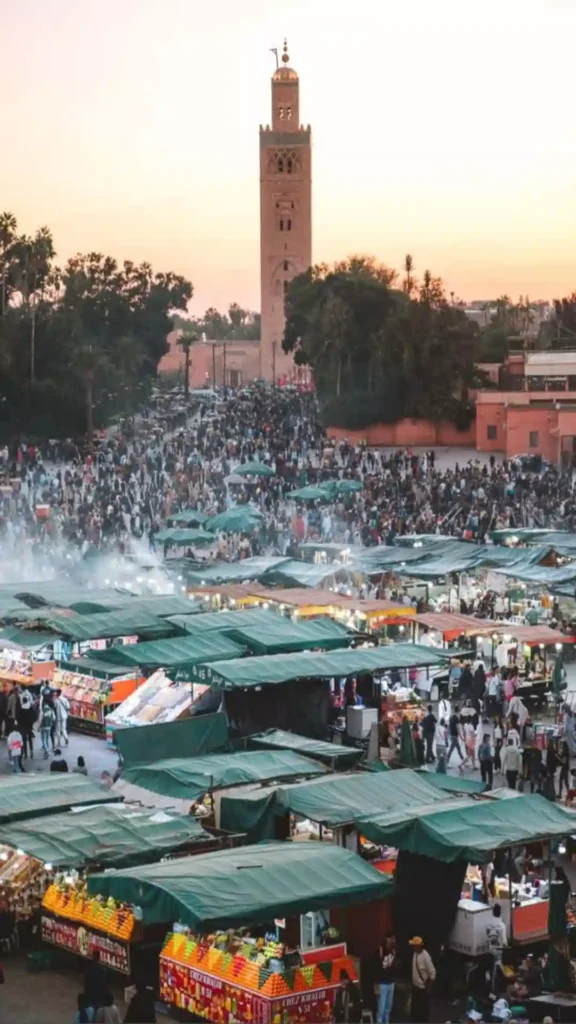
Watching the sunset over the bustling main square illustrates why Marrakech is worth visiting at every corner.
Food enthusiasts wondering if they should visit Marrakech Morocco will find their expectations exceeded. The city’s culinary scene represents a brilliant fusion of Amazigh (Berber), Arab, Andalusian, and French influences.
In the evening, the central square of Jemaa el-Fnaa transforms into a massive open-air dining spectacle. Numbered stalls serve sizzling skewers of spiced lamb (brochettes), steamed sheep’s head, flavorful snail broth, and aromatic fish chermoula. For many, dining elbow-to-elbow with locals and international travelers in the heart of the **city of Marrakech** is an unforgettable rite of passage.
Beyond street food, Marrakech boasts an extraordinary spectrum of dining options. You can enjoy slow-cooked slow-roasted lamb (Mechoui) at unassuming alleys near the square, or reserve a table at opulent fine-dining establishments set inside restored palaces where delicate tagines, sweet-and-savory Pastilla (flaky pigeon or chicken pastry), and sophisticated Moroccan wines are served alongside live traditional gnawa music.
5. Managing the Hassle Factor: Touts, Bargaining, and Expectations
To give a complete, fair answer to “Is Marrakech worth visiting?”, one must directly address the common pain points that travelers report. The most frequent source of friction in Morocco Marrakech revolves around persistent salesmanship, unsolicited directions, and aggressive bargaining.
Because tourism is a primary economic pillar of the city, shopkeepers and touts in heavily trafficked areas actively solicit business. Unwary tourists who stop to look at an item may find themselves immersed in an extended sales pitch. Additionally, young men in the medina may offer unsolicited directions to confused travelers, later demanding a tip for their assistance.
How to Effortlessly Handle Medina Interactions:
- Walk with Purpose: Maintain a relaxed, confident posture. Looking continuously lost makes you a natural magnet for unsolicited direction offers.
- The Polite Refusal: A warm, smiling “Non, merci” (No, thank you) or “La, Shukran” in Arabic, accompanied by a polite hand gesture over your heart, works wonders. Keep walking.
- Embrace the Negotiation: Bargaining for carpets, leather, or ceramics is an interactive social art form in Morocco Marrakech. Enter negotiations with good humor, start at a fraction of the opening quote, and never bargain for an item you have no intention of buying.
- Navigation Tools: Download offline maps (such as Maps.me or Google Maps) prior to exploring quieter quarters to easily navigate back to major **Marrakech points of interest**.
6. Safety, Solitary Travel, and Cultural Etiquette
1. How safe is Marrakech City? Marrakech is statistically and practically a safe destination for international tourists. There is practically no violent crime against tourists. The safety of visitors is a high priority for the Moroccan government, and a visible presence of specialized tourist police (Brigade Touristique) is maintained in major areas.
2. Pickpocketing and other petty crimes do occur, especially in crowded areas such as Jemaa el-Fnaa and in busy market thoroughfares. Generally, all that is needed is common travel caution: keep your wallets secured, carry backpacks forward in narrow spaces, and do not venture into unlit alleyways after dark.
3. Visiting Marrakech as a solo traveler, and particularly as a solo female traveler, requires a certain level of cultural sensitivity and assertiveness. Street harassment isn’t often physical, but persistent catcalling or unwanted attention does happen. Dressing modestly (cover to shoulders and knees) not only is this respectful of local customs in Morocco Marrakech but it also cuts down the unwanted attention significantly while exploring the historical quarters.
7. Marrakech vs. Other Moroccan Destinations: How It Compares
Understanding whether is Marrakech worth visiting often depends on what other destinations you plan to compare it against:
| City | Atmosphere | Key Distinction vs. Marrakech |
|---|---|---|
| Fes | Scholarly, traditional, raw | Fes has an older, larger, and less commercialized medina but lacks Marrakech’s high-end luxury, trendy dining, and quick mountain access. |
| Essaouira | Laid-back, breezy, coastal | Located just 2.5 hours away, Essaouira provides a quiet, oceanfront antidote to the fast-paced energy of the **city of Marrakech**. |
| Chefchaouen | Tranquil, scenic, photogenic | The famed “Blue Pearl” in the north offers relaxed mountain vibes, whereas Marrakech is a major metropolitan power center. |
| Rabatt / Casablanca | Modern, administrative, coastal | These coastal cities feel modern and European-influenced, while Marrakech retains an unmistakable imperial Moroccan identity. |
8. Practical Budgeting & Seasonal Considerations
Another reason to visit Marrakech Morocco is that it is incredibly accessible on all budget levels. Whether you are a backpacker sleeping in budget hostel dorms for $20 a night or a luxury traveler booking private villas at the Royal Mansour for several thousand dollars a night, the city easily accommodates everyone.
To answer the question is Marrakech worth visiting, you’ll need to time your visit to your travel window. Peak seasons are spring (March–May) and autumn (September–November) with daily temperatures of a comfortable 20°C to 28°C (68°F–82°F). Summers (July and August) are hot, and temperatures can often exceed 40°C (104°F), making it difficult to explore during the day. Winter days are mild but crisp at night, with majestic snow-capped peaks of the High Atlas Mountains, providing a stunning backdrop to the **city of Marrakech**.
Final Verdict: Is Marrakech Worth Visiting in 2026?
So is Marrakech a good place to visit? Of course. It takes a moderate dose of patience, humor and open-mindedness, but few places on earth can match its intoxicating blend of history, architecture, sensory vibrancy and warm hospitality. If you can put your trip in perspective, and consider the city a cultural hotspot and a springboard to other parts of the country, instead of a resort destination, then your trip to Morocco Marrakech will be one of the most memorable travel experiences of your life.
Tips for Actually Enjoying the City of Marrakech
- Stay inside the medina at a traditional riad: Staying in a historic riad puts you steps away from main sights and provides a quiet rooftop escape that modern hotels outside the walls simply cannot replicate.
- Get lost on purpose once or twice: Wandering off the primary thoroughfares in the **city of Marrakech** reveals authentic residential life, historic neighborhood fountains, and peaceful artisan workshops.
- Keep bargaining friendly and lighthearted: Price negotiations are social exchanges when you visit Marrakech Morocco approach them with smiles and good humor rather than frustration.
- Use Jemaa el-Fnaa as your navigation anchor: Treat the main square as the geographical reference point you return to when exploring deeper parts of the medina.
- Pack for shifting temperatures: Desert environments in Morocco Marrakech lead to significant temperature drops between midday sun and cool nighttime breezes. Check out our detailed Morocco packing list for expert recommendations.
If Marrakech Isn’t Quite Right for You
If the fast-paced energy or bustling nature of Marrakech doesn’t align with your ideal vacation style, there are fantastic alternative cities in Morocco to consider. Fes provides a deeper, highly preserved medieval medina experience tailored toward history lovers. Coastal Essaouira offers a relaxed seaside atmosphere with gentle sea breezes and easygoing markets. Meanwhile, Chefchaouen in the north provides a peaceful, picture-perfect escape surrounded by the Rif Mountains.
That said, most international travelers still find that spending at least 2 days when they visit Marrakech Morocco is well worth it, given its prime airport connections and unbeatable position as the gateway to desert tours and High Atlas trekking.
Frequently Asked Questions About Visiting Marrakech
Is Marrakech worth visiting for first-time travelers to Morocco?
Yes, Marrakech’s international airport access and its position as the gateway to the Atlas Mountains and Sahara make it the most practical and common starting point for a first trip to Morocco Marrakech.
How many days should I spend when visiting Marrakech?
Two to three days is generally enough to see the main **Marrakech points of interest** and experience Jemaa el-Fnaa properly without medina fatigue setting in.
Is Marrakech safe for tourists?
Yes, the **city of Marrakech** is generally very safe for tourists. Primary concerns are non-violent issues like persistent vendors or pickpocketing in dense areas. Standard urban precautions apply.
Is Marrakech worth visiting if I only have one day?
Yes, though a single day requires prioritizing the highlights of Jemaa el-Fnaa, Bahia Palace, or Ben Youssef Madrasa, and a sunset rooftop meal.
Is Marrakech better than Fes for a first visit?
If you want better flight options, diverse luxury riads, and easy access to the desert, choose to visit Marrakech Morocco. If you prioritize medieval history and artisanal preservation above modern comforts, Fes is a great choice.
What’s the biggest downside of visiting Marrakech?
The most common friction point reported when **visiting Marrakech** is navigating street vendor pressure in busy markets, which can require patience during your first day.
Should I stay in the Marrakech medina or in Gueliz?
The historic medina offers the iconic riad experience near major **Marrakech points of interest**, while the modern new town (Gueliz) offers contemporary hotels, wide boulevards, and easy vehicle access.
Related Guides for Morocco Marrakech
- What to Do in Morocco: The Complete Guide to Where to Go & What to See
- Atlas Morocco Map: The Complete Guide to the Atlas Mountains & Desert Routes
- Cities in Morocco: The Complete Guide to Where to Go, City by City
- The Complete Morocco Packing List for 2026
- The Best Time to Visit Morocco: A Month-by-Month Guide
Ready to Visit Marrakech Morocco? Let’s Build Your Perfect Itinerary
Whether you plan to spend two days exploring top Marrakech points of interest or join on a multi-week expedition across Morocco, Marrakech, our local guides ensure you experience the absolute best of the country.
Explore our guided city tours and day trips, or let us craft a seamless custom itinerary taking you from the **city of Marrakech** straight into the High Atlas Mountains and the Sahara Desert.