What to Pack for Merzouga Desert: The Ultimate Sahara Packing List (2026)
Table of Contents
What to Pack for Merzouga Desert: Why Getting This Right Changes Everything
Most travelers arrive in Merzouga having packed for Morocco in general and then discover that the Erg Chebbi desert operates by entirely different rules. The Sahara at 1,100 meters elevation on the pre-Saharan plateau is not simply “hot.” It is a place of violent temperature extremes: daytime highs reaching 42°C 45°C in July, nights that drop to 2°C-5°C in December, winds that arrive without warning and fill the air with fine sand that works its way into every pocket and lens, and ultraviolet radiation that is significantly more intense than at sea level due to the altitude, the absence of cloud cover, and the reflective surface of the sand. A well-considered Merzouga desert packing list is not a comfort upgrade; it is the difference between an extraordinary experience and a miserable one. This guide is written by the Over Morocco Tours team, whose guides have accompanied thousands of guests through Erg Chebbi across every season, and it covers every category of packing decision with the specificity that only genuine first-hand desert experience can provide. We tell you exactly what to bring, what to wear, what your camera needs, and equally importantly what to leave behind.
What to Pack for Merzouga Desert Checklist: Complete At a Glance Summary
Use this checklist as your final pre-departure review before leaving for Merzouga:
| Category | Essential Items Checklist |
|---|---|
| Clothing ✓ |
|
| Footwear ✓ |
|
| Sun & Heat Protection ✓ |
|
| Sandstorm & Wind Protection ✓ |
|
| Camera & Electronics ✓ |
|
| Health Kit ✓ |
|
| Documents & Money ✓ |
|
Understanding Merzouga Desert Conditions Before You Pack
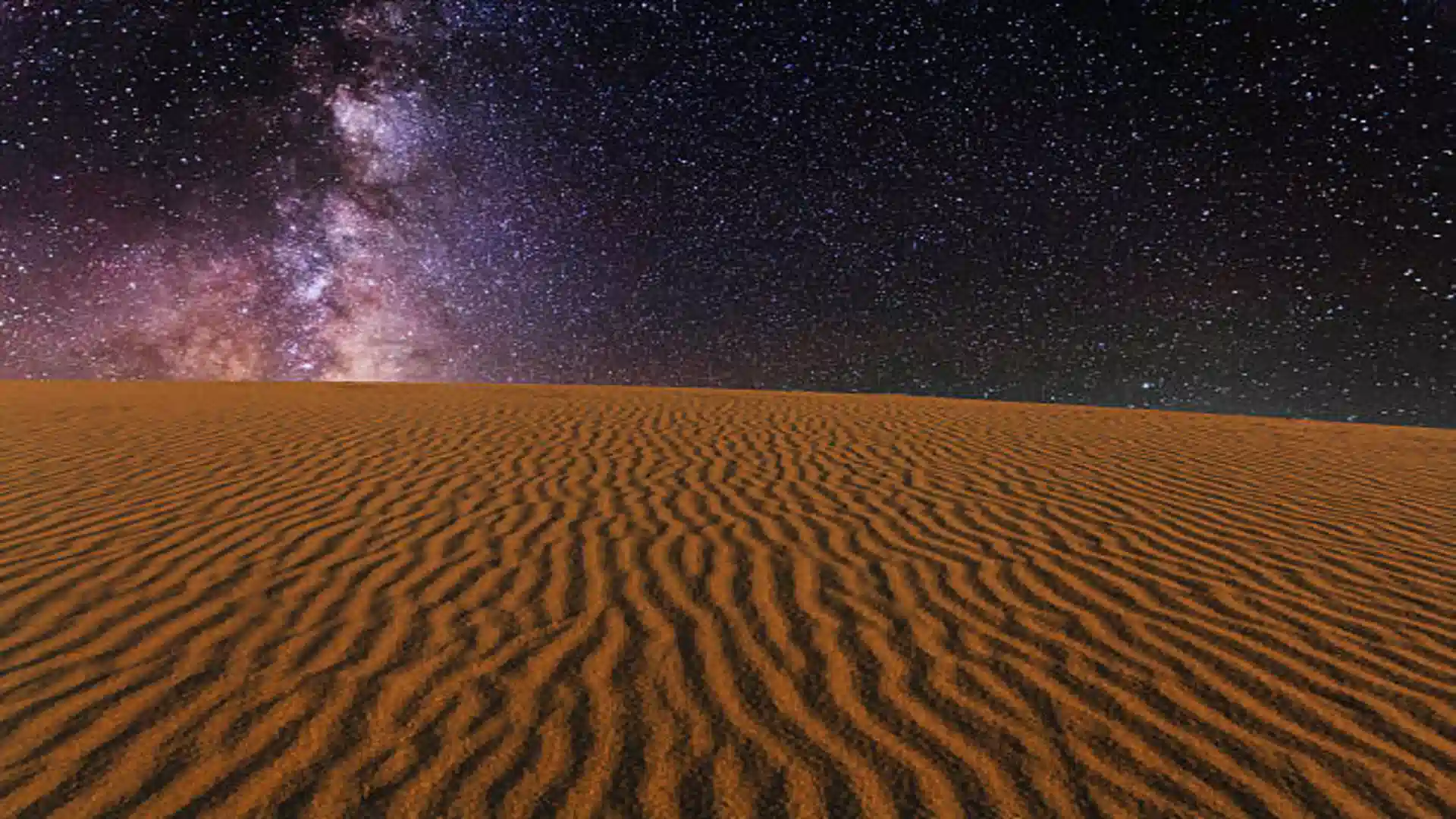
Before building your Merzouga Desert packing list for Morocco, it is essential to understand the physical environment you are packing for. Erg Chebbi is a true sand sea, not a gravelly hammada or a stony plateau, but a continuous body of fine, pale orange sand that shifts constantly in the wind and generates its own microclimate. The sand itself is one of the finest-grained desert sands in North Africa, which means it penetrates everything: zip-locked bags, closed camera cases, sealed water bottles, and the weave of clothing that seems perfectly dense at home. The Morocco desert night temperature drops far more sharply than most travelers expect even in summer; the temperature swing between 3:00 PM (peak heat) and 4:00 AM (overnight low) regularly exceeds 20°C, and in winter, the swing can reach 30°C in a single day.
The Chergui wind- the hot, sand laden desert wind that blows from the southeast out of Algeria can arrive at any time of year and transforms the desert within minutes: visibility drops, loose sand fills the air, and any exposed skin, eyes, or equipment suffers immediately. Morocco desert sandstorm preparation is not about avoiding this weather event; it is about being equipped to endure it without injury to yourself or damage to your belongings. Understanding these conditions shapes every packing decision below.
The Complete Merzouga Desert Packing List by Category
Clothing: What to Wear in the Sahara Desert
What to pack for Merzouga desert clothing requires a layering strategy that accounts for the full temperature range of a single 24-hour desert stay, from the blazing midday heat of the camel trek to the cold of a 5:00 AM sunrise dune climb. The clothing approach that experienced desert travelers use is not about bringing more; it is about bringing the right fabrics in a minimal number of versatile pieces.
What to Wear on a Camel Ride Morocco?
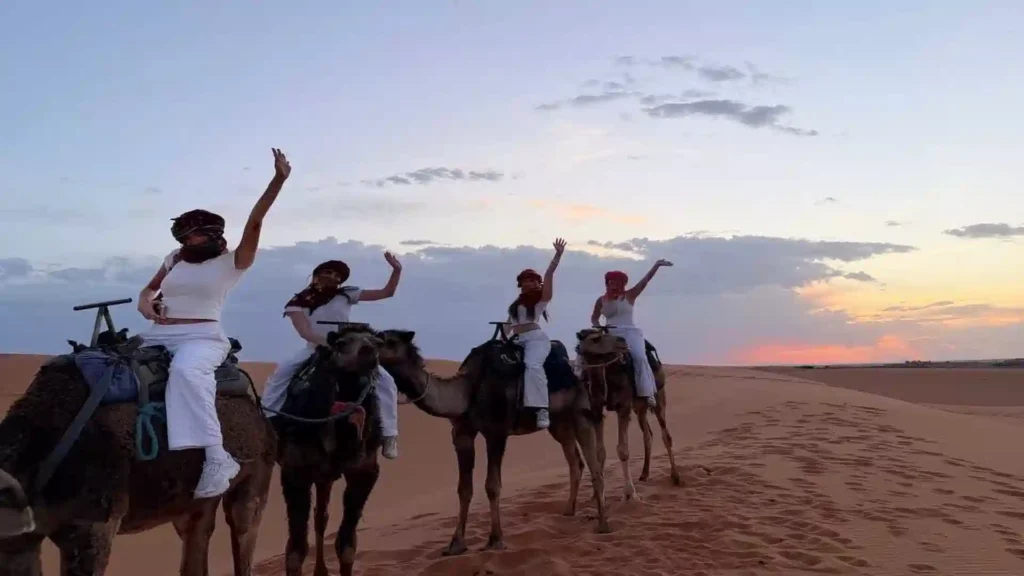
The camel ride Morocco experience is what most guests anticipate most, and it is also the context in which clothing choices matter most. A camel saddle positions you approximately 2 meters above the ground, fully exposed to direct sun from above and reflected heat from the sand below, moving slowly enough that wind cooling is minimal. What to wear on a camel ride in Morocco should meet four criteria simultaneously: sun protection for shoulders, arms, and the back of the neck; breathability to prevent heat buildup; comfort across a sitting position sustained for 45-90 minutes; and coverage that respects the conservative local culture of the Merzouga community.
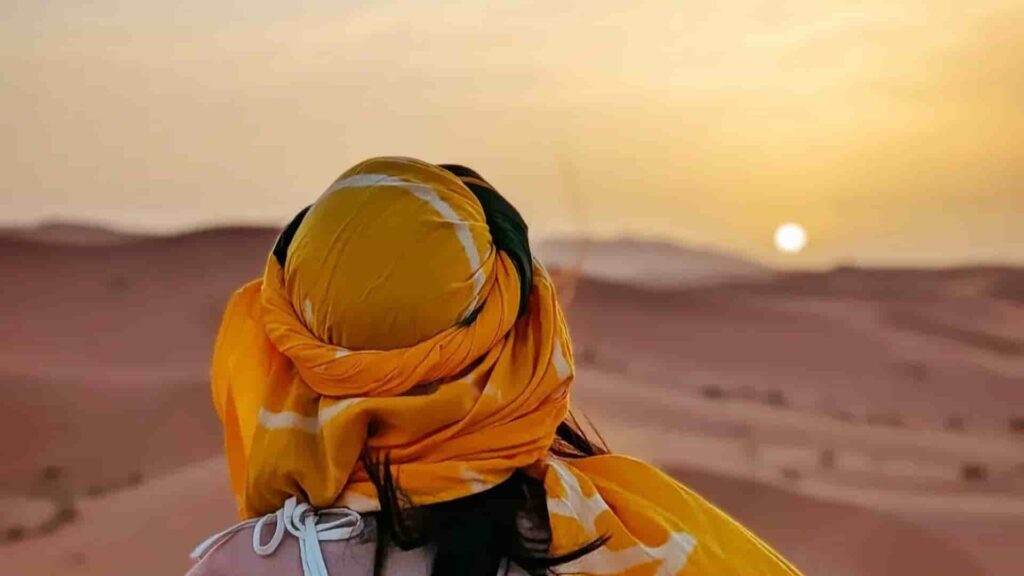
The optimal camel trek Morocco what to wear combination is: a lightweight long sleeved shirt in a natural fiber (linen or cotton, not synthetic synthetics trap heat and smell quickly), lightweight loose trousers (not jeans denim is heavy, non-breathable, and abrasive against a camel saddle over an hour), and a tagelmust the traditional Tuareg and Berber head and face wrap worn by the desert peoples of the Sahara for millennia. The tagelmust serves as simultaneous head covering, face shield against sun and wind, and neck protection, and it is the single most-recommended item by every experienced desert guide in Merzouga. Over Morocco Tours provides tagelmusts to all guests at the start of the camel trek, but bringing your own large lightweight cotton or linen scarf (minimum 150cm x 50cm) gives you the option of wearing it throughout your desert stay rather than only during the trek.
Full Merzouga Desert Clothing List
For the camel trek and daytime dune activities:
1-2 lightweight long-sleeved linen or cotton shirts the single most important clothing item for the Sahara; long sleeves in a breathable natural fiber protect from sun without overheating
1-2 pairs of lightweight loose trousers linen or cotton travel trousers, not denim; a loose fit prevents abrasion on the camel saddle and allows air circulation
1 large lightweight cotton or linen scarf (tagelmust-style) minimum 150cm x 50cm; used as a head wrap, face shield, and neck protection throughout the desert stay
1 pair of sunglasses with UV400 or polarized lenses; standard sunglasses are inadequate in the Sahara; sand reflection intensifies UV exposure significantly
For desert camp evenings and Morocco desert night temperature:
1 warm mid-layer:5 a fleece, light down jacket, or wool sweater; summer nights in Merzouga drop to 20°C-25°C, winter nights to 2°C-5°C; this layer is non-negotiable year-round
1 pair of warm socks: the desert camp floor (sand) draws heat from the body rapidly at night; warm socks for the campfire and sleeping period are consistently underestimated
1 lightweight waterproof or windproof outer layer doubles as a windbreaker during sandstorm conditions and as an extra warmth layer on cold nights
For sleeping in the desert camp:
Comfortable sleepwear: most mid-range and luxury desert camps provide blankets, but sleeping in comfortable clothes appropriate for the night temperature is recommended; for winter visits, thermal base layers are genuinely useful
Merzouga Desert Packing List: The Most Overlooked Item:
Merzouga desert shoes are the single most frequently under-considered element of the packing equation, and they generate more comfort problems on the ground than any other item. The shoe requirements of the Sahara are specific and somewhat counterintuitive: you need footwear that is simultaneously comfortable for long camel treks, functional for climbing steep dunes, protective against extreme heat (sand surface temperatures in summer can reach 60°C-70°C at peak midday), and easy to remove quickly at the camp entrance (a Moroccan cultural norm).
The best Merzouga desert shoes are closed-toe, lightweight, and secure at the heel. A sports sandal with a heel strap, a lightweight trail shoe, or a low-profile hiking boot all work well. Flip-flops and open sandals are strongly discouraged for the camel trek and dune climbing: the camel saddle stirrup requires a secure shoe to prevent the foot from slipping, the dune face is physically demanding to climb in unsecured footwear, and the sand surface temperature in summer can cause burns through thin-soled footwear within minutes. For camp use in the evening and morning, a pair of lightweight slip-on shoes or sandals in your daypack allows you to switch out of your trekking shoes without going barefoot on the cold sand.
Gaiters: lightweight fabric covers that wrap around the ankle and lower leg to prevent sand ingress into shoes are used by experienced desert trekkers and are worth bringing for anyone planning more than a standard camel trek. They are available in outdoor shops and online for €10-€25 and make a significant difference to comfort on a long dune walk.
What to Bring to a Desert Camp Morocco: Health & Protection
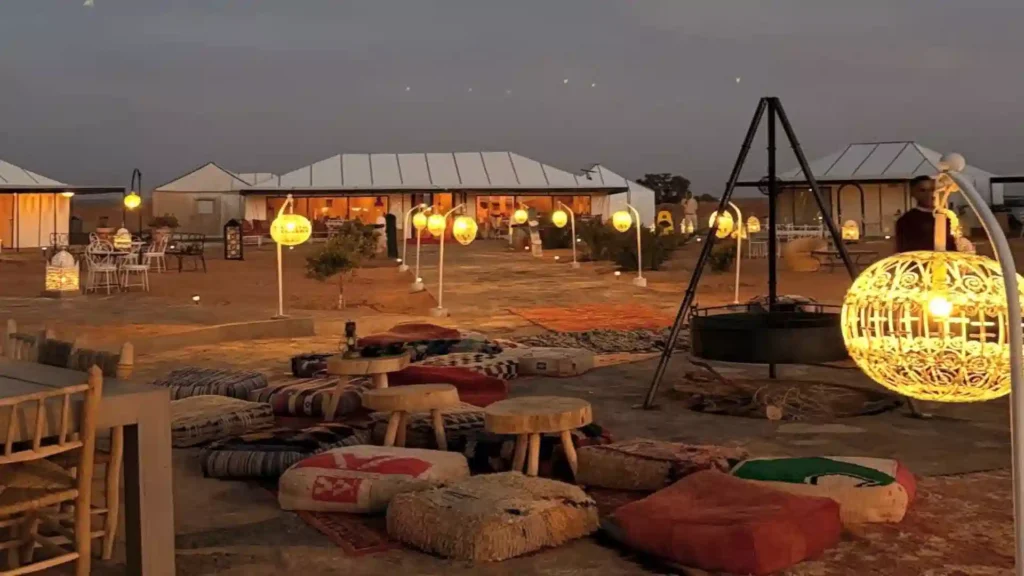
Sahara Desert Sunscreen Morocco
Sunscreen requirements for the Sahara Desert in Morocco are more demanding than standard travel sun protection. The combination of altitude (1,100 meters), zero cloud cover, and sand reflection means effective UV levels at Erg Chebbi are significantly higher than at sea level in a temperate climate. Dermatologists recommend a minimum of SPF 50 for Sahara Desert conditions, applied generously to all exposed skin including the back of the hands, the lips (use an SPF lip balm), the tops of the ears, and the back of the neck. Reapplication every 90 minutes is the standard recommendation for high-UV desert environments, and this should be built into your desert schedule around the camel trek, the dune climb, and any midday time spent outside the camp shade.
What to bring: A large tube or bottle of SPF 50+ broad-spectrum sunscreen (minimum 200ml for a 2-night stay), SPF lip balm (reapply every hour), and an aftersun lotion or aloe vera gel for evening skin recovery. Do not rely on purchasing sunscreen in Merzouga village; availability is limited, and prices for tourist-oriented products are significantly higher than in Marrakech or Fes.
Morocco Desert Health Tips: Hydration and Heat Management
The Morocco desert health tips that our guides give every guest before the camel trek are built around a single core principle: the desert dehydrates you faster than you feel thirsty. At Erg Chebbi in summer, an adult at rest in the shade loses approximately 1 liter of water per hour through perspiration and respiration, and during physical activity (camel trekking, dune climbing), this rises to 1.5-2 liters per hour. The golden rule is to drink water before you feel thirsty, not in response to thirst, and to maintain this discipline throughout the desert stay.
What to bring: A reusable insulated water bottle of minimum 1-liter capacity; the insulation keeps water cool for hours in the desert heat, which matters enormously for drinking compliance when hot water is unpleasant to consume. Over Morocco Tours provides bottled water throughout all desert tours, but having your own bottle means you can fill it at camp and carry it on the camel without worrying about plastic packaging. Oral rehydration salts (ORS) or electrolyte tablets are strongly recommended for summer visits; pure water consumption without electrolyte replacement can lead to hyponatremia (low blood sodium) in extreme heat conditions. One sachet before the camel trek and one in the evening is sufficient.
Additional Merzouga desert health tips: Avoid alcohol in the 24 hours before your desert arrival; alcohol significantly accelerates dehydration and impairs the body’s thermoregulation in heat. Eat lightly on the day of your camel trek; heavy meals are physically uncomfortable in desert heat. If you take prescription medication, store it in an insulated pouch away from direct sun; many medications lose potency when exposed to temperatures above 30°C for extended periods.
Morocco Desert Sandstorm Preparation: What to Pack for Merzouga Desert
Morocco desert sandstorm preparation is a category that most packing guides omit entirely, yet the Chergui wind that generates sandstorm conditions in Merzouga can arrive in any season. A full sandstorm is rare, perhaps 5-10 occurrences per year, but dust haze and elevated wind conditions that carry fine sand are common year-round and can develop within 30 minutes.
Merzouga desert Packing list for sandstorm conditions: A dust or sand mask (a simple FFP2/N95 mask is adequate, or a fabric gaiter that pulls up over the nose and mouth), sealed goggles or wraparound sunglasses (standard glasses leave the eyes exposed at the sides), and a dry bag or sealed zip-lock bags for electronics, documents, and anything that must remain sand-free. The tagelmust scarf doubles as a face covering in wind conditions; if worn, our guides correctly demonstrate the correct wrapping technique on every tour.
Camera Gear for the Sahara Desert Morocco
Camera gear Sahara desert Morocco packing requires specific attention because the desert environment is hostile to photographic equipment in ways that are not always obvious. Fine sand is the primary threat; it penetrates camera body seams, lens mounts, and filter threads even in mild wind conditions, and a single grain of Saharan sand inside a lens mechanism can cause lasting damage. UV radiation at desert altitude also affects digital sensors differently than at sea level, and the extreme contrast between the bright sand surface and the deep shadows of the dune faces challenges exposure systems in ways that require deliberate compensation.
Camera packing for Erg Chebbi: A sealed camera bag or dry bag is non-negotiable; do not carry your camera in an open-top bag in the desert. For DSLR and mirrorless users, carry a UV filter on every lens (it protects the front element from sand abrasion and can be wiped clean without risking the lens coating), bring 2–3× more memory cards than you think you need (the Sahara sunrise and sunset light generates far more shooting than any other landscape on a Morocco trip), and carry double the batteries cold desert nights drain battery charge rapidly, and solar charging in camps is inconsistent.
For smartphone photographers, the practical concerns are different: screen visibility in direct desert sunlight is poor (a lens shade or a cupped hand helps), and fingerprint-contaminated screens attract fine sand particles that scratch the glass. A screen protector and a sealed zipper pocket for the phone are both worthwhile investments for a Sahara trip.
Photography timing in the desert: The best light for dune photography is the 45 minutes after sunrise and the 45 minutes before sunset, the so-called “golden hours” when the low-angle sun creates long shadows that reveal the three-dimensional structure of the dune ridgelines. Midday light in the Sahara is harsh, flat, and largely unphotogenic for landscapes. Our guides always position guests on the dune crest at the right moment, but having your camera ready and settings pre-checked before the climb means you do not waste the first minutes of extraordinary light troubleshooting equipment.
Morocco Desert Trip Essentials: Documents, Money, and Practical Items
Documents and Money
Merzouga desert packing list trip essentials in the logistical and administrative category are straightforward but must not be overlooked. Your passport (or EU national identity card for EU citizens) should be carried at all times. Moroccan police checkpoints on desert roads are routine and require identification from all vehicle passengers. A color photocopy of your passport stored separately from the original (in a different bag or in your phone’s photos) provides backup in case of loss. Travel insurance documents (printed or accessible offline on your phone) should include the emergency contact number and your policy number; keep these accessible rather than buried in email.
Cash is essential in the Merzouga desert area. ATMs do exist in Merzouga village, and the nearest reliable ATM is in Rissani (22 km) or Erfoud (55 km). Withdraw sufficient Moroccan dirhams (MAD) before leaving your last major city (Marrakech, Fes, or Ouarzazate) to cover: meals not included in your tour package, any souvenir purchases, tips for your guide, camel handler, and camp staff (budget 200-400 MAD / approximately EUR18-EUR36 per person for a 2-night stay), and any optional activities arranged locally. Cards are not accepted at most desert camps, village shops, or local restaurants in Merzouga.
What Pack for Merzouga Desert Health Kit
A Morocco desert trip health kit should be compact yet should be compact but comprehensive. In our experience, guests most frequently need the following items:
- Antihistamine tablets and cream. Desert dust and sand trigger allergic reactions in some travelers. Antihistamines also help with insect bites from the occasional desert beetle or ant.
- Imodium (loperamide) or equivalent anti-diarrheal Not because desert camps have poor hygiene (our partner camps maintain high food safety standards), but because dietary change is common on any Morocco trip, and having this available provides security.
- Ibuprofen and paracetamol: Heat headaches and minor muscle aches from camel trekking or dune climbing are common. Having both analgesics covers different types of pain.
- Antiseptic wipes and plasters: Small sand abrasions from dune climbing are common. Clean them immediately to prevent infection in the desert environment.
- Eye drops Fine desert sand causes eye irritation even in calm wind conditions. Lubricating eye drops (not medicated) provide immediate relief.
- Hand sanitizer: Water for handwashing at desert camps is limited. Sanitizer fills the gap between meals and activities.
Packing Light Morocco Desert Tour: The What Not to
Bring List
Packing light for a Morocco desert tour is both a practical imperative your luggage is transported by camel or on foot to remote camps, and excessive weight causes problems and a philosophical orientation that improves the desert experience. The items that guests most commonly bring and wish they hadn’t:
Leave at home:
- Heavy denim jeans: too hot during the day, too stiff on a camel saddle, too slow to dry if they get wet at camp.
- Excessive jewelry or valuables fine jewelry and sand do not coexist well, and desert camps, while safe, are not secure environments for irreplaceable items.
- White or very light-colored clothing for the camel trek camel saddle leather leaves marks, and sand is orange; bring colors that disguise both.
- Perfume or strong scents desert insects (particularly the scarab beetles of Erg Chebbi) are attracted to synthetic scents; natural sweat in clean clothing is a more sensitive approach.
- Hair dryers and high-wattage appliances most desert camps have limited or no electrical supply; luxury camps have charging points but not high-wattage sockets.
- Books or heavy reading material: your phone with downloaded content, a lightweight e-reader, or nothing at all is the appropriate approach; the desert provides its own entertainment.
- Unnecessary toiletries: desert water is limited; a minimalist toiletry kit (toothbrush, toothpaste, small bar of soap, deodorant, moisturizer) is all that is needed, and all that is practical.
What not to bring to Merzouga desert from a safety perspective: Do not bring drone equipment without having researched and obtained the relevant ANAC (Agence Nationale de l’Aviation Civile) drone flight permit. Flying a drone in Morocco without the correct permit is illegal and can result in equipment confiscation and fines. Many guests are unaware of this regulation; our team can advise on the permit process for those who wish to fly legally.
Important Tip from Guide Ali: The Two Items Most Guests Wish They’d Brought
After thousands of desert tours, the two things guests most often say they wish they had brought are a better head covering and a warmer layer for the night. Almost everyone underestimates the cold. They pack for a hot country and forget that the desert at 5:00 AM in October is 10 degrees and windy on top of a dune. We lend blankets at camp, but on the dune crest at sunrise, you have nothing but what you are wearing. A light down jacket that packs into its own pocket takes up almost no space in a bag and makes the sunrise experience completely different.
The head covering is the other one. We provide scarves for the camel ride, but the guests who bring their own large cotton scarf use it for three days in the medina, on the drive south, on the camel, at the campfire, and on the dune at dawn. It becomes the most-used item they packed. My advice: take the scarf you use at home and bring it to Morocco. You will use it every single day.
One more thing that nobody ever mentions: bring a small torch or headlamp. The path between the camp tents and the bathroom block at 2:00 AM is very dark. The stars are extraordinary, but they do not illuminate the ground well enough to walk safely without a light. This is a small thing that makes a big difference.
Ali, Senior Desert Guide, Over Morocco Tours (Merzouga based since 2012)
Seasonal Adjustments What to Pack for Merzouga Desert And What Changes by Month?
Your Merzouga desert packing list should be adjusted based on the season of your visit. The core list above applies year-round, but the following modifications also apply:
October-April (Peak and Shoulder Seasons):
- Add a thermal base layer (top and bottom) for December-February nights.
- A beanie hat or warm head covering for the sunrise dune climb in winter is genuinely necessary.
- Pack one fewer set of summer-weight clothing and substitute a heavier shirt or long-sleeve layer.
June-August (Summer Season):
Below are a few essential things on what to pack for Merzouga desert during summer:
- Prioritize breathability above all else: linen and cotton only; no synthetics.
- Add a second bottle of SPF 50 sunscreen (you will use more than you think).
- The camel trek happens at 5:30 AM, so pack your warmest layer in the accessible top of your bag—the desert is cool at that hour even in July.
- Add oral rehydration salts as a daily supplement, not just an emergency provision.
March-May and September-November (Spring and Early Autumn):
The most forgiving seasons for packing the temperature range are moderate; neither extreme heat management nor heavy warmth layers are critical.
A single mid-weight fleece and standard sun protection cover the full range of conditions.
Frequently Asked Questions: Merzouga Desert Packing List
What is the most important item of what to pack for Merzouga Desert?
The single most important item is a large, lightweight cotton or linen scarf (minimum 150cm x 50cm) that can be worn as a tagelmust, a head, face, and neck wrap that simultaneously protects against sun, wind, and sand. After the scarf, a warm mid-layer for desert nights is the most consistently underestimated essential item on any Merzouga desert packing list.
What shoes should I wear for a camel ride in Merzouga?
Closed-toe shoes with a secured heel a sports sandal with a heel strap, lightweight trail shoe, or low-profile hiking boot—are the best choice for a camel ride in Merzouga. Flip-flops and open sandals are strongly discouraged: the camel saddle stirrup requires secure footwear, dune climbing in unsecured shoes is difficult, and sand surface temperatures in summer can cause burns through thin soles.
How cold does it get at night in the Merzouga desert?
Morocco desert night temperatures in Merzouga range from 2°C–5°C in December and January to 20°C–25°C in July and August. The temperature swing between midday and pre-dawn can exceed 25°C in spring and autumn. A warm mid-layer (fleece or light down jacket) is recommended year-round for the sunset and sunrise dune experiences, with thermal base layers added for winter visits.
Can I bring a drone to the Merzouga desert?
Drone flight in Morocco requires an advance permit from ANAC (National Civil Aviation Agency). Flying without a permit is illegal and can result in equipment confiscation and fines. If you wish to film with a drone at Erg Chebbi, contact Over Morocco Tours in advance—our team can advise on the permit process and, in some cases, assist with the application.
Is there electricity at desert camps in Merzouga?
Standard and mid-range desert camps have limited electrical supply—typically a generator that runs for a few hours in the evening, sufficient for phone charging but not high-wattage appliances. Luxury desert camps have a more consistent power supply, including charging points in tents. Bring a portable power bank (10,000–20,000 mAh) as a reliable backup regardless of camp tier.
Can I buy sunscreen and water in Merzouga?
Bottled water is available at all desert camps and guesthouses in Merzouga and is included in Over Morocco Tours packages. Sunscreen is available in Merzouga village but in limited selection and at significantly higher prices than in Marrakech or Fes. Bring your own SPF 50+ sunscreen from home or purchase it in a larger city before arriving.
How much cash should I bring to Merzouga?
Budget a minimum of 500–800 MAD (approximately EUR45–EUR72) per person in cash for a 2-night Merzouga stay covering tips for the guide, camel handler, and camp staff (200–400 MAD), any optional purchases, and personal expenses. ATMs are not available in Merzouga village; the nearest reliable ATM is in Rissani (22 km) or Erfoud (55 km). Withdraw dirhams before leaving your last major city.
Ready for the Sahara? Book Your Merzouga Desert packing list.
Your Merzouga desert packing list is complete, and so is your preparation. Over Morocco Tours offers year-round private and small group desert tours from Marrakech, Fes, and Casablanca, with departure flexibility, luxury and standard camp options, and English-speaking Berber guides based in Merzouga who know Erg Chebbi in every season and condition. Contact our team today to build your personalized Sahara itinerary and pack exactly what this guide recommends.
Written by our team, Merzouga, Morocco. Our guides lead desert tours through Erg Chebbi year-round and have contributed firsthand packing knowledge from thousands of desert trips across every season.