What language is spoken in Morocco? The Complete Travel & Linguistic Guide
Know what language is spoken in Morocco and you will find a complex, multi-layered linguistic landscape where ancient heritage, colonial influence, and modern global trends collide. Official languages are Modern Standard Arabic and Standard Moroccan Amazigh (Berber), but the most widely spoken language across the country is Moroccan Arabic (Darija), which is the native tongue of the vast majority of the population.
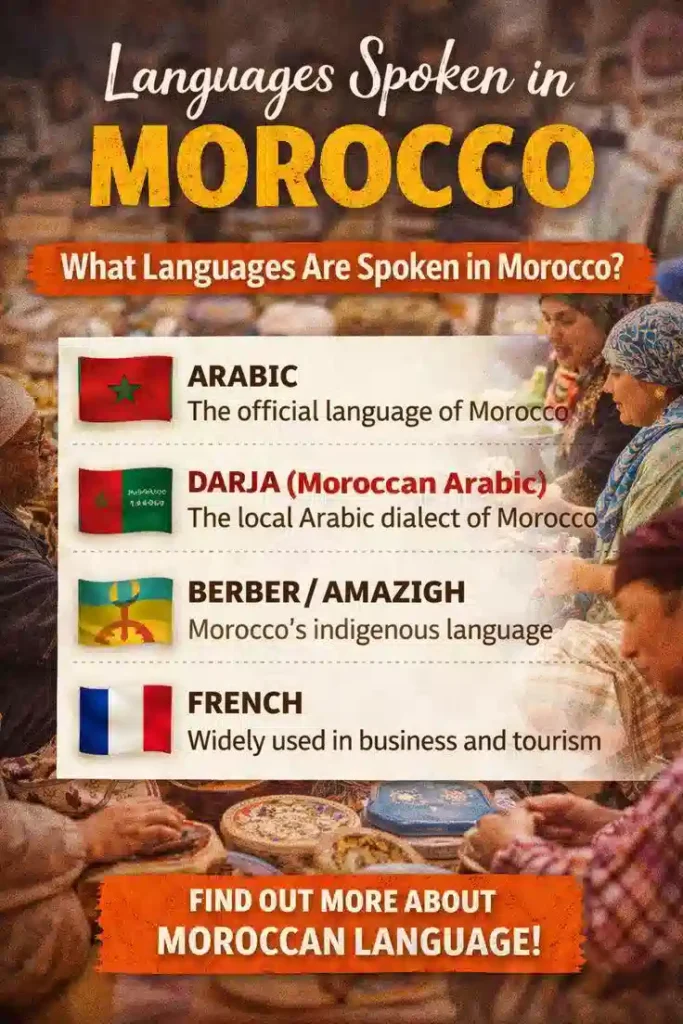
A clear overview of primary tongues and dialects addressing what language is spoken in Morocco for travelers.
Every year, travelers planning itineraries across Marrakech, Fes, Casablanca, Tangier, and the Sahara Desert ask fundamental questions: what language do they speak in Morocco during daily encounters? How do formal legal standards translate into street-level conversation? What is the official status of the Morocco official language policy in schools and administration? Do they speak English in Morocco well enough for first-time visitors to travel comfortably without a guide? And how does Moroccan Arabic differ from Eastern Arabic dialects?
This comprehensive Morocco language guide breaks down every layer of Morocco’s linguistic tapestry. Covering constitutional frameworks, census statistics, regional language distribution, cultural nuances, practical travel phrase lists, and communication tips, this guide provides the detailed context required for navigating the Kingdom with confidence.
What language do they speak in Morocco? Diglossia and Multilingual Reality
To thoroughly address what language do they speak in Morocco, it is necessary to examine the concept of diglossia a sociolinguistic condition where two distinct forms of the same language, or multiple different languages, are used by the same speech community under different social circumstances.
In Morocco, code-switching is a standard feature of daily conversation. A single sentence spoken by a Moroccan in Casablanca or Rabat might begin in Moroccan Arabic, incorporate French terms for technical concepts, and end with an Amazigh greeting or an English expression. This fluid linguistic movement reflects centuries of trade, cultural contact, and strategic geographic positioning at the crossroads of Africa, the Middle East, and Europe.
| Language / Dialect | Status | Estimated Usage | Primary Domains of Usage |
|---|---|---|---|
| Moroccan Arabic (Darija) | National Spoken Vernacular | ~92% of the population | Home life, markets, street interactions, popular media, daily trade |
| Modern Standard Arabic (MSA) | Constitutional Official Language | Universal in literacy/education | News broadcasts, legal filings, official government documents, literature |
| Amazigh (Berber Languages) | Constitutional Official Language | ~25%–30% native speakers | Atlas Mountains, Souss Valley, Rif, rural indigenous communities |
| French | Administrative / Commercial Language | ~35%–55% functional fluency | Higher education, banking, international trade, hospitality, government agencies |
| English | Foreign Language (Expanding) | ~15%–20% functional fluency | Tourism, tech sectors, youth education, international commerce |
| Spanish | Regional Foreign Language | ~5% (Concentrated in North) | Northern coastal cities (Tangier, Tetouan, Nador, Larache) |
Morocco official language: Modern Standard Arabic and Amazigh Integration
The constitutional architecture governing Morocco official language policy underwent significant reform in 2011. Article 5 of the Kingdom’s updated constitution explicitly establishes two co-official state languages, codifying recognition of both Arab-Islamic heritage and indigenous Amazigh roots.
1. Modern Standard Arabic (Al-Fusha)
Modern Standard Arabic serves as the primary written medium for government, law, education, and national administration. It connects Morocco to the broader Arab world literary tradition. However, Modern Standard Arabic is almost exclusively a written and formal spoken language; it is not utilized for informal domestic conversations or daily commercial haggling in markets.
2. Standard Moroccan Amazigh (Tamazight or Tachlhiyt)
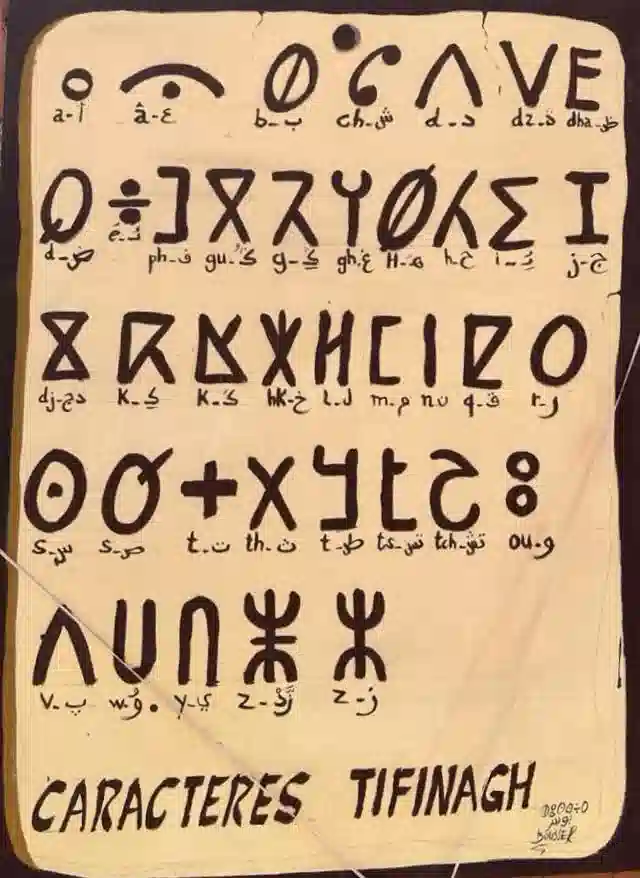
Exploring the indigenous Amazigh alphabet to better understand what language is spoken in Morocco beyond Arabic.
The formal elevation of Amazigh to an official language marked a pivotal moment in North African history. The Amazigh people are the original inhabitants of North Africa, with history in the region spanning thousands of years. Standard Moroccan Amazigh utilizes the official Tifinagh script a geometric writing system visible on government buildings, school signs, and official documents across the country.
The Primary Amazigh Dialects of Morocco:
While standardized Tamazight is taught in schools, spoken Amazigh consists of three major regional languages:
- Tashelhit (Shilha): Spoken across the High Atlas, Anti-Atlas, and Souss Valley (including centers like Agadir, Taroudant, and Ouarzazate). It represents the largest Amazigh speech community in Morocco.
- Central Atlas Tamazight: Spoken throughout the Middle Atlas range and central High Atlas regions (including Errachidia, Khenifra, and Midelt).
- Tarifit (Riffian): Spoken across the northern Rif Mountain region bordering the Mediterranean (including Nador, Al Hoceima, and surrounding areas).
Moroccan Arabic (Darija): Grammar, Structure, and Origins
To understand daily communication in Morocco, one must understand Moroccan Arabic, locally called Darija. Darija functions as the default spoken lingua franca among Moroccans of all backgrounds.
Moroccan Arabic differs significantly from Levantine, Egyptian, or Gulf Arabic. Due to Morocco’s geographic location and complex history, Darija combines an Arabic lexical core with structural, grammatical, and phonological influences from Amazigh languages, alongside vocabulary borrowed from French, Spanish, and historical Andalusian dialects.
Distinct Characteristics of Moroccan Darija:
- Vowel Reduction: Short vowels common in Standard Arabic are frequently omitted in Darija, leading to rapid consonant clusters (e.g., standard Kitab for book becomes Ktab in Darija).
- Amazigh Substrate: Syntax, sentence structure, and specific core terms (such as words for local flora, fauna, and traditional customs) trace directly back to Amazigh roots.
- European Loanwords: European terms are fully integrated into everyday Darija, often modified using Arabic verb roots and plural structures (e.g., Formaja for cheese from French fromage, or Cozina for kitchen from Spanish cocina).
The Role of French and Spanish in Moroccan Society: What Language Is Spoken In Morocco
Although neither French nor Spanish are designated as a Morocco official language in the constitution, both play significant historical and modern roles in specific regions and professional sectors.
The Influence of French
French was established as a primary administrative language during the French Protectorate period (1912–1956). Today, French remains widely used in private enterprise, banking, higher education (particularly in engineering, medicine, and natural sciences), and government administrative departments. For international visitors, French is widely spoken in urban hotels, upscale dining establishments, and transport hubs.
The Presence of Spanish
Spanish influence remains most visible in northern Morocco, reflecting the historical footprint of the former Spanish Protectorate zone (including Tangier, Tetouan, Larache, and Chefchaouen), as well as southern coastal pockets like Sidi Ifni. In these northern centers, older generations, street vendors, and taxi drivers frequently speak or understand Spanish.
Do they speak English in Morocco? Practical Expectations for Tourists
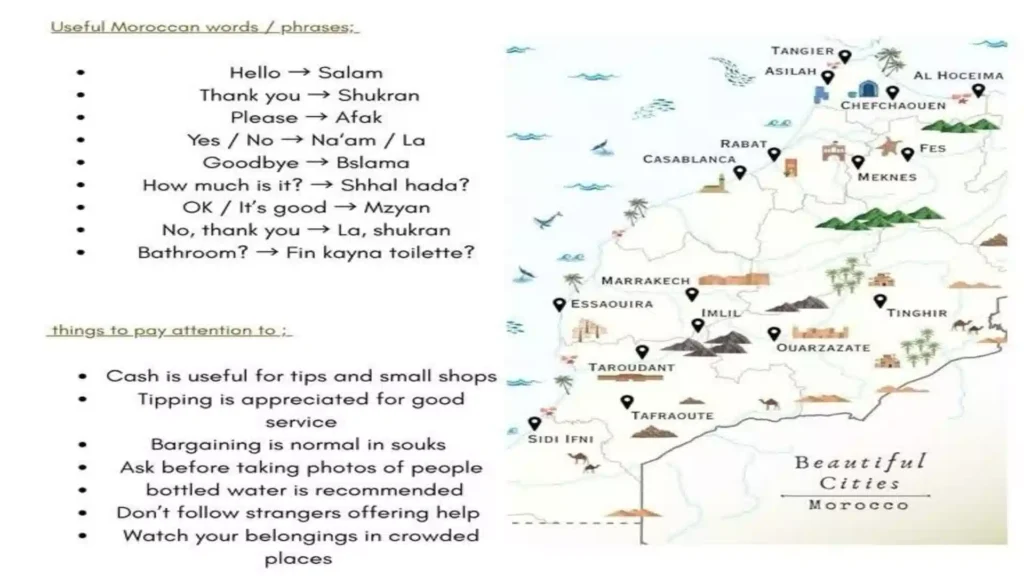
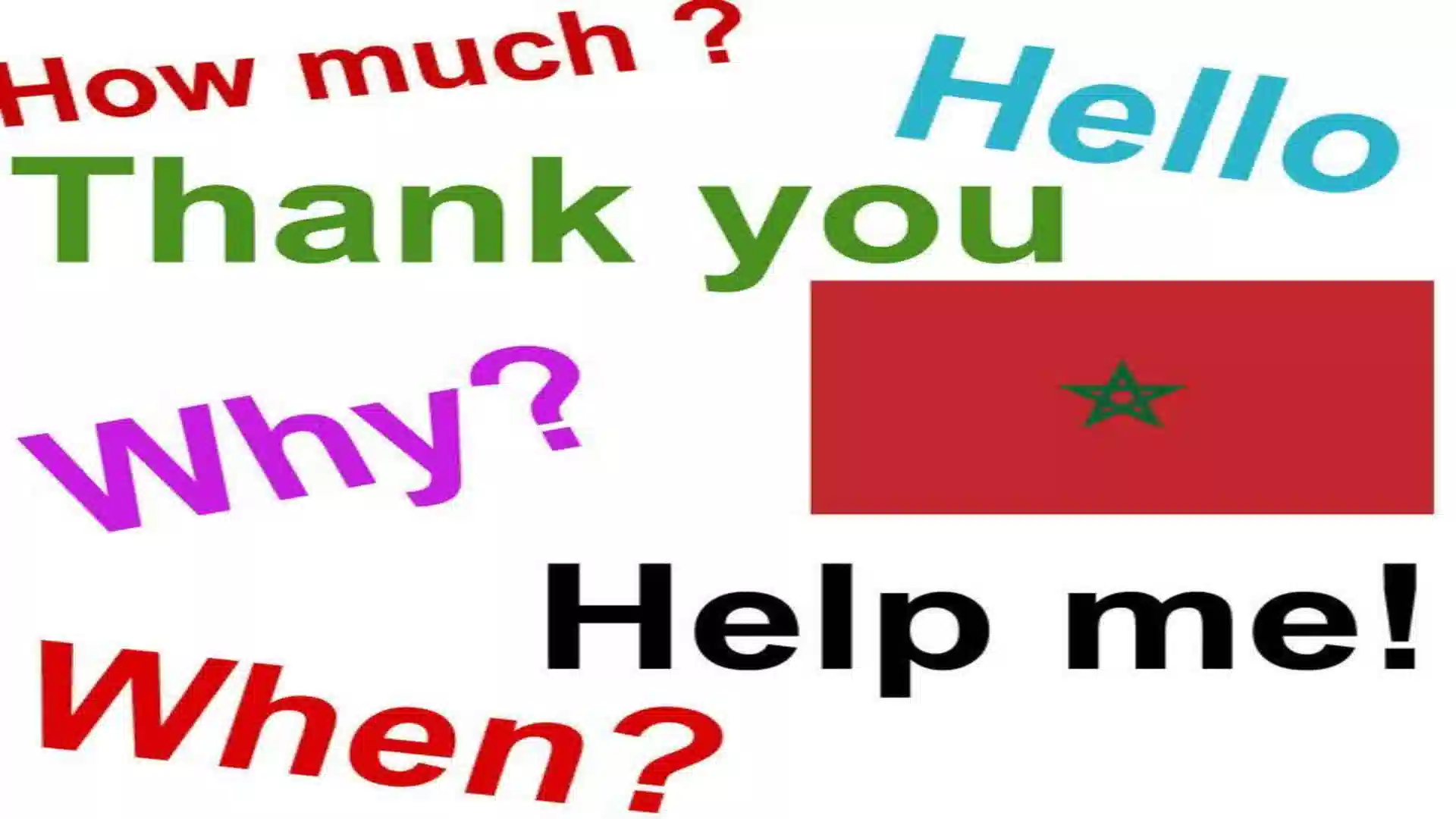
Key local phrases and practical travel advice helping visitors navigate what language is spoken in Morocco during their journey.
For travelers preparing for an upcoming visit, a primary operational question remains: Do they speak English in Morocco effectively enough to support independent travel?
English proficiency in Morocco is growing rapidly, particularly among youth, university graduates, and professionals in the tourism sector. While English is not as universally spoken as French or Darija, travelers can easily navigate key tourist regions using English.
| Sector / Location | English Language Availability | Practical Travel Context |
|---|---|---|
| Hotels, Riads & Resorts | Very High | Reception, concierge, and management staff in tourist centers speak fluent English. |
| Tour Operators & Drivers | High | Professional guides and private drivers catering to international guests are fluent in English. |
| Souks & Markets | Moderate to High | Vendors in major medinas (Marrakech, Fes) speak commercial English for negotiating prices. |
| Taxis & Local Transit | Limited to Low | City taxi drivers primarily speak Darija and French. Using smartphone maps or written addresses is recommended. |
| Rural Villages & Remote Desert | Low | In rural High Atlas or Saharan communities, local languages dominate. Traveling with an English-speaking guide ensures smooth interaction. |
Morocco language guide: Useful Phrases for Travelers
To assist in daily encounters during your trip, this practical Morocco language guide outlines core phrases across Moroccan Arabic (Darija), French, and Amazigh. Learning basic greetings demonstrates respect for local culture and opens doors to genuine hospitality.
1. Moroccan Arabic (Darija) Essentials
| English | Darija Expression | Phonetic Guide | Usage Note |
|---|---|---|---|
| Hello / Peace be with you | Salam Alaikum | Sah-lam Ah-lay-koom | Standard polite greeting across the country. |
| Response to Hello | Wa Alaikum Salam | Wa Ah-lay-koom Sah-lam | Standard response to Salam Alaikum. |
| Thank you | Shukran | Shook-ran | Universal expression of gratitude. |
| No, thank you | La, Shukran | La, Shook-ran | Polite refusal for offered goods or services. |
| Please | Afak | Ah-fak | Add to requests for courteous interaction. |
| How much is this? | Bshhal hada? | Bsh-hal ha-da | Inquiring about prices in medinas or shops. |
| Too expensive | Ghali bzaf | Gha-li bzaf | Used during market bargaining. |
| Okay / Good | Wakha | Wa-kha | Expressing agreement or understanding. |
| Goodbye | Bslama | Bs-lah-ma | Standard farewell phrase. |
2. Helpful French Expressions for Travel
- Bonjour: Good morning / Hello.
- Bonsoir: Good evening.
- S’il vous plaît: Please.
- L’addition, s’il vous plaît: The check/bill, please.
- Où se trouve…?: Where is…?
3. Basic Amazigh Greetings
- Azul: Hello / Peace (Traditional Amazigh greeting).
- Tanmirt: Thank you.
Regional Linguistic Variations Across Morocco
Language distribution in Morocco varies drastically depending on the geographic zone, historical trade influences, and proximity to neighboring continents. Understanding these regional variations helps travelers anticipate which languages will be most helpful during their itinerary.
1. Northern Morocco (Tangier, Tetouan, Chefchaouen)
Because of historical proximity to Spain and former protectorate arrangements, northern cities feature a high concentration of Spanish speakers alongside Northern Darija (Jebli dialect). Spanish signage, radio stations, and loanwords remain widespread throughout the Rif and Mediterranean coast.
2. Coastal & Central Economic Hubs (Casablanca, Rabat, Kenitra)
These urban centers showcase high levels of bilingualism in French and Moroccan Arabic. French is dominant in modern commercial offices, universities, fine dining, and corporate management, while Darija remains the standard street language.
3. Imperial Cities (Marrakech and Fes)
As major international travel destinations, Marrakech and Fes feature exceptional multilingual capacity within their ancient medinas. Vendors, tour guides, and shopkeepers seamlessly shift between English, French, Spanish, German, Italian, and Moroccan Arabic to accommodate international visitors.
4. Atlas Mountains & Southern Sahara Regions (Ouarzazate, Merzouga, Agadir)
Across the High Atlas, Anti-Atlas, and Souss Valley, Tashelhit and Central Atlas Tamazight are spoken as primary mother tongues in local homes and villages. In Saharan regions, Hassaniya Arabic—a distinct dialect with strong historical ties to nomadic desert culture—is widely spoken alongside Amazigh languages.
Linguistic Etiquette, Digital Communication, and Media Trends
Beyond basic vocabulary, understanding how language intersects with modern technology and daily etiquette offers deeper insight into Moroccan culture. As smartphones and internet access have expanded across urban and rural zones alike, the way Moroccans communicate digitally has created unique linguistic phenomena.
1. Texting in Darija: The Chat Arabic (Arabizi) System
Because traditional keyboards lacked intuitive access to Arabic characters during the early digital era, younger Moroccans developed a phonetic Latin-script writing system known as Arabizi or Chat Arabic. This system replaces specific Arabic letters that have no Latin equivalents with numbers based on visual similarity:
- 3: Represents the guttural Arabic letter ‘Ayn (ع), as in 3afak (please).
- 7: Represents the heavy rasping Ha sound (ح), as in 7ta ana (me too).
- 9: Represents the emphatic Qaf sound (ق), as in 9ehwa (coffee).
2. Cultural Etiquette & Indirect Communication
In Moroccan society, spoken language is deeply interwoven with hospitality, religious invocations, and respectful social boundaries. Beginning encounters with pleasantries is expected before transitioning to business transactions:
- Inshallah (God willing): Expresses future intentions or hopes. It is routinely used in response to plans, agreements, or travel schedules.
- Hamdullah (Praise be to God): The standard answer when asked about your well-being or health (Labas?).
- Bismillah (In the name of God): Uttered before eating a meal, starting a journey, or taking a major step.
The Evolving Role of Language in Moroccan Commerce, Media, and Education
Morocco’s linguistic landscape is not static; it undergoes continuous shifts driven by economic modernization, educational reforms, and global media consumption. Understanding how different languages function within professional environments gives travelers and business visitors a clearer picture of modern Moroccan life.
1. Business and Corporate Dynamics
In urban corporate sectors such as financial institutions in Casablanca, technology firms in Rabat, or industrial logistics hubs near Tangier Med port French historically served as the exclusive working language. Corporate emails, financial balance sheets, legal contracts, and board presentations were predominantly drafted in French.
However, international trade expansion with North America, East Asia, and sub-Saharan Africa has positioned English as a vital asset. Multinational corporations, renewable energy ventures, and digital start-ups across Morocco increasingly operate in English, driving professional demand for fluent English speakers.
2. Media, Television, and Broadcasting
Moroccan broadcast media reflects the national policy of multilingual accessibility. State television channels (such as Al Aoula and 2M) broadcast news bulletins in Modern Standard Arabic, French, and Amazigh dialects daily. Popular entertainment programming, including local comedy series, soap operas, and talk shows, is produced almost entirely in Moroccan Darija to maximize audience engagement.
Radio broadcasting follows a similar pattern. Urban FM stations feature hosts who move fluidly between Darija and French within single sentences, playing local music alongside pan-Arab, Western, and Amazigh tracks.
3. Educational Reforms and Future Trends
Morocco’s Ministry of National Education has initiated strategic language policies designed to balance traditional identity with global competitiveness. Modern Standard Arabic remains foundational throughout primary and secondary schooling, while standardized Amazigh instruction expands across regional curricula.
Concurrently, educational reforms emphasize strengthening early English instruction. Younger Moroccans demonstrate higher English literacy than previous generations, heavily influenced by online streaming, social platforms, and international academic ambitions.
| Context / Scenario | Primary Spoken Choice | Primary Written Choice | Alternative Choice |
|---|---|---|---|
| Legal Court Proceedings | Modern Standard Arabic / Darija | Modern Standard Arabic | French (Civil/Commercial cases) |
| Banking & International Commerce | French / English | French / English | Modern Standard Arabic |
| Traditional Market Bargaining | Moroccan Arabic (Darija) | N/A (Oral interaction) | Amazigh / French / English |
| Mountain Village Interactions | Amazigh (Tashelhit / Tamazight) | Tifinagh / Arabic Script | Moroccan Arabic (Darija) |
| High-End Tourism & Hospitality | English / French | English / French / Arabic | Spanish / German / Italian |
Practical Communication Strategies for Travelers with Moroccan Arabic
Navigating a country with multiple distinct languages can initially feel daunting, but simple strategies ensure smooth interactions throughout your itinerary. Moroccans are notoriously welcoming and appreciative of visitors who attempt local phrases.
1. Greetings as Cultural Currency
In Moroccan culture, rushing directly to a transaction without a greeting is considered abrupt. Placing a hand over your heart after saying Salam Alaikum or Shukran is a traditional sign of warmth and sincerity.
2. Leveraging Translation Technology
When traveling independently outside major cities, offline translation applications are invaluable. Downloading French and Arabic language packs allows you to translate street signs, menus, and written instructions even without active mobile data. For spoken Darija, translation tools are expanding, though basic French often serves as a helpful backup.
3. Navigating Taxis and Transportation
Drivers operating local city taxis (Petit Taxis) rarely speak fluent English. To avoid miscommunication, carry written addresses in French or Arabic, or show the destination visually on a digital navigation map. Verifying that the meter (compteur) is active before departing ensures fair pricing.
4. Working with Multilingual Private Drivers and Guides
When organizing custom multi-day journeys such as traveling from Marrakech through the High Atlas Mountains to the Merzouga dunes booking a multilingual driver or private guide resolves potential language barriers. A local guide handles logistics, translates conversations in mountain villages, and provides cultural context throughout your journey.
Frequently Asked Questions About What language is spoken in Morocco:
What is the single main language spoken in Morocco?
The primary spoken language across daily life in Morocco is Moroccan Arabic, known locally as Darija. It is spoken or understood by approximately 92% of the population.
Is French an official language under the Moroccan Constitution?
No. The constitution officially recognizes two languages: Modern Standard Arabic and Standard Moroccan Amazigh. French holds no constitutional status, though it serves as a primary language for business, higher education, and government operations.
Can I get by in Morocco with only English?
Yes, particularly if you are visiting major cities like Marrakech, Fes, Casablanca, and Tangier, or traveling with organized tours. In major hotels, restaurants, and tourist markets, English is widely spoken.
What script or alphabet is used for written signs in Morocco?
Street signs, official government buildings, and road markers in Morocco routinely feature three scripts: Arabic script for Modern Standard Arabic, Latin script for French, and Tifinagh script for Amazigh.
Is Moroccan Arabic (Darija) written down?
Traditionally, Darija was primarily an oral language, while Modern Standard Arabic was used for writing. However, with modern texting, social media, and digital messaging, Moroccans frequently write Darija using Arabic characters or the Latin alphabet supplemented with numbers (e.g., using “7” for the throat ‘ha’ sound or “3” for ‘ayn’).
How widely spoken is Spanish in Morocco?
Spanish is mostly spoken in northern Morocco (Tangier, Tetouan, and Nador) and parts of the far south (Sidi Ifni). Nationwide, around 5% of the population speaks Spanish, making it a regional foreign language rather than a national administrative tongue.
What language is taught in Moroccan schools?
Moroccan public education begins with Modern Standard Arabic and Standard Moroccan Amazigh. French is introduced early in primary school as a second core language, while English education starts in middle and high school, with expanding national initiatives to increase English instruction across all educational levels.
What is Tifinagh and where can I see it?
Tifinagh is the ancient geometric writing system of the Amazigh (Berber) people. Following the 2011 constitutional reforms, Tifinagh was officially adopted for written Standard Moroccan Amazigh. You will see Tifinagh characters displayed on public buildings, monuments, school signs, and official government stationery throughout Morocco.
If I speak Arabic from the Middle East (Syria, Egypt, Jordan), will Moroccans understand me?
Yes. Due to the widespread consumption of Middle Eastern television programs, news broadcasts, and music, most Moroccans easily understand Eastern Arabic dialects (Levantine or Egyptian) or Modern Standard Arabic. However, you may find it difficult to understand their response if they answer in fast-paced Moroccan Darija.
Is it better to speak French or English when bargaining in the souk?
Using basic Darija numbers and greetings always yields the warmest response and best initial pricing in local markets. Beyond Darija, French is generally more widely understood by older shopkeepers, while younger vendors in tourist hubs speak fluent commercial English.
What language are menu items and restaurant signs written in?
In tourist areas and urban cities, restaurant menus are almost universally printed in French and English, often accompanied by Arabic descriptions. In smaller rural eateries, menus may be written solely in French or communicated orally by the staff.
How do language dynamics affect hiring a local driver or private guide?
Professional tour drivers and licensed city guides are selected specifically for their multilingual capabilities. Engaging a dedicated English-speaking guide bridges the gap when interacting with remote village elders, nomadic families in the Sahara, or local artisans who speak primarily Amazigh dialects or Darija.
Plan Your Morocco Journey with Local Experts
Equipped with this complete understanding of what language is spoken in Morocco, what language do they speak in Morocco across different regions, and how to utilize your Morocco language guide, you are ready to experience the sights, sounds, and traditions of the Kingdom.
Our professional drivers and licensed local guides speak fluent English, French, Moroccan Arabic (Darija), and Amazigh, ensuring seamless communication throughout your travel itinerary.