What Is Marrakech Morocco? Location, History & What to See in 2026
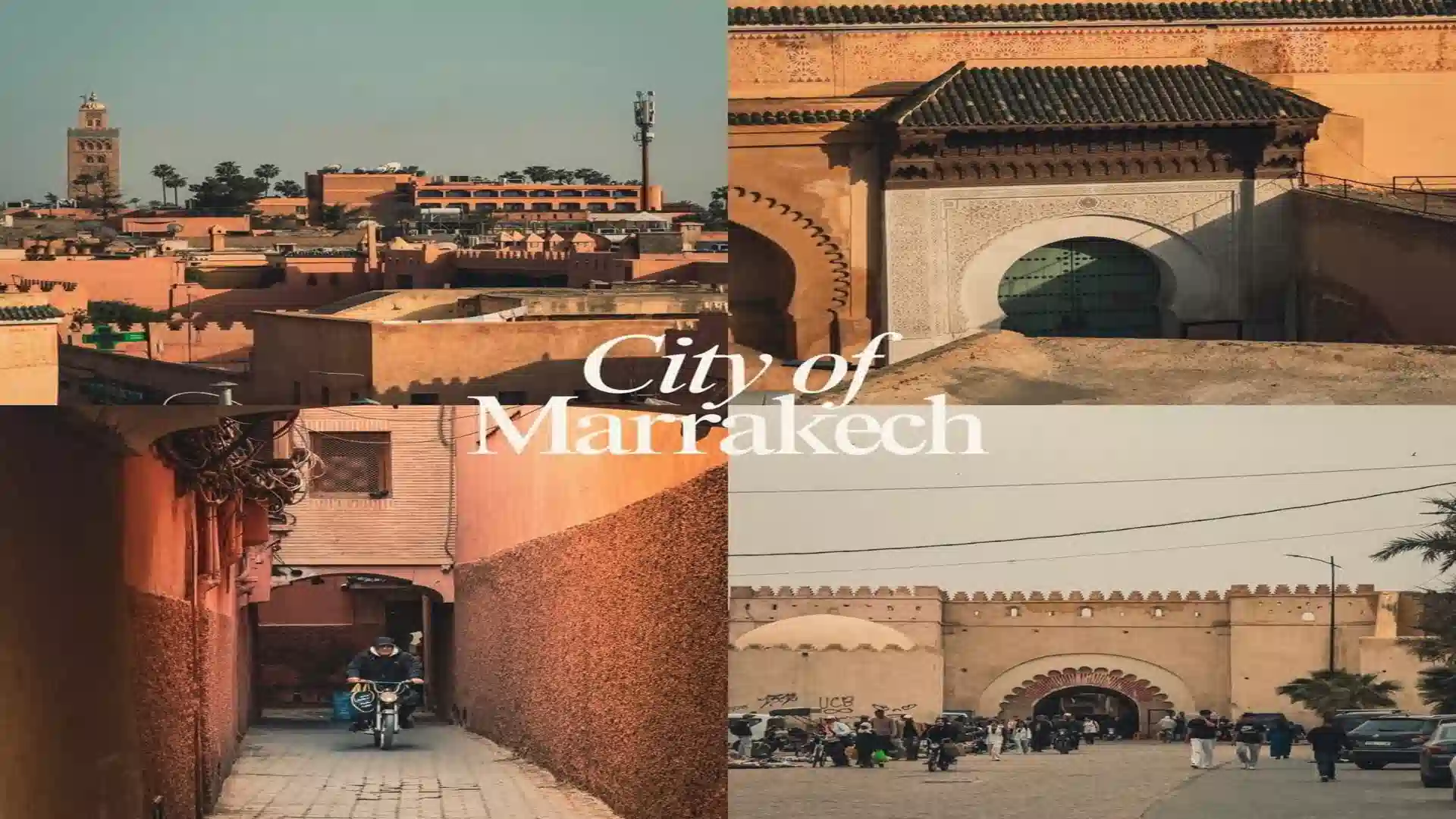
What is Marrakesh? Marrakech is the signature imperial city of Morocco, an ancient metropolis of over a million souls at the foot of the High Atlas mountains. Known globally as “The Red City” (Al-Hamra) for its signature salmon-pink clay architecture and medieval rammed-earth ramparts, it is North Africa’s principal cultural center, commercial crossroads, and global travel destination.
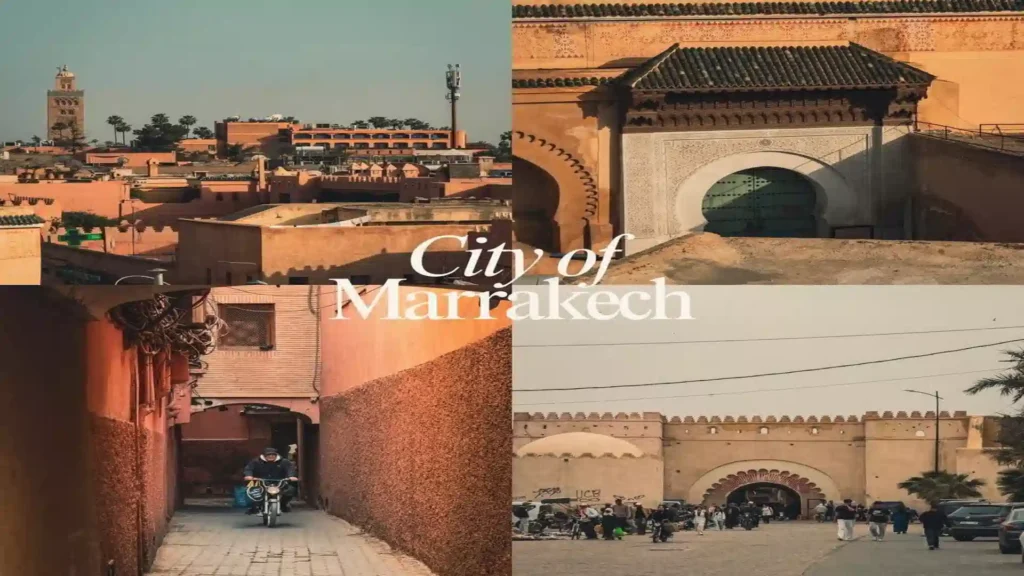
Exploring the historical architecture and vibrant streets that define what is Marrakech Morocco.
Every year, millions of travelers, scholars, and vacationers set out to explore the wonders of North Africa, starting with the exact same fundamental queries: what is Marrakech Where is Marrakech Morocco? How did this desert outpost evolve into one of the world’s most glamorous travel destinations? What makes its UNESCO World Heritage-listed medina so iconic? what to see in Marrakech Morocco during an extended trip? And how do you find the ideal Marrakech rental—from historic central riads to expansive private luxury villas to make your journey completely seamless?
This ultimate Marrakech Morocco guide delivers an exhaustive, deep-dive examination of the city. Spanning geographic analysis, detailed historical timelines, neighborhood breakdowns, comprehensive sight itineraries, and practical accommodation strategies, this guide provides everything you need to navigate, understand, and enjoy Morocco’s Red City to the absolute fullest.
What Is Marrakech? The Essence of Morocco’s Imperial Red City
To fully grasp what is Marrakech, you must look beyond modern tourism brochures and understand the city as a living, breathing historic monument. Founded in 1070 CE by the Almoravid dynasty, Marrakech is one of Morocco’s four historic imperial capitals—alongside Fes, Meknes, and Rabat. For centuries, it served as the political, economic, and cultural capital of powerful Islamic empires that stretched from sub-Saharan West Africa all the way into southern Europe (Andalusia).
The city derives its global nickname, “The Red City,” from the local red clay and rammed earth (pisé) used to build its ancient fortifications, historic palaces, and residential homes. Under the shifting North African sun, these clay structures change color from warm ochre in the morning to deep crimson at sunset, giving the entire city a unified, otherworldly aesthetic.
At its core, Marrakech is defined by a dynamic contrast between two distinctly different urban environments separated by historic city walls:
- The Medina (Ancient Walled City): A sprawling 600-hectare car-free urban maze enclosed by 19 kilometers of 12th-century pink walls. Inside lies thousands of winding alleyways, historic courtyard homes (riads), bustling artisan marketplaces (souks), and world-famous monuments.
- The Ville Nouvelle (Modern French City): Encompassing modern districts like Guéliz and Hivernage, constructed outside the ancient walls during the early 20th century. Here, broad palm-lined avenues, European-style street cafes, contemporary art galleries, international shopping malls, and luxury nightlife venues offer a sleek modern contrast to medina life.
- The Resort Suburbs (Palmeraie & Agdal): Sprawling green belts outside the urban core characterized by tens of thousands of date palms, luxury resort hotels, private villas, and golf courses set against the backdrop of snow-capped mountain peaks.
Beyond its physical geography, Marrakech represents a sensory cultural phenomenon. It is a place where traditional Gnaawa music fills evening square air, where scent of cumin and orange blossom lingers in riad courtyards, and where centuries-old craftsmanship—from hand-hammered brass to vegetable-dyed leather—is passed down continuously across generations.
Where Is Marrakech, Morocco? Geographic Location & Regional Connectivity
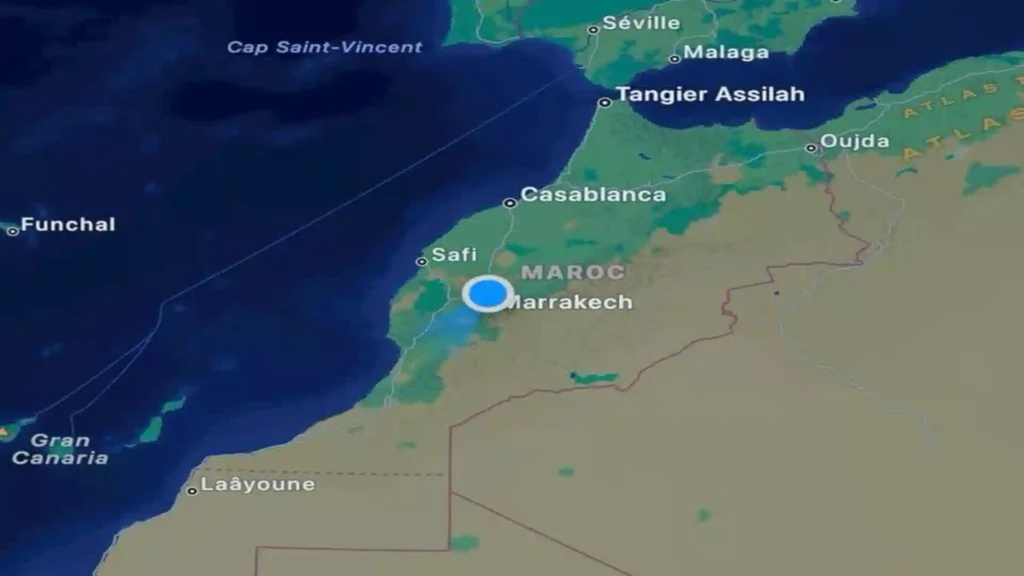
A regional map view highlighting the exact location of the red city for travelers wondering what is Marrakech Morocco.
If you are planning an itinerary across North Africa, the immediate question is: Where is Marrakech, Morocco? Geographically, Marrakech is situated in west-central Morocco on the fertile Haouz Plain, lying directly at the northern foot of the High Atlas Mountains. It sits at an average altitude of 466 meters (1,529 feet) above sea level.
This unique geographical position plays a crucial role in shaping the city’s climate, water access, and historic importance. The towering peaks of the High Atlas range—including Mount Toubkal, the highest peak in North Africa at 4,167 meters—rise dramatically to the south. These mountains act as a natural climate barrier between the Mediterranean influence of northern Morocco and the arid expanse of the Sahara Desert to the south.
To clearly understand Where is Marrakech, Morocco? In relation to other major cities, transport hubs, and regional attractions, examine the detailed distance and transit matrix below:
| Destination / Landmark | Distance from Marrakech | Direction | Typical Transit Time | Key Transport Routes |
|---|---|---|---|---|
| Casablanca | 240 km (149 mi) | North | 2.5 – 3 Hours | A1 Toll Highway / Direct ONCF Express Train |
| Rabat (Capital) | 325 km (202 mi) | North | 3.5 – 4 Hours | A1/A2 Highways / High-Speed Rail Connections |
| Essaouira (Atlantic Coast) | 177 km (110 mi) | West | 2.5 Hours | N8 Highway / Supratours Bus Lines |
| Agadir (Southern Coast) | 258 km (160 mi) | Southwest | 3 Hours | A7 Toll Motorway through Atlas Foothills |
| Ouarzazate (Desert Gateway) | 193 km (120 mi) | Southeast | 4 Hours | N9 Mountain Highway via Tizi n’Tichka Pass |
| Merzouga (Erg Chebbi Dunes) | 560 km (348 mi) | Southeast | 9 – 10 Hours | N9/N10 Highways via Todra and Dades Gorges |
| Fes (Northern Imperial City) | 530 km (329 mi) | Northeast | 6.5 Hours | A2 Highway / Direct Rail Line / Domestic Flight |
Because of its strategic center-stage location, Marrakech serves as Morocco’s premier travel gateway. International visitors fly directly into Marrakech Menara Airport (RAK), located just 6 kilometers (3.7 miles) southwest of the city center. From this central position, travelers easily organize short day trips into the High Atlas valleys or launch multi-day desert expeditions into the Sahara.
A Complete History of Marrakech: From Caravan Camp to Imperial Capital
You cannot fully appreciate any Marrakech Morocco guide without exploring the dynamic rise, fall, and architectural rebirth of the city across four distinct imperial dynasties over the past thousand years.
1. The Almoravid Foundation (1070–1147 CE)
Marrakech was founded around 1070 CE by Abu Bakr ibn Umar, a chieftain of the Saharan Sanhaja Berber tribe, and dramatically expanded by his cousin, Sultan Youssef ibn Tashfin. Initially a strategic encampment controlling caravan trade routes between sub-Saharan Africa and northern Morocco, Tashfin turned Marrakech into the capital of a vast empire spanning North Africa and southern Spain (Andalusia). The Almoravids constructed the city’s initial mud-brick walls, planted thousands of palm trees, and constructed an ingenious network of underground irrigation canals known as khettaras that brought water from Atlas snowpacks directly into the city plain.
2. The Almohad Empire & Architectural Flowering (1147–1269 CE)
In 1147, the Almohads—a religious Berber movement from the Atlas Mountains led by Ibn Tumart and Abd al-Mu’min—captured Marrakech after a lengthy siege. After destroying much of the Almoravid religious architecture, the Almohads rebuilt Marrakech into a dazzling imperial capital. They constructed the iconic Koutoubia Mosque, built the monumental stone city gates (such as Bab Agnaou), and established vast agricultural retreats, including the Menara and Agdal Gardens, which survive to this day.
3. The Saadian Golden Age (1549–1659 CE)
Following centuries of relative decline under the Marinid dynasty (who moved the imperial court north to Fes), Marrakech experienced a glorious golden renaissance under the Saadian Dynasty in the 16th century. Sultan Ahmad al-Mansur used the huge amounts of money he made from trading sugar and gold across the Sahara to build beautiful buildings in the city. He constructed the legendary El Badi Palace (“The Incomparable”), built the grand Ben Youssef Madrasa, and established the marble mausoleums of the Saadian Tombs.
4. The Alaouite Period & Modern Preservation (1666–Present)
When the Alaouite Dynasty, Morocco’s current ruling royal family, took power in the mid-17th century, Sultan Moulay Ismail briefly shifted the capital to Meknes, stripping El Badi Palace of its luxury materials. However, subsequent Alaouite sultans restored Marrakech as a royal capital, constructing grand 19th-century sites like Bahia Palace. During the French Protectorate (1912–1956), French urban planners made the critical decision to preserve the ancient medina entirely, building the modern city of Guéliz outside the walls. In 1985, the Medina of Marrakech was officially designated a UNESCO World Heritage Site.
What to See in Marrakech Morocco: Ultimate Attraction Guide
When organizing your itinerary, discovering what to see in Marrakech Morocco requires prioritizing a blend of ancient historical monuments, peaceful botanical gardens, bustling artisan marketplaces, and modern cultural institutions. Below is an in-depth tour of the top landmarks you simply cannot afford to miss:
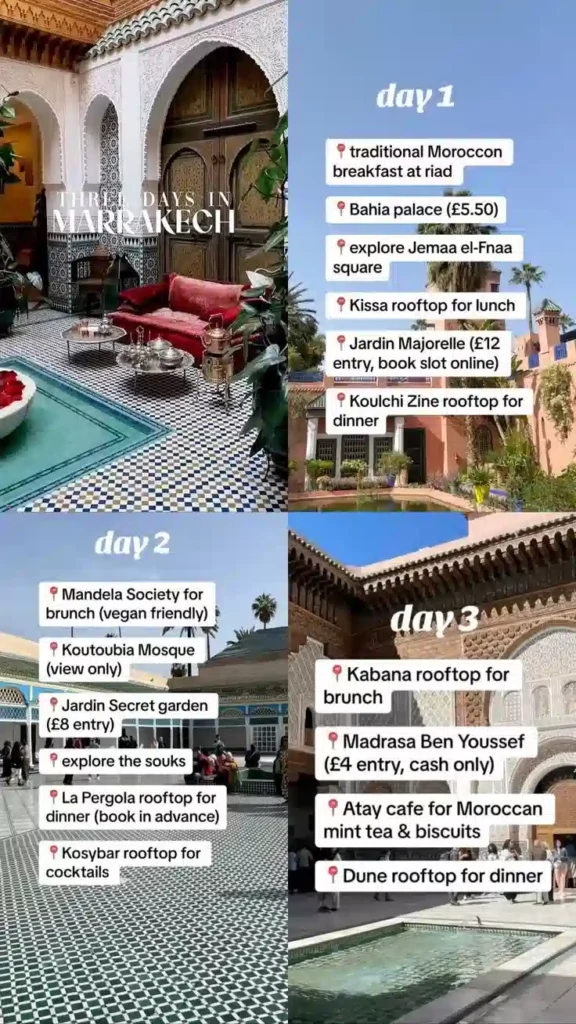
A structured 3-day travel itinerary highlighting historic sights, gardens, and rooftops to experience what is Marrakech Morocco.
1. Jemaa el-Fnaa Square & Surrounding Souks
Jemaa el-Fnaa is the indisputable heart of Marrakech. An open-air theater that has operated continuously for nearly a thousand years, this massive square transforms dramatically between day and night. By day, orange juice sellers, traditional water carriers in colorful hats, snake charmers, and henna artists dominate the open plaza.
As dusk falls, smoke rises from dozens of open-air food stalls serving grilled meats, steamed snails, tagines, and spiced tea. Surrounding the food stalls, traditional storytellers (halqa), acrobats, musicians, and Gnaawa troupes perform for gathered crowds. Direct branching off Jemaa el-Fnaa leads into the vast labyrinth of Medina souks, including:
- Souk Semmarine: The wide main market artery selling carpets, pashmina shawls, and leather footwear (babouches).
- Souk Haddadine: The ironworkers’ market filled with the rhythmic sound of blacksmiths hammering brass and metal lanterns.
- Souk Cherratine: The leather district specializing in bags, belts, jackets, and handmade saddles.
- Place des Épices (Spice Square): A vibrant plaza filled with woven basketry, aromatic spices, dried herbs, and traditional cosmetics.
Visiting Tip: Reserve a table on the second-story rooftop terrace of Cafe des Épices or Le Grand Balcon du Café de France by 5:30 PM to watch sunset light transform the square below.
2. Ben Youssef Madrasa
Founded in the 14th century by Marinid Sultan Abou al-Hasan and extensively rebuilt in the 1560s by Saadian Sultan Abdallah al-Ghalib, Ben Youssef Madrasa was once the largest Islamic university in North Africa, hosting up to 900 Quranic students in its 130 upper-floor dorm rooms.
The central courtyard is an architectural masterpiece featuring a shallow central marble pool, floors covered in colorful geometric zellige tilework, walls clad in intricately carved plasterwork (stucco) with Arabic calligraphy, and grand archways crowned with hand-carved Atlas cedar wood.
Visiting Tip: Arrive promptly at 9:00 AM opening to photograph the symmetrical courtyard reflection pool before tour groups fill the central floor.
3. Jardin Majorelle & Musée Yves Saint Laurent
Located in the modern Guéliz district, Jardin Majorelle is an artistic botanical oasis created over forty years by French Orientalist painter Jacques Majorelle starting in 1923. The garden features an extraordinary collection of exotic cacti, palm trees, bamboo groves, and water lily ponds framing an Art Deco villa painted in an intense, custom electric shade of cobalt known as “Majorelle Blue.”
Saved from real estate demolition in 1980 by fashion designer Yves Saint Laurent and his partner Pierre Bergé, the garden remains Morocco’s most visited site. Adjacent to the garden stands the state-of-the-art Musée Yves Saint Laurent Marrakech (mYSLm), displaying iconic haute couture collections inspired by Morocco, along with changing art exhibitions.
Critical Tip: Tickets are no longer sold at the gate. You MUST purchase timed-entry tickets online at least 24 to 48 hours in advance.
4. Bahia Palace
Spanning nearly eight hectares in the southern medina, Bahia Palace (“The Palace of the Brilliant”) offers a fascinating glimpse into late 19th-century royal luxury. Built by Si Moussa, grand vizier to Sultan Hassan I, and expanded by his son Ba Ahmed, the palace was constructed incrementally over decades to house a massive royal household.
The complex features over 150 single-story rooms (designed without stairs to accommodate Ba Ahmed’s physical size) that open onto tranquil interior courtyards paved with Italian Carrera marble, lush orange tree gardens, painted wooden ceilings, and stained-glass windows imported from Europe.
5. The Saadian Tombs
Sealed away for nearly three centuries by Alaouite Sultan Moulay Ismail and rediscovered via aerial photography in 1917, the Saadian Tombs represent one of the finest surviving examples of Saadian architecture. The royal necropolis holds over 60 members of the Saadian Dynasty.
The highlight of the mausoleum is the breathtaking Chamber of the Twelve Pillars, featuring towering Italian Carrara marble columns supporting an intricate, gilded honeycomb vaulted ceiling made of cedar wood and carved plaster.
Secondary Landmarks & Cultural Hidden Gems:
- El Badi Palace Ruins: The dramatic red-earth ruins of Sultan Ahmad al-Mansur’s once-grand 16th-century palace, featuring vast sunken orange groves, massive water basins, and nesting white storks atop ancient mud walls.
- Koutoubia Mosque Gardens: The public gardens and orange tree walkways surrounding the city’s iconic 70-meter 12th-century minaret, offering stunning photo angles of Almohad stonework.
- Le Jardin Secret: A beautifully restored 19th-century palace complex in the heart of the medina showcasing two distinct gardens: a traditional Islamic Paradise Garden designed according to precise Quranic geometry and an Exotic Garden housing desert flora.
- Maison de la Photographie: A tranquil multi-story medina riad turned museum, housing an incredible collection of historical photographs documenting Moroccan landscapes, Berber tribes, and urban life between 1870 and 1950.
- The Leather Tanneries (Bab Debbagh): Located on the eastern edge of the medina, where local leather craft workers treat, dye, and dry cow, goat, and camel hides using centuries-old traditional methods.
Marrakech Morocco Guide: Comprehensive Practical Travel Planning
Navigating Marrakech successfully requires local knowledge. This practical section of our Marrakech Morocco guide delivers actionable advice regarding weather, cultural etiquette, financial logistics, and safety:
1. Seasonal Weather Breakdown & When to Visit
| Season | Months | Average Day / Night Temp | Travel Conditions & Crowds |
|---|---|---|---|
| Spring (Peak) | March – May | 22°C – 28°C / 12°C – 16°C | Ideal weather, clear mountain views, peak tourist crowds and higher room rates. |
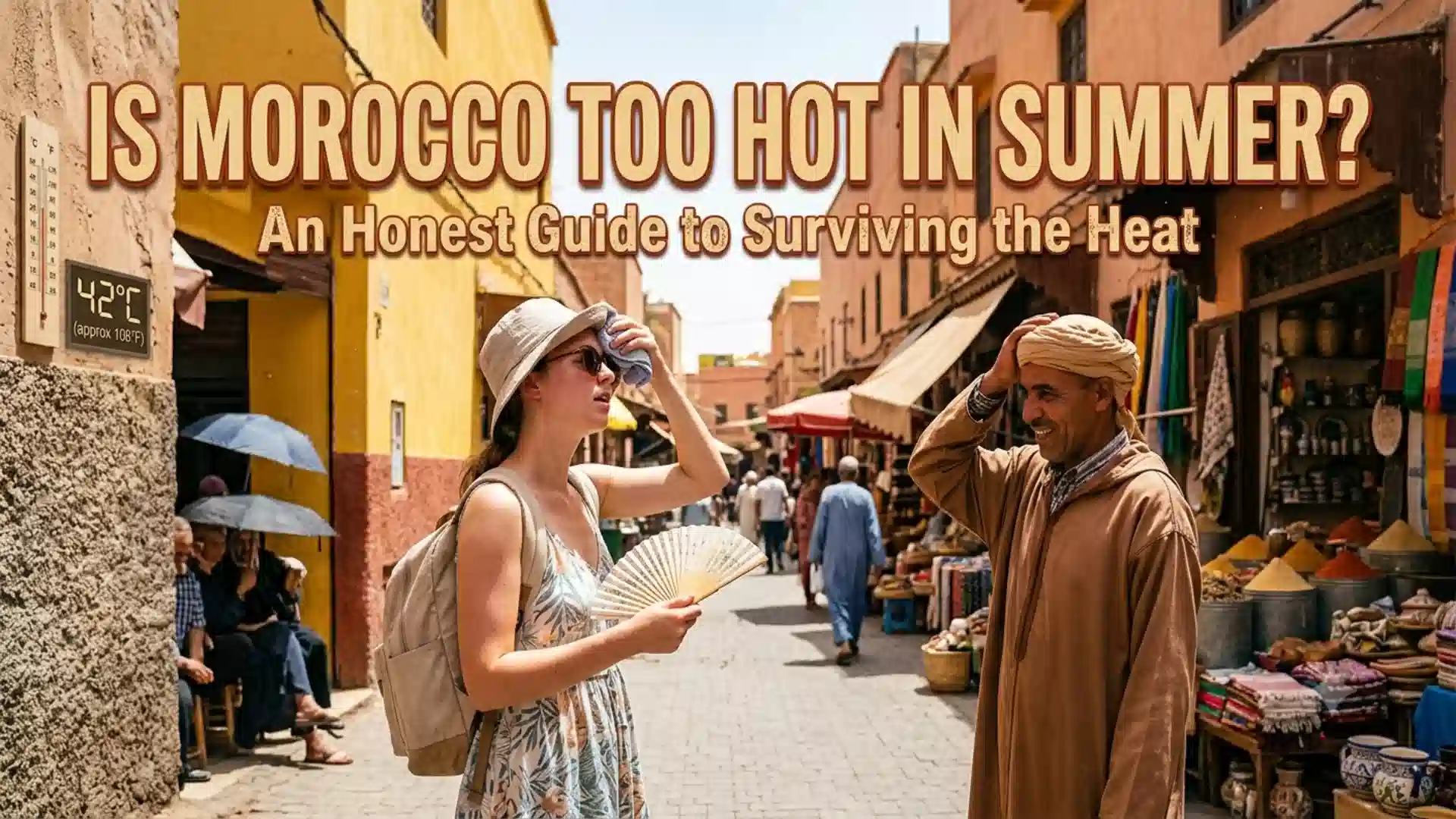
| Summer (Low) | June – August | 38°C – 45°C / 22°C – 26°C | Intense heat, quiet medina streets by mid-day, budget accommodation discounts available. |
| Autumn (Peak) | Sept – Nov | 24°C – 30°C / 14°C – 18°C | Warm sunny days, comfortable walking weather, excellent time for desert excursions. |
| Winter (Shoulder) | Dec – Feb | 18°C – 21°C / 6°C – 10°C | Pleasant sunny days, chilly nights requiring heating, snow-capped Atlas backdrops. |
2. Money, Currency & Tipping Conventions
Morocco operates on the Moroccan Dirham (MAD). While modern restaurants, boutique hotels, and luxury shops accept international credit cards, cash remains the absolute king inside the medina souks, street markets, and taxis.
- ATM Cash Withdrawals: Use bank-attached ATMs (such as BMCE, Attijariwafa, or Banque Populaire) inside major plazas for reliable withdrawals.
- Carrying Change: Break large 200 MAD notes at hotels or supermarket chains. Keep 10, 20, and 50 MAD notes accessible for small purchases and tipping.
- Tipping Culture (Pourboire): Tipping is customary in Morocco. Tip restaurant servers 10%, cafe waiters 2 to 5 MAD, luggage porters who cart bags through the medina 20 to 50 MAD, and private day tour drivers 100 to 200 MAD per day.
3. Medina Navigation & Safety Rules
The ancient medina of Marrakech is famously intricate. To avoid getting lost or overwhelmed, keep these practical navigation rules in mind:
- Use Offline GPS Maps: Download offline map areas via Google Maps or Organic Maps (Maps.me) prior to walking into narrow medina lanes where cell signals drop.
- Understanding Street Signs: Square blue metal street signs mark main thoroughfares; cut-off hexagonal signs indicate dead-end alleyways (cul-de-sacs).
- Handling Unsolicited Helpers: If someone offers unsolicited directions or tells you a street or monument is “closed,” politely but firmly say “La, Shukran” (No, thank you) and keep walking toward your target destination.
- Medina Traffic Etiquette: Medina alleys are shared by pedestrians, scooters, bicycles, and donkey carts. Keep to the right side of narrow lanes and listen for motor engines or drivers shouting “Balak! Balak!” (Make way!).
Finding the Ideal Marrakech Rental: Accommodation Strategies
Choosing the perfect Marrakech rental is one of the most exciting aspects of planning a trip to Morocco. Accommodation in Marrakech is unlike anywhere else in the world, offering options ranging from centuries-old traditional courtyard guesthouses to ultra-modern luxury villas set among palm groves.
| Accommodation Type | Location & Setting | Architectural Style & Amenities | Ideal Traveler Type |
|---|---|---|---|
| Boutique Medina Riad | Inside Historic Medina Walls | Inward-focused multi-story home, central open-air courtyard with plunge pool, rooftop terrace, and traditional zellige tilework. | Couples, cultural travelers, and first-time visitors seeking authentic Moroccan immersion. |
| Exclusive Private Villa | Palmeraie / Route de l’Ourika | Multi-acre private grounds, large swimming pools, full household staff (private chef, butler, and housekeeper), and Atlas views. | Large families, group trips, wedding parties, and luxury retreats requiring complete privacy. |
| Modern Apartment Rental | Guéliz / Hivernage Districts | Western-style layout, modern kitchens, elevator access, high-speed fiber internet, and proximity to supermarkets and cafes. | Digital nomads, remote workers, long-term stays, and business travelers. |
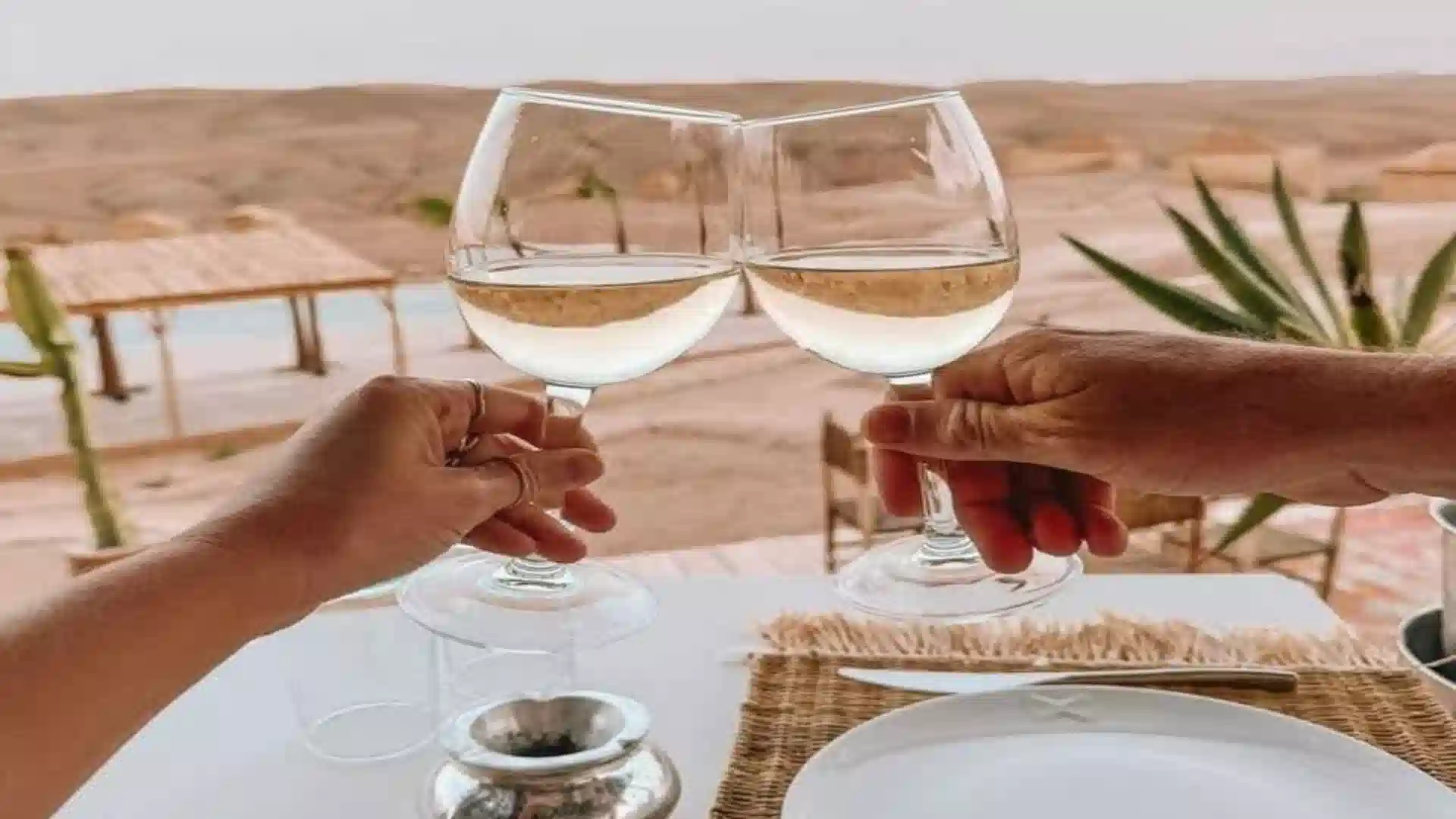
| Luxury Desert Glamping Camp | Agafay Desert (40 mins away) | Canvas luxury tents, private ensuite bathrooms, infinity pools facing the stone desert, and outdoor dining under stars. | Romantic weekend escapes, overnight stargazing, and unique short desert stays. |
Understanding the Riad: The Ultimate Medina Rental
When searching for an authentic Marrakech rental, the word Riad dominates accommodation searches. The word “riad” originates from the Arabic word ryad, meaning “garden.” Historically, riads were urban stately homes built by wealthy merchants and court officials.
The architectural layout of a riad is brilliant in its functionality:
- Inward-Facing Privacy: The building has no outer windows facing the street, ensuring total family privacy and protection against dust and city noise.
- The Central Courtyard: Every room opens inward onto a central open-air courtyard garden containing citrus trees, flowering bougainvillea, and central water fountains or plunge pools.
- Natural Microclimate Cooling: The open central courtyard pulls cool night air down into lower living spaces, keeping interior rooms comfortable even during hot summer months.
- Rooftop Terraces: Multi-story rooftops offer peaceful outdoor lounge spaces for sunbathing, enjoying home-cooked breakfasts, and viewing sunset over the medina rooftops toward the snow-capped Atlas Mountains.
Travelers can rent individual boutique guest rooms inside professionally managed riads or rent out an entire multi-bedroom private Marrakech rental riad exclusively for their private group, complete with dedicated house staff and daily chef services.
Curated Marrakech Travel Itineraries (3-Day to 5-Day Plans)
To help you structure your daily adventures, here are two battle-tested travel itineraries crafted for optimal efficiency and pacing:
Option A: Classic 3-Day Imperial Highlights Itinerary
- Day 1: The Historic Medina Core. Start early at Ben Youssef Madrasa, walk through the central artisan souks, and go down to Place des Épices for lunch. Spend the afternoon visiting Bahia Palace and the Saadian Tombs. End the day watching sunset over Jemaa el-Fnaa square from a rooftop cafe, followed by dinner at a traditional medina restaurant.
- Day 2: Gardens, Modern Art & Guéliz. Take a morning taxi to Jardin Majorelle and the Yves Saint Laurent Museum. Have lunch in modern Guéliz at a sidewalk bistro. Spend the afternoon exploring contemporary art galleries (like MACAAL or Comptoir des Mines) and boutique shopping. In the evening, enjoy dinner and live music in the Hivernage district.
- Day 3: Palaces, Hammams & Desert Sunset. Spend the morning visiting the ruins of El Badi Palace and Le Jardin Secret. Indulge in a traditional afternoon Moroccan hammam (steam bath and clay scrub) experience at a luxury spa. By late afternoon, head out to the nearby Agafay Desert for a sunset camel walk and candlelit dinner under the stars.
Option B: Extended 5-Day Deep Cultural & Day-Trip Itinerary
- Days 1–3: Complete Marrakech Exploration. Follow the 3-day itinerary outlined above to cover all core historical monuments, major gardens, culinary experiences, and market souks.
- Day 4: Day Trip to the High Atlas Mountains (Ourika Valley / Imlil). Escape the city heat with a private driver to the High Atlas. Hike past mountain waterfalls in the Ourika Valley or trek through traditional Berber stone villages around Imlil at the base of Mount Toubkal. Enjoy a traditional riverside lunch before returning to Marrakech by early evening.
- Day 5: Coastal Escape to Essaouira. Drive 2.5 hours west across argan tree groves to the Atlantic coastal town of Essaouira. Explore its 18th-century sea ramparts, bustling fishing port, relaxed medina, and wood-carving workshops before returning to Marrakech for your final evening.
Frequently Asked Questions About Marrakech
Is Marrakech safe for solo and family travelers?
Yes, Marrakech is widely considered a safe global destination supported by dedicated tourist police (Brigade Touristique). Standard travel vigilance applies: guard against pickpocketing in crowded markets, ignore unsolicited street guides, and use registered taxis.
What languages are spoken in Marrakech?
The official languages are Arabic and Amazigh (Berber), with Moroccan Arabic (Darija) being spoken daily. French is universally spoken in hospitality, business, and restaurants. English is widely spoken throughout hotels, tourism agencies, and Medina shops.
Can you drink tap water in Marrakech?
While tap water in major Marrakech hotels is treated and generally safe for washing, international visitors are strongly advised to drink bottled or filtered mineral water to avoid upset stomachs.
How far is the Sahara Desert from Marrakech?
The actual sand dunes of the Sahara (Erg Chebbi in Merzouga) lie approximately 560 km southeast of Marrakech, a scenic 9- to 10-hour drive over the Atlas Mountains. For shorter stays, the stone desert of Agafay is located just 40 minutes southwest of the city center.
Ready to Plan Your Unforgettable Marrakech Adventure?
Now that you have explored what is Marrakech Where is Marrakech Morocco?, discovered what to see in Marrakech Morocco, and learned how to select the perfect Marrakech rental, it is time to bring your dream trip to life!
Whether you need assistance booking an authentic medina riad, securing a private luxury villa, or crafting customized tour itineraries across Morocco, our expert local team is here to assist every step of the way.