Portugal to Morocco 2026: Flights, Ferry, & Road Trip Guide
Flying is the fastest and cheapest way to get from Portugal to Morocco direct flights from Lisbon to Marrakech or Casablanca take roughly 1 hour 30 minutes, with fares starting from around €55 one-way on low-cost carriers. The ferry route is also possible but requires driving through Spain first, adding a full day of travel. Based on our experience welcoming travelers from Lisbon, Porto, and the Algarve onto our Morocco tours, the Portugal Morocco route is one of Europe’s most naturally paired two-destination trips close enough to do in a long weekend, different enough to feel like a completely different world.
This guide covers every realistic travel option from Portugal to Morocco in 2026 direct flights, the ferry route via southern Spain, overland road trip logistics, and what to do once you land.
Table of Contents
Portugal to Morocco: Quick Comparison Table
Flying from Portugal to Morocco: The Fastest Route
Direct flights from Lisbon (LIS) to Marrakech (RAK) take approximately 1 hour 30 minutes and depart up to three times daily, operated by Ryanair, easyJet, TAP Air Portugal, and Royal Air Maroc, with fares starting from around €55 one-way on low-cost carriers booked in advance. This is the route the overwhelming majority of Portuguese and international travelers in Portugal use, and for good reason — it is fast, cheap, and lands you directly into Morocco’s most iconic city.
Lisbon to Marrakech
Ryanair, easyJet, and three other airlines fly from Lisbon-Portela Airport (LIS) to Marrakech (RAK) three times a day. This frequency means flexible booking rather than locking into a single departure time.
- Flight time: ~1h 30m direct
- One-way fare range: €55–200 depending on airline, season, and advance booking
- Cheapest window: Book 6–8 weeks in advance; avoid July–August and holiday peak weeks
- Airlines: Ryanair, easyJet, TAP Air Portugal, Royal Air Maroc
- Arrives at: Marrakech Menara Airport (RAK), 6 km from the medina
Lisbon to Casablanca
TAP Air Portugal flies Lisbon (LIS) to Casablanca (CMN) with round-trip fares from approximately €178. Casablanca is the better arrival point if you’re planning a northern Morocco–focused trip (Fes, Chefchaouen, Rabat, Tangier) rather than a desert-and-Marrakech circuit.
- Flight time: ~1h 40m direct
- Best for: Northern Morocco itineraries, travelers continuing to Fes or Tangier
Porto to Marrakech
From Porto (OPO), there are direct low-cost flights to Marrakech and occasionally to Casablanca, ideal for travelers looking for a quick weekend getaway.
- Flight time: ~2h 15m
- Frequency: Less frequent than Lisbon; check Ryanair and easyJet seasonal schedules
Faro (Algarve) to Marrakech
During the high season, you can often find seasonal flights connecting the south of Portugal directly to Marrakech, making it easy to hop from the Portuguese beaches to the Moroccan desert.
- Flight time: ~1h 45m
- Frequency: Seasonal — generally April to October; check Ryanair
The Ferry Route: Portugal to Morocco by Sea Spain to Morocco ferry 2026
There is no regular direct ferry from mainland Portugal to Morocco — the practical ferry route requires crossing into southern Spain to catch a ship from Tarifa or Algeciras, with the Tarifa–Tangier Ville route taking roughly 60 minutes and representing the fastest sea crossing between Europe and Africa. This route is ideal for travelers driving their own vehicle into Morocco, or those who want the experience of crossing the Strait of Gibraltar by sea rather than flying over it.
Step 1 — Overland Transit from Portugal to Southern Spain
The drive from southern Portugal (Algarve) to the main ferry ports in Spain takes about 3 to 4 hours. Most travelers head toward Tarifa or Algeciras, which are the two primary gateways to Morocco. The roads are modern and easy to navigate, making the transit through Andalusia a pleasant part of the journey.
- From Lisbon: Allow roughly 5–6 hours to reach Algeciras.
- From the Algarve: Allow roughly 3–4 hours.
Step 2 — Choose Your Ferry Crossing
Two main options once you reach southern Spain:
Tarifa → Tangier Ville (city center port)
- There are usually over 10 daily ferries, with crossings taking around 1 hour and tickets priced from about €40.
- Arrives in the heart of Tangier — best if you want to start exploring the medina immediately without a transfer.
- Operated by Baleària and Africa Morocco Link (AML).
Algeciras → Tanger Med (cargo/passenger port, 40 min outside Tangier)
- There are up to 40 daily crossings, with the journey lasting 1.5 to 2.5 hours and tickets starting from around €30.
- Higher frequency but arrives at an industrial port requiring a taxi or bus transfer into Tangier city.
- Operated by Baleària, Trasmediterránea, FRS Iberia DFDS, Naviera Armas, and AML.
Tangier Ville vs Tanger Med: Which Port to Choose?
The Rail and Bus Alternative: Public Transit Via Seville
If you do not have a car but still want a sea-crossing adventure, a highly efficient choice is to take an international coach (like Alsa or FlixBus) from Lisbon or Faro across the border to Seville, Spain. From Seville, you can easily pick up a reliable Andalusian train link or regional bus line dropping you directly into Algeciras or Tarifa for the morning ferry crossing. This smart layout entirely eliminates expensive cross-border vehicle rental fees while maintaining a beautiful, slow-travel landscape shift.
The Portugal to Morocco Road Trip Route
A Portugal to Morocco road trip via southern Spain and the Algeciras ferry is one of Europe’s most rewarding overland trips crossing from the cork forests of the Alentejo through Andalusia’s whitewashed villages, across the Strait of Gibraltar, and into northern Morocco’s Rif Mountains and ancient medinas within two days. When managing logistics on the ground, this is the route we most often recommend to clients who want to combine Portugal and Morocco into a single extended European-African itinerary.
A practical two-day road trip outline:
Day 1 — Lisbon/Algarve to Algeciras
- Depart Lisbon early morning; drive south through the Alentejo and across the Algarve.
- Cross into Spain at the Vila Real de Santo António / Ayamonte bridge crossing.
- Drive through Huelva, Seville (optional stop), Jerez de la Frontera.
- Arrive Algeciras or Tarifa by late afternoon.
-
Overnight in Algeciras or Tarifa — book accommodation close to the ferry terminal.
Day 2 — Ferry Crossing and First Morocco Day
- Morning ferry crossing (Tarifa → Tangier Ville in 60 minutes; Algeciras → Tanger Med in 90 minutes).
- Arrive Tangier and begin the Morocco leg of your trip.
Driving in Morocco: Renting a car in Portugal and driving it into Morocco is possible with some operators, but many standard rental agreements explicitly exclude Morocco. Always confirm with your rental company before booking, and carry the vehicle’s authorisation letter for border crossing. Alternatively, leave your Portuguese vehicle in Algeciras (long-term parking available) and hire a Moroccan-side vehicle or transfer service after crossing.
What to Do First When You Arrive in Morocco from Portugal
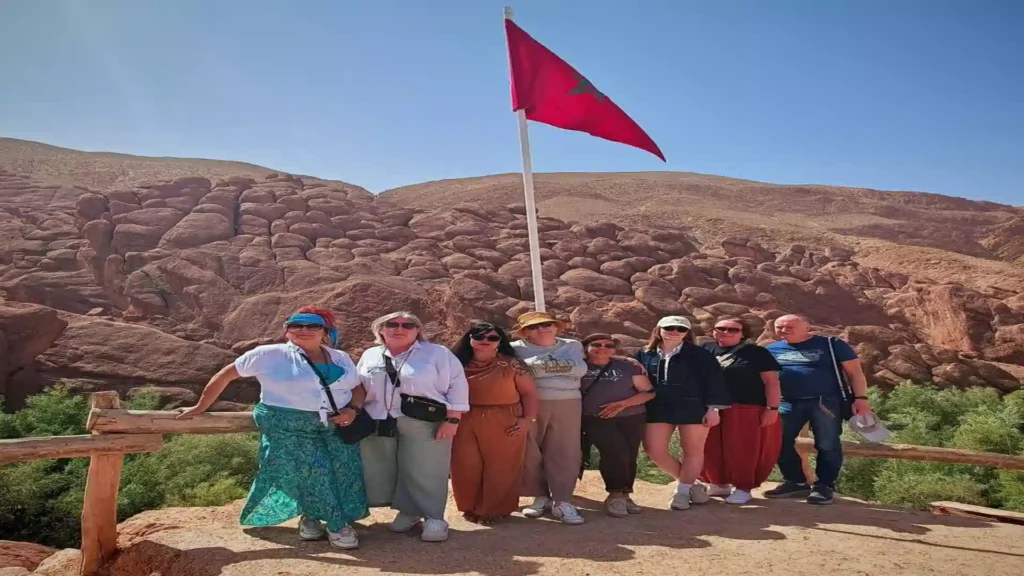
Celebrating cross-continental connections: Portuguese and international travelers experiencing the breathtaking scale of the Todra Gorge.
Most travelers arriving from Portugal land in Marrakech or Tangier, and the right first move depends entirely on which you’ve arrived in — Marrakech is best explored by walking straight into the medina and finding your riad, while Tangier rewards a slower start at the kasbah viewpoint before continuing south. In our experience welcoming clients from Portugal onto our Marrakech-based tours, the transition from Portugal’s relatively calm atmosphere to Marrakech’s medina energy takes about 24 hours to fully settle into.
If you arrive in Marrakech:
- Head directly to your riad in the medina the contrast between the plain exterior door and the ornate interior courtyard is the best possible first impression of Morocco.
- Spend your first evening at Jemaa el-Fnaa square as it transforms from a daytime market to an evening food and entertainment spectacle.
- Book your desert tour departure for day 2 or 3 if that’s part of your itinerary.
If you arrive via Tangier:
- Walk through the Kasbah, which sits on the highest point of the city and offers a view of the ocean you just crossed. Don’t miss Café Hafa, where you can drink mint tea while looking at the coast of Spain in the distance.
- Continue south toward Chefchaouen (2 hours), Fes (5 hours), or Marrakech (6+ hours by train or road).
Portugal to Morocco: What to Combine in One Trip
The most natural Portugal to Morocco trip combines 3–4 days in Lisbon or the Algarve with 5–10 days in Morocco enough time to reach the Sahara from Marrakech, experience at least one imperial city, and return without feeling rushed. This two-country format is increasingly popular among European travelers who want maximum contrast within a single trip.
Do Portuguese Citizens Need a Visa for Morocco?
No — Portuguese passport holders do not need a visa to enter Morocco for tourist stays of up to 90 days, with only a valid passport required at the border. Morocco has a broad visa-free arrangement with EU member states, making the entry process for Portuguese travelers straightforward.
- Documents required: Valid passport with at least 6 months remaining validity.
- Length of stay permitted: Up to 90 days for tourism.
- Border crossing: Passport control is required at the ferry port or airport Morocco is not part of the Schengen zone, so your passport will be stamped.
-
Currency exchange: Moroccan dirham (MAD) cannot be purchased in Portugal before departure; exchange euros to dirham on arrival at the airport, a bank, or an in-city exchange office in Marrakech, Casablanca, or Tangier.
Best Time to Travel from Portugal to Morocco
The best time to travel from Portugal to Morocco is October through April, when Moroccan temperatures are comfortable for city exploration and desert touring conveniently overlapping with the shoulder season when Portuguese flight prices to Marrakech and Casablanca are often at their lowest outside of Christmas and Easter peak windows. July and August are simultaneously the most expensive months for Portuguese flights to Morocco and the least comfortable for Sahara desert tours due to extreme heat.
Portugal vs Morocco: How Different Is the Experience?
Portugal and Morocco sit just 513 miles apart and share deep historical connections centuries of cross-Strait trade, Andalusian refugees who brought Portuguese-influenced tilework traditions to Moroccan cities, and an Atlantic coastal character that shows in both countries but the cultural, linguistic, and sensory experience shifts dramatically the moment you cross the water. Understanding this contrast helps travelers prepare mentally rather than landing in Marrakech expecting a warmer extension of Lisbon.
Offers exceptional relative value for premium accommodation, transport, fresh dining, and artisanal goods.
The architectural link between the two countries is particularly striking: Portugal’s famous azulejo tiles and Morocco’s zellige share the same Moorish geometric design vocabulary, carried across the Mediterranean by Andalusian communities moving in both directions over several centuries. Travelers who notice this connection often describe it as one of the most unexpected and satisfying historical threads of a two-country trip a single visual language woven into the walls of Lisbon’s São Jorge Castle and Marrakech’s Bahia Palace alike, separated by just 90 minutes of flight time.
What to Pack When Combining Portugal and Morocco

Nothing beats a sunset tea overlooking the Ksar. Sharing these cultural experiences is what makes a trip to Morocco truly unforgettable.
Packing for a combined Portugal to Morocco trip requires planning for two different climates, two different cultural dress expectations, and one bag that handles both — the key adjustment is adding modest clothing layers for Morocco’s more conservative cultural norms, particularly for medina visits and desert nights. Most of what works in Portugal works in Morocco with two additions: a headscarf or light cotton shawl and closed-toe shoes suitable for medina cobblestones and camel mounting.
A combined packing strategy:
- Shared items: Comfortable walking shoes, sunscreen, sunglasses, a light daypack, a small first-aid kit, and universal travel adaptors (both countries use the standard European two-pin plug).
- Portugal-specific: Swimwear for the Algarve or Porto’s river beaches, smart-casual evening wear for Lisbon restaurants, light rain layer for northern Portugal.
- Morocco additions: At least one set of modest clothing (shoulders covered, knees covered) for medina and mosque visits; a cotton scarf or shawl that doubles as sun protection and cultural covering; one warm layer for desert camp nights (temperatures drop near 0°C between November and February); sturdy closed-toe shoes for cobblestone medinas and camel trekking.
- The lightest transition item: A single lightweight linen shirt or blouse that’s both beach-appropriate in Portugal and respectful in a Moroccan medina is the most versatile single piece you can pack for this trip combination.
The Portugal To Morocco Shared History Worth Knowing
Portugal and Morocco share a genuinely fascinating overlapping history the Moors controlled the Iberian Peninsula for over 700 years (711–1492 CE), leaving an indelible architectural and cultural mark on both southern Portugal and Morocco, and Portuguese explorers later built trading posts along Morocco’s Atlantic coast, most visibly at Essaouira (known as Mogador under Portuguese rule). This shared history makes a combined trip feel more cohesive than simply visiting two unrelated neighboring countries.
Key historical threads connecting the two:
- Moorish Portugal: Much of southern Portugal — the Algarve’s name itself comes from Arabic al-Gharb, “the west” was shaped by centuries of Moorish rule, and the geometric tile traditions visible in Lisbon and Sintra draw directly from the same Andalusian-Islamic design vocabulary seen in Moroccan riads.
- Essaouira as Mogador: Portugal built the fortress town of Mogador on Morocco’s Atlantic coast in the 15th century, establishing one of their earliest African trading posts. The fortification walls still standing around Essaouira’s medina today incorporate Portuguese stonework.
- Ceuta and Melilla: Spain’s two autonomous cities on the Moroccan coast began as Portuguese possessions, captured in 1415 (Ceuta) and passed to Spain in the 1580 Iberian Union — a geographic echo of Portugal’s once-significant North African presence.
- Andalusian refugees: When the Reconquista ended Muslim rule of Iberia in 1492, hundreds of thousands of Arabs, Berbers, and Sephardic Jews fled south into Morocco, settling in cities like Fes, Tetouan, and Chefchaouen. The distinctly Andalusian character of Chefchaouen’s architecture and Tetouan’s medina (a UNESCO site) is a direct result of this migration.
For travelers making this journey, knowing this history transforms what might otherwise feel like two separate trips into a single coherent cultural arc — following the same traditions, the same tilework, and the same architectural vocabulary across the water that once separated and united these two worlds.
Frequently Asked Questions: Portugal to Morocco
How long is Lisbon to Marrakech flight?
Approximately 1 hour 30 minutes direct, making it one of the shortest intercontinental hops between Europe and Africa.
Is there a direct ferry from Portugal to Morocco?
No, there are no regular commercial direct ferries running between Portugal and Morocco. Most year-round ferry crossings require an easy transit into southern Spain to board high-speed ships via Tarifa or Algeciras.
Which is cheaper — flying or taking the ferry from Portugal to Morocco?
Flying is almost always cheaper for foot passengers, with one-way flights starting from €55. The ferry route makes most sense for travelers with vehicles or those specifically wanting an overland road trip experience.
Can I take my car from Portugal to Morocco?
Yes, via the southern Spain ferry route, but confirm your rental car agreement permits entry into Morocco — many standard agreements exclude it. Personally owned vehicles cross freely with a passport and vehicle registration documents.
Do I need travel insurance for Morocco from Portugal?
EU travel insurance (including the European Health Insurance Card) does not cover Morocco, as it is outside the EU and EEA. Separate travel insurance covering Morocco specifically is recommended.
What currency should I bring from Portugal?
Moroccan dirham cannot be purchased in Portugal before arrival. Bring euros and exchange on arrival at Marrakech, Casablanca, or Tangier airports, banks, or licensed exchange offices in the medina.
What’s the best airline for Lisbon to Marrakech?
Ryanair and easyJet offer the cheapest fares; TAP Air Portugal and Royal Air Maroc offer more flexible ticketing and baggage, often at a slightly higher price — the right choice depends on your luggage needs and schedule flexibility.
Can I combine Portugal and Morocco in one trip?
Absolutely — this is one of the most naturally paired two-country combinations in Europe and Africa, close enough to travel between in under two hours by air, and different enough in culture, landscape, and pace to feel like genuinely separate adventures within a single itinerary.
What’s the best way to get from Tangier to Marrakech after the ferry?
The high-speed Al Boraq train connects Tangier to Casablanca and onward to Marrakech via the ONCF national rail network. Alternatively, private transfer choices or CTM long-distance luxury coaches are highly accessible.
Is Morocco safe for Portuguese travelers?
Yes — Morocco is a well-established tourist destination with a strong hospitality tradition, and Portuguese travelers report broadly positive experiences. The same general travel awareness you’d apply anywhere applies here: stay alert in very crowded medina areas, keep valuables secured, and book tours with licensed, reputable operators.
Should I exchange euros to dirhams before leaving Portugal?
No — Moroccan dirham is not readily available in Portuguese banks or exchange offices before departure. Exchange euros on arrival at the airport or at licensed exchange bureaus in the medina. Airport rates are slightly less favorable than in-city exchange offices; withdrawing from a local ATM is an alternative.
Final Checklist: Getting from Portugal to Morocco
- Fastest and cheapest for most travelers: Book a direct Ryanair or easyJet flight from Lisbon (LIS) to Marrakech (RAK), 1h 30m, from ~€55 one-way — search 6–8 weeks ahead for best fares.
- Arriving in northern Morocco: Fly Lisbon to Casablanca (CMN) to access Fes, Chefchaouen, Rabat, and Tangier easily, particularly if your Morocco itinerary starts in the north rather than the south.
- Road trip option: Drive Lisbon → Algeciras (5–6 hrs) or Algarve → Algeciras (3–4 hrs), take the ferry to Tanger Med or Tangier Ville, and continue into Morocco in your own vehicle — one of the most rewarding overland European-African itineraries available.
- Ferry port choice: Tarifa → Tangier Ville (60 min, arrives city center) or Algeciras → Tanger Med (90 min, higher frequency, arrive outside city) choose based on whether you want immediate medina access or a faster onward connection south.
- Passport: Valid passport required; Portuguese citizens enter Morocco visa-free for up to 90 days.
- Currency: Exchange euros to Moroccan dirham on arrival — cannot be pre-purchased in Portugal. Airport exchange rates are slightly worse than in-city bureaus; both are acceptable.
- Travel insurance: Your EU EHIC card does not cover Morocco. Arrange separate travel insurance before departure.
- Best travel window: October–April for comfortable temperatures across both countries, with the lowest Portugal–Morocco flight prices in October–November and February–March outside of holidays.
- From Morocco’s side: Once in Marrakech, a private 3 day Sahara desert tour is the most consistently booked next step for travelers arriving from Portugal covering Ait Ben Haddou, the Dades Valley, and Erg Chebbi’s 150-metre dunes before returning to Marrakech for your flight home.
Portugal and Morocco are two of the most naturally paired destinations in the world for one long trip – close enough that the logistics are effortless, different enough in culture, landscape, cuisine and pace that the contrast feels genuinely transformative. For many travelers, the single most satisfying detail of the entire journey is still the fact that you can have coffee in Lisbon’s Baixa in the morning and mint tea in a Marrakech riad courtyard by late afternoon. For anyone already planning a Portugal trip and wondering whether to extend it south across the Strait, the honest answer is almost always yes. The flight is shorter than the Lisbon–Porto train, and the world you step into on the other side is worth every minute of it.
Expand Your Journey: Recommended Reading besides travel from Portugal to Morocco
Planning a trip to Morocco involves more than just understanding transit routes. To help you fully prepare for the cultural, logistical, and culinary adventures ahead, explore our latest insider travel guides:
These options are specifically tailored to match the interests of travelers arriving from Portugal or booking multi-day overland tours:
- Morocco Desert Tours from Marrakech: The Ultimate Sahara Guide – A complete breakdown of what to expect on a 3-day desert safari, from camel trekking in Erg Chebbi to choosing the right luxury desert camp.
- The Ultimate 10-Day Morocco Itinerary: Imperial Cities & Sahara Desert – The perfect route layout for travelers landing in Marrakech or Casablanca who want to maximize their first trip across the Strait.
- Exploring the High Atlas Mountains: Berber Villages & Cultural Gems – Discover the breathtaking landscapes, traditional earthen architecture, and generational resilience of Morocco’s mountain communities.
Spain to Tangier Morocco Ferry Crossing Guide 2026
This video is directly relevant because it breaks down the real-world boarding layout, passport controls, and arrival tracking at both major Spanish ports (Tarifa and Algeciras) for travelers crossing into Morocco by sea in 2026.