Morocco Plug Type & Outlet Guide (2026): Voltage, Adapters & Tips
The Morocco plug type question is one that almost every first-time traveler wonders about. The answer is simple: Morocco has Type C and Type E outlets on 220V, 50 Hz, the same electrical standard as France, Spain, and most of continental Europe. But get the wrong adapter, and you’ll spend your first night in Marrakech with a dead phone.
This guide gives you all the info you really need to know about the Morocco outlet type system: which of your devices require a simple plug adapter vs. a full voltage converter, how the Moroccan electrical outlet varies from old riads to new hotels, which adapter to buy before you fly, and where to find one locally if you forget.
Quick Answer: What Plug Adapter Do I Need for Morocco?
- Morocco outlet type: Type C and Type E, both with two round pins
- Voltage: 220V (standard European voltage)
- Frequency: 50 Hz
- Coming from the US, UK, Canada or Australia: You need a plug adapter
- Coming from continental Europe (France, Spain, Germany): Your plug already fits no adapter needed
- Voltage converter needed? Only for single-voltage 120V devices like North American hair dryers
The Morocco Outlet Type: Type C and Type E Explained
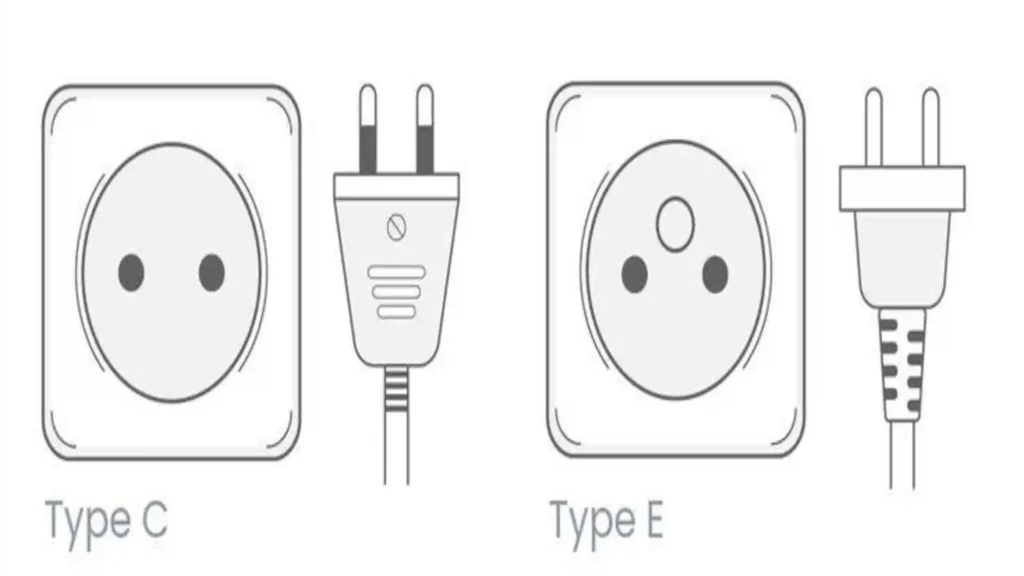
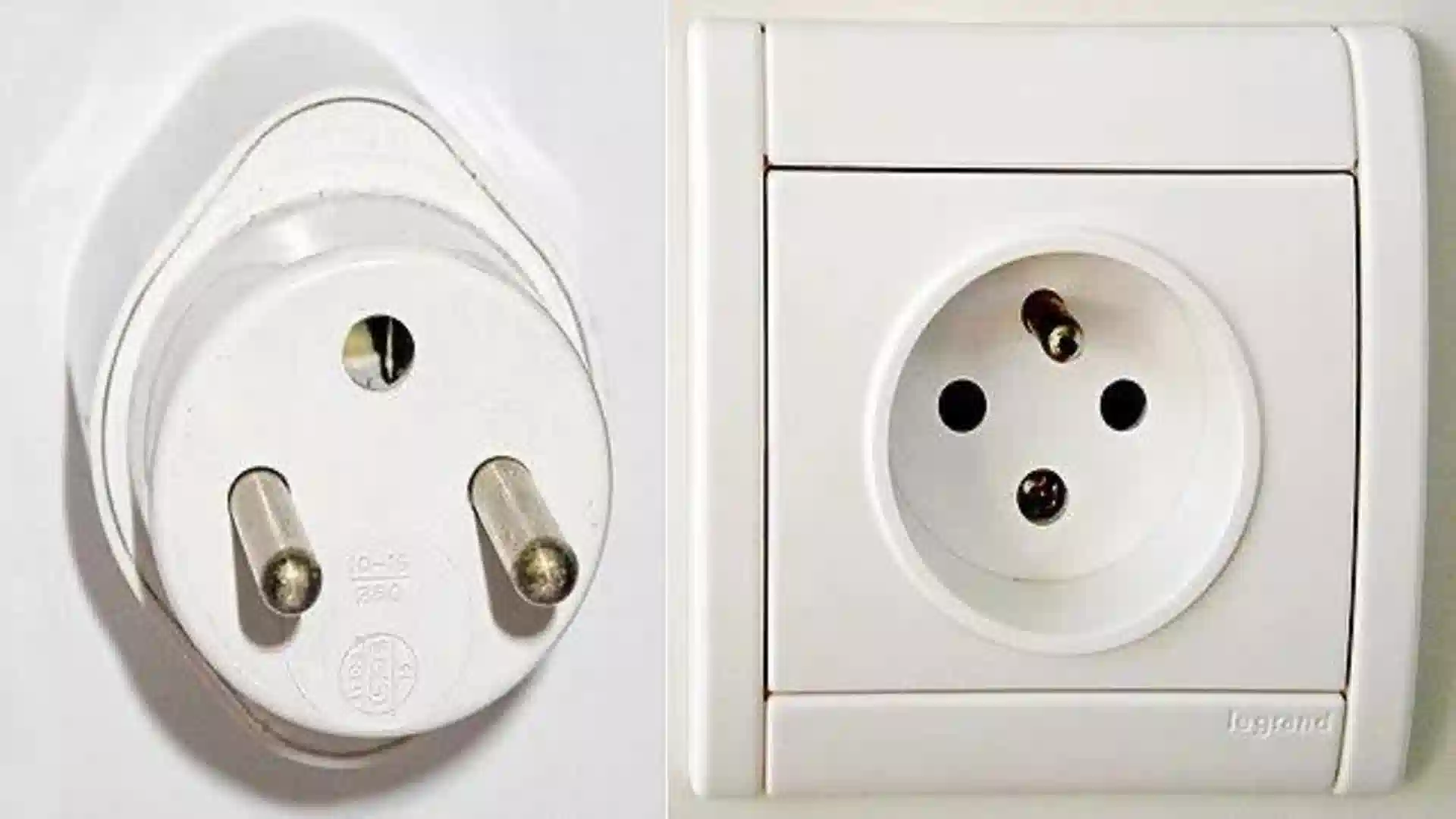
Understanding standard Type C and Type E dual-pin configurations for Morocco plug type.
Morocco’s electrical system uses two related socket standards, both built around the European two-round-pin design. Understanding the difference between them tells you exactly which Morocco electrical outlet you’ll face in any given building.
| Socket Type | Pin Design | Grounded? | Commonly Found In |
|---|---|---|---|
| Type C (Europlug) | Two round 4mm pins | No | Older riads, traditional guesthouses, rural properties |
| Type E (French Standard) | Two round pins plus a central earth pin hole | Yes. | Modern hotels, apartments, malls, new construction |
A key practical detail: a Type C plug physically fits into a Type E socket, but a Type E plug (with its earth-pin receptacle) will not fit a Type C socket. This is why a compact Type C adapter is usually enough to cover the entire Morocco outlet type range, though a universal adapter that explicitly covers both is the safer bet for grounded, high-power electronics.
Morocco Voltage 220V& Frequency: What Your Devices Actually See
Beyond the physical Morocco plug type, the electrical current itself matters just as much. Morocco runs on 220V at 50Hz, roughly double the voltage used in North America (120V/60Hz) and close to the 100V/60Hz standard in Japan.
A plug adapter only changes the shape of the pins it does nothing to the voltage passing through. Before plugging anything in, check the fine print on the charger brick or the device’s rating label.
How to Read Your Charger Label in 5 Seconds
- “Input: 100–240V ~ 50/60Hz”: Dual-voltage works anywhere in the world with just a plug adapter. Nearly all phone, laptop, and tablet chargers made after 2010 are labeled this way.
- “120V only” or “110–120V”: Single-voltage plugging this into a Moroccan 220V outlet without a converter will damage or destroy it. This label is common on North American hair dryers, curling irons, and older kitchen appliances.
Adapter or Converter? Checking Your Devices Against the Morocco Outlet Type C E
Most travelers only ever need a simple plug adapter. A small minority of devices genuinely require a bulkier voltage converter. Here’s how the common travel electronics break down.
| Device Category | What You Need | Notes |
|---|---|---|
| Smartphones (iPhone, Samsung, Pixel) | Plug adapter only | All modern chargers are dual-voltage. |
| Laptops (MacBook, Dell, HP, Lenovo) | Plug adapter only | Check the brick label to confirm the 100–240V rating. |
| Cameras & GoPro chargers | Plug adapter only | Almost always dual-voltage; verify on the charger. |
| Hair dryers & straighteners (US/Canada) | Voltage converter | Most are 120V-only; it’s easier to use the hotel’s own dryer. |
| Electric shavers | Check the label. | Newer models are usually dual-voltage; older ones are not. |
| CPAP machines | Plug adapter (usually) | Most post-2015 models are dual-voltage confirmed before travel. |
| Kettles & travel coffee makers | Voltage converter | US/Canada versions are single-voltage, and heating elements draw high current. |
Do I Need an Adapter? By Country of Departure
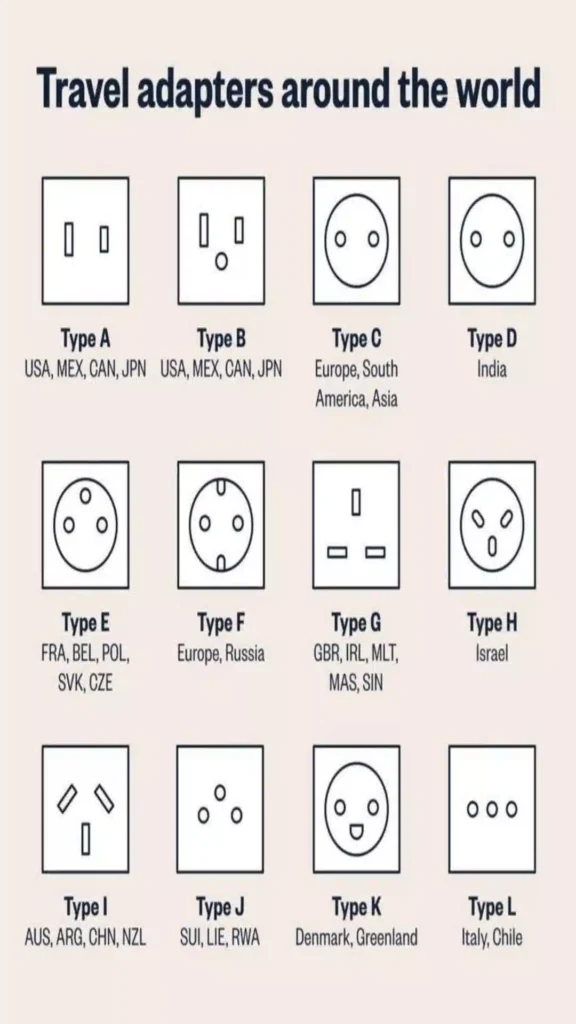
Comparing international plug standards to identify the correct Morocco plug type for traveling.
Traveling from the United States or Canada
Yes. North American Type A/B flat-pin plugs do not fit the Moroccan outlet type at all. Bring a Type C or Type E adapter, and double-check any heating appliance for a “120V only” label before packing it.
Traveling from the United Kingdom or Ireland
Yes. The UK’s three-rectangular-pin Type G plug does not fit Morocco’s round-pin sockets. Voltage is nearly identical (UK 230V vs. Morocco 220V), so a simple shape adapter is all you need; no converter is required.
Traveling from Australia or New Zealand
Yes. Type I plugs with angled flat pins don’t match Morocco’s sockets. A Type C/E adapter is required; voltage is compatible, so no converter is needed for dual-voltage electronics.
Traveling from France, Spain, Germany, or Continental Europe
No adapter needed in most cases. France and Spain use the identical Type C/E standard. German Type F plugs also fit Moroccan Type E sockets since the pin spacing matches.
Choosing the Right Morocco Plug Adapter
Not every adapter sold as “universal” is worth packing. A few features separate a reliable travel adapter from one that fails on day two.
- Type C/E coverage confirmed: Check the packaging specifically lists Europe or Morocco compatibility, not just “worldwide.”
- CE or RoHS certification: Certified adapters include internal fuses that protect your devices from voltage spikes, which matters more in older properties and rural areas.
- USB-C Power Delivery port: A 65W+ USB-C PD port charges a modern laptop or phone at full speed, cutting down how many chargers you need to pack.
- Buy before departure: Airport kiosks in Marrakech and Casablanca mark adapters up two to three times over city-center prices.
Forgot Your Adapter? Where to Buy One in Morocco Voltage 220V
If you land without one, adapters for the Moroccan electrical outlet are easy to find in every major city; just avoid the tourist-priced airport kiosks where possible.
| City | Where to Look |
|---|---|
| Marrakech | Electronics shops in Gueliz (Ville Nouvelle), local supermarkets, and hanout corner shops for basic units |
| Casablanca | Derb Ghalef electronics market, shopping centers near the city center |
| Fes | Electronics streets in Ville Nouvelle near Avenue Hassan II |
| Tangier | Ville Nouvelle near Grand Socco, shopping malls |
Many riads and 4-star-plus hotels also keep a small stock of loaner adapters at reception; it’s always worth asking at check-in before heading out to shop.
Electrical Safety Tips for Riads, Desert Camps & Mountain Guesthouses
- Charge fully before rural stays: Desert camps near Merzouga and guesthouses in the High Atlas often run on generator power with fluctuations; top off devices in the city first.
- Check for loose sockets: Older Type C outlets in traditional Medina properties can be worn. If a plug wobbles, avoid charging high-power devices there.
- Unplug during storms: Seasonal thunderstorms hit northern Morocco and the Atlas Mountains, especially in autumn and winter; unplug laptops and sensitive electronics.
- Pack a power bank: A 20,000mAh power bank covers several phone charges and is genuinely useful for multi-day desert or trekking excursions where outlets are scarce.
If your Morocco trip includes an overland route through the Atlas Mountains toward the Sahara, it’s worth reading our companion guide on the Atlas Morocco map and Merzouga desert itinerary to see exactly where power access gets limited along the way.
Charging Devices in Sahara Desert Camps (Erg Chebbi & Erg Chigaga)
One of the highlights of visiting Morocco is spending a night under the stars in the Sahara Desert. However, charging your camera gear, smartphone, or drone at a desert camp presents unique electrical realities that surprise many travelers.
Desert camps generally fall into two broad categories: standard traditional camps and luxury glamping sites. The available power infrastructure depends entirely on which type of camp you book.
1. Standard & Traditional Desert Camps
Standard camps often rely on diesel generators or basic solar installations. Generators typically run for only a few hours per day—usually between sunset and 10:00 PM or 11:00 PM. During these hours, a central charging station in the dining tent is activated. Outlets inside individual sleeping tents are rarely available.
- Limited Outlets: Central charging stations are shared by all guests, so available Morocco plug type sockets fill up quickly.
- Voltage Fluctuations: Small generators can experience slight power surges when started or turned off. Avoid leaving high-value electronics plugged in unsupervised overnight.
2. Luxury Glamping Camps
Luxury desert camps in Erg Chebbi (Merzouga) or Erg Chigaga are equipped with sophisticated off-grid solar array systems backed by battery banks. These camps usually offer standard Type E grounded wall outlets directly inside your private tent, available 24 hours a day.
Even in luxury camps, high-draw appliances like single-voltage travel hair dryers or irons are strictly prohibited because they exceed the battery inverter’s continuous output threshold and can trigger circuit breakers.
Navigating Outlets in Historic Medina Riads Morocco Voltage 220V
Staying in a restored traditional Moroccan house (riad) inside the medinas of Marrakech, Fes, or Meknes is an essential cultural experience. However, adapting 17th-century masonry and thick adobe walls to modern electrical wiring presents architectural challenges that travelers should keep in mind.
1. Outlet Placement and Density
Because electrical conduits must be carved directly into thick brick or rammed-earth walls, historic guest rooms often feature fewer wall outlets than modern hotel rooms. You might find only one or two usable sockets located near a desk or nightstand.
2. Recessed Sockets and Loose Fits
Many Type E outlets in older riads feature deep circular recesses. Heavy multi-port chargers or bulky all-in-one universal adapters can sometimes pull out of the socket due to gravity. Carrying a short European extension cable or a compact multi-plug cord ensures a secure connection without placing stress on the wall outlet.
| Accommodation Type | Dominant Socket Type | Power Reliability | Recommended Charging Strategy |
|---|---|---|---|
| Medina Riads | Type C & Type E | Stable; occasional local grid maintenance | Use light adapters; charge the main power bank during the day. |
| Modern City Hotels | Type E (Ground Senator) | Very high; backup city generators | Standard multi-port USB-C desktop chargers work seamlessly. |
| Atlas Mountain Lodges | Type C (Europlug) | Moderate; subject to mountain weather disruptions | Plug in immediately upon arrival; carry surge protection. |
| Sahara Luxury Camps | Type E (Solar Inverter) | Dependent on daily solar reserve & batteries | Avoid high-wattage heating tools; charge devices during sunny hours. |
Powering Cameras, Drones, and Medical Gear in Morocco
For photographers, content creators, and travelers carrying medical gear, reliable power management is essential. Here is what you need to know about charging specialized equipment in Morocco.
1. Camera Battery Charging Hubs
Multi-battery charger hubs for mirrorless cameras (Sony, Canon, Nikon) and action cams (GoPro, Insta360) operate on dual-voltage standards (100–240V). They plug directly into a Moroccan electrical outlet using a simple Type C or Type E adapter. If using rapid multi-bay chargers, ensure your adapter is grounded to protect sensitive battery controller boards.
2. Note on Drones in Morocco
While drone batteries charge easily on Morocco’s 220V grid using dual-voltage chargers, remember that **drones are strictly regulated in Morocco**. Importing a drone without prior written authorization from the Moroccan Ministry of Transport and Foreign Affairs is illegal, and unauthorized drones are routinely confiscated at airport customs control points.
3. Medical Equipment (CPAP Machines and Concentrators)
Travelers relying on CPAP machines should verify that their power brick is dual-voltage (100–240V). Most modern units (e.g., the ResMed AirSense series) run natively on 220V at 50 Hz. If traveling through remote areas or sleeping overnight in desert camps, bring a dedicated portable CPAP battery pack, as main power overnight may be shut off or switched to low-capacity solar reserves.
The Ultimate Morocco Electrical Outlet Packing Checklist
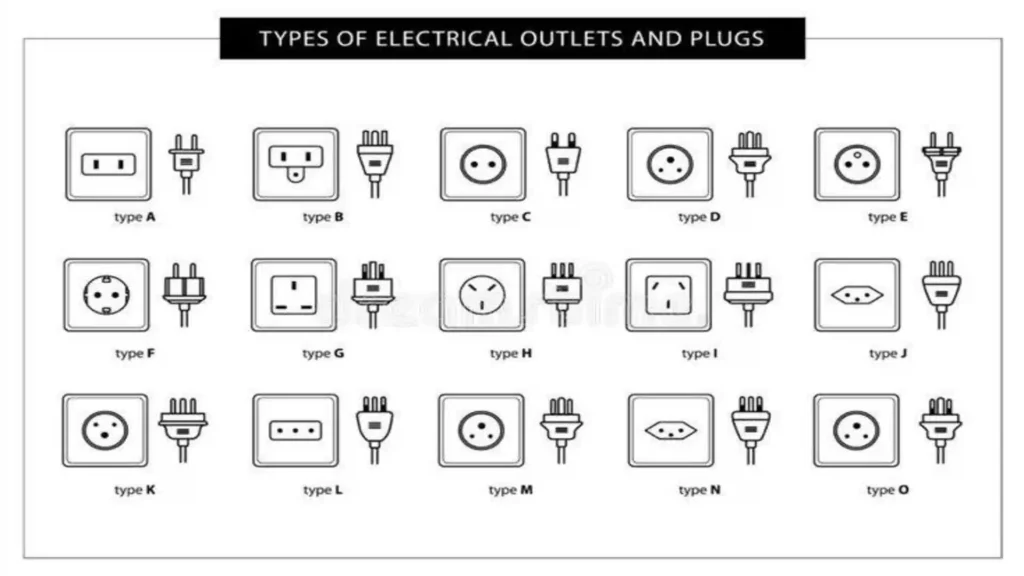
Pinpointing Type C and Type E sockets on a master adapter chart for Morocco plug type.
To avoid last-minute scrambling for adapters in local Medina markets, follow this quick electronic packing list before heading to the airport.
- Primary Plug Adapter (2x): Pack two Type C or Type E adapters per traveler so you can charge your phone and power bank simultaneously.
- High-Capacity Power Bank (10,000–20,000mAh): Essential for long overland driving days through the High Atlas passes and overnight stays in desert camps.
- Multi-Port USB Wall Charger: A single dual-voltage USB-A/USB-C brick with 3–4 ports lets you charge multiple devices using just one Moroccan wall socket.
- Voltage Converter (Only If Needed): Bring a heavy-duty step-down converter (220V to 110V) only if you are carrying single-voltage North American personal care products or specialized medical devices.
- Spare Charging Cables: Sourcing high-quality fast-charging cables in rural villages can be challenging; bring extra braided cables in your carry-on.
Frequently Asked Questions About the Morocco Plug Type
What plug type does Morocco use?
Morocco uses Type C (two round ungrounded pins) and Type E (two round pins plus a grounding pin), the same standard used across France, Spain, and most of continental Europe.
What voltage does Morocco use?
Morocco runs on 220V at 50 Hz. This is close to double the 120V used in the United States and Canada, so single-voltage North American appliances require a converter, not just an adapter.
Do I need a voltage converter or just a plug adapter for Morocco?
Most travelers only need a plug adapter, since phones, laptops, and cameras are dual-voltage (100–240V). A voltage converter is only needed for single-voltage appliances like North American hair dryers or kettles.
Does Morocco use the same plugs as France and Spain?
Yes. Morocco, France, and Spain all use Type C and Type E sockets at 220V/50Hz, so any adapter or dual-voltage device that works in continental Europe works in Morocco without modification.
Will my UK plug work in Morocco?
Not directly. UK Type G plugs have three rectangular pins that don’t fit Morocco’s round-pin sockets, so a UK-to-Type-C/E adapter is required. No voltage converter is needed since UK and Moroccan voltages are nearly identical.
Do hotels and riads in Morocco provide adapters?
Many 4-star and 5-star hotels keep loaner adapters at the front desk, but budget riads and guesthouses often don’t, so it’s safest to bring your own.
Is the electricity supply reliable across Morocco?
In major cities like Marrakech, Casablanca, Rabat, and Fes, power is modern and reliable with rare outages. In remote desert camps and mountain guesthouses, expect generator power with occasional fluctuations.
Can I charge my phone in long-distance trains in Morocco?
Yes. Modern Al Boraq high-speed trains connecting Tangier, Rabat, and Casablanca offer standard Type E 220V electrical outlets at seat locations in First Class and in designated compartments in Second Class.
Are power banks allowed on flights into Morocco?
Yes, but power banks must be carried only in your hand luggage (carry-on). Airlines operating flights to Morocco enforce international aviation standards prohibiting lithium power banks in checked luggage.
Will my hair straightener work in Morocco with just an adapter?
Only if it is dual-voltage (100–240V). If your hair straightener is a single-voltage 120V unit from the US or Canada, plugging it into a 220V Moroccan outlet with a simple adapter will cause it to overheat and fail instantly.
Related Travel Guides To Morocco Power Adapter:
Atlas Morocco Map & Desert Itinerary Guide
Plan your route through the High Atlas Mountains to the Merzouga dunes with detailed maps, drive times, and off-grid stops.
The Complete Morocco Packing List for Every Season
Discover what clothing, footwear, and electronics to pack for medinas, mountain treks, and Saharan desert nights.
3-Day Marrakech to Merzouga Desert Tour Guide
Everything you need to know about driving across the Tizi n’Tichka pass, visiting Ait Benhaddou, and staying overnight in Erg Chebbi.
Ready to Plan the Rest of Your Morocco Trip?
Now that your Morocco plug type and packing questions are sorted, let our local guides handle the logistics from Atlas Mountain crossings to Sahara desert camps.
Explore our guided tours from Marrakech, Fes, and Casablanca, built around comfortable transport and reliable overnight stops.