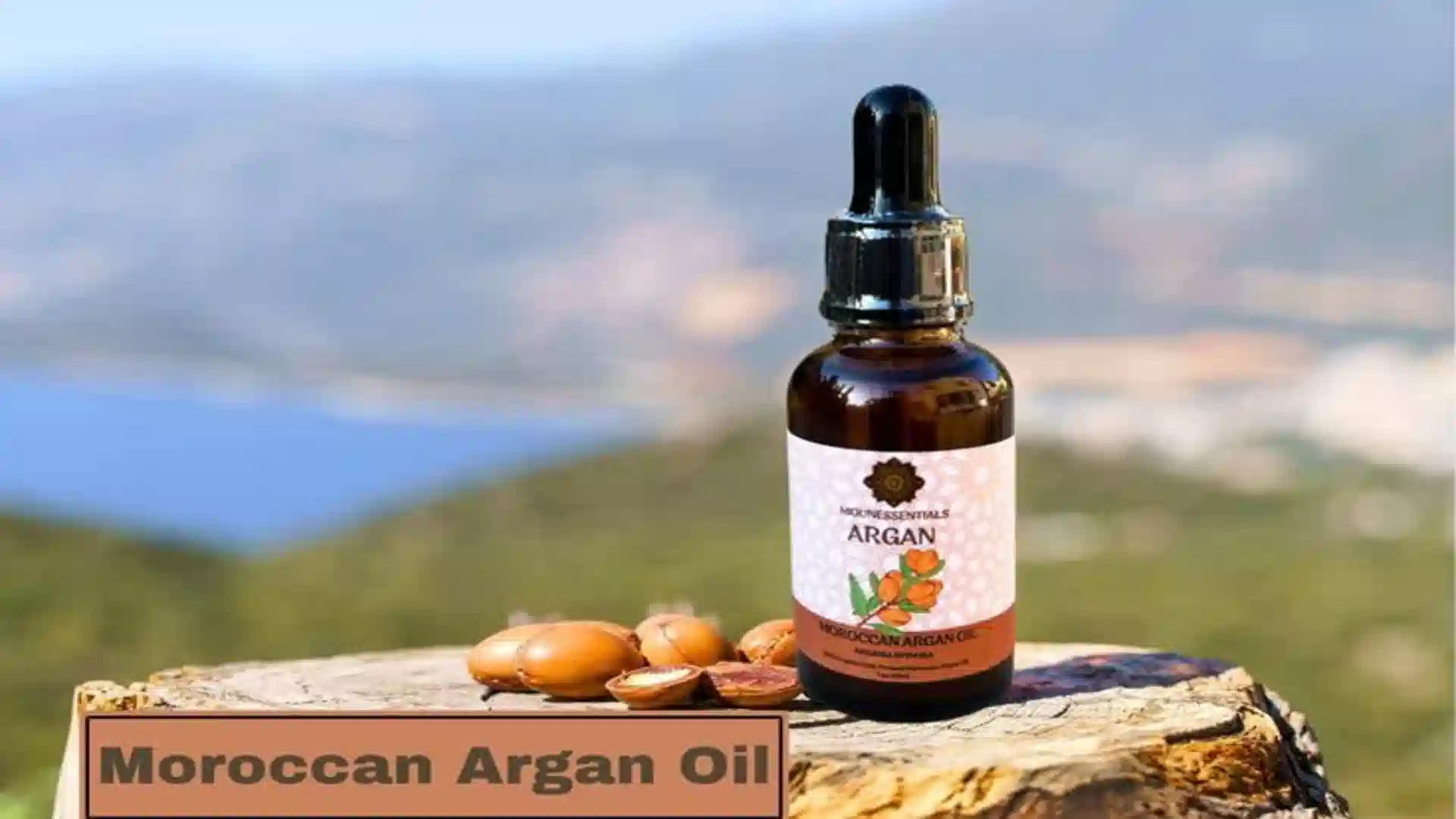
Moroccan Argan Oil: The Complete Guide to Morocco’s Liquid Gold
Long before Moroccan argan oil ever made its way into commercial beauty formulas and elite cosmetic aisles around the world, it was an essential mainstay of indigenous Amazigh culture. A unique bridge between ancient botanical heritage and modern skin science, Moroccan argan oil is hand-expressed across the Souss Valley from a tree species that grows almost nowhere else on earth. To know what makes this rare oil special, to identify its true sensory profile, and to purchase argan oil safely, one must look far beyond simple retail labels.
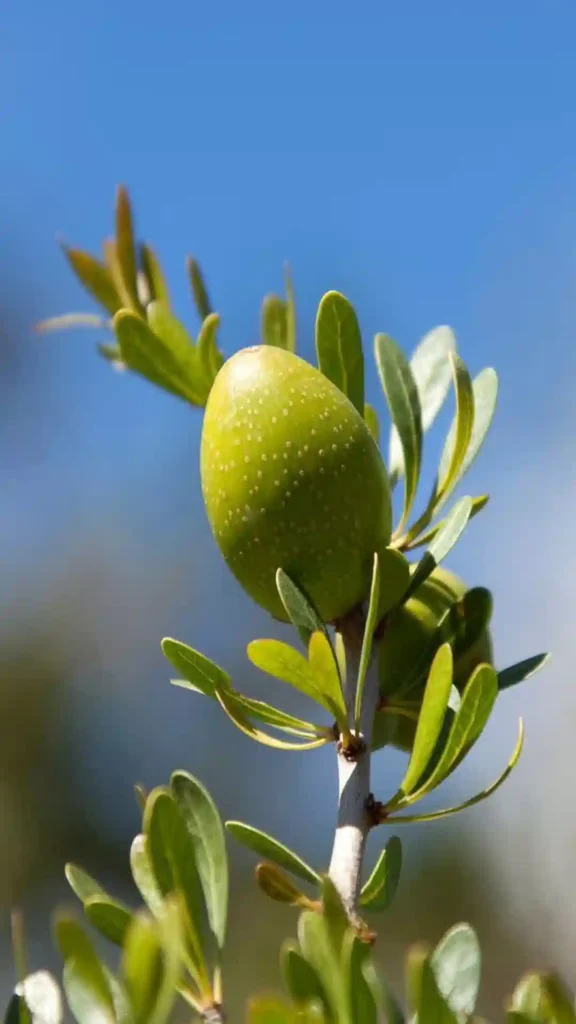
The source of luxury: a single ripening Moroccan argan fruit.
Quick Answer: What Is Pure Moroccan Argan Oil?
- What it is: A nutrient-rich botanical oil pressed from kernels of the argan tree (Argania spinosa), native primarily to southwestern Morocco.
- Primary variants: Culinary oil (roasted kernels, deep golden shade, nutty flavor profile) and cosmetic oil (unroasted raw press, light golden hue, delicate aroma).
- Core origins: The UNESCO-protected Arganeraie Biosphere Reserve spans the Souss Massa plain between Agadir, Taroudant, and Essaouira.
- Production cost reality: Yielding one single liter requires approximately 30 kilograms of ripe fruit and up to 15 hours of skilled manual labor.
- Biochemical value: Packed with essential fatty acids, polyphenols, squalene, and vitamin E antioxidants that nourish cellular barriers.
- Where to buy argan oil: Sourced directly from verified fair trade women cooperatives across Morocco or reputable importers supplying pure, single-origin pressings.
Where Does Moroccan Argan Oil Come From?
Authentic Moroccan argan oil comes only from the fruit of Argania spinosa, a hardy tree species that has adapted over thousands of years to the semi-arid terrain of southwestern Morocco. The argan tree has gnarled trunks, deep root networks, and sharp thorny branches, and it thrives in hostile microclimates with scorching temperatures, low rainfall, and nutrient-poor soil. Aside from small isolated pockets, this ancient species resists commercial cultivation anywhere else globally, establishing Morocco as the sole guardian of genuine argan oil Moroccan argan oil production.
In recognition of its singular environmental and cultural importance, UNESCO designated more than 2.5 million hectares of the region as the Arganeraie Biosphere Reserve in 1998. The vast forest ecosystem functions as an essential ecological shield, preventing desertification by anchoring fragile soils against severe wind erosion and stopping the northwards advance of the Sahara Desert. The deep taproots extract moisture from subsurface aquifers, maintaining microclimatic balance that sustains surrounding agricultural land.
Beyond ecological protection, the argan forest provides the foundation for an entire socioeconomic ecosystem. Millions of rural inhabitants depend on the forest for fuel wood, livestock forage, agricultural shade, and the annual harvest of argan nuts. Protecting these forests is directly tied to preserving the authentic production practices that give genuine Moroccan argan oil its global reputation for quality.
Why Are There Goats in Moroccan Argan Trees?
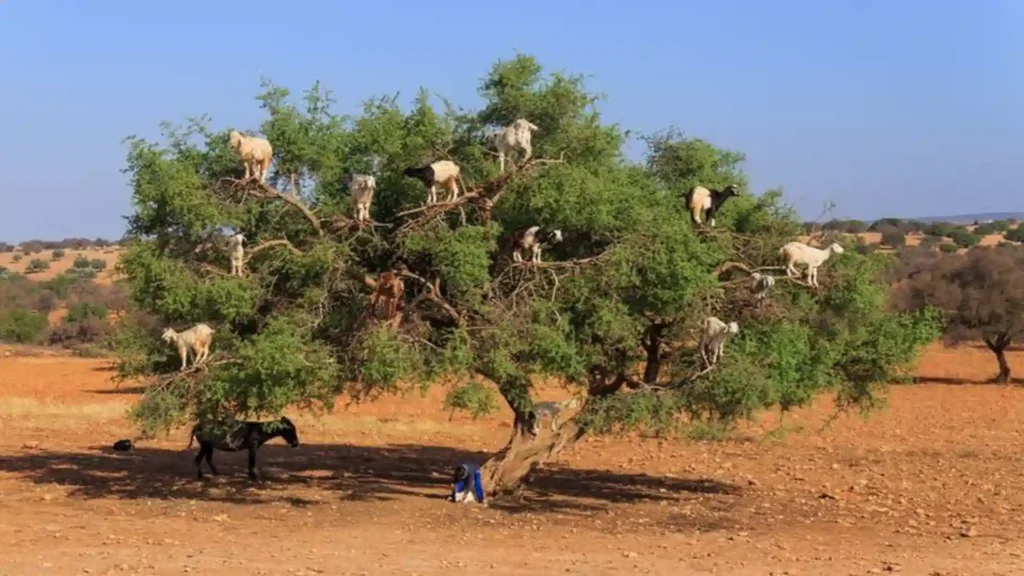
The famous tree-climbing goats of Morocco are feeding on native argan fruit.
Images of local goats perched high among the thorny branches of argan trees are world famous. This unique phenomenon is a natural behavior driven by the sparse vegetation of the Souss Valley. During hot, dry summer months when ground pasture dries up, agile local goats climb directly into the tree canopy to feast on the fleshy green outer pulp of the argan fruit.
Historically, this animal interaction played a role in early agricultural gathering. Goats ingested the fruit, digested the fleshy outer rind, and regurgitated or excreted the extremely hard inner nut undamaged. Rural families would harvest these processed nuts from the forest floor, saving the heavy labor required to remove the outer husk by hand.
In modern professional production, certified cooperatives strictly avoid using nuts gathered by goats. Kernel harvesting for premium cosmetic and culinary applications relies exclusively on gathering mature fruit that falls naturally from branches onto clean collection mats. This keeps the process sanitary, prevents unwanted odors, and maintains the high chemical integrity needed for pure cosmetic pressings.
How Argan Oil Is Traditionally Made: Pure Moroccan Argan Oil
Creating high purity Moroccan argan oil is an intensely physical process combining centuries-old traditional manual skill with precise environmental timing. Every stage requires specialized technical knowledge passed down through generations of Amazigh artisans.
| Stage | Operational Process Details |
|---|---|
| 1. Harvesting | Fully ripe fruit is collected from ground level under forest canopies between May and August, avoiding unripened fruit plucked off branches. |
| 2. Sun Drying & De-husking | Harvested fruit is spread out under the open sun to dry naturally, allowing the outer skin to shrink so that workers can strip away the dried pericarp husk. |
| 3. Manual Nut Cracking | Workers strike each hard nut between two hand-held stones to crack open the dense shell without damaging the delicate, oil-rich internal kernels inside. |
| 4. Roasting (Culinary Only) | Kernels intended for kitchen use are gently toasted over controlled flame to release aromatic compounds; raw cosmetic kernels skip roasting entirely. |
| 5. Mechanical or Stone Pressing | Kernels are cold-pressed using traditional hand-rotated stone mills or modern temperature-controlled mechanical screw presses to squeeze out liquid oil. |
| 6. Decanting & Filtration | Raw extracted oil rests in decanting vessels for two weeks, settling naturally before undergoing fine physical paper filtration to guarantee clarity. |
The intense manual labor required explains why true argan oil Moroccan argan oil carries a premium price. Extracting one single liter of pure cosmetic oil requires roughly 30 to 40 kilograms of dried fruit, representing the entire annual yield of an average mature tree. Cracking that quantity of nuts by hand demands 10 to 15 hours of continuous labor, making mass production impossible without dedicated local workforce structures.
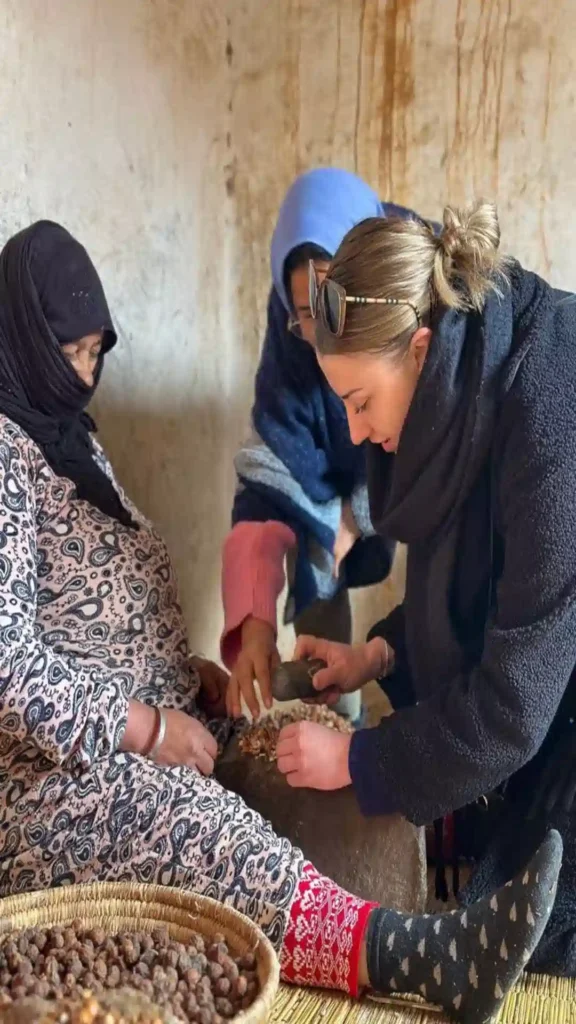
Honoring centuries of Moroccan argan oil tradition in local women’s cooperatives.
Women Cooperatives: The Economic Heart of Production
The global rise of Moroccan argan oil has driven a transformative social shift across rural regions of southern Morocco. Beginning in the late 1990s, indigenous Amazigh women organized small agricultural production units into formalized fair trade worker cooperatives. Before these commercial structures were established, rural women engaged in unpaid domestic work and had limited access to independent household income or formal education.
Today, dozens of legal cooperatives operate across the Souss Massa region, providing steady fair wages, healthcare coverage, and flexible working conditions for thousands of female workers. Profit surpluses are reinvested directly back into rural communities, funding adult literacy classes, clean water infrastructure, educational scholarships, and local medical facilities.
Visiting or purchasing directly from accredited cooperatives ensures that economic benefits remain within the producer communities. Fair trade certified organizations guarantee ethical working environments, prevent child labor, and enforce sustainable forestry practices that preserve argan woodlands for future generations.
Culinary Argan Oil vs Cosmetic Argan Oil:
Understanding the operational differences between culinary and cosmetic grades is crucial when evaluating quality, performance, and application methods.
| Attribute | Culinary Argan Oil Grade | Cosmetic Argan Oil Grade |
|---|---|---|
| Kernel Preparation | Kernels undergo light roasting over slow heat before cold pressing. | Raw, completely unroasted kernels are cold pressed directly. |
| Visual Appearance | Deep amber to copper bronze hue with rich warm undertones. | Bright straw yellow to pale golden translucent liquid. |
| Aroma Profile | Strong toasted hazelnut, warm sesame, and toasted seed notes. | Faint, raw, slightly nutty natural botanical scent that fades fast. |
| Primary Uses | Finishing oil for warm dishes, couscous, dipping bread, and amlou paste. | It can be applied directly to facial skin, hair lengths, nails, and cuticles. |
While applying culinary oil to skin is not harmful, the roasting process changes its biochemical balance and leaves a strong food-like aroma. Conversely, raw cosmetic oil lacks the rich flavor needed for gourmet cooking. Always check product labels to confirm you are purchasing the exact grade meant for your intended use.
What Does Argan Oil Smell Like? Understanding Sensory Profile
One of the most frequent points of confusion for first-time buyers revolves around sensory characteristics: what does argan oil smell like, and more importantly, what should argan oil smell like when you open a fresh bottle? Because raw cold-pressed oils retain active organic compounds, authentic unrefined oils display a distinct natural scent profile.
When assessing what should argan oil smell like for pure cosmetic-grade preparations, expect a subtle, earthy, and slightly nutty botanical scent. It is raw and green with a mild nutty undertone, resembling fresh pumpkin seeds or raw walnut meat. The scent should be light and nonintrusive and dissipate within a few minutes after skin absorption.
Understanding what does argan oil smell like across different quality grades helps consumers identify authentic, unadulterated oils versus processed or damaged products:
- Fresh Cosmetic Grade: A faint raw nutty scent that disappears quickly upon contact with skin. It should never smell heavily perfumed or completely odorless.
- Fresh Culinary Grade: A robust, warm aroma of freshly roasted nuts, toasted hazelnut, and toasted sesame seeds.
- Over Processed or Deodorized Oil: Completely odorless oil has usually undergone extreme steam deodorization, high heat filtration, or chemical bleaching. This process strips away volatile aromatic compounds and beneficial antioxidants like vitamin E.
- Rancid or Spoiled Oil: Strong sour notes, sharp vinegar accents, heavy barnyard aromas, or pungent stale cardboard smells indicate oxidation, bad nut harvesting, or advanced decomposition. Rancid oil should not be used on skin.
- Synthetic Perfumed Oil: Strong floral, sweet, or artificial fragrance added to mask lower-quality carrier oils or hide rancidity.
Do Argan Oil Expire? Shelf Life, Storage, and Stability
Consumers often ask direct questions regarding longevity: do argan oil expire over time, and how can you maximize the usable lifespan of a fresh bottle? The short answer is yes, like all natural unpreserved lipid extracts, argan oil gradually degrades and will eventually expire through lipid oxidation.
Under proper storage conditions, unopened pure cosmetic Moroccan argan oil maintains optimal potency for approximately 18 to 24 months from its original cold pressing date. Once opened and exposed to ambient air, a bottle should ideally be used within 6 to 12 months to enjoy its full biochemical benefits.
Key Environmental Factors That Accelerate Oil Expiration
- Ultraviolet Light Exposure: Sunlight breaks down essential fatty acid chains and accelerates nutrient degradation. Always choose dark amber, cobalt blue, or opaque black glass bottles. Avoid clear plastic containers.
- Thermal Instability: Fluctuating or elevated room temperatures speed up oxidation. Store bottles in a cool, dark cabinet away from direct heat sources, steam, or kitchen stoves.
- Oxygen Degradation: Leaving cap enclosures loose introduces air into the bottle, triggering oxidative rancidity. Keep bottles tightly sealed when not actively in use.
- Water Contamination: Allowing water droplets to enter glass dropper bottles encourages microbial growth and spoils lipid freshness. Store cosmetic bottles outside humid shower areas.
Knowing the answer to do argan oil expire helps you track signs of deterioration. If your oil changes color, loses transparency, turns cloudy, or develops a sharp sour odor, it has oxidized past its usable life and should be replaced.
Biochemical Skin Benefits of Moroccan Argan Oil
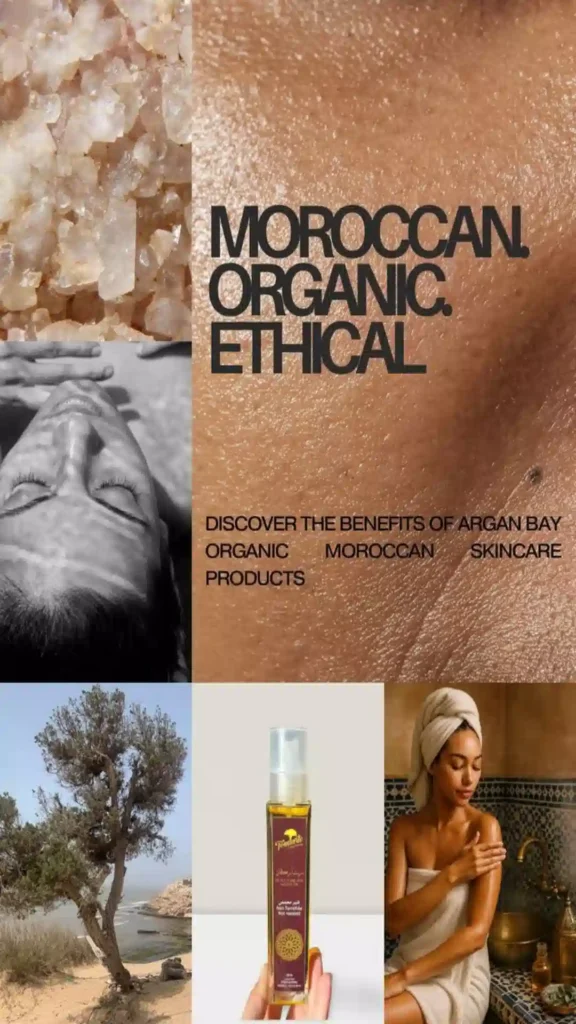
Pure, ethical, and organic Moroccan argan oil straight from the source.
The restorative reputation of genuine Moroccan argan oil is backed by its unique lipid profile. Packed with oleic acid (42 to 48 percent) and linoleic acid (30 to 38 percent), cold-pressed argan oil offers a balanced lipid ratio that matches the skin’s natural sebum composition.
- Deep Moisture Barrier Repair: Linoleic acid helps reinforce the epidermal stratum corneum layer, reducing trans epidermal water loss (TEWL) to keep dry skin hydrated.
- Potent Antioxidant Shield: High levels of naturally occurring tocopherols (Vitamin E) neutralize free radicals triggered by UV exposure and air pollution.
- Non Comedogenic Hydration: Rated low on the comedogenic scale (0 out of 5), pure argan oil hydrates oily or combination skin without clogging pores or triggering acne breakouts.
- Skin Elasticity Support: Plant sterols (schottenol and spinasterol) boost cellular metabolism, helping smooth fine dry lines and maintain skin suppleness.
- Soothing Inflammatory Irritation: Natural squalene and ferulic acid soothe mild redness, dry eczema patches, and minor skin sensitivities.
Transformative Hair Care: Using Hair Oil From Morocco
Using pure hair oil from Morocco is one of the most effective ways to restore dry, heat-damaged, or color-treated hair. Unlike heavy mineral oils that sit on the surface, the small molecular structure of argan oil penetrates the hair shaft to seal split ends and nourish hair strands from within.
Incorporating pure hair oil from Morocco into your regular hair care routine provides several targeted benefits:
- Frizz Control and Heat Protection: Coating hair shafts with a few drops before blow drying creates a protective barrier against thermal damage while smoothing frizzy flyaways.
- Enhanced Shine and Softness: Medium chain fatty acids smooth out raised hair cuticles, restoring natural shine and silky texture without leaving greasy residue.
- Scalp Nourishment: Massaged directly into the scalp as a pre wash treatment, its anti-inflammatory properties soothe dry, itchy, or flaking skin.
- Curl Definition: Hydrates naturally textured, coily, or wavy hair types, improving curl elasticity and preventing breakage.
To get the best results from hair oil from Morocco, apply two or three drops onto damp, towel-dried hair from mid-lengths down to the tips before styling.
How to Spot Fake vs Authentic Moroccan Argan Oil
Because global demand outstrips yearly production capacity, diluted, adulterated, and counterfeit products are widespread. Knowing how to evaluate bottle labels, pricing, and sensory characteristics ensures you invest in pure quality.
- Ingredient Transparency: The label must list only 100% pure Argania spinosa kernel oil. Avoid products listing silicones, dimethicone, mineral oil, or synthetic fragrance fillers.
- Container Integrity: Authentic high-grade oil is packaged exclusively in dark UV-protective glass bottles (amber, dark blue, or matte black). Avoid clear plastic bottles that leach chemicals into the oil.
- Price Baseline: High labor costs mean true cold-pressed argan oil cannot be cheap. Unrealistically low prices indicate dilution with inexpensive sunflower or soybean oil.
- Texture Test: Pure cosmetic argan oil feels smooth, silky, and rich, absorbing into the skin within minutes without leaving a sticky, plastic layer.
- Sediment Presence: Fine natural cloudy sediment at the bottom of an unrefined bottle is a normal sign of traditional physical filtration rather than chemical processing.
Where to Buy Authentic Argan Oil in Morocco and Online
Travelers and international shoppers frequently ask two core questions: where buy argan oil? and where can I buy argan oil with full confidence in product purity? Sourcing genuine oil requires choosing certified producers and reputable vendors.
When asking yourself where can I buy argan oil while traveling in Morocco, prioritize these trusted sources:
| Retail Location Type | Quality Assurance & Authenticity Level |
|---|---|
| Rural Fair Trade Cooperatives (Souss Valley) | Highest quality guarantee. Purchasing directly from registered production facilities in Taroudant, Tiout, or Agadir ensures single-origin purity. |
| Certified Pharmacies (Moroccan Cities) | Very high reliability. Local pharmacies in Marrakech, Rabat, and Casablanca stock lab-tested, cosmetic-grade oils with verified origin labels. |
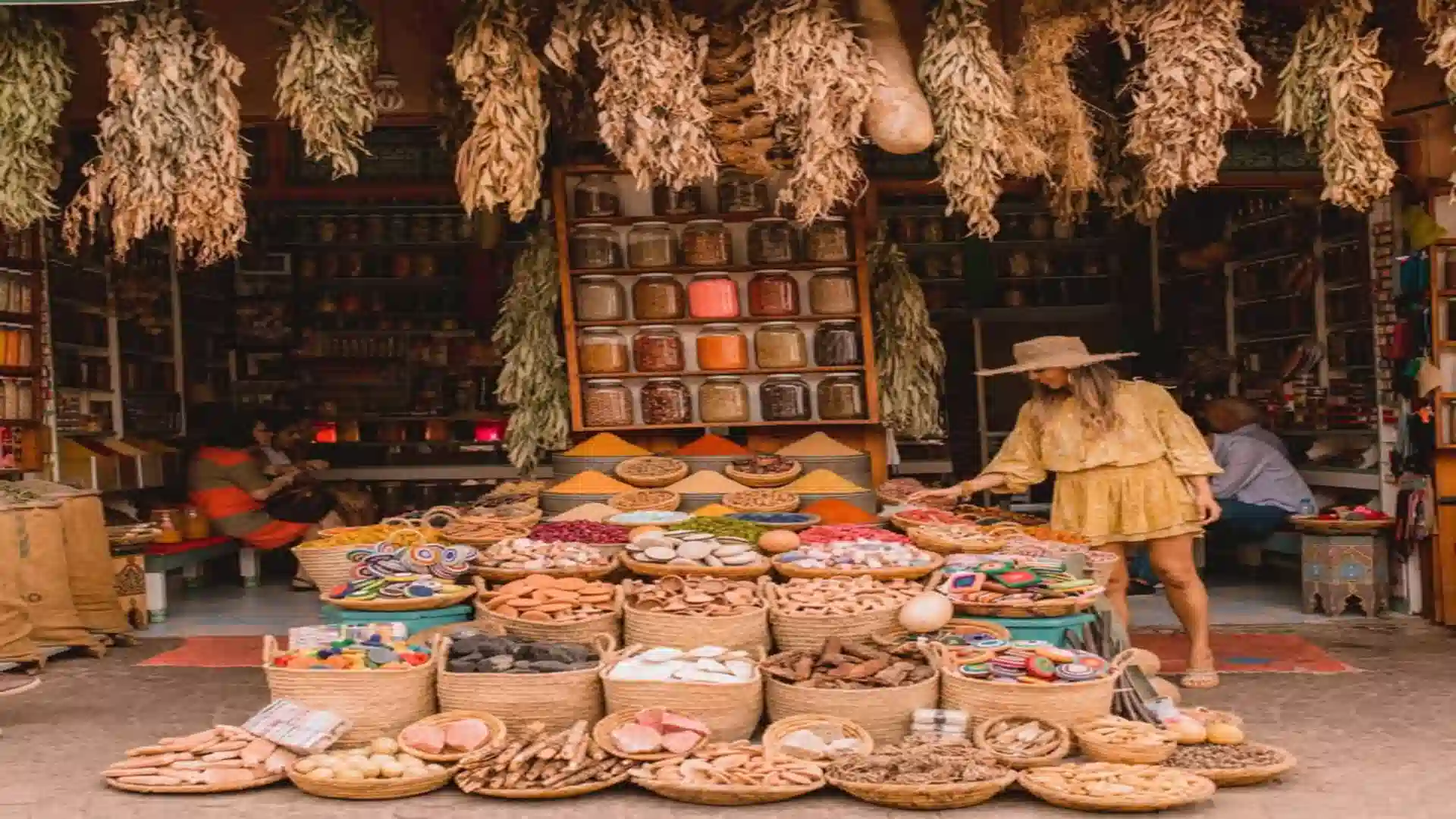
| Cooperative Outlets in Medina Souks | Moderate to high reliability. Look for officially licensed retail shops affiliated with recognized regional agricultural associations in Essaouira or Marrakech. |
| Roadside Tourist Stalls | Low reliability. Unlabeled clear plastic bottles sold along major highway routes are frequently diluted, sun-damaged, or overprocessed. |
If you are shopping internationally and wondering where buy argan oil? Without visiting Morocco, look for certified organic, fair trade importers that publish independent batch testing and source their inventory directly from Moroccan agricultural cooperatives.
Planning a trip through the Souss Valley region? Explore our detailed Essaouira travel guide and argan oil producer directory, or check out our comprehensive what to do in Morocco guide to build an authentic regional itinerary.
Step by Step Application Techniques for Moroccan Argan Oil
To get the most out of your pure argan oil Moroccan argan oil, use these straightforward application methods tailored for daily beauty and wellness routines.
- Facial Hydration Treatment: Warm two to three drops of oil between your palms, then gently press onto damp, freshly cleansed facial skin every morning and evening. Damp skin helps lock in surface moisture.
- Leave-in Hair Conditioning: Dispense three to four drops of pure hair oil from Morocco into damp hair after showering, focusing on mid-lengths to ends. Avoid applying directly to roots if your hair tends to be oily.
- Overnight Scalp Therapy: Warm a full dropper of oil and massage into your scalp using circular motions. Leave it on overnight and wash out thoroughly with a mild shampoo in the morning.
- Nail and Cuticle Restoration: Massage a drop directly into nail beds and surrounding cuticles every evening before bed to help strengthen brittle nails.
- Body Moisture Seal: Apply immediately after taking a shower while skin is still slightly damp to seal in hydration across dry elbows, knees, and heels.
Frequently Asked Questions About Moroccan Argan Oil
Why is pure argan oil produced exclusively in Morocco?
The argan tree requires specific semi-arid climate conditions, soil composition, and coastal humidity unique to southwestern Morocco’s Souss Valley. Attempts to cultivate commercial argan orchards outside Morocco have consistently failed to reproduce the chemical quality of native trees.
Do argan oil expire if left unopened in dark glass?
Yes, even unopened bottles will eventually degrade over time. Fresh cold-pressed cosmetic oil stays potent for 18 to 24 months from pressing when kept sealed in a cool, dark environment.
What should argan oil smell like when applied to clean skin?
Unrefined cosmetic argan oil has a light, earthy, slightly nutty aroma that absorbs quickly into the skin within minutes. It should never smell heavily perfumed, harsh, sour, or completely odorless.
Where can I buy argan oil safely while traveling through Morocco?
Buy directly from accredited fair trade women cooperatives located throughout the Souss Valley, reputable pharmacies in major cities, or official cooperative retail outlets in Medina centers like Essaouira and Agadir.
Can I use pure hair oil from Morocco on fine or thin hair types?
Yes, fine hair types can benefit from argan oil without feeling weighed down. Use sparingly one to two drops applied exclusively to dry ends is all you need for smooth shine.
Is culinary argan oil safe for facial skincare application?
While culinary-grade argan oil is non-toxic and safe for skin, its roasted kernel preparation creates a strong roasted nut scent and alters its delicate cosmetic antioxidant balance. Use unroasted cosmetic-grade oil for skincare.
Related Guides & Regional Insights for Moroccan argan oil
See Where Moroccan Argan Oil Is Made, Firsthand
Our custom Souss Valley and coastal itineraries include visits to authentic women-run fair trade cooperatives. Experience traditional hand-cracking demonstrations, sample fresh culinary amlou, and purchase 100% pure argan oil straight from the source.