Do You Need Cash in Morocco in 2026? The Honest Money Guide
Yes, do you need cash in Morocco? You absolutely do. Card acceptance is growing, but day-to-day life still runs on cash the dirham (MAD), a closed currency you can only get once you arrive. Plan to use cards for big, formal payments and cash for almost everything else.
Morocco in 2026 is not a cashless society and will not become one anytime soon. Taxis will not take your card. The souk vendor who has just spent three minutes showing you his best leather goods does not have a terminal. The hammam attendant, the street food stall, the camel handler, the guide tip, and the public toilet are all cash. Based on our operational experience managing logistics for travelers across Marrakech, the Atlas Mountains, and the Sahara Desert every week of the year, the travelers who follow our essential Moroccan dirham travel tips have a noticeably smoother trip than those who do not.
This guide tells you exactly how much cash to bring, where to get dirhams once you land, how to navigate ATMs in Morocco, which banks to use, how to avoid the fees nobody warns you about, and answers the crucial question: can you pay by card in Morocco in 2026?
The Quick Answer: Morocco Cash or Card at a Glance
| Situation | Cash (MAD) | Card |
|---|---|---|
| Petit taxi (local) | ✅ Always | ❌ Never |
| Grand taxi (intercity) | ✅ Always | ❌ Rarely |
| Street food / souk stalls | ✅ Always | ❌ Never |
| Public hammam | ✅ Always | ❌ Never |
| Tips (guide, driver, porter) | ✅ Always | ❌ Never |
| Small medina restaurants | ✅ Usually | ⚠️ Sometimes |
| Desert camps (standard) | ✅ Usually | ❌ Rarely |
| Licensed international hotels | ⚠️ Optional | ✅ Usually fine |
| Riads (mid range to upscale) | ⚠️ Optional | ✅ Usually fine |
| Carrefour / Marjane supermarkets | ⚠️ Optional | ✅ Usually fine |
| Licensed tour operators | ⚠️ Optional | ✅ Usually fine |
| Gueliz restaurants (Marrakech) | ⚠️ Optional | ✅ Usually fine |
| Mountain villages / rural areas | ✅ Essential | ❌ Never |
| Desert (past Ouarzazate) | ✅ Essential | ❌ Never |
What Is the Moroccan Dirham? Essential Moroccan Dirham Travel Tips
The Moroccan dirham (MAD or DH) is Morocco’s official currency and a closed currency meaning you cannot legally buy meaningful amounts of it outside Morocco before you travel, and you cannot take large amounts back home.
Key facts for your Morocco currency guide:
- Symbol: MAD or DH (pronounced “deh rahm” locally)
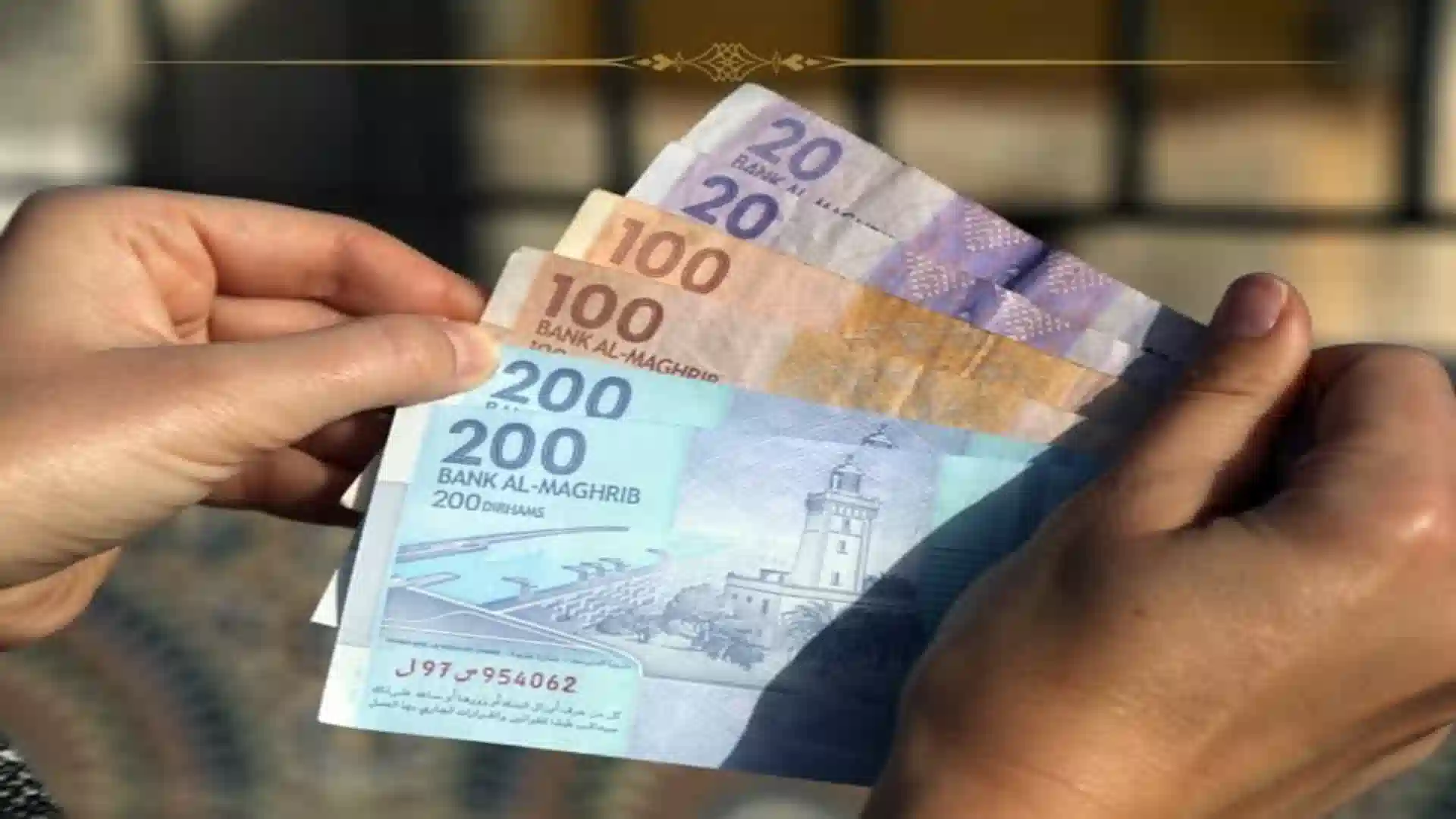
- Notes in circulation: 20, 50, 100, and 200 MAD
- Coins: 1, 2, 5, and 10 MAD coins; smaller centimes coins (largely irrelevant for tourists)
- Rough exchange rate (2026): 1 USD ≈ 9.9 to 10.2 MAD / 1 EUR ≈ 10.8 to 11.2 MAD / 1 GBP ≈ 12.5 to 13.0 MAD (check the live rate before you travel)
- Closed currency rule: You can bring foreign currency into Morocco and exchange it on arrival. You cannot buy dirhams before landing in any meaningful quantity at airport currency exchange offices and banks at your origin, which will either not stock it or offer terrible rates.
- What this means practically: Budget your dirham needs before departure, then get them on arrival at the airport ATM or exchange desk.
The 200 MAD Note Problem Morocco Currency Guide
ATMs dispense 100 and 200 MAD notes, which can sometimes be difficult to break at small vendors, so ask for change proactively when you have the opportunity.
This is one of the most consistently frustrating early trip issues for Morocco visitors. You withdraw 2,000 MAD from an ATM and receive ten 200 MAD notes. Then you try to pay 15 MAD for a glass of orange juice at Jemaa el Fnaa. The vendor sighs. This is avoidable:
- Break large notes early pay for a coffee or a bottle of water at a café or supermarket with a 200 MAD note specifically to get change
- Carrefour and Marjane checkouts are the easiest places to break large notes legitimately
- Ask your hotel or riad to give you smaller notes when you exchange or pay
- Always carry a mix: a handful of 20 and 50 MAD notes alongside your 100s makes daily spending dramatically smoother
Where to Get Moroccan Dirhams: Navigating ATMs in Morocco
The best place to get dirhams in Morocco is using bank attached ATMs in Morocco from major institutions Attijariwafa Bank, Banque Populaire, BMCE Bank of Africa, or CIH Bank.
Option 1) Airport ATM (Best for Arrival Day)
Many ATMs from the main Moroccan banks (Attijariwafa Bank, Banque Populaire, BMCE, and CIH) are available in the arrivals hall of Mohammed V Airport and Marrakech Menara Airport.
This is the right move immediately after landing. Withdraw enough for your first day taxi to your riad, dinner, and small tips rather than trying to find a bank in an unfamiliar city while tired from a flight. The airport ATM rate is standard; avoid the currency exchange desks in arrivals unless you have brought cash to exchange, as they typically offer worse rates than ATMs for card withdrawals.
What to withdraw on arrival: 600 to 800 MAD covers a taxi from Marrakech airport to the medina (80 to 120 MAD), riad tip (20 to 30 MAD), dinner at Jemaa el Fnaa (80 to 120 MAD), and a buffer for the morning.
Option 2) City Bank ATMs in Morocco (Best Rate and Safety)
When using ATMs in Morocco, sticking to major bank branches ensures maximum reliability across every major city. Their machines are:
| Bank | ATM Availability | Notes |
|---|---|---|
| Attijariwafa Bank | Widespread — best coverage | Morocco’s largest bank; most reliable machines |
| Banque Populaire | Very widespread | Strong in medina areas and smaller cities |
| BMCE Bank of Africa | Widespread | Good coverage; some machines have English |
| CIH Bank | Good coverage | Slightly fewer ATMs than the top two |
| Crédit Agricole du Maroc | Good coverage | Reliable; common in rural areas |
Street facing standalone ATMs not attached to a visible bank branch carry a higher risk of card skimming and mechanical failure. Use bank branch ATMs whenever possible, during banking hours when staff can help if something goes wrong.
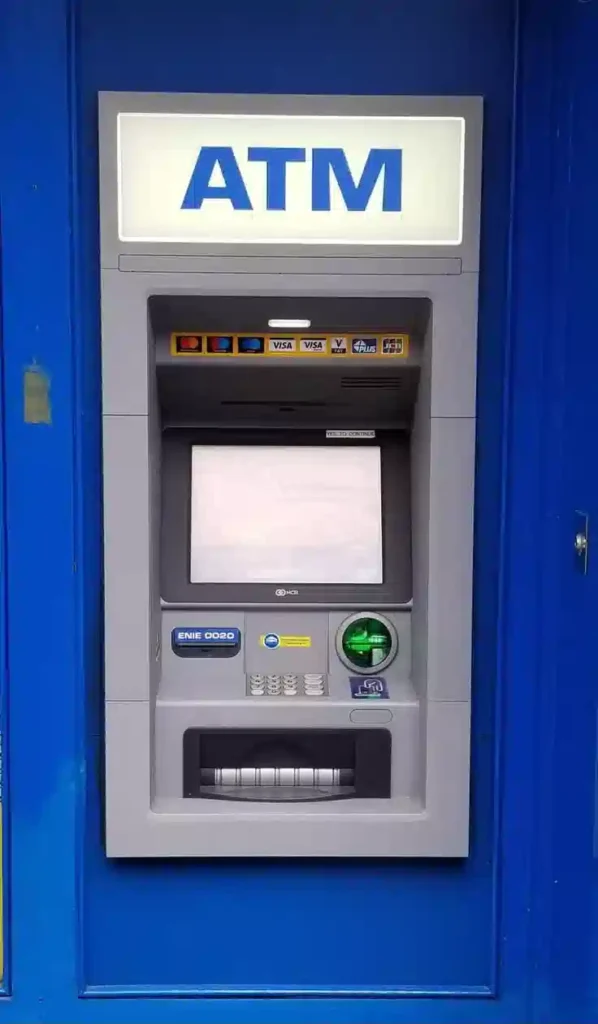
Withdrawing local currency from ATMs helps answer the question do I need cash in Morocco for daily travel spending.
Option 3) Currency Exchange Offices (Best for Cash You Brought)
If you are bringing euros, pounds, or dollars from home to exchange, licensed exchange bureaux (bureaux de change) in the medinas and ville nouvelles offer competitive rates often better than banks for cash transactions. The airport exchange desks are the worst rate; in city bureaux are significantly better.
What to watch for: Always count your notes before leaving the window. Some visitors report being short changed in the counting process. This is not universal but worth the 30 seconds it takes.
Option 4) Your Hotel or Riad (Convenience Tax Applies)
Most riads and hotels can exchange foreign currency or facilitate cash advances, but at rates that include a margin. Use this only in genuine emergencies; the convenience cost is real.
ATMs in Morocco & Fees: The Full Picture
Most ATMs in Morocco charge a local fee on top of whatever your home bank charges — typically 20 to 40 MAD per transaction — meaning every ATM withdrawal costs you both the local fee and your bank’s international fee.
Fee breakdown for a typical withdrawal:
| Fee Type | Typical Amount | Who Charges It |
|---|---|---|
| Moroccan bank local fee | 20 to 40 MAD (~$2 to $4) | The ATM’s bank |
| Your bank’s international fee | 1.5 to 3% of withdrawal | Your home bank |
| Currency conversion fee | 0 to 2% (avoidable) | Your home bank / ATM |
| Total cost on a 1,000 MAD withdrawal | ~60 to 100 MAD total | Combined |
The Single Most Important Fee Tip: Always Choose Dirhams
If a card terminal offers a choice between your home currency and dirhams, choose dirhams. That often helps you avoid an unfavorable conversion set by the payment terminal.
This rule applies at both ATMs and card terminals. When a machine asks, “Would you like to be charged in USD/GBP/EUR or Moroccan Dirham?” always choose Moroccan Dirham. The terminal’s own exchange rate is almost always worse than your bank’s rate. This practice called Dynamic Currency Conversion (DCC) is legal but consistently unfavorable to the traveler.
The ATM fee strategy that saves money:
- Withdraw larger amounts less often (2,000 to 4,000 MAD per transaction) rather than small amounts repeatedly — each withdrawal incurs the fixed local fee regardless of amount
- A 4,000 MAD withdrawal at one fixed fee costs half as much per dirham as two 2,000 MAD withdrawals
- Never go below 500 MAD before topping up running out in a rural area is genuinely inconvenient
Can You Pay by Card in Morocco? Where Cards Work (And Where They Do Not)
So, can you pay by card in Morocco in 2026? Yes, card acceptance has genuinely expanded in major cities — but when weighing Morocco cash or card options, card reliance remains selective, unreliable at smaller businesses, and essentially nonexistent once you leave the main tourist circuit.
Where Cards Reliably Work
- International standard hotels (4 to 5 star, major chains): Visa and Mastercard standard, AmEx less reliable
- Most riads with an international online presence: Most now accept cards for the main booking payment
- Carrefour and Marjane supermarkets: Cards accepted at checkout
- Gueliz and Hivernage licensed restaurants (Marrakech): Most accept cards
- Licensed tour operators: Most accept card for the main tour payment (including Over Morocco Tours)
- Petrol stations (major highway stations): Cards increasingly accepted
- Some larger medina shops with a tourist facing operation: Card terminals increasingly visible
Where Cards Rarely or Never Work: Morocco cash or card
- Petit taxis (small city taxis): Cash only, always
- Grand taxis (intercity shared taxis): Cash only
- Souk stalls and medina artisans: Cash only — even when you see a card sticker, it is often aspirational
- Street food and small cafés: Cash only
- Public hammams: Cash only
- Tips (for any guide, driver, porter, hammam attendant): Cash only
- Desert camps (standard and budget): Cash only; luxury camps sometimes accept card
- Rural villages and mountain areas: Cash only
- Anything past Ouarzazate on the desert route: ATMs exist in Ouarzazate withdraw there
How Much Cash Do You Need Per Day in Morocco?
A practical daily cash budget for Morocco depends on your travel style budget travelers need 200 to 300 MAD per day for incidentals; mid range travelers 400 to 600 MAD; and anyone exploring medinas, paying for optional activities, or buying souvenirs should carry 600 to 800 MAD.
| Traveler Type | Daily Cash Budget | What It Covers |
|---|---|---|
| Budget | 200 to 300 MAD (~$20 to $30) | Street food, local taxis, basic entries, tips |
| Mid range | 400 to 600 MAD (~$40 to $60) | Restaurant lunches, taxis, monument entries, tips, a few small purchases |
| Active | 600 to 800 MAD (~$60 to $80) | All of above plus hammam, activity tips, souk browsing |
| Shopper | 1,000+ MAD | Add budget for souk purchases, carpet negotiations |
City specific cash notes:
- Marrakech: Carrefour on Avenue Mohammed VI is the best city cash break point, large, reliable, and breaks 200 MAD notes easily
- Fes: ATMs concentrated near the Bab Bou Jeloud gate area; fewer options inside the medina
- Merzouga / Sahara: Withdraw in Erfoud or Ouarzazate before proceeding Merzouga has one ATM (at Café Yasmina) that occasionally runs out or goes offline. Do not rely on it.
- Rural Atlas villages: No ATMs carry all cash you will need from the nearest city
- Chefchaouen: Small city ATMs available but limited withdrawals adequately in Fes before the drive
Cash for a Desert Tour from Marrakech: What to Prepare
A complete travel money guide detailing why do I need cash in Morocco for markets, tips, and daily expenses.
If you are doing a 3 day Sahara desert tour from Marrakech our most booked itinerary plan is to have 800 to 1,500 MAD in cash beyond your tour payment to cover lunches (3 × 100 to 150 MAD), optional tips (guide/driver: 50 to 100 MAD per day; camel handler: 50 MAD; camp host: 50 MAD), and any optional activities or souvenirs on the route. This is operational guidance from our team who runs this circuit every week.
Desert tour cash checklist:
| Item | Approximate Cost (MAD) |
|---|---|
| 3 lunches (en route, not included in tours) | 300 to 450 |
| Guide tip (per day, recommended) | 150 to 300 total |
| Driver tip (per day, recommended) | 100 to 200 total |
| Camel handler tip | 50 to 100 |
| Camp host / dinner staff tip | 50 to 100 |
| Sandboarding rental | 50 to 100 |
| Souvenir stops (fossils, silver, spices) | 100 to 500+ |
| Total recommended cash | 800 to 1,500 MAD |
Withdraw this cash in Marrakech before departure; do not plan to withdraw on the route. Ouarzazate has ATMs, but they are sometimes busy or limited during peak season. After Ouarzazate, reliable cash access is essentially nonexistent.
Tipping in Morocco: The Cash You Need for People, Not Just Things
Tipping in Morocco is not mandatory but is culturally expected for guides, drivers, hammam attendants, hotel porters, and camp hosts, and it is always cash, always in dirhams, always given directly to the person.
| Recipient | Recommended Tip (MAD) | Notes |
|---|---|---|
| Private guide (full day) | 100 to 200 | Per person in your group |
| Driver (multi day tour) | 50 to 100 per day | Separate from guide tip |
| Hammam attendant / kessala | 20 to 50 | After a scrub session |
| Hotel porter | 10 to 20 per bag | On arrival and departure |
| Riad cleaning staff | 20 to 50 per night stayed | Leave in room at checkout |
| Camel handler | 50 to 100 per trek | For the full camel ride experience |
| Restaurant (when service not included) | 10 to 15% of bill | Check if service is already included |
| Parking attendant (gardien) | 2 to 5 MAD | Always cash, always small coins/notes |
Euros and Dollars: Can You Use Foreign Currency in Morocco?
Some hotels, major tourist operators, and occasionally grand taxis will accept euros and sometimes US dollars as payment, but the exchange rate applied is almost always unfavorable; paying in dirhams is consistently cheaper and avoids ambiguity.
The practical position: if you have euros or pounds in your wallet and you are somewhere that accepts them, use dirhams instead. The implicit exchange rate offered by a Marrakech taxi driver accepting euros will be 10 to 15% worse than the bank rate. This is not a scam it is a real cost of the convenience, and avoiding it is simply a matter of having dirhams ready.
Moroccan Dirham: Can You Take It Home?
Officially, Morocco restricts the export of dirhams you cannot legally take large amounts of Moroccan currency out of the country. The practical implication is to spend down your dirham balance before your return flight rather than converting back to your home currency.
The exit strategy:
- Use remaining dirhams at the airport on food, water, and last-minute purchases
- The airport exchange desks will convert small amounts of leftover dirham back to euros or dollars at a reasonable rate
- Do not try to convert large amounts of dirham at the airport the rate is poor and the limits apply
- Coins cannot be reconverted anywhere spend them on airport coffee or give them to the baggage handling staff as a tip
Frequently Asked Questions: Morocco Currency Guide
Do you need cash in Morocco in 2026?
Yes, Morocco remains primarily a cash economy for daily transactions. Taxis, street food, souks, hammams, tips, and rural areas all require Moroccan dirhams in hand. Cards work at most international hotels and some Gueliz restaurants, but cash is essential for everything else.
Can you pay by card in Morocco reliably?
You can pay by card in Morocco at upscale hotels, major supermarkets like Carrefour, licensed tour operators, and modern city restaurants. However, you cannot pay by card for taxis, souk shopping, street food, or rural excursions, making cash a necessity.
Can I use my credit or debit card at ATMs in Morocco?
Yes, most ATMs in Morocco accept Visa and Mastercard debit and credit cards. American Express is accepted at some machines. Ensure your card is enabled for international use before traveling and inform your bank to prevent fraud-triggered blocks.
How much cash should I bring to Morocco?
For a standard one-week trip, plan to access 3,000 to 5,000 MAD over the week, withdrawing in batches of 2,000 to 4,000 MAD to minimize fixed transaction fees. Carry 400 to 600 MAD on your person each day for daily spending, with more on souk browsing days or desert tour days.
Where is the best place to get dirhams in Morocco?
Bank-attached ATMs from Attijariwafa Bank, Banque Populaire, or BMCE Bank are available at all major airports and throughout cities. Airport ATMs are the most convenient on arrival; city bank branch ATMs are the safest and most reliable for larger withdrawals.
Can I use euros or dollars in Morocco instead of dirhams?
Technically yes at some hotels and tourist operators, but the implicit exchange rate is always worse than paying in dirhams. Always pay in dirhams where possible; it is consistently cheaper.
Is Dynamic Currency Conversion (DCC) a problem in Morocco?
Yes, when an ATM or card terminal offers to charge you in your home currency rather than MAD, always decline and choose dirhams. The terminal’s conversion rate is typically 5 to 10% worse than your bank’s rate.
Do I need cash for a Morocco desert tour?
Yes, plan for 800 to 1,500 MAD in cash beyond your tour payment for lunches (not included in most tours), tips for your guide, driver, camel handler, and camp staff, and any optional activities or souvenirs. Withdraw all of this in Marrakech before departure; cash access after Ouarzazate is limited and unreliable.
Which Moroccan banks are the most reliable for ATM withdrawals?
Attijariwafa Bank (Morocco’s largest) and Banque Populaire have the widest ATM networks and most consistent machine reliability. BMCE Bank of Africa and CIH Bank are strong alternatives.
Final Checklist: Morocco Cash or Card Strategy
- Before you fly: Alert your bank about Morocco travel dates to prevent international transaction blocks; confirm your card is Visa or Mastercard and enabled for international withdrawals
- On arrival: Use the airport ATM for your first 600 to 800 MAD; choose dirhams when the machine asks about currency
- In city: Use bank branch ATMs (Attijariwafa, Banque Populaire, BMCE, CIH) for best reliability; withdraw 2,000 to 4,000 MAD per session to reduce per-transaction fees
- Break large notes early: Use Carrefour, Marjane, or a hotel to exchange 200 MAD notes for smaller denominations on your first day
- Before any rural or desert leg: Withdraw all cash you will need for the duration. Carry 800 to 1,500 MAD for a 3-day desert tour beyond your tour payment
- Always choose MAD: Decline Dynamic Currency Conversion at every ATM and terminal
- Carry small notes daily: 20 and 50 MAD notes make taxis, tips, and small purchases dramatically smoother
- At departure: Spend the remaining dirhams at the airport; reconvert any surplus at airport exchange desks before your gate
The travelers who manage Morocco’s cash landscape best are not the ones who bring the most money; they are the ones who know when to carry it, how much to carry, and where to get more when they need it.