
Dades Valley to Ziz Valley via Tinghir: The Definitive Best Guide to Morocco’s Greatest Desert Road 2026
There is a corridor of southern Morocco that most international itineraries reduce to a single sentence — “then we drove through the desert” — and in doing so, they erase one of the most extraordinary overland journeys on the planet. The route from Dades Valley to Ziz Valley via Tinghir is not a transit leg. It is not a connector between more glamorous destinations. It is the destination itself: a living, breathing, geologically staggering road narrative that unfolds across hundreds of kilometres of High Atlas shadow, ancient ksar ruins, and palm-lined river corridors that have sustained Amazigh civilization for three thousand years.
This guide to the Dades Valley to Ziz Valley via Tinghir route was not written from a hotel lobby in Marrakech with a laptop and a map. It was assembled from the kind of ground-level, operational knowledge that only comes from having navigated these roads in every season, through every road condition, with every category of traveller — couples celebrating anniversaries, photography enthusiasts chasing the golden hour above Boumalne Dadès, multi-generational families who need both the grandeur and the comfort, and independent adventurers who arrive with a rough idea and need someone to translate the landscape for them. What follows is the most comprehensive account of this route you will find in English, built not to summarize the obvious, but to give you the information that separates a memorable journey from a transformative one.
Table of Contents
The Macro Geography — Understanding What You Are Actually Travelling Through
The Marrakech to Fes Desert Tour Route: Where the Dades-Ziz Corridor Fits
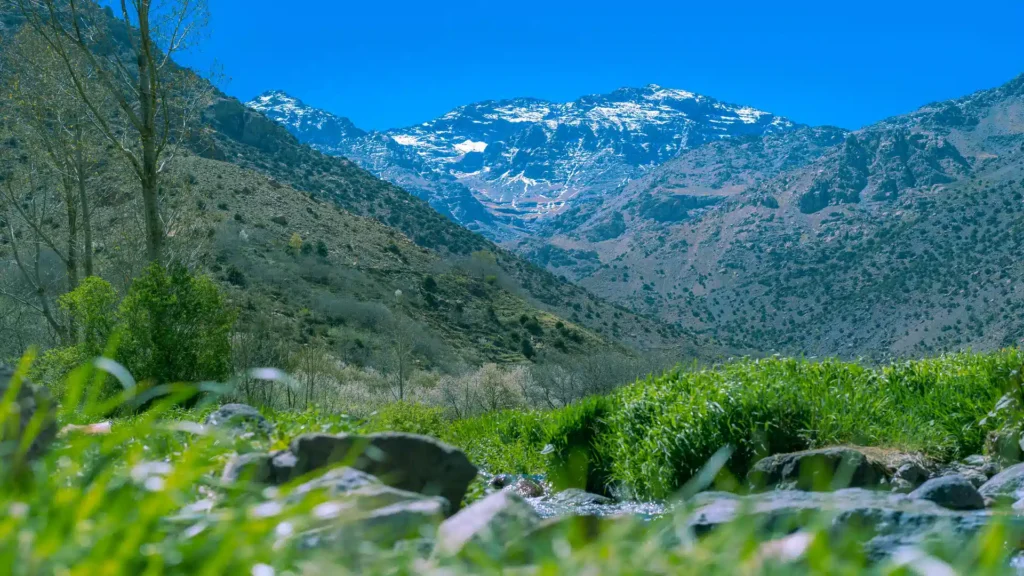
Before you can appreciate this journey, you need to understand the corridor’s position within the broader architecture of the Marrakech to Fes desert tour route logistics. Most travellers doing this classic loop arrive at the Dades Valley after crossing the High Atlas via the Tizi n’Tichka pass — a winding, altitude-earning mountain crossing that already introduces you to the scale of Moroccan landscape. From Ouarzazate, the N10 highway becomes your axis: it runs due east through the pre-Saharan steppe like a geological timeline, each kilometre revealing a progressively drier, more ancient version of the world. As you analyze map logistics, tracking the terrain from Dades Valley to Ziz Valley via Tinghir highlights how abruptly the Moroccan landscape changes from jagged rock folds to deep alluvial palm grooves.
The Dades Valley begins in earnest around Boumalne Dadès, a small provincial town that most travellers pass through without realizing it is the gateway to one of the most visually intense gorge systems in North Africa. The valley is carved by the Dades River, a seasonal waterway that has spent millennia grinding through limestone and sandstone of dramatically varying colour — rose-red, ochre, pale cream — producing the accordion-folded canyon walls that photographers specifically book flights to Morocco to stand in front of. This is not hyperbole. The sculpted rock formations in the upper Dades Gorge, locally known as the “monkey fingers” or “rock des singes,” are structurally unlike anything in the Alps or American southwest. They are the product of a specific interplay between Jurassic limestone layers and the river’s lateral erosion, and they glow differently in morning light than they do at dusk — a fact that any photographer who has spent two days exploring the Dades Valley to Ziz Valley via Tinghir corridor will tell you matters enormously.
From the Dades Valley, the route moves west-to-east through the corridor that connects it to Tinghir, the market town that sits at the foot of Todra Gorge. This section of the drive — roughly 53 kilometres along the N10 with a series of compelling detour options — is where the true Dades Valley to Ziz Valley via Tinghir experience genuinely begins. The road passes through a series of fortified ksar villages whose mud-brick architecture is so organically integrated into the earth that from certain angles, the settlements appear to simply grow from the ground. This is not aesthetic coincidence. The builders of these ancient structures were working with the same terracotta clay that surrounds them, producing a vernacular architecture of extraordinary thermal efficiency that predates air conditioning by centuries and outperforms it in the desert heat along the Dades Valley to Ziz Valley via Tinghir track.
The Geological and Cultural Identity of This Corridor
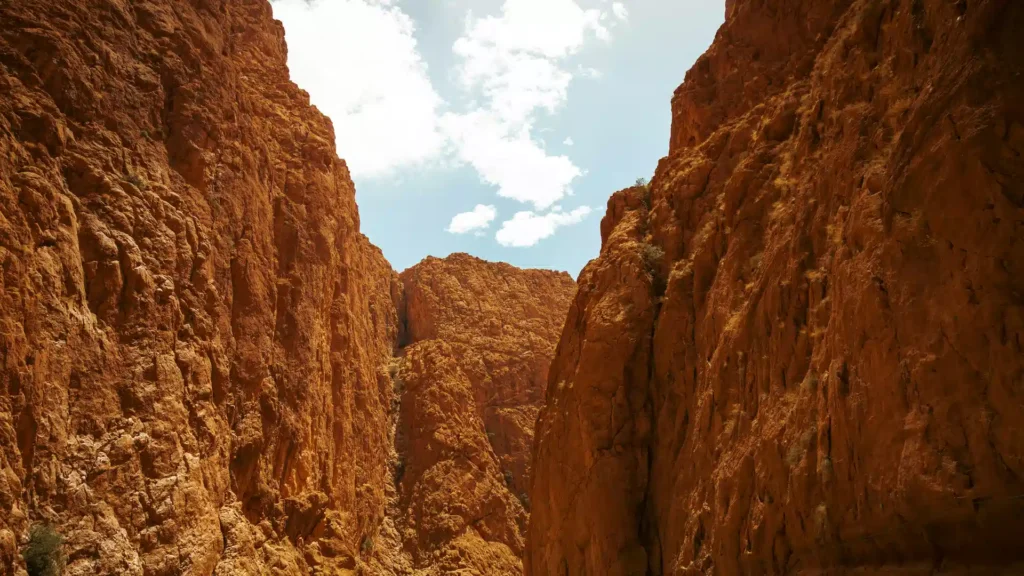
The geology of the Dades-Tinghir-Ziz corridor is, in itself, a kind of argument about time. The limestone cliffs that frame the Todra Gorge at Tinghir are some of the most sheer and dramatic in the world — up to 300 metres of vertical wall narrowing to a canyon floor barely 10 metres wide in its tightest section. These walls were not carved by the Todra River as it currently exists; they were carved during the Pleistocene by a far more voluminous river system that has since reduced to the gentle, crystalline stream that now winds between the canyon walls. What remains is a monument to a wetter, wilder geological past, and standing at the base of those walls is one of the genuinely humbling experiences that southern Morocco offers along the Dades Valley to Ziz Valley via Tinghir route.
Culturally, the entire corridor from Dades to Ziz is Amazigh territory — specifically the territory of the Aït Atta confederation, one of the most historically powerful Berber tribal groups in the pre-colonial Moroccan south. The Amazigh people (the term “Berber” is increasingly considered pejorative by the communities themselves) have inhabited this region continuously since before the Arab arrival in North Africa, and their presence shapes everything about the travel experience here in ways that are difficult to quantify but impossible to miss. The warmth of the hospitality, the specificity of the architectural forms, the agricultural patterns in the palm groves along the river — all of it derives from a sophisticated relationship with this landscape that goes back dozens of generations, making the journey from Dades Valley to Ziz Valley via Tinghir a rich cultural immersion.
The Amazigh hospitality that travellers encounter while navigating from the Dades Valley to Ziz Valley via Tinghir is not a performance for tourists. It is a deeply embedded cultural value — “tawiza,” the principle of collective mutual support — that expresses itself in the form of mint tea offered before any transaction, lunch prepared with obvious pride, and directions given with patient detail. Travellers who arrive with the expectation of transactional efficiency will find the pace disorienting. Travellers who surrender to it will understand something important about how a civilization survives three thousand years in a desert environment like the one found along the Dades Valley to Ziz Valley via Tinghir path.
The Operational Reality — Driving from Dades Gorge to Todra Gorge
Road Options, Conditions, and the Choice That Defines Your Journey
Driving from Dades Gorgeto Todra Gorge is one of the most strategically loaded decisions on the entire Dades Valley to Ziz Valley via Tinghir itinerary, because the route between them is not fixed. There is the obvious option — returning to the N10 and driving east along the main highway — and then there is the road less taken: the R704, a high-mountain piste that crosses the plateau between the two gorge systems through a series of Amazigh villages that receive almost no foreign visitors. Deciding to complete this section of the Dades Valley to Ziz Valley via Tinghir journey adds approximately an hour and a half to the driving time under good conditions, requires either a private 4×4 vehicle or a private driver Morocco with an appropriate SUV, and rewards the additional commitment with views and village encounters that belong to a different category of travel experience entirely.
Let us be precise about the road conditions on the R704, because the internet is full of misleading generalizations for those researching the Dades Valley to Ziz Valley via Tinghir passage. Between October and April, the piste through the high plateau between the two gorges can be affected by snow, particularly on the sections above 2,000 metres altitude. Vehicles without four-wheel drive have become stranded on this road in April after unseasonable snowfall, and the nearest rescue infrastructure is not conveniently located. During the summer months of June through August, the same road is dry, sometimes deeply rutted, and navigable in a standard SUV by a driver who knows the surface. The specific condition of the road in any given week depends on the rainfall of the previous month, the maintenance cycle of the provincial road authority, and whether the section near Aït Oudinar has been graded recently. This is not information that a travel booking platform can give you. It is information that a local Moroccan guide who drove the road the previous Thursday can give you — and the difference matters when calculating risks on the Dades Valley to Ziz Valley via Tinghir route.
For travellers who choose the standard N10 route between Boumalne Dadès and Tinghir, the driving time under normal conditions is approximately 45 minutes to one hour. The road is well-paved, wide enough for two vehicles to pass comfortably, and passes through a series of oasis towns — Aït Arbi, Msemrir road junction, the palmeries approaching Tinghir — that are genuinely worth slowing down for rather than simply driving through. The roadside kasbah accommodation options along this section of the Dades Valley to Ziz Valley via Tinghir journey have improved dramatically in the past decade, with several boutique riads now operating in converted ksar buildings that offer a quality of stay entirely disproportionate to their price point by European or American standards.
Tinghir to Ziz Valley Driving Time — and Why the Number Alone Misleads You
Tinghir is consistently underestimated by travellers who treat it as merely the service town adjacent to the more photogenic Todra Gorge. This is a navigational and experiential error. Tinghir is a functioning Moroccan market town with a Monday souk that draws traders from a radius of 50 kilometres, a palmery — a continuous palm grove corridor running along the Todra River — that stretches for nearly 40 kilometres through the valley and constitutes one of the most productive and visually striking agricultural landscapes in the country, and a historic medina quarter whose mud-brick architecture has been continuously inhabited since the medieval period, marking a significant transition point along the Dades Valley to Ziz Valley via Tinghir overland highway.
The Tinghir to Ziz Valley driving time is the question that brings many itinerary planners to search engines, and the answer requires more nuance than a simple number. When completing the Dades Valley to Ziz Valley via Tinghir crossing, the direct route from Tinghir to the Ziz Valley — specifically to the point where the Ziz River valley begins to open near Aït Arbi — is approximately 120 kilometres as the crow flies. However, it involves navigating through the Tinejdad and Goulmima districts before picking up the N10 corridor that eventually reaches Errachidia and the northern Ziz. If the traveller is heading for the southern Ziz, toward Erfoud and Rissani at the gateway to Merzouga, the total distance from Tinghir is closer to 170 kilometres, and the realistic driving time with stops — which any traveller engaging seriously with this landscape will make — is between three and four hours to complete the Dades Valley to Ziz Valley via Tinghir link.
How to Visit Todra Gorge and Ziz Valley: Timing, Sequencing, and the Best Stops Between Dades and Merzouga
Understanding how to visit Todra Gorge and Ziz Valley as consecutive experiences requires planning at the level of timing, not just route. Todra Gorge at 9 o’clock in the morning is a different planet from Todra Gorge at noon. In the morning hours, the sun has not yet crested the western wall of the canyon, which means the eastern wall is lit in dramatic raking light while the canyon floor remains in cool shadow — a chiaroscuro effect that makes every photograph look like it was taken with a filter that wasn’t actually used. By midday, the sun drops directly into the canyon and flattens the light completely, washing out the colour variation in the limestone and reducing the walls’ visual drama to a fraction of their early-morning or late-afternoon intensity.
This is not merely a photography consideration for your Dades Valley to Ziz Valley via Tinghir itinerary. The thermal dynamics of the gorge are such that the early morning is also significantly cooler and more comfortable for walking the canyon floor, exploring the section above the tourist cluster where the trail narrows and the walls press in most dramatically, and engaging with the small community of Amazigh families who live in the stone-and-adobe houses built directly against the cliff base. By 11am on any summer day, the gorge floor is hot enough to make prolonged walking uncomfortable. Travellers who arrive at 10:30am, spend 40 minutes in the main section, and leave by lunchtime have visited Todra Gorge in the way one visits an airport — they have been there without having experienced the deep magic of the Dades Valley to Ziz Valley via Tinghir corridor.
The best stops between Dades and Merzouga require strategic sequencing that most generalist itineraries fumble. The gorges are the centrepiece, but the villages between them — Aït Benhaddou aside, which deserves its own article — constitute the true texture of the Dades Valley to Ziz Valley via Tinghir journey. The ksar at Aït Arbi, the painted houses of the Imiter silver-mining district, the Sunday market at Goulmima where livestock trading begins before dawn, the fossil merchants of Erfoud whose workshops contain the kind of geological specimens that European natural history museums display under glass — these are the details that transform a route into a narrative for anyone booking a Dades Valley to Ziz Valley via Tinghir tour.
The Ziz Valley — Morocco’s Southern Oasis Travel Guide
What the Ziz Valley Actually Is (And Why Most Travel Writing Gets It Wrong)
The Ziz Valley is consistently misrepresented in international travel media as a mere prelude to Merzouga and the Erg Chebbi dunes — a transitional zone to be driven through rather than engaged with. For travellers on the Dades Valley to Ziz Valley via Tinghir route, this framing reflects the bias of those who are optimizing for the photogenic sand dune experience at the end and treating everything before it as runway. It is geographically and culturally illiterate, and it causes travellers to miss what is arguably the most historically significant agricultural landscape in southern Morocco.
The Tafilalet oasis— the broader geographic and historical term for the oasis complex centred on the Ziz Valley around Erfoud and Rissani — is the largest oasis system in Morocco and one of the largest in the Saharan fringe. Its palm groves contain an estimated 800,000 date palms, predominantly the Medjool variety, which the Tafilalet region produces in quantities significant enough to have made the word “Tafilalet date” a standard of quality throughout Morocco. The oasis is not a natural accident; it is a human construction maintained across centuries by a sophisticated network of khettara — underground irrigation channels that tap into the water table and distribute it through gravity across the palm grove floor. Some of these channels are thought to be over a thousand years old and are still functional, which represents a feat of hydraulic engineering that no modern traveller passing through the Dades Valley to Ziz Valley via Tinghir corridor at speed would suspect.
Rissani, the historic heart of the Tafilalet, is the birthplace of the Alaoui dynasty — the royal family that has ruled Morocco since the seventeenth century. This is not merely a historical footnote. The mausoleum of Moulay Ali Cherif, founder of the Alaoui dynasty, sits at the edge of Rissani’s ancient medina and remains an active site of religious significance. The town’s souks — held on Sundays, Tuesdays, and Thursdays — operate on a commercial rhythm that has barely changed in three centuries, with sections dedicated to livestock, silver jewellery, dates, and the trade goods that still flow along the trans-Saharan route vectors that made this region wealthy before the Atlantic trade routes redirected the global economy, providing a perfect final reward at the end of the Dades Valley to Ziz Valley via Tinghir passage.
Erfoud, Rissani, and the Deep History of the Tafilalet
The final approach to the Ziz Valley through Erfoud requires a recalibration of expectations that most travellers are not prepared for, because Erfoud is not a scenic town by any conventional measure. It is a functional market centre built in the French protectorate period on a grid plan, its wide boulevards lined with the low-rise commercial architecture of a mid-century Saharan administrative post. Its value is not visual; it is historical and geological. The Erfoud fossil workshops — where local artisans extract, cut, and polish the marine fossils embedded in the Devonian limestone that underlies this entire region — are operating at a scale and sophistication that consistently surprises visitors who stumble upon them while completing their Dades Valley to Ziz Valley via Tinghir expedition.
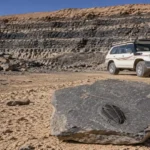
The fossils in question are primarily orthoceras nautiloids — the straight-shelled predecessors of the modern nautilus — along with ammonites, trilobites, and crinoids preserved in limestone that was laid down in a shallow sea that covered this region 380 million years ago. The Sahara, in other words, was once an ocean floor. The workshop operators who extract and shape these specimens include trained geologists who explain the stratigraphy with the precision of academics and the enthusiasm of people who have spent their lives surrounded by objects of genuine scientific significance, adding immense intellectual value to the Dades Valley to Ziz Valley via Tinghir travel experience. A polished tabletop cut from a single block of orthoceras-bearing limestone is not a souvenir. It is a piece of pre-Cambrian ocean floor that has been made useful again after nearly four hundred million years of geological patience.
The Road Architecture of the Ziz Valley
The N13 highway, which enters the Ziz Valley from the north after descending from the Midelt plateau through the dramatic Ziz Gorge — technically one of the most impressive road sections in the entire country, with the river cutting through a tight sandstone canyon less than a few meters wide and barely leaving room for the road and the river together — is the spine of the valley’s road network. The stretch from Errachidia south through Er Rissani to the Merzouga turn-off is approximately 90 kilometres and takes between 90 minutes and two hours depending on traffic through the market towns.
For travellers coming from Todra Gorge rather than from the north, the entry into the Ziz Valley system is typically via the N10 through Tinejdad and Goulmima, joining the Ziz drainage at Errachidia. This route completes the essential Dades Valley to Ziz Valley via Tinghir link. This path traverses a broad, flat steppe landscape that can feel stark to travellers who have been surrounded by the gorge drama of the previous day — but the starkness is its own kind of grandeur. The light in this section of the journey, particularly in the afternoon, has a quality that photographers who specialize in desert landscapes describe as uniquely Moroccan: a diffuse, golden-amber cast produced by the dust particles suspended in the air above the steppe that softens shadows and saturates warm tones in a way that no filter can adequately replicate for those capturing the Dades Valley to Ziz Valley via Tinghir transit.
Planning the Complete Journey — Itinerary Architecture and Private Driver Logistics
Marrakech to Fes Desert Tour Route: Full Day-by-Day Operational Framework
The complete Marrakech to Fes desert tour route logistics — of which the Dades Valley to Ziz Valley via Tinghir forms the central, defining section — constitute a journey of between four and seven days depending on the depth of engagement the traveller wishes to bring to it. The four-day version is possible in the technical sense; it is not possible in any experiential sense that would justify the cost and effort of reaching Morocco in the first place. The seven-day version, which allows a full day and night at each of the major nodes, is the version that produces the travellers who return five years later with family members they want to share the experience with.
Here is the architecture of the route as it functions in operational reality, with the precision that generic travel blogs systematically omit. Departure from Marrakech after breakfast on Day One via the N9 over Tizi n’Tichka — allow three hours for the crossing, more in summer when campervan and truck traffic creates bottlenecks on the hairpin sections above 2,000 metres. Ouarzazate by midday, Aït Benhaddou in the early afternoon (two hours minimum, though serious photography enthusiasts routinely spend four), Skoura palm grove in the late afternoon, and Boumalne Dadès by early evening. This is an aggressive first day that covers approximately 320 kilometres, but the road quality on the N9 and N10 is generally good and a private driver Morocco operating a comfortable vehicle with air conditioning makes it manageable to reach the starting base of the Dades Valley to Ziz Valley via Tinghir overland segment.
Day Two belongs to the Dades Gorge. The drive up the gorge road — a single-lane paved track that gains altitude rapidly above Boumalne — should be done in the morning, reaching the famous bend-viewpoint above the gorge by 8am if possible. The light on the canyon walls at that hour, combined with the fact that the tourist buses from Ouarzazate have not yet arrived, gives this section a quality of solitude and visual intensity that represents one of the genuine peak experiences of the Dades Valley to Ziz Valley via Tinghir route. The road continues beyond the main tourist viewpoints into the upper valley, where the gorge opens into a plateau of walnut orchards and Amazigh villages that feel genuinely remote. Return to Boumalne by early afternoon, cross to Tinghir via the N10 by late afternoon, and spend the night in the palm grove at one of the kasbah accommodations overlooking the Todra River.
Day Three is structured around Todra Gorge in the morning — pre-8am arrival is the operational target — followed by the long drive southeast toward the Ziz Valley. The route from Tinghir to Merzouga via Tinejdad, Goulmima, and Errachidia covers approximately 200 kilometres and should not be rushed, because the town of Goulmima’s central market, the rose-coloured kasbahs of the Tinejdad oasis corridor, and the Ziz Gorge descent north of Errachidia are all individually worth stopping for. Passing completely from the Dades Valley to Ziz Valley via Tinghir and arriving at Merzouga by late afternoon positions the traveller perfectly for the camel ride into Erg Chebbi dunes for sunset — the experience that most travellers have come to Morocco specifically for, and which the entire desert journey has been building toward.
Why a Private Driver Marrakech to Fes Desert Changes Everything
No discussion of Dades Valley to Ziz Valley via Tinghir logistics is complete without an honest analysis of transportation options, and the honest analysis is this: this corridor, and the full desert loop of which it is part, is experienced most fully — and most safely — with a professional Saharan driver in a private 4×4 vehicle rather than a rental car or public transport.
The logistical reasons are numerous. Public transport between the gorge towns is infrequent, often involves multiple connections through Tinghir or Boumalne, and runs on schedules that are incompatible with optimal photography timing. Rental cars in Morocco are available, but the major international operators’ insurance policies exclude the piste sections between the gorges, meaning that a mechanical problem on the R704 — a genuine possibility even in good conditions — leaves the traveller personally liable for a stranded vehicle in a location without mobile coverage. The fuel station infrastructure between Boumalne and Errachidia is thinner than maps suggest; a local driver knows exactly where to refuel and which stations are currently operational along this specialized Dades Valley to Ziz Valley via Tinghir trail.
But the most important reason for choosing a private driver Marrakech to Fes desert is not logistical — it is informational. A professional local Moroccan guide who has driven this route three hundred times carries a library of contextual knowledge that no amount of online research can replicate. They know which family in the upper Dades Gorge still operates a traditional pottery kiln and will welcome visitors for tea. They know that the fossil-cutting workshop on the edge of Erfoud is run by a geologist who trained in Rabat and can explain the 380-million-year-old orthoceras nautiloids with scientific precision that transforms the purchase from souvenir to artifact. They know that the road below the Ziz Gorge floods in February after heavy rain, and they know the alternative route. This is the true essence of a premium Dades Valley to Ziz Valley via Tinghir travel guide—it lives in the working memory of the people who navigate this landscape daily.
Advanced Strategic Perspectives Trade-offs, Alternatives, and Expert Analysis
The Draa Valley Comparison and the Question of Sequencing
Sophisticated travellers planning the southern Morocco desert loop will encounter the question of sequencing: do you drive the Draa Valley before the Dades-Tinghir-Ziz corridor, or afterward? The Draa Valley — the route southeast from Ouarzazate through Agdz, Zagora, and Mhamid — is often presented as an alternative to the Dades route rather than a complement to it, and this framing produces itineraries that sacrifice depth for coverage, missing the critical value of the Dades Valley to Ziz Valley via Tinghir overland dynamic.
The Draa Valley comparison reveals something important about the character of the two routes. The Draa is broader, flatter, and more immediately accessible — its palm grove oases are visible from the main road, its kasbahs are easily reached without leaving the tarmac, and its scale, while impressive, is horizontal rather than vertical. The Dades-Todra-Ziz corridor is vertical: it is a landscape of cliff walls, gorge depths, and altitude changes that demand more physical engagement and reward more active attention. They are not competing experiences; they are complementary ones that together constitute a complete portrait of the pre-Saharan south, balanced beautifully by the Dades Valley to Ziz Valley via Tinghir run.
For travellers with more than five days, incorporating both valleys — Draa on the outbound journey from Marrakech, Dades-Ziz on the return, or vice versa — produces the most complete understanding of southern Morocco’s geographic diversity. For travellers with four to five days, the exact Dades Valley to Ziz Valley via Tinghir route is the clear priority, because the gorge system at Todra is geologically unique in a way that the Draa, for all its beauty, is not.
The Hidden Villages: What the Morocco Southern Oasis Travel Guide Misses
There is an entire layer of this journey that standard itineraries systematically erase because it cannot be reduced to a GPS coordinate or a TripAdvisor entry. This is the layer of the inhabited ancient ksour — the plural of ksar, the Moroccan term for a fortified village — that punctuate the river corridors at intervals of four to ten kilometres throughout the entire route. Learning to read this layer is what separates a journey through the region from a journey of the region, turning a standard drive into an authentic Dades Valley to Ziz Valley via Tinghir exploration.
The ksar at Aït Benhaddou is the one that receives UNESCO certification and the movie crews; it is architecturally extraordinary and simultaneously the most performative experience on the route, because its residents have largely relocated across the river and its mud-brick towers are now maintained primarily as a heritage attraction. The ksour between Boumalne Dadès and Tinghir that nobody films — the inhabited ones where children are walking home from school and the smell of bread baking in a communal oven carries across the road — are the ones that communicate something true about the continuity of life in this landscape along the Dades Valley to Ziz Valley via Tinghir bypass.
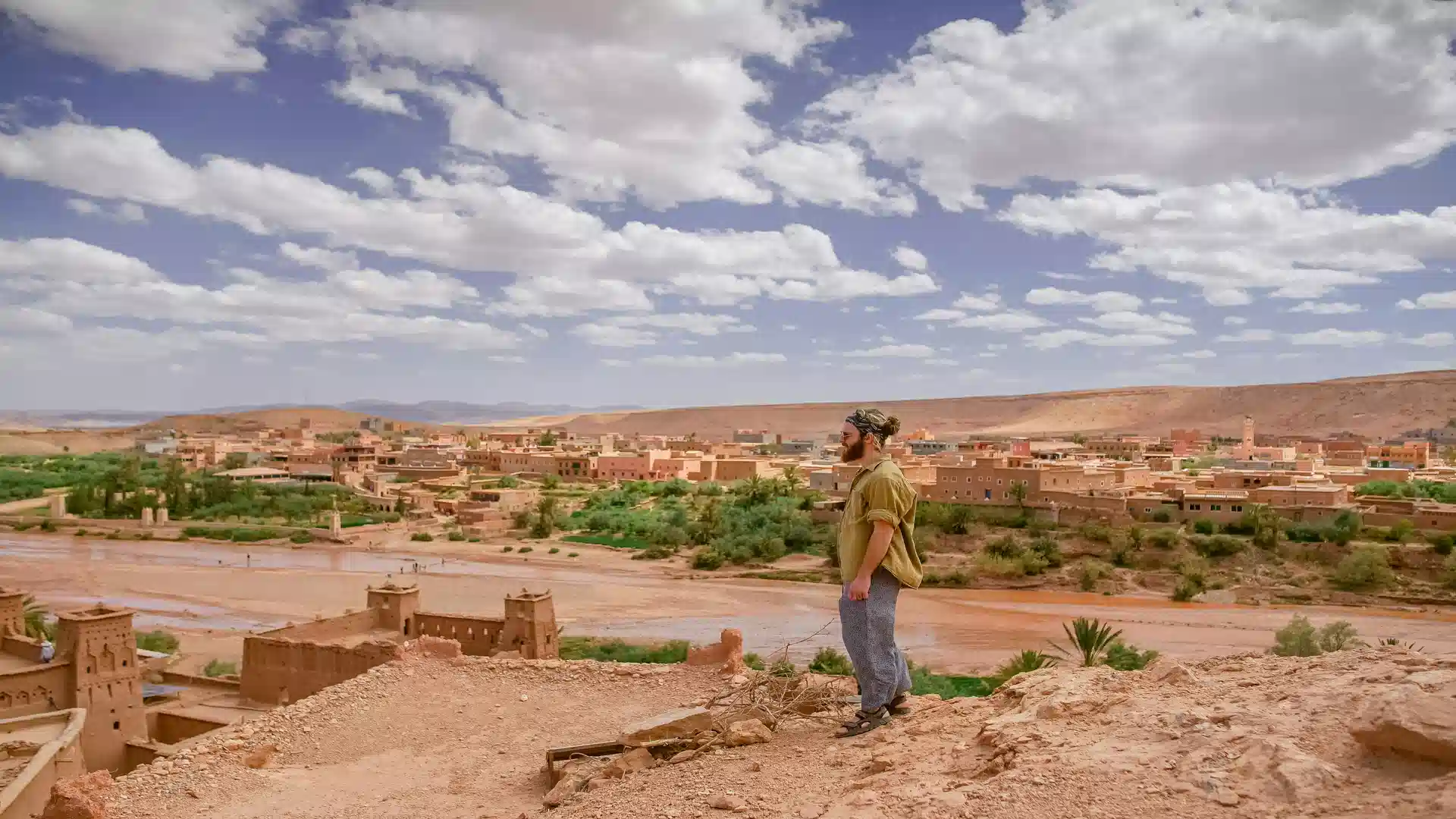
The village of Aït Arbi, roughly halfway between Boumalne and Tinghir on the N10, exemplifies this. Its ksar tower — crumbling at the upper levels in the way that unreinforced pisé construction inevitably crumbles without ongoing maintenance — is still occupied at its lower levels by extended family units who have lived here for generations. The tower’s fabric represents a kind of architectural triage: the lower floors are maintained because they are inhabited and their maintenance is a matter of structural survival; the upper floors deteriorate because the economic resources to restore them do not exist and the UNESCO-level attention that might catalyze those resources has been directed elsewhere. This is the reality of mud-brick heritage in the pre-Saharan south, and a traveller who understands it engages with the landscape with a depth that transforms the Dades Valley to Ziz Valley via Tinghir itinerary.
The Amazigh villages in the upper Dades Gorge above the main tourist viewpoint are accessible only on foot or by 4×4 on a deteriorating track, which means they receive perhaps two percent of the visitor traffic that passes through the main gorge section below. The families here — primarily agro-pastoral, cultivating walnut and almond orchards on the narrow terraced strips along the river and grazing goats on the plateau above — have a relationship with foreign visitors that is warm but unmediated by the commercial expectations that shape interactions in the lower gorge. Tea is offered because hospitality demands it, not because a sale is anticipated. The walnut oil produced here, pressed in a hand-operated stone mill that may be the oldest working piece of industrial equipment a traveller from the US or UK will ever encounter, is available for purchase at a price that reflects the labour involved rather than the tourist premium, a hidden gem encountered uniquely on the Dades Valley to Ziz Valley via Tinghir track.
The Photography Traveller’s Operational Calendar
For the significant category of travellers who are organizing this journey substantially around photography, the seasonal and daily timing considerations require a level of specificity that most generalist travel resources do not provide for the Dades Valley to Ziz Valley via Tinghir loop.
The Dades Gorge “monkey fingers” rock formations photograph best in October and November, when the low-angle autumn sun hits the convex faces of the formation from the east in the morning hours and produces the maximum depth of shadow in the recessed channels between the columns. In July and August, the sun angle is too high to produce the shadow depth that makes these formations visually dramatic; they read as interesting geology rather than extraordinary photography. The Todra Gorge, conversely, is magnificent in any season but produces its most dramatic chiaroscuro light in January and February, when the sun’s declination is lowest and the light enters the gorge at the steepest angle, painting the upper portions of the cliff in amber while the floor remains blue-shadowed—critical knowledge for anyone planning a photographic masterclass along the Dades Valley to Ziz Valley via Tinghir pass.
The Accommodation Hierarchy — What to Book and Why
The kasbah accommodation landscape along this corridor has stratified significantly over the past decade into three distinct tiers, and understanding the distinction matters for travellers whose comfort expectations were set by European boutique hotels checking into properties along the Dades Valley to Ziz Valley via Tinghir road.
The premium tier — a small number of converted historic kasbahs operated by owners who have invested seriously in restoration and service — offers accommodation that is genuinely world-class by any standard. These properties typically feature central courtyard gardens with mature rose-oleander plantings, hand-laid zellige tilework in the common areas, terraces with unobstructed gorge or palmery views, and a kitchen capable of producing a creditable bastilla and slow-cooked lamb tagine. They are not cheap by Moroccan standards, but their price-to-experience ratio for travellers from the US, UK, Canada, or Australia is extraordinary — a premium riad in the Dades Valley that would cost £350 per night in the Marrakech medina is typically available for £90 to £130 here, making overnight stops along the Dades Valley to Ziz Valley via Tinghir path highly rewarding.
Note: In case you want to book a tour to discover all things you have read we customize Tours from Fes To Marrakech and Casablanca, Moreover, you can customise your owen trip in Morocco from Dades Valley to Ziz Valley via Tinghir then to Marrakech and it would perfect.
The middle tier is larger and more variable — family-operated guesthouses and smaller kasbahs where the accommodation is comfortable and the hospitality is genuine\, but the physical fabric of the property is less refined. For travellers who are spending the majority of their waking hours exploring the gorges and palmeries rather than relaxing at the property, this tier represents excellent value. The authentic Berber village homestay experience that many travellers seek exists primarily in this tier.
The Realities of the Ziz Valley Endgame: Fuel, Cash, and Connectivity
The final operational transition from the Ziz Valley into the open pre-Saharan desert requires a practical checklist that general itineraries routinely ignore as travellers exit the core Dades Valley to Ziz Valley via Tinghir bypass. Once you bypass Errachidia heading south, the infrastructure shifts fundamentally from mountain-valley logistics to Saharan frontier realities.
- The Cash Desert: While boutique riads along the Dades Valley increasingly accept card payments, the local markets, fossil workshops in Erfoud, and traditional date vendors along the N13 in the Ziz Valley operate strictly on Moroccan Dirham (MAD). Tinghir is your last reliable hub for a dense concentration of functioning bank ATMs (Guichets Automatiques). South of Goulmima, ATMs in smaller settlements are prone to running out of cash during regional market days (Mondays and Thursdays), or during high-demand travel windows in October and May.
- Fuel Strategy: Never let your fuel tank drop below a quarter when completing the Dades Valley to Ziz Valley via Tinghir corridor. While unbranded regional stations exist, reliable, high-quality fuel stations (such as Total or Afriquia) are spaced precisely between the major urban hubs of Boumalne, Tinghir, and Errachidia. If you plan to take the R704 mountain piste shortcut, refuelling to a full tank in Boumalne Dadès is an absolute operational requirement; there is no fuel infrastructure on the high plateau until you drop down into the mouth of the Todra Gorge.
- Cellular Coverage Gaps: For those managing remote workflows or relying on digital navigation, the N10 and N13 transport corridors maintain stable 4G connectivity via Maroc Telecom (IAM) and Orange. However, the deep interior of the Todra Gorge walls acts as a natural cellular shield, cutting off signals completely for a three-kilometre stretch. Furthermore, if your driver navigates the high-altitude R704 route, expect total connectivity blackouts across the central limestone plateau. Download your offline maps in advance and notify external teams of a temporary communications drop during this mountain crossing.
Ultimately, mastering the complete Dades Valley to Ziz Valley via Tinghir route means recognizing that the geography is constantly testing your patience against your itinerary constraints. As you complete the final descent out of the mountains and watch the river give life to the vast Tafilalet oases, you realize that the real value of this road wasn’t the efficiency with which it delivered you to the sand dunes of the Sahara. The value was in the slow-motion revelation of an ancient ecosystem, carved from limestone and clay, that continues to thrive exactly where the rest of the world assumes nothing exists at all.