Chefchaouen Travel Guide: Everything to Know About Morocco’s Blue City (2026)
Table of Contents
Chefchaouen: Most Photographed City, Explained
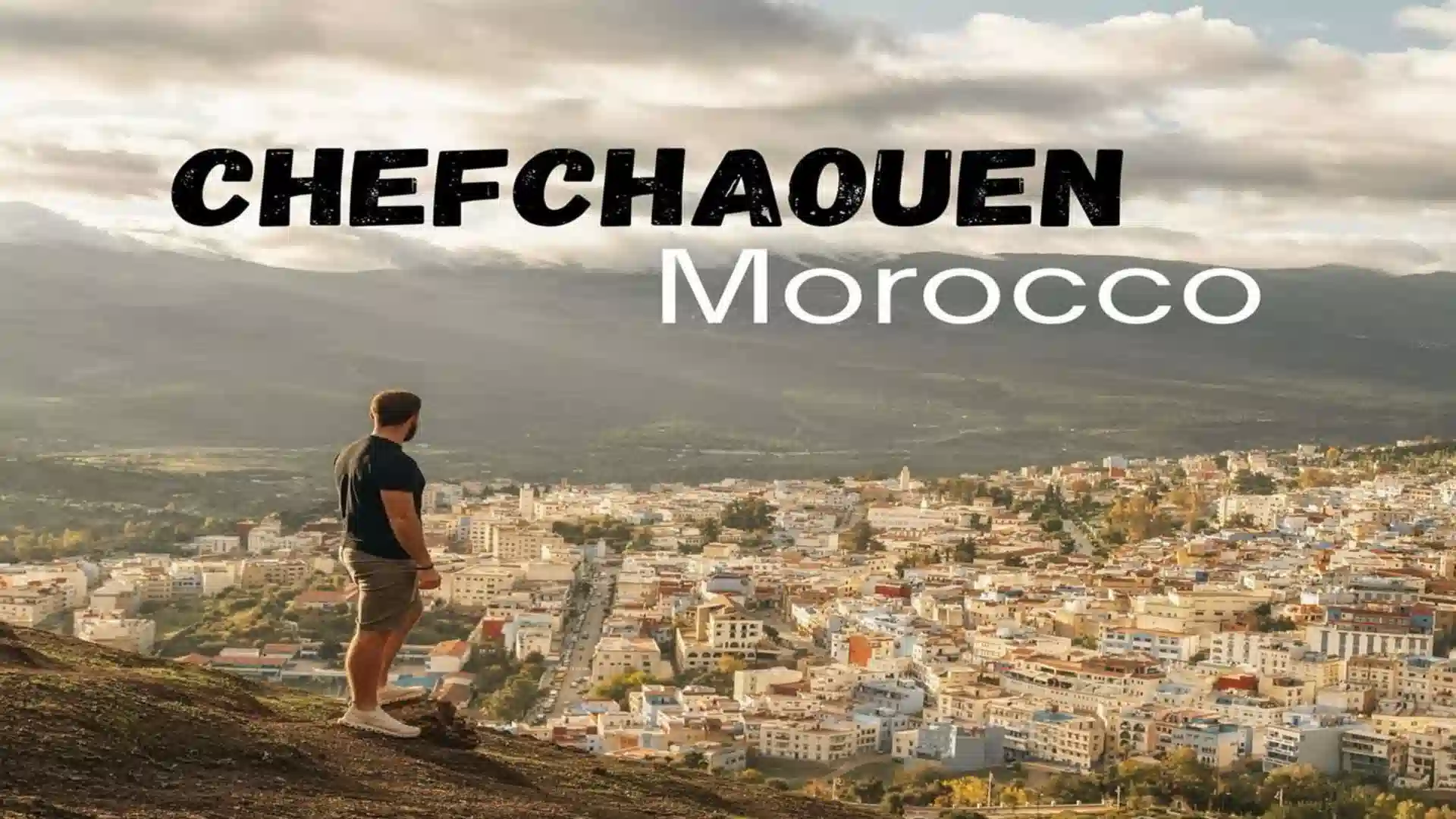
Chefchaouen, pronounced “Chef-shah-WEN” and often shortened locally to Chaouen, is a small mountain town in northern Morocco that has become, almost improbably, one of the most photographed and internationally recognized destinations in the entire country, despite being far smaller and considerably less visited in raw numbers than Marrakech or Fes. Tucked into a steep valley in the Rif Mountains at an elevation of roughly 600 meters, Chefchaouen blue city Morocco status comes from a single, striking visual fact: nearly every surface in the old medina — walls, doors, stairways, flower pots, even the cobblestones underfoot in places is washed in shades of blue ranging from pale sky to deep cobalt, creating an environment that truly looks more like a painted film set than a functioning town. At Over Morocco Tours, we are asked about Chefchaouen more than almost any other single destination outside our core desert routes, and this guide gives you everything you need: why the city is blue, what to actually do once you’re there, how to get there from Fes or Tangier, and how to decide whether it deserves a place in your itinerary.
The Definitive Quick Guide to Chefchaouen: Logistics, Attractions & Local Insights
| Category | Key Detail & Data Point | Strategic Travel Recommendation |
|---|---|---|
| Geography & Vibe | Mountain town in the Rif range (~600m elevation). Distinctly relaxed, low-pressure blue medina. | Ideal for decompression after the intense pace of Fes or Marrakech. |
| The Blue Origin | No single confirmed source. Traced to 1930s Jewish refugees, mosquito deterrence, heat moderation, and modern tourism upkeep. | Accept the local mystery rather than seeking a single historical truth. |
| Tangier Route | 2 to 2.5 hours via private transfer, shared taxi, or CTM bus. | The shortest, most efficient access point for international arrivals. |
| Fes Route | Approximately 4 hours via private transfer, CTM, or Supratours bus. | Best used to bridge the gap into a broader northern Imperial City circuit. |
| Trip Duration | 1 to 2 full days (with at least one overnight stay) is the practical sweet spot. | Avoid day trips; spending 8 hours driving for 3 hours in town is a major mistake. |
| Top Attractions | The Blue Medina, the terracotta-red 1471 Kasbah, and local textile/pottery souks. | Prioritize aimless wandering over a rigid checklist to capture the best photography. |
| Outdoor Hikes | Spanish Mosque (short panoramic walk) and Tassemtane National Park (God’s Bridge). | Catch the Spanish Mosque trail at golden hour for the absolute best views of the valley. |
| Safety & Culture | Exceptionally safe for all, including solo female travelers. Local kif (cannabis) is common but illegal. | Maintain normal travel precautions and decline unsolicited substance offers firmly. |
| Best Weather | Spring (March–May) and Autumn (September–November) offer mild, pleasant temperatures. | Winter is viable and uncrowded, but expect mountain mist, rain, or light snow. |
Why Is Chefchaouen Blue? The Honest Answer
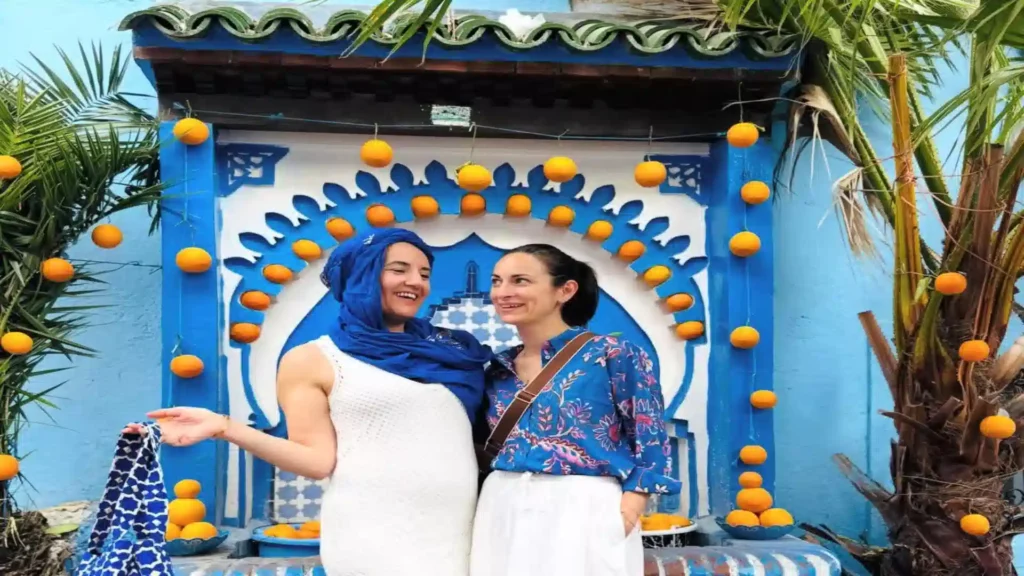
Why is Chefchaouen blue is the question every visitor asks, and the honest answer is that no single, definitively confirmed explanation exists — the true origin has become genuinely uncertain over time, and locals themselves will often offer several different stories depending on who you ask. The most widely repeated and historically grounded theory traces the blue tradition to Jewish refugees who arrived in Chefchaouen in the 1930s , fleeing persecution in Europe, who are said to have painted buildings in shades of blue in keeping with a Jewish religious and cultural association between the color blue and the sky, traditionally understood as a reminder of the divine. Some older residents maintain a more specific version of this story: that originally only the mellah (the historic Jewish quarter) was painted blue, while the rest of the medina remained white, with the blue gradually spreading across the wider town only in subsequent decades.
Beyond the Jewish-origin theory, several competing or complementary explanations persist locally. Some residents attribute the color to a practical function — the belief that blue tones help repel mosquitoes, a genuine concern in a mountain valley town. Others connect the blue to its association with water and coolness, suggesting the color psychologically and even physically helps moderate the perception of summer heat in a town where temperatures can climb significantly during the warmer months. A more modern, somewhat more cynical theory suggests the tradition was deliberately revived and intensified in recent decades specifically to draw tourism, given how dramatically and consistently photogenic the result has proven to be. The truth is most likely some combination of genuine historical practice and later intentional preservation once the town’s tourism value became clear — and travelers are best served simply enjoying the mystery rather than expecting a single definitive answer.
Things to Do in Chefchaouen: The Complete List
Wander the Chefchaouen Medina
The single best things to do in Chefchaouen , and one consistently named by experienced travelers as the highlight of any Morocco trip, is simply to walk, without a fixed plan, through the Chefchaouen medina. Unlike the often overwhelming, hustle-heavy medinas of Marrakech and Fes, Chefchaouen’s medina is comparatively small, easy to navigate, and considerably more relaxed in terms of touting and vendor pressure, making aimless wandering not just tolerable but genuinely the point of the visit. The blue intensifies and varies as you move through different alleys. Some lanes lean toward pale powder blue, others toward a much deeper indigo, and the famous photogenic stairways, flower-pot-lined steps, and arched blue doorways that dominate Chefchaouen’s online image are scattered throughout the medina rather than concentrated in one single spot, rewarding genuine exploration over a quick, single-photo visit.
Visit the Chefchaouen Kasbah
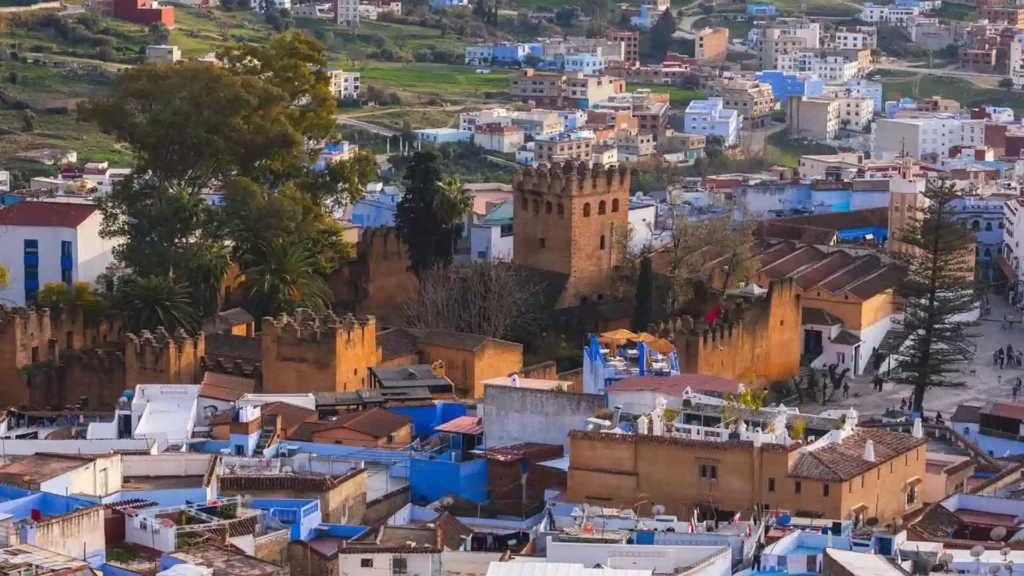
The Chefchaouen kasbah, located in the medina’s main square ( Plaza Uta el-Hammam ), stands as the town’s principal historic monument and a notable visual exception to the otherwise all-blue palette — the kasbah itself is built in striking terracotta red and white, dating to its construction in 1471 by Moulay Ali Ben Rashid, the town’s founder, as a defensive fortress against Portuguese incursions along Morocco’s northern coast. Today, the kasbah houses a small ethnography museum, with most signage presented in Arabic, French, and Spanish, and visitors can climb its tower for an elevated view across the blue rooftops of the medina toward the surrounding Rif peaks. Immediately adjacent stands the Grand Mosque (Jamaa Kbeer) , whose distinctive octagonal minaret is visible throughout much of the medina, though as with most active mosques in Morocco, entry is reserved for Muslim worshipers and the building is best appreciated from the exterior.
Hike the Spanish Mosque Viewpoint and Talassemtane National Park
Hiking opportunities in Chefchaouen and the surrounding Rif Mountains represent one of the town’s most underrated draws, frequently overlooked by visitors who treat Chefchaouen purely as a photography stop rather than a base for genuine outdoor activity. The most accessible hike, suitable for nearly any visitor, is the walk up to the Spanish Mosque , a short but genuinely rewarding uphill route from the edge of the medina that delivers the single best panoramic view over the entire blue town set against its mountain backdrop, particularly spectacular in the late afternoon as the light turns golden. For travelers with more time, Talassemtane National Park , just outside town, offers considerably more extensive hiking through pine and fir forest in the Rif range, including routes toward the dramatic rock formation known as God’s Bridge (Pont de Dieu) , a natural stone arch reachable on a half-day round trip from Chefchaouen for reasonably fit hikers.
Shop the Local Crafts: Rugs, Pottery, and Woven Goods
Chefchaouen blue city supports a genuinely distinctive local craft tradition worth seeking out, specifically, separate from the generic souvenir shops found throughout Morocco’s larger tourist cities. The Rif region is particularly known for its woven wool rugs in bold geometric patterns, often produced by Berber women’s cooperatives in surrounding mountain villages, and the town’s relatively low-pressure shopping environment bargaining is still expected and customary, as throughout Morocco, but conducted with noticeably less insistence than in Marrakech’s souks makes Chefchaouen a comparatively relaxed place to shop for genuine, regionally specific textiles and pottery.
How to Get to Chefchaouen: From Fes, Tangier, and Beyond
Chefchaouen From Tangier: The Shortest Route
Chefchaouen from Tangier represents the most efficient access point for most international travelers, given Tangier’s well-connected international airport and ferry links from southern Spain. The drive between Tangier and Chefchaouen takes approximately 2 to 2.5 hours by private transfer or shared taxi, traversing increasingly mountainous terrain as the route climbs into the Rif. The CTM bus line , Morocco’s most reliable and comfortable long-distance bus operator, runs multiple daily services on this route and represents the most cost-effective option for independent travelers, with journey times broadly comparable to private transfer once boarding and station logistics are accounted for.
Chefchaouen From Fes: The Imperial Cities Connection
Chefchaouen from Fes is the second most common access route, particularly for travelers combining Chefchaouen with Morocco’s imperial cities circuit. The drive between Fes and Chefchaouen takes approximately 4 hours , making it a meaningfully longer journey than the Tangier route, though it allows travelers to combine Chefchaouen naturally into a broader northern Morocco itinerary that also includes Fes’s UNESCO-listed medina and, for travelers with more time, Meknes and Volubilis . CTM buses and Supratours services both operate this route, alongside private transfer options for travelers prioritizing comfort and flexibility over cost.
Chefchaouen Day Trip: Is It Enough Time?
A Chefchaouen day trip from either Fes or Tangier is technically achievable and is offered by numerous tour operators, but the honest assessment from experienced guides and seasoned travelers alike is that a single day leaves meaningfully less time than the town deserves. A day trip from Tangier, after accounting for the 2-2.5 hour drive each way, typically leaves only 3 to 5 hours of actual time in Chefchaouen sufficient for a focused medina walk and the Spanish Mosque viewpoint, but not enough to properly absorb the town’s slower pace, which is, for many travelers, precisely the point of visiting. An overnight stay of at least one night, ideally two, is consistently the recommendation from travelers who have done both versions of the trip.
How Many Days in Chefchaouen: Finding the Right Length
How many days in Chefchaouen should you actually plan for? The consistent answer across experienced Morocco travelers is one to two full days as the practical sweet spot for most itineraries. The medina itself is genuinely compact the blue old town can be walked in its entirety within a few hours — meaning travelers without a strong interest in hiking or an extended relaxed pace can comfortably see the highlights in a single full day following an overnight stay. Travelers with a stronger interest in the surrounding Rif Mountains hiking , the slower café culture, or simply a few days of decompression after the more intense pace of Marrakech or Fes, can comfortably extend a Chefchaouen stay to three or four days without running out of things to do, when day hikes into Talassemtane National Park are included. Beyond four days, most travelers find the town’s relatively limited scale means returns diminish, and time is generally better redirected to other parts of a Morocco itinerary.
Where to Stay in Chefchaouen
Where to stay in Chefchaouen follows the same broad logic as accommodation choice throughout Morocco: a riad a traditional guesthouse, frequently converted from a centuries-old historic home represents the most atmospheric and recommended choice, and Chefchaouen’s medina is dense with well-reviewed options across a range of budgets. Riads within the blue medina itself offer the most immersive experience, typically featuring traditional Andalusian-influenced architecture, rooftop terraces with views over the blue rooftops toward the Rif peaks, and, in many cases, an in-house hammam (traditional steam bath). Budget travelers will find Chefchaouen has a strong hostel culture as well, reflecting its enduring popularity with backpackers, though independent rental platforms have drawn some local criticism in Chefchaouen specifically for contributing to housing pressure within the historic medina travelers wanting to support the local hospitality economy directly are generally better served by family-run riads and guesthouses than short-term rental platforms.
Is Chefchaouen, Morocco, safe? What Travelers Should Know
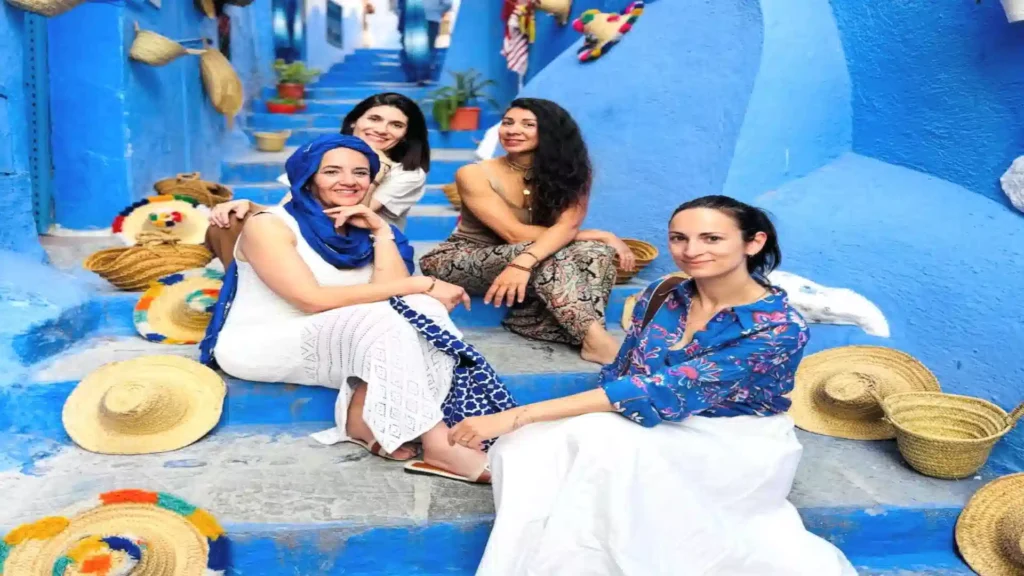
Is Chefchaouen safe yes, and Chefchaouen is consistently rated among the safest and most relaxed towns in all of Morocco for tourism, including for solo female travelers, who frequently report a noticeably more comfortable experience here than in Marrakech or Fes. The town’s smaller scale, lower population density relative to the major imperial cities, and its long-established, mature tourism economy contribute to a generally low-pressure atmosphere with comparatively fewer aggressive all. Standard travel precautions remain sensitive securing valuables, avoiding poorly lit areas of the medina late at night, and exercising normal caution but Chefchaouen does not present the more intense hassle factor that some travelers experience elsewhere in Morocco’s bigger cities.
One specific local context worth understanding: the surrounding Rif Mountains region has a long-standing association with kif (a local cannabis preparation) cultivation, and travelers in Chefchaouen will likely be approached at some point by individuals offering to sell it. Despite its visible presence in the region, cannabis remains illegal in Morocco outside narrowly regulated commercial contexts, and travelers should decline these offers, as with any unsolicited approach, with a polite but firm refusal.
Best Time to Visit Chefchaouen
Best time to visit Chefchaouen considerations differ somewhat from the rest of Morocco, given the town’s mountain elevation and the cooling effect this has on its climate relative to lowland cities like Marrakech or coastal Casablanca. Spring (March-May) and autumn (September-November) represent the most comfortable windows, with daytime temperatures typically mild and pleasant for the extensive walking the town rewards, while avoiding both the more intense summer heat (which, while less extreme than Marrakech or the Sahara, can still climb into genuinely warm territory in July and August) and the cooler, occasionally rainy conditions of winter. Winter visits remain entirely viable and bring their own appeal — the blue medina against a backdrop of mist or even occasional light snow on the surrounding Rif peaks is a genuinely striking and considerably less crowded version of the Chefchaouen experience for travelers prepared for cooler, wetter weather.
Combining Chefchaouen Blue City Morocco, with a Desert Tour
For travelers building a broader Morocco itinerary, Chefchaouen’s position in the country’s far north means it naturally pairs with a northern circuit — Tangier, Chefchaouen, and Fes rather than sitting directly on the standard Marrakech-to-Merzouga desert route that forms the core of most Over Morocco Tours itineraries. However, travelers with sufficient time, typically 10 days or more, can construct a single comprehensive circuit that opens in Tangier or Casablanca, takes in Chefchaouen and Fes in the north, then continues south through the Middle Atlas and Ziz Valley to the Sahara dunes of Merzouga, before concluding in Marrakech — a route that truly delivers the full breadth of what Morocco offers, from the blue mountain town in the Rif to the golden dunes of Erg Chebbi. Travelers interested in this kind of extended, multi-region circuit should reach out directly, as these itineraries benefit significantly from custom planning around specific flight arrival and departure points.
Important Tip from Our Guide Team: What Most Visitors Get Wrong About Chefchaouen
“The single biggest mistake we see is travelers treating Chefchaouen as a box to check on a rushed day trip from Fes , four hours each way in the car, for three hours in town. You arrive tired, you photograph the famous steps everyone photographs, and you leave without ever actually experiencing what makes the town special, which is the pace, not just the color.
Our advice is always the same: if Chefchaouen is on your list at all, give it one full overnight, minimum. Have a coffee on a rooftop terrace in the late afternoon and just watch the light change on the blue walls, that’s worth more than any specific ‘thing to do’ on a checklist. And if you have the time and energy, the walk up to the Spanish Mosque at golden hour is, in our honest opinion, a better photograph than anything you’ll get in the medina itself — fewer people, a wider view, and the whole town glowing blue and gold against the mountains behind it.”
Over Morocco Tours Guide Team
Frequently Asked Questions for Chefchaouen, Blue City, Morocco
Why is Chefchaouen blue?
No single explanation is definitively confirmed. The most widely cited theory traces the tradition to Jewish refugees who arrived in the 1930s and painted buildings blue in line with a religious association between the color and the sky. Other theories suggest the blue helps repel mosquitoes or moderate summer heat, while some attribute its modern intensity to deliberate tourism promotion.
How do I get to Chefchaouen?
Chefchaouen is most commonly reached from Tangier (approximately 2-2.5 hours by car or CTM bus) or Fes (approximately 4 hours). Tangier offers the shortest and most direct route, given its international airport, while Fes allows Chefchaouen to be combined naturally with Morocco’s imperial cities circuit.
How many days should I spend in Chefchaouen?
One to two full days is the recommended minimum, allowing time to properly explore the medina, visit the kasbah, and hike to the Spanish Mosque viewpoint. Travelers interested in hiking Talassemtane National Park or simply experiencing the town’s slower pace can comfortably extend to three or four days.
Is Chefchaouen safe for tourists?
Yes. Chefchaouen is consistently rated among the safest and most relaxed towns in Morocco for tourism, including for solo female travelers, with notably less hassle from all compared to Marrakech or Fes. Standard travel precautions apply, and travelers should decline any offers of kif (cannabis), which remains illegal in Morocco.
Can I do Chefchaouen as a day trip?
Yes, day trips from Tangier or Fes are offered by tour operators, but typically leave only 3-5 hours of actual time in town after accounting for drive time. An overnight stay is strongly recommended to properly experience the town rather than rushing through a single photo stop.
What is the best time to visit Chefchaouen?
Spring (March-May) and autumn (September-November) offer the most comfortable temperatures for walking and hiking. Summer remains warm but less extreme than Marrakech or the Sahara, while winter brings cooler, occasionally rainy conditions and noticeably fewer crowds.
Can Chefchaouen be combined with a Sahara desert tour?
Yes, though it requires a longer overall itinerary given Chefchaouen’s position in northern Morocco, away from the standard Marrakech-to-Merzouga desert route. Travelers with 10 days or more can build a comprehensive circuit connecting Chefchaouen and Fes in the north with the Sahara dunes of Merzouga and Marrakech in the south.
Plan Your Visit to Chefchaouen Blue City Morocco Today!
Chefchaouen’s blue medina is one of the most genuinely photogenic and relaxing destinations anywhere in Morocco , and pairing it with the right itinerary makes all the difference. Over Morocco Tours can help you build a custom northern Morocco circuit, including Chefchaouen, Fes, and beyond, or a full Morocco journey connecting the blue city with the Sahara desert. Contact our team today to start planning your trip.
Written by the Over Morocco Tours team, Morocco. Our guides have led travelers through Chefchaouen and the wider northern Morocco circuit for over a decade.