Can You Drink Alcohol In Morocco? 2026/2027: Laws, Where to Buy & What to Drink
Yes, alcohol in Morocco is completely legal and available to tourists in licensed bars, restaurants, hotels, and supermarkets in every major city. There is no prohibition, no special permit required for foreigners, and no law that makes it illegal for a tourist to drink. The rules that matter are about where and how you drink, not whether you can at all, and once you understand those two things, the rest is straightforward.
This guide covers Morocco and alcohol laws plainly, where to actually buy it, what to drink, real 2026 prices, what happens during Ramadan, and the cultural etiquette that makes the difference between a respectful visit and an uncomfortable one.
Moroccan Alcohol Laws 2026: What Is and Isn’t Legal
Alcohol in Morocco is legal, regulated under Law 03-12 (2014), which governs licensing of bars, hotels, restaurants, and shops. Three pieces of Moroccan law sit underneath every alcohol question: Article 281 of the Penal Code technically prohibits the sale of alcohol to Moroccan Muslims; foreigners and Moroccan non-Muslims are exempted. Law 03-12 regulates the licensing of venues. Public drinking is not explicitly criminalized but is treated as a public-order matter.
| Legal Status | Details |
|---|---|
| Legal for tourists | Yes, no permit, no special card needed |
| Legal drinking age | 18, carry ID (passport or copy) |
| Licensed venues | Bars, hotels, restaurants, Carrefour, Marjane, liquor stores |
| Public drinking | Illegal streets, parks, medinas, and public beaches |
| Driving under the influence | Zero tolerance, no exceptions |
| Visible intoxication | Illegal fines and possible detention |
| Bringing alcohol into Morocco | Yes, 1 liter of spirits + 1 liter of wine duty-free |
The practical takeaway is simple: drink inside licensed spaces, stay discreet, and you will have zero issues. Police generally enforce only when drinking is visible AND someone is being disruptive.
Can You Drink Alcohol in Morocco as a Tourist?
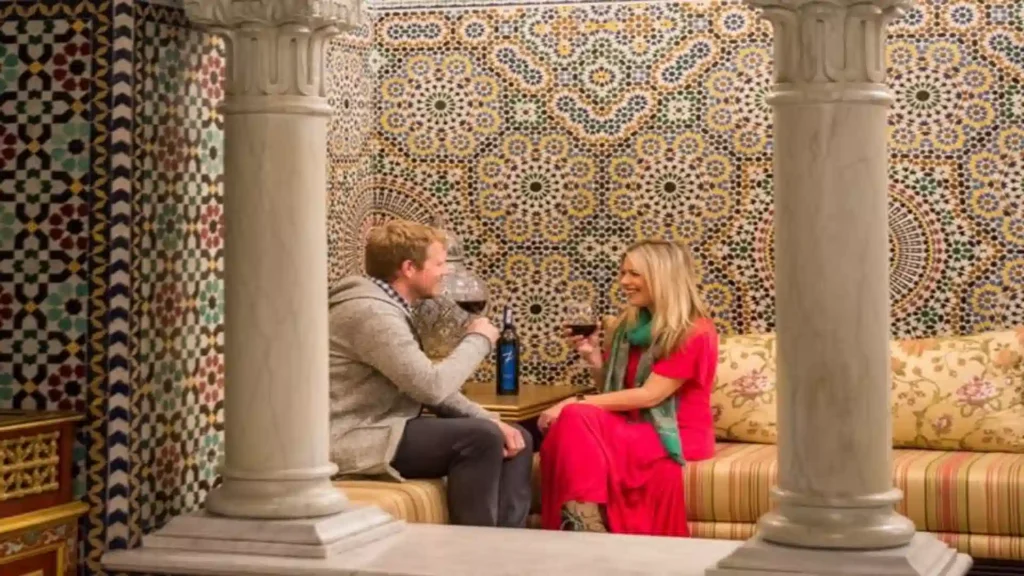
Sipping Moroccan wine inside the beautiful zellij-tiled dining room of a luxury riad.
Yes, without restriction in licensed venues, tourists do not need to prove their religion, show a card, or navigate any bureaucratic barrier. For tourists, the situation is straightforward: you can drink in any licensed establishment without restriction.
What’s clearly legal for tourists:
- Hotel bars and rooftop terraces
- Licensed restaurants (mid-range to upscale, particularly in Gueliz and Hivernage in Marrakech)
- Licensed bars in Ville Nouvelle districts
- Purchasing from Carrefour, Marjane, or dedicated liquor stores
- Drinking in your riad or hotel room
- Bringing in your customs allowance on arrival
What isn’t legal anywhere:
- Drinking on the street, in the medina, in parks, on public beaches
- Drinking on any form of public transport
- Sitting on a hotel balcony that faces a public street with a beer
- Offering alcohol to local Muslims is both culturally disrespectful and technically illegal under Article 281
Where to Buy Alcohol in Morocco
The most affordable place to buy alcohol in Morocco is Carrefour or Marjane supermarkets; the most convenient is your hotel bar; and the best selection comes from standalone licensed liquor stores found in most large cities. A Casablanca beer that costs 25 MAD in a shop may cost 60 MAD in a hotel bar. The markup is real and consistent, which makes it more famous as the Moroccan beer.
Supermarkets That Sell Alcohol in Morocco:
Three sell alcohol; two don’t. Sells alcohol: Carrefour (large stores + Carrefour Market in cities), Marjane (separately curated alcohol section), and some Carrefour Express in tourist zones. Does NOT sell: Acima, BIM, Aswak Assalam, and most small franchise corner shops.
- The alcohol section in Carrefour and Marjane is often behind a separate set of double doors or curtains, both for discretion and because the section closes earlier than the main store, and entirely during Ramadan.
- Hours: typically close 30–60 minutes before the main store; closed Sundays in some locations.
Licensed Liquor Stores (Magasin d’Alcool):
Standalone liquor stores can be found in cities like Marrakech, Casablanca, Rabat, Agadir, and Fes. These shops often have a larger selection and longer hours, usually open between 10:00 AM and 8:00 PM.
- These stores are often located in the ville nouvelle (new city) rather than the medina.
- Better spirits selection than supermarkets.
- Some close Friday afternoons for Jumu’ah prayer.
Hotel Bars and Riad Rooftops:
The most relaxed option for tourists has no Medina navigation required, staff are accustomed to serving international guests, and the setting is legitimately private. The premium you pay (typically 2× shop price) buys atmosphere and discretion.
Restaurants Serving Alcohol in Morocco:
Licensed restaurants across Morocco serve beer, wine, and sometimes spirits with meals. In Marrakech, you will have no trouble finding wine with dinner in Gueliz, Hivernage, or the Palmeraie. Some restaurants in the medina and more traditional neighborhoods do not have alcohol licenses; if a menu does not list drinks, it probably means the restaurant does not serve them.
Airport Duty-Free:
Duty-free shops at Marrakech Menara (RAK) and Casablanca Mohammed V (CMN) sell alcohol on arrival and departure. Bringing up to 1 liter of spirits and 1 liter of wine per person into Morocco is permitted; under the customs allowance, declare anything above this limit.
Where to Drink Alcohol Morocco: City by City
Casablanca and Rabat have the most established bar scenes; Marrakech has the most tourist-oriented licensed venues; Agadir is the most relaxed coastal option; and Fes and Chefchaouen have the fewest options. This city-by-city variance is significant; don’t assume what works in Casablanca applies to a small town en route to the desert.
| City | Alcohol Availability | Character |
|---|---|---|
| Casablanca | High, widest bar and nightclub scene | Urban, mixed local-tourist crowds, most normalized |
| Rabat | High | Cosmopolitan, government/diplomatic city, well-stocked |
| Marrakech | High in Gueliz, Hivernage, and hotels low in the medina | Two distinct zones: tourist-facing and traditional |
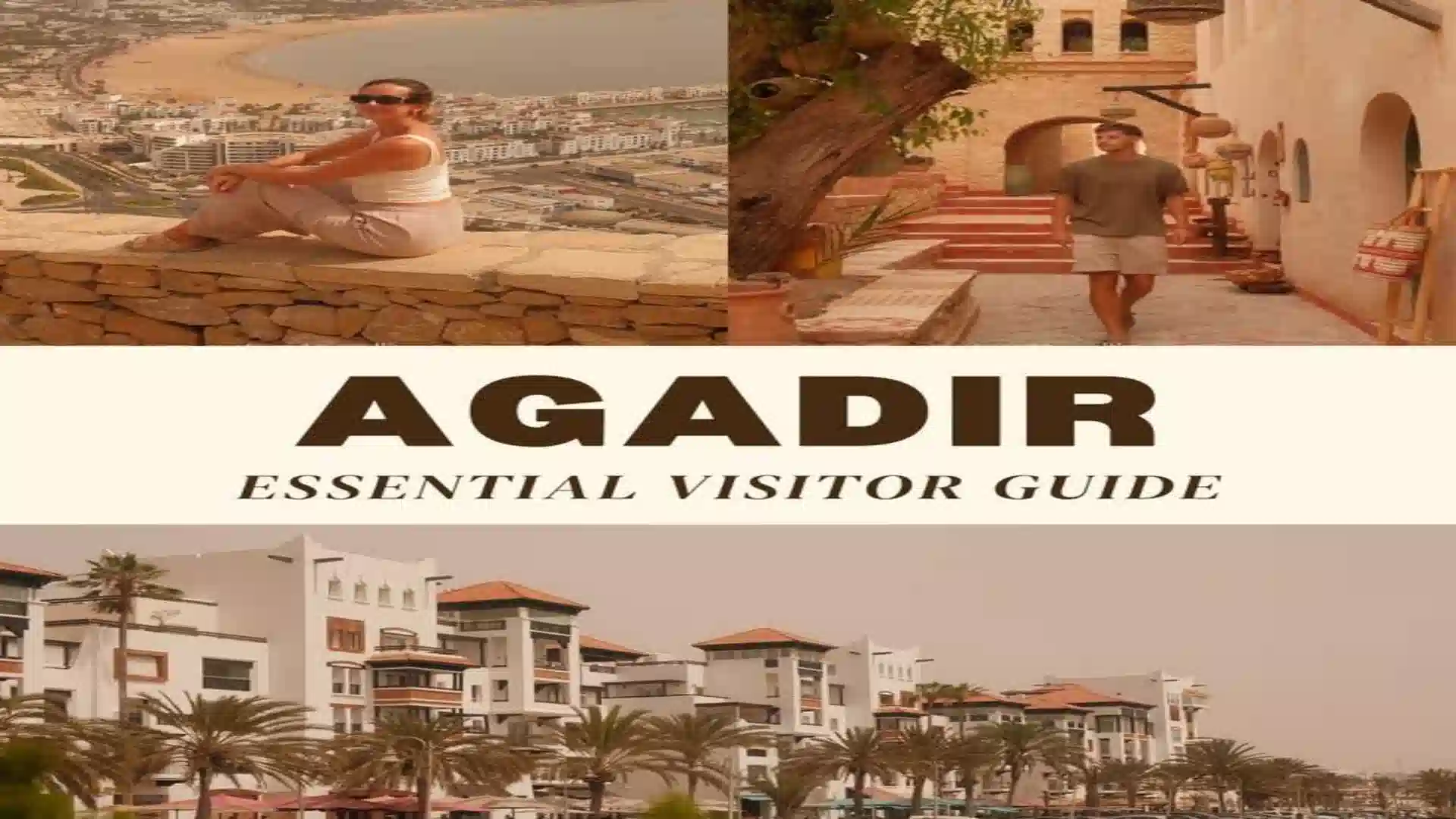
| Agadir | High, beach resort atmosphere | Most visible and casual alcohol culture in Morocco |
| Tangier | Moderate | Port-city history, eclectic bar scene |
| Fes | Low-moderate | Fewer options, more conservative atmosphere |
| Essaouira | Moderate | Relaxed artistic town, some licensed restaurants |
| Chefchaouen | Low | Very few options in a small, conservative mountain town |
| Desert towns (Merzouga, Zagora) | Very low to none | Rural buy in Marrakech before departure |
Real 2026 Alcohol in Morocco Prices
Alcohol in Morocco is noticeably more expensive than in non-Muslim countries due to heavy taxation and import duties; a beer costs 25–40 MAD in a shop but 50–80 MAD in a bar, and a bottle of Moroccan wine runs 60–120 MAD retail versus 200–400 MAD in a hotel restaurant.
| Item | Shop / Supermarket | Restaurant / Bar | Hotel Bar |
|---|---|---|---|
| Casablanca / Flag beer (bottle) | 25–35 MAD | 45–65 MAD | 60–85 MAD |
| Moroccan wine (bottle) | 60–120 MAD | 150–300 MAD | 200–400 MAD |
| Imported beer | 40–60 MAD | 70–100 MAD | 90–130 MAD |
| Spirits (measure) | N/A | 60–100 MAD | 80–150 MAD |
| Cocktail | N/A | 80–150 MAD | 120–200 MAD |
A beer in a restaurant may cost 3–6 euros, and wine in a hotel could be 20–30 euros per bottle. Buying from Carrefour or a liquor store and drinking in your riad room is by far the most cost-effective approach.
Moroccan Beer: Casablanca, Flag, and Stork Explained Morocco and Alcohol
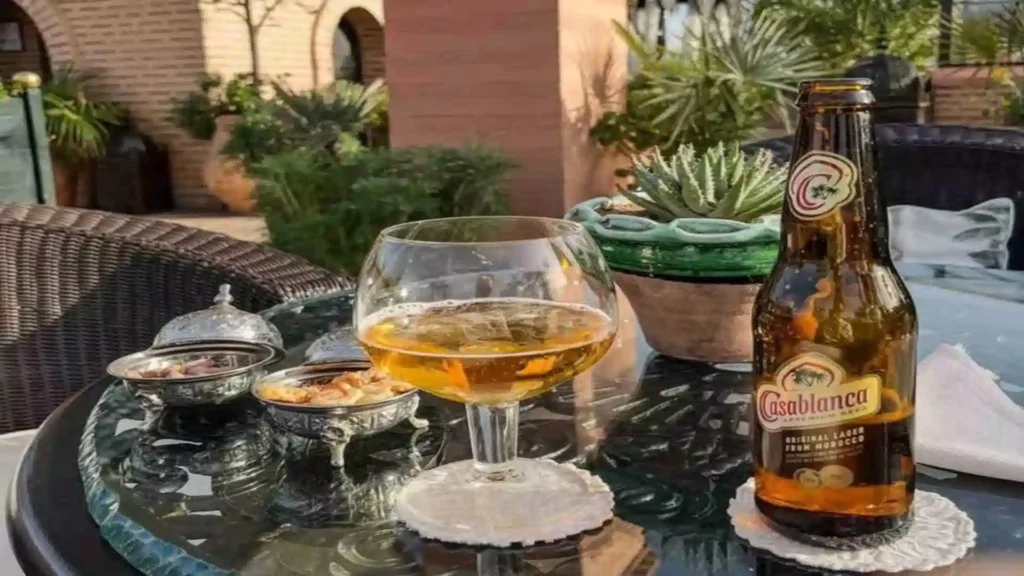
Trying Morocco’s famous local brew, Casablanca Beer, on a sunny outdoor patio.
Morocco’s beer market is dominated by three domestic brands Casablanca Beer, Flag Spéciale, and Stork all produced by Société des Brasseries du Maroc (SBM), a company with roots in the French protectorate era.
Flag Spéciale is a pale lager with around 5% ABV, light and easy-drinking with a slightly sweet malt character. Casablanca Beer is broadly comparable and arguably the most recognized internationally. Stork is the lighter session option.
| Beer | Style | ABV | Notes |
|---|---|---|---|
| Casablanca Beer | Pale lager | ~5% | Most internationally recognized, clean finish |
| Flag Spéciale | Pale lager | ~5% | Slightly sweet malt character, widely available |
| Stork | Light lager | ~3.5% | Lower ABV, session option |
Craft beer is limited in Morocco, expensive (€5–8 per bottle), and has a limited selection, and the craft culture is underdeveloped. Stick with local Casablanca or Flag beer, which is actually quite good.
Moroccan Wine: A Growing Industry Worth Discovering
Morocco has a genuine and growing wine industry centered around Meknes and the Essaouira region, producing red, white, and rosé wines that have won international awards and are available on winery tours. Vineyards near Meknes and Essaouira produce red, white, and rosé wines. You can even take wine-tasting tours at vineyards like Val d’Argan near Essaouira.
Key Moroccan wine producers:
| Producer | Location | Known For |
|---|---|---|
| Chateau Roslane | Meknes | Premium reds, international award winner |
| Val d’Argan | Near Essaouira | Organic wines, visitor-friendly tasting tours |
| Les Celliers de Meknès | Meknes | Largest producer, wide distribution |
| Domaine de la Zouina | Meknes | Boutique production, strong export reputation |
Meknes sits at the foot of the Middle Atlas Mountains at roughly 550 meters altitude, a climate that produces grapes with natural acidity and structure that distinguishes Moroccan wine from hotter North African alternatives. If you are already visiting Fes (2 hours from Meknes), a half-day wine detour to the Meknes vineyards is one of Morocco’s most underrated add-ons.
Drinking Alcohol in Morocco During Ramadan: What Actually Changes
Morocco During Ramadan, supermarket alcohol sections and most liquor stores close entirely for the month, but hotel bars and licensed tourist restaurants continue serving discreetly to international guests. Carrefour, Marjane, and other licensed retailers stop alcohol sales the night before Ramadan begins and resume the day after Eid al-Fitr. Licensed hotel bars and 5-star restaurant bars continue serving through Ramadan, but only inside the venue.
2026 Ramadan dates: approximately 17 February – 18 March 2026.
2027 Ramadan dates: approximately 6 February – 7 March 2027.
What this means practically:
- Supermarkets and liquor stores: Alcohol sections are closed and physically curtained off; no workaround
- Hotel bars: Continue serving guests, though often more quietly
- Licensed restaurants: Most continue for international guests; some pause voluntarily
- Desert camps: Buy before you leave Marrakech; nothing is available once past Ouarzazate
- Cultural tone: Discretion is expected; you wouldn’t walk through a Marrakech medina with a beer during Ramadan daytime even though no one will physically stop you.
If your trip overlaps Ramadan, buy a supply from Carrefour or a liquor store in Marrakech on arrival and keep it in your riad room for the duration.
Can You Drink Alcohol at a Moroccan Desert Camp?
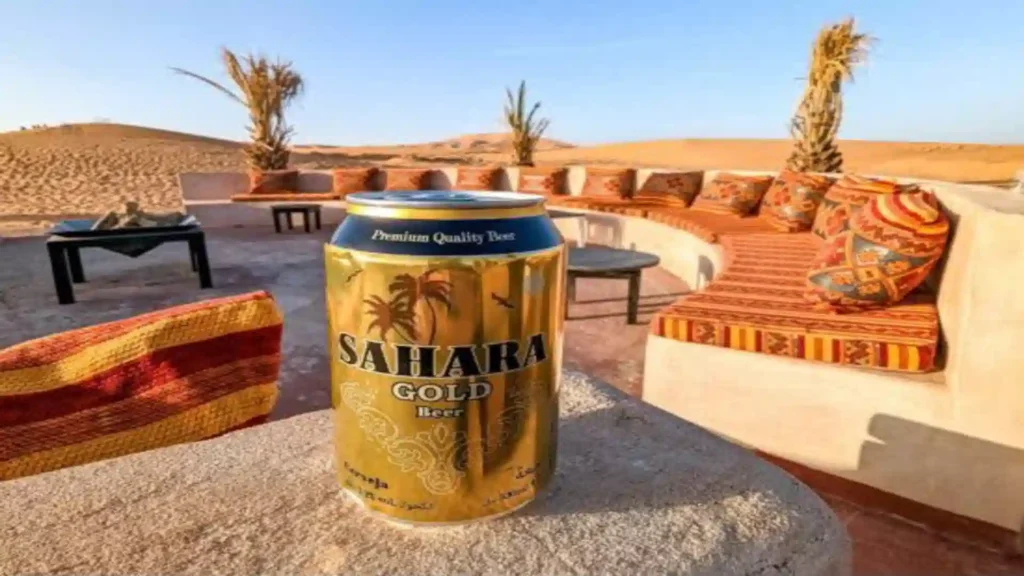
Enjoying a refreshing local beer at a desert camp in the Sahara.
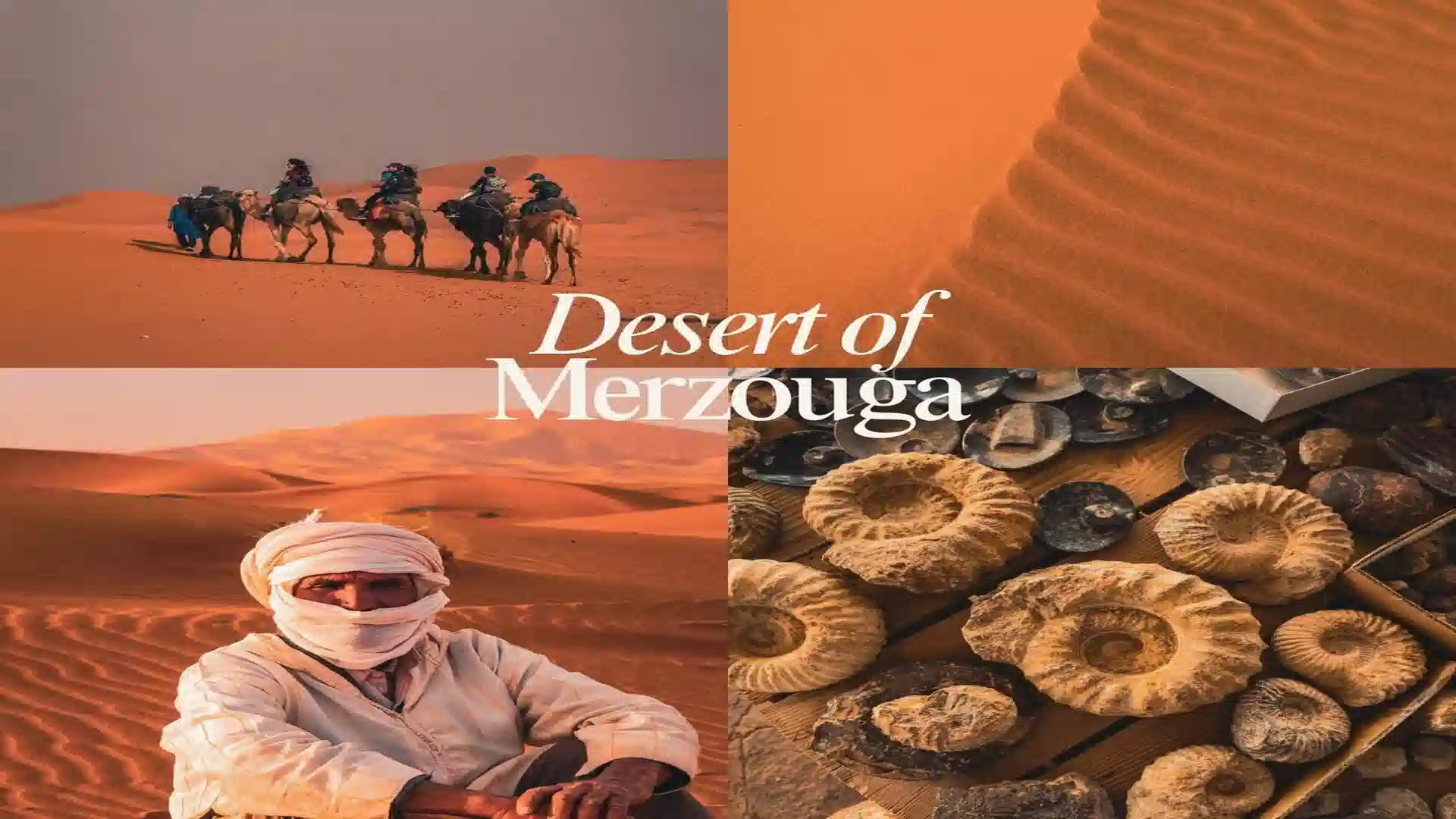
Standard desert camps near Merzouga and Zagora typically do not serve alcohol; luxury camps sometimes include wine or beer with dinner on request; bringing your own is usually fine if you buy in Marrakech before departure and drink discreetly in your tent. Standard camps: usually no. Luxury camps: often yes (wine/beer with dinner). BYO: usually fine to buy in Marrakech beforehand. Ask your operator when booking.
The real star of desert evenings is mint tea nicknamed “Moroccan whiskey” for its cultural importance and ritual preparation. Three glasses served from a height, sweet and strong. Sharing mint tea around the campfire with your Berber hosts is often the most memorable social moment of a desert tour no alcohol needed.
If alcohol matters to your camp experience, confirm with your operator before departure, not because it’s unavailable, but to avoid any uncomfortable surprise on arrival.
Mahia: Morocco’s Traditional Spirit—Moroccan Drinks
Mahia is Morocco’s traditional distilled spirit, a strong fig-and-aniseed liquor historically produced by Morocco’s Jewish communities, with deep roots in Sephardic Moroccan culture and still made today, though largely in small-batch, artisan, or informal production. One traditional spirit worth trying is Mahia, a strong drink made from figs and aniseed. It’s often homemade and used in small gatherings or celebrations.
Mahia is genuinely difficult to find commercially; it surfaces occasionally in specialist liquor stores in larger cities and more commonly through connections within Morocco’s small but longstanding Jewish community, particularly in Fes. For travelers interested in Morocco’s full cultural tapestry, it’s worth knowing that mahia exists, even if you never encounter it.
Morocco Alcohol Etiquette: The Rules That Actually Matter
The single most important rule is simple: drink inside licensed spaces and keep alcohol out of the public eye. Everything else follows from there.
The do’s:
- Drink in hotel bars, riad rooftops, licensed restaurants, or your room
- Buy from Carrefour, Marjane, or a licensed liquor store for the best price
- Carry your passport or a copy when buying; some shops ask for ID
- Be quiet, calm, and discreet at all times
The don’ts:
- Don’t drink in public or on the streets. Don’t offer alcohol to locals. Don’t drink during prayer times near mosques. Don’t leave empty bottles visible. Don’t be loud or rowdy while drinking. Don’t assume locals want to drink with you.
- Don’t drive after any amount of alcohol in Morocco’s enforcement is zero-tolerance
- Don’t drink on hotel balconies facing public streets
- Don’t attempt to buy alcohol from unlicensed street vendors
Spirits and Cocktails Available in Morocco
In licensed hotel bars and better restaurants in Morocco, you will find imported spirits like whiskey, vodka, gin, and rum, but the choice varies greatly, and prices are much higher than in European or North American markets because of import duties. The least dependable category to plan around other than 4- and 5-star hotels in Casablanca, Marrakech, and Rabat.
What to realistically expect:
- Hotel bars (4–5 star): Reliable selection of imported spirits, including major Scotch and Irish whisky brands, standard vodka and gin, and rum. Cocktail menus are common.
- Mid-range licensed restaurants: Limited usually covers the basics (gin and tonic, rum and cola) but not cocktail menus.
- Licensed bars in Ville Nouvelle districts: Local bars tend to focus on beer and wine rather than spirits; cocktail culture is concentrated in higher-end establishments.
- Specialist cocktail bars: Found increasingly in Casablanca, Marrakech’s Gueliz district, and Agadir, growing in number but still not as dense as European city equivalents.
Spirits pricing at hotel bars: expect to pay 80–150 MAD per measure for imported spirits, 120–200 MAD for a cocktail. This is genuinely expensive by local standards one reason beer and Moroccan wine represent better value for travelers not locked into hotel-bar convenience.
The Cultural Context of Alcohol in Morocco: What Travelers Should Understand
Morocco’s relationship to alcohol is truly nuanced. The country makes and sells alcohol domestically, boasts a burgeoning wine industry, and has a vibrant bar scene in major cities. But the prevailing Muslim culture around drinking means attitudes differ hugely by city, generation, and social class. In cities such as Casablanca, Marrakech, and Rabat, drinking is relatively normalized among certain segments of the population. Young professionals and artists, as well as the city’s middle and upper classes, drink socially in restaurants, bars, and private events.
This knowledge allows travelers to interact more respectfully than either extreme of treating Morocco as essentially identical to France (totally ignoring the cultural context) or treating it as a strict, dry country (which it clearly is not).
A few grounded cultural realities:
- Plenty of Moroccans do drink bars in Casablanca and Marrakech are full of locals on weekends, not just tourists. The picture is not one of a uniformly non-drinking population.
- The public/private divide is the key principle: drinking in a licensed space is normal and tolerated; drinking visibly in a public space is disrespectful regardless of your legal right to do so.
- Rural and Medina Morocco operate differently from Ville Nouvelle; the same city often contains two entirely different alcohol environments depending on which district you’re in.
- Your guides and drivers almost certainly don’t drink on the job this is a professional and cultural standard across the tour industry. Offering them a drink is inappropriate.
- “Moroccan whiskey” is mint tea this half-joking local phrase reflects something genuine about mint tea’s cultural role. The ritual preparation, the three glasses served from height, and the social ceremony around it are Morocco’s version of what other cultures do with wine an experience worth engaging with fully rather than treating as a consolation prize for not having alcohol.
Alcohol in Morocco Tour: What Over Morocco Tours Clients Ask
Based on our experience running desert and city tours from Marrakech, the most common alcohol-related question is whether it’s available at desert camps and the honest answer is: bring your own from Marrakech if it matters to you, ask your operator to confirm your specific camp’s policy, and expect the cultural default to be mint tea. These are the questions we get before almost every departure to Merzouga or Zagora.
The most practical pre-departure tips from our operational experience:
- Buy in Marrakech before your desert tour departs. Carrefour on Avenue Mohammed VI has a well-stocked alcohol section open until roughly 9 PM and is the easiest point on any Marrakech circuit to stock up.
- Decant into a thermos or opaque bottle if you prefer not to have alcohol visible in your bag during camp check-in, not because it’s forbidden, but out of cultural consideration for camp staff who may be practicing Muslims.
- Luxury camps that serve alcohol typically do so with dinner, paired with the meal rather than as a bar service frame your expectation accordingly.
- Mint tea will be the evening centrepiece regardless; don’t plan a desert trip around finding alcohol at the end of it; plan it around the dunes, the stargazing, the fire, and the tea.
Alcohol in Morocco vs. Other Muslim-Majority Countries: How It Compares
Morocco is at the more permissive end of the spectrum among Muslim-majority tourist destinations: much more relaxed than Saudi Arabia or Iran (where alcohol is prohibited entirely), roughly on par with Turkey and Tunisia, and slightly more conservative than Dubai’s tourist areas where alcohol is highly visible. The point of this comparison is that travelers who have previously visited other Islamic countries generally come with expectations based on their previous experiences, not the situation in Morocco.
| Country | Alcohol Status | Tourist Experience |
|---|---|---|
| Morocco | Legal, regulated, licensed venues | Readily available in tourist areas, discreet in public |
| Turkey | Legal, unrestricted | Widely available, visible consumption common |
| Tunisia | Legal, available | Similar to Morocco in most respects |
| Egypt | Legal, regulated | Available in tourist hotels and licensed venues |
| Dubai (UAE) | Legal in hotels/licensed venues | Very accessible in tourist areas, expensive |
| Saudi Arabia | Banned completely | No legal alcohol at all |
| Iran | Banned completely | No legal alcohol at all |
| Indonesia | Legal but restricted | Available in tourist areas, restrictions in some regions |
The relevant takeaway for travelers planning a Morocco trip specifically: if you’ve been to Turkey or southern Europe and are worried Morocco might be more restrictive, you’ll find the licensed-venue situation comfortable and familiar. If you’re coming from a Gulf state where tourist alcohol access is exceptionally easy, expect somewhat less visibility but no meaningful scarcity in city environments.
Frequently Asked Questions About Alcohol in Morocco
Is alcohol available in Morocco?
Yes, in licensed bars, restaurants, hotels, Carrefour, Marjane, and licensed liquor stores in all major cities.
What is the legal drinking age in Morocco?
18. This law applies to everyone, including foreign tourists. Buying alcohol for someone under the legal age is prohibited and can result in legal consequences.
Can I drink alcohol in Marrakech?
Yes, you can drink freely in licensed venues in Gueliz and Hivernage, as well as hotel bars. More limited in the traditional medina, where many restaurants don’t hold alcohol licenses.
Can I buy alcohol in a Moroccan supermarket?
Yes, Carrefour and Marjane stock alcohol in a separate curtained section. Acima, BIM, and smaller chains do not sell it.
Is alcohol allowed during Ramadan in Morocco?
Hotel bars and licensed tourist restaurants continue discreetly; supermarkets and liquor stores close their alcohol sections entirely for the month.
Can I bring alcohol to a Moroccan desert camp?
Usually yes, if you bring your own buy-in Marrakech before departure, keep it in your bag, and drink discreetly in your tent. Luxury camps sometimes serve it; standard camps generally don’t. Confirm with your operator when booking.
Is Moroccan wine any good?
Yes, particularly the reds and rosés from the Meknes region. Chateau Roslane and Les Celliers de Meknès have won international competition awards, and a Meknes wine tour is one of Morocco’s most underrated day trips.
Is it rude to drink alcohol in front of Moroccan locals?
Most Moroccans who work in tourism react professionally, but drinking visibly in front of local guides, drivers, or camp staff who may be fasting or religiously abstaining is considered inconsiderate. Keep it in licensed spaces and private settings.
What is the most popular Moroccan beer?
Casablanca Beer and Flag Spéciale are the two most widely available both produced domestically by Société des Brasseries du Maroc (SBM), both pale lagers at around 5% ABV, and both genuinely decent drinks rather than tourist-trap local brands you suffer through once and forget.
Final Checklist: Alcohol in Morocco for Tourists
- Buy cheapest: Carrefour or Marjane (25–35 MAD for a local beer; 60–120 MAD for Moroccan wine). Carrefour on Avenue Mohammed VI in Marrakech is the most reliable single stop before any desert departure.
- Drink legally: Hotels, licensed restaurants, riad rooftops, and inside your room. Not on the street, in the medina, in parks, on public transport, on public beaches, or on hotel balconies facing public streets.
- Zero tolerance driving: No exceptions, no minimums. Morocco enforces this strictly and without the “one drink” leniency common in some European countries.
- During Ramadan: Stock up in Marrakech on arrival; supermarkets close their alcohol sections entirely for the month. Hotel bars and licensed tourist restaurants continue, discreetly, for guests.
- For desert camps: Buy in Marrakech before departure, confirm with your operator, and drink discreetly in your tent or at the communal fire rather than openly in front of staff.
- Best Moroccan beer: Casablanca or Flag Spéciale, widely available, reliably good don’t overthink it.
- Best Moroccan wine: Chateau Roslane (Meknes) for reds; Val d’Argan (Essaouira) for organic whites and the option of a vineyard tour.
- Try Mahia if you encounter it: Morocco’s fig-and-aniseed spirit is a genuine cultural artifact with deep Sephardic roots, rare commercially but worth seeking out in specialist liquor stores in Fes or Casablanca.
- Be discreet, not invisible: The expectation isn’t that you hide completely; it’s that you drink with the same quiet consideration you’d show in any respectful environment, anywhere in the world. That single mental model covers everything on this list.