Semester at Sea Custom Morocco Itinerary: A Real, Day-by-Day Guide for 2026 Voyages
For Semester at Sea custom Morocco itinerary’s 2026 voyages, the ship will dock in Tangier, not Casablanca. Spring 2026 (Voyage 137) runs April 2–7, and Fall 2026 (Voyage 138) runs September 22–27. A five- to six-day itinerary covering Chefchaouen, Fes, the Merzouga Sahara Desert, and Marrakech in a private vehicle rather than the ship’s group field program is a typical custom Morocco itinerary that includes that port stop. Here’s how to build one, what it costs to think through, and what no one tells you until you’re already standing at the port gate wondering which way to walk.
Having lived through the actual planning process that the SAS students go through each semester, I’ve compiled this: a comparison of the official Field Program to independent options, plotting drive times between cities that Google Maps quietly gets wrong for mountain roads, and talking to guides who’ve picked up students from this exact port for ten years. This is not a cut-and-paste brochure. It’s the itinerary logic, laid out so you can build your own version of it in twenty minutes, not three weeks of Reddit threads.
Table of Contents
What ” Semester At Sea Custom Morocco Itinerary” Actually Means for SAS Students
Semester at Sea sells two very different experiences during a Morocco port stop, and the terminology gets muddy fast.
The Field Program is the official, SAS-organized excursion. You book it through the shipboard portal; it shows up on your account statement, and SAS handles the logistics end-to-end bus, guide, meals, insurance, liability. It’s safe, it’s simple, and it’s also fixed. You go where the group goes, at the pace the group moves, and if the itinerary doesn’t include something you actually care about, that’s the trip.
A custom itinerary is the alternative track: an independently arranged, private tour built around your specific field-class schedule, your interests, and the number of days you actually have in port. It’s the same country, often the same cities, but you choose the order, the pace, and what gets cut when time runs short. Most SAS students who go this route book through a Morocco-based tour operator rather than freelancing it solo, mainly because Morocco’s drive times between cities (especially into the Atlas Mountains and the Sahara) are long enough that a wrong turn costs you an entire day.
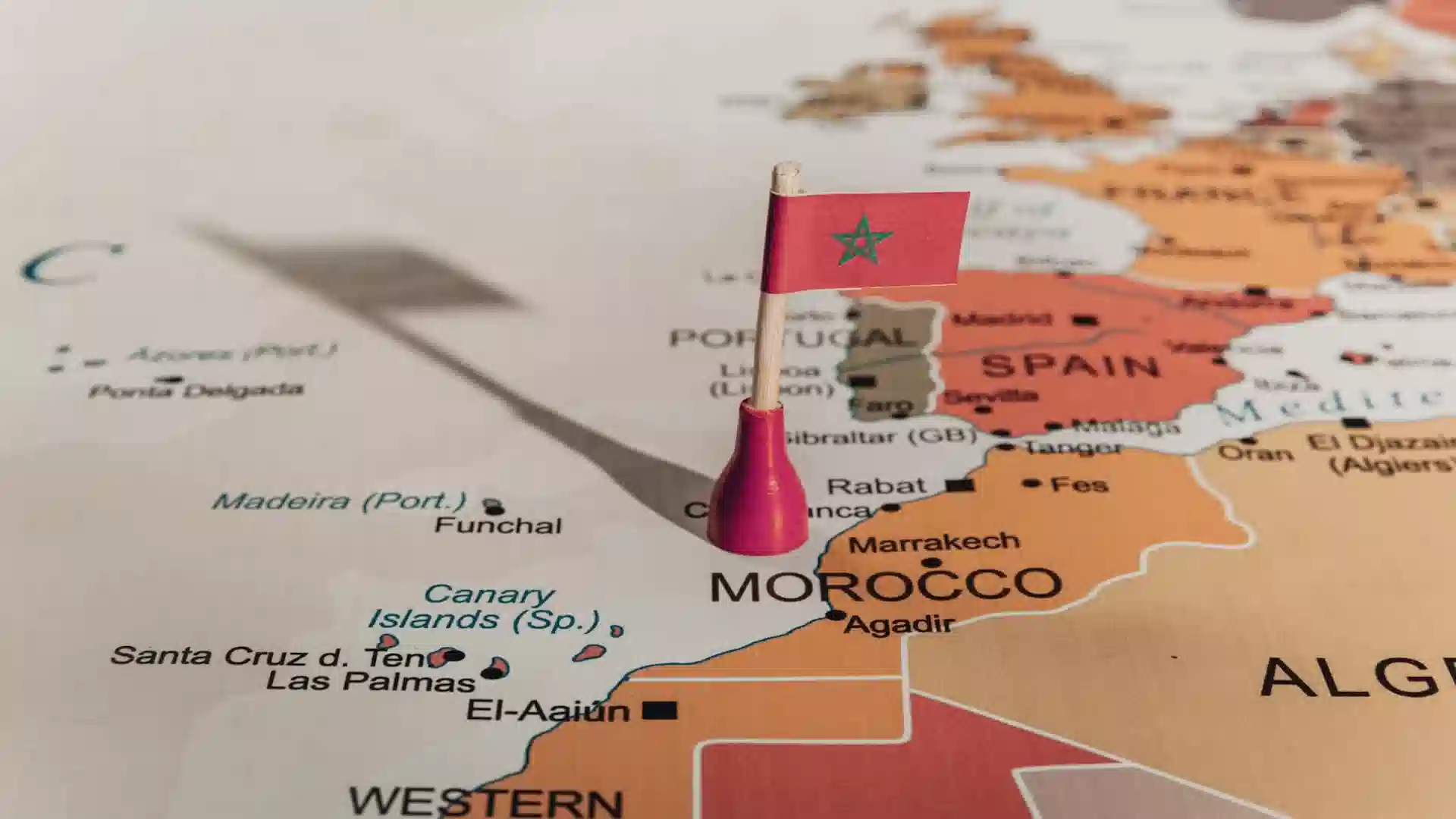
Where the Ship Actually Docks For Semester At Sea Morocco 2026 (Tangier vs. Casablanca)
This is the detail that trips up more planning than anything else, because most of what’s floating around online about Semester at Sea Morocco trips was written when the port was Casablanca and that changed.
Semester at Sea is set to make port calls at Tangier during its Spring 2026 voyage (Voyage 137) and Fall 2026 voyage (Voyage 138), with the port being the entry point into the country.The Morocco stop for the Fall 2026 voyage is September 22 to 27, a five-day call that comes after Leixões, Portugal and before the ship crosses the Atlantic en route to Brazil Fall 2026 Semester at Sea updated this itinerary from Casablanca to Tangier for logistical reasons and the organization has indicated the overall program schedule did not change as a result.
If you’ve read older blog posts or forum threads that mention Casablanca, that’s not wrong information it’s outdated information. The Fall 2025 voyage did visit Casablanca, from September 28 through October, and Semester at Sea’s own port materials still list Casablanca and Tangier together as Moroccan ports of call, with field programs including multi-day trips to the Sahara Desert where students ride camels and sleep under the stars. The program hasn’t scrubbed every reference yet, which is normal itineraries change year to year based on port logistics, fuel routing and terminal availability.
Why the port is so important: Tangier and Casablanca put you in two completely different parts of the country.
Tangier is way up in the north, a hop from the Rif Mountains, Chefchaouen and Tetouan. It’s compact and walkable, and puts the Sahara a longer drive away but puts Chefchaouen and Fes much closer.
Further south down the Atlantic coast, Casablanca is closer to Marrakech and Rabat but further from Chefchaouen and the Rif.
Both voyages will call at Tangier, and the guide makes every itinerary based around the confirmed 2026 port. If your voyage or semester is different than what is listed here, check your specific voyage’s official port page before locking anything in Semester at Sea’s Spring 2026 voyage runs Vietnam, Malaysia, India, Kenya, South Africa, Ghana, Morocco, and Spain, embarking January 5 in Bangkok, while the Fall 2026 voyage covers Portugal, Morocco, Brazil, St. Helena, South Africa, Mauritius, Sri Lanka, Vietnam, and Hong Kong, starting on September 9 in IJmuiden
One more thing worth knowing because it explains why “flexible” matters more in Morocco than almost anywhere else on the voyage: “Semester at Sea has operated shipboard voyages since 1963, and more than half of all its voyages have required some deviation from the planned itinerary due to weather, political conditions, or health and safety considerations” . When planning your Morocco, plan for a buffer. Do not book your flight home on the day the ship is scheduled to dock.
Field Program vs. Custom Private Tour vs. Going It Alone With Semester At Sea Morocco Tours
There’s no universally “right” option here it depends on how much control you want versus how much you want handled for you. Here’s the honest breakdown.
Semester at Sea itself frames Morocco as a country where students move quickly from studying to lived experience visiting old cities, meeting locals, and seeing landscapes very different from home, all within a short window. That short window is exactly why the custom-tour model has become popular: it stretches five days of port time across more of the country than a single bus loop can cover, without asking you to solve Morocco’s mountain roads by yourself at 2 a.m. trying to catch a return connection.
Port days in Morocco can also support class themes religion, colonial history, urban growth, art, migration, community life since the country’s layered past gives faculty plenty to build field-linked programming around. If you’re trying to tie your port time to a specific course, a custom itinerary lets you weight the day toward that theme (more medina and mosque time in Fes, for instance, versus more desert time near Merzouga) in a way a single fixed bus tour can’t.
The 5 Day Custom Itinerary Tangier To Marrakech Sahara Desert Tour: Tangier → Chefchaouen → Fes → Sahara → Marrakech
This is the itinerary shape that comes up again and again once you compare enough private Morocco operators who work specifically with SAS groups. It’s built for the roughly five-day window Tangier gives you in both the Spring and Fall 2026 voyages, and it front-loads the long desert drive so you’re not doing it exhausted on the last day before re-boarding.
Build-in buffer rule: whatever your custom operator quotes for the return leg, add 90 minutes of slack before your ship’s published “all aboard” time. Port traffic and last-minute souvenir stops eat schedules alive.
Shorter Options For Semester At Sea Morocco 2026: 3 Day and 4 Day Versions
Not every voyage or every student’s field-class schedule — leaves room for the full five-day loop. Here’s how the itinerary compresses.
How to Build Your Own Version (Step by Step)
You don’t need to copy the five-day itinerary above exactly. Here’s the actual process for building a version that fits your class schedule and interests.
- Get your confirmed port dates and times first. Not the semester-general dates the specific arrival and “all aboard” times for your voyage. Everything else depends on this.
- Subtract your mandatory field-class commitments. If a professor requires a specific field lab during the port stop, that block is fixed. Build around it, not through it.
- Pick one anchor experience. Sahara overnight, Chefchaouen, or Marrakech medina decide which one is non-negotiable before you start mapping drive times, because that choice determines your whole route direction.
- Map realistic drive times, not Google’s optimistic ones. Mountain roads in the Rif, Middle Atlas, and High Atlas run slower than flat-highway estimates. Add 25–30% to any driving estimate involving mountain passes.
- Book through a licensed, Morocco-based operator with SAS-specific experience. Ask directly: how many SAS groups have you run, and can you confirm a fixed port pickup/return time in writing? Vague answers are a red flag.
- Confirm group size and vehicle type before paying anything. A 15-person minibus and a 4-person private SUV are very different experiences of the same route.
- Build in the 90-minute return buffer mentioned above. Every single time.
- Get a written cancellation and itinerary-change policy. Given how often the ship’s own schedule shifts, your land tour needs the same flexibility.
Semester At Sea Morocco Trip Budget: What It Actually Costs
Exact pricing shifts with group size, season, and operator, so treat these as planning ranges rather than quotes. Semester at Sea itself lists Morocco field programs as optional add-ons but does not publish set prices on its public voyage pages, since costs vary with trip length, transport, lodging, and whether it’s a day trip or multi-day program — the same variability applies to custom private tours.
Rough per-person ranges for a private group tour (splitting vehicle and guide costs across 4–8 people):
1-day Chefchaouen or Tangier-area trip: budget end of the range, transport plus guide only.
3-day north-loop (Chefchaouen–Fes–Meknes): mid-range, includes one or two nights’ riad accommodation.
4–5 day itinerary with Sahara overnight: highest of the group-tour range, since it includes the desert camp, camel trek, and longest driving distance.
What moves the number most: group size (larger groups split vehicle/guide cost further), whether you want a private vehicle versus a shared minibus, and how much of the accommodation is riad-standard versus basic guesthouse. Ask any operator for a full breakdown transport, guide fees, accommodation, meals included versus not — rather than a single bundled figure, so you can actually compare quotes across operators.
Packing, Safety, and Cultural Etiquette
A few things that make more difference on the ground than they seem like they will on paper.
1 ) Money. Bring a mix of cash (Moroccan dirham, exchanged after arrival it’s a closed currency, so you can’t get it before landing) and a card for larger purchases. Desert camps and small medina shops are cash-only more often than not.
2 ) Dress. Loose, modest clothing travels better than shorts and tank tops, especially in medinas and rural areas — not because it’s strictly required everywhere, but because it changes how you’re treated and photographed by locals. Layer for temperature swings: coastal Tangier, mountain passes, and the desert at night can each demand a completely different jacket within 72 hours.
3 ) Respect and photography. Ask before taking close photos of people, follow posted rules at mosques and historic sites, and stay polite in markets even when you’re not buying — Morocco tends to feel warm and welcoming when students act like guests rather than spectators.
4 ) Security basics. Keep your phone and cards secure in crowded medina spaces, and watch ship-return timing carefully a great day ashore turns bad fast if you cut the return window too close.
5 ) Health. Bottled water outside of your riad or hotel, especially in the desert leg. A basic pharmacy kit (rehydration salts, anti-diarrheal, sunscreen rated for desert sun, a scarf for dust and sun protection on the camel trek) covers most of what actually comes up.
Food You Should Actually Order
Morocco’s food culture is a real highlight of the port stop think couscous, tagine, and mint tea as the staples that show up everywhere from street stalls to riad dinners. A few specifics worth seeking out beyond the basics:
Tagine variations chicken with preserved lemon and olives in the north, lamb with prunes and almonds further south, both cooked slow in the cone-shaped clay pot the dish is named for.
Fresh bread (khobz) every meal comes with it, and it’s the utensil as much as the side dish; you’ll eat with it more than a fork in most traditional settings.
Harira a tomato-lentil soup, common at breakfast and dinner alike, especially useful after a long driving day.
Mint tea poured from height as a matter of hospitality tradition, not just style; it’s worth learning to accept a glass even if you don’t finish it, since refusing outright can read as impolite in a home or shop setting.
Seafood in Essaouira if your route includes the coast, this is the one city on this list where seafood, not tagine, is the move.
Food tends to be what sticks with students longest after the ship leaves port mint tea, tagine, fresh bread, olives, pastries, and strong café coffee all leave a mark because they’re tied to a specific place and pace, and a simple lunch in a busy, clean spot is often more memorable than an expensive restaurant.
Frequently Asked Questions For your Semester at Sea Morocco 2026
Does Semester at Sea still stop in Casablanca?
Not for the 2026 voyages. Semester at Sea updated its Morocco port from Casablanca to Tangier for both the Spring and Fall 2026 voyages, though Casablanca was used as recently as Fall 2025, from September 28 to October 3 [2-1]. Always confirm your specific voyage’s port page, since this has changed before and can change again.
How many days does the ship spend in Morocco?
For Fall 2026, the Tangier stop runs five days, from September 22 to 27 [12-1]. Spring 2026 runs a similar window, April 2 through 7 [10-1]. Actual usable time ashore is less than five full days once you subtract arrival and departure hours.
Can I do the Sahara Desert and Marrakech in one Morocco port stop?
Yes — it’s the core of the five-day custom itinerary above, but it requires committing most of your port time to a single loop rather than splitting days across shorter unrelated trips.
Is a custom private tour safer than the SAS field program?
Not inherently safer, just differently structured. The SAS Field Program comes with built-in program insurance and staff oversight; a custom tour’s safety depends entirely on the operator you choose.
What if the itinerary changes at the last minute?
It happens more than you’d expect — more than half of all Semester at Sea voyages have required some itinerary adjustment due to weather, political conditions, or health and safety factors [1-1]. Build flexibility into any land-tour booking and avoid non-refundable, non-changeable packages.
Do I need French or Arabic to get around?
Not for a guided custom tour — your guide handles this. For independent time in medinas, basic French phrases go further than English in the north; Darija (Moroccan Arabic) and Amazigh languages are also widely spoken.
Is the desert overnight worth it if I’ve already done a similar trip elsewhere on the voyage?
Depends on your priorities. If South Africa, Namibia, or a prior voyage stop already gave you a desert-camping experience, the 4-day Marrakech-and-Atlas version above covers more new ground without repeating the same core activity.
How far in advance should I book a custom Morocco tour?
As early as your voyage’s port schedule is confirmed — popular field-linked programs and private tour slots for SAS groups tend to fill early [12-1]. Locking in a few months ahead, rather than the week before port, gives you real choice of operator and dates.
What’s the biggest planning mistake students make?
Underestimating drive times between cities and cutting the return-to-ship window too close. The single most common regret isn’t a bad tour — it’s a good tour with no buffer built into the last day.
Final Word For Semester At Sea Morocco 2026
\A Semester at sea custom Morocco itinerary stop is short five days, if you’re lucky, against a country that genuinely rewards two weeks. A custom itinerary doesn’t solve that problem, but it stretches what you can actually see and do inside that window further than a single fixed bus tour will, and it lets you weight the trip toward whatever you personally came to see, whether that’s the blue alleys of Chefchaouen at sunrise, the medina in Fes with a guide who actually knows which tannery to skip, or a night in the Sahara that has nothing between you and the stars.
Build it around your confirmed port dates, pick one anchor experience, book with an operator who’s run this exact route for SAS groups before, and leave yourself more return buffer than feels necessary. That’s the whole method everything else is just filling in the map.
About This Guide
This itinerary was compiled from Semester at Sea’s official voyage and port materials, current 2026 field-program updates, and route data from Morocco-based private tour operators who work directly with SAS student groups each semester. Dates and port assignments are confirmed as of mid-2026 and are cross-checked against Semester at Sea’s official voyage pages but as noted above, Semester at Sea itineraries are genuinely subject to change, so always verify your specific voyage number’s port schedule before booking any land arrangements. Last updated: July 2026.