Morocco’s Imperial Cities: The Complete Guide to Fes, Marrakech, Meknes & Rabat (2026)
Table of Contents
Understanding Morocco Imperial Cities: Why Four Capitals, Not One
Morocco’s term “imperial city” carries a specific and fascinating historical meaning that surprises many first-time visitors: the country has not had one continuous capital throughout its history, but four — Fes, Marrakech, Meknes, and Rabat — each of which served as the seat of power for different ruling dynasties at different points across more than a millennium of Moroccan history. Understanding the Morocco imperial cities is, in many ways, understanding Morocco itself: each city represents a distinct dynasty’s vision of religious authority, military power, or administrative control, and together they trace an arc from the 8th-century founding of Fes by the Idrisid dynasty through to Rabat’s establishment as the modern capital during the French Protectorate era and at Moroccan independence in 1955. At Over Morocco Tours , we are frequently asked by guests planning a Morocco trip whether they should prioritize one imperial city over another, or attempt all four — and the honest answer, covered in detail below, is that each city offers something genuinely distinct, and the right combination depends entirely on your travel style, time available, and interests.
This guide gives you the complete picture: the history that shaped each imperial city, the unmissable sites within each, the Morocco UNESCO World Heritage sites designations that protect their architectural legacy, and a practical framework for building your own imperial cities of Morocco tour , whether independently or combined with our Sahara desert circuits.
Fes: The Spiritual and Intellectual Capital
Fes Morocco History: Morocco’s Oldest Imperial City
Fes Morocco history begins earlier than any of the country’s other imperial capitals. The city was founded in the 8th century by Idris I , a direct descendant of the Prophet Muhammad and the founding ruler of the Idrisid dynasty — the first independent Islamic dynasty to govern Morocco and a foundational moment in the country’s religious and political identity. Fes sits in a river valley at the foot of the Middle Atlas mountains, and its position along historic trade and pilgrimage routes between sub-Saharan Africa, the Mediterranean, and the wider Islamic world allowed it to develop into one of the great centers of Islamic scholarship, jurisprudence, and craftsmanship in North Africa — a status it retains in cultural memory today, even though political power shifted to other cities over subsequent centuries.
What to See in Fes: The UNESCO Medina and Al Quaraouiyine
The heart of any visit to Fes is Fes el-Bali , the old walled medina and a Morocco UNESCO World Heritage Sites, widely regarded as the best-preserved medieval Islamic urban environment anywhere in the world and the largest car-free urban area on Earth. Entrance to the medina traditionally begins at Bab Bou Jeloud , the elaborately tiled “Blue Gate” that marks the threshold into the oldest quarter of the city, dating to the Idrisid era.
Within the medina stands the Al Quaraouiyine University , recognized by UNESCO and the Guinness World Records as the oldest continuously operating institution of higher learning in the world, founded in the 9th century by Fatima al-Fihri , a woman from a wealthy merchant family who endowed the mosque and university that bears her family’s name. The Al Quaraouiyine University Fes complex remains an active center of Islamic learning today, and its library — one of the oldest in the world — has undergone significant restoration in recent years to preserve its extraordinary manuscript collection. Beyond the university, the medina’s other unmissable sites include the Bou Inania Madrasa , a 14th-century Quranic school famous for its carved cedar wood, intricate zellige tilework, and monumental brass entrance doors, and the Chouara Tannery , where leather has been dyed using traditional methods — including natural pigments derived from saffron, poppy, indigo, and pomegranate — for centuries, viewable from surrounding terrace viewpoints that have become an iconic image of the city. For the best panoramic view over the full sprawl of the medina, the Merinid Tombs , perched on a hillside north of the city, offer the definitive vantage point, particularly at sunset when the golden light catches the thousands of flat rooftops below.
Marrakech: The Luxury Jewel on the Edge of the Sahara
Marrakech Imperial City: Gateway Between Desert and Mountains
Marrakech imperial city status dates to 1062, when it was founded by the Almoravid dynasty as their capital and rapidly grew into a major commercial hub and caravan stop, connecting trans-Saharan trade routes with the Atlas Mountains and the cities of northern Morocco. Over the following centuries, multiple dynasties including the Almohads and later the Saadians — chose Marrakech as their seat of power, and the city’s distinctive ochre-red architecture, built from the local clay that gives Marrakech its nickname “the Red City,” reflects this layered dynastic history. Today, Marrakech is the most internationally recognized of Morocco imperial cities, and for many travelers including the majority of guests who book Over Morocco Tours’ Sahara departures — it functions as the practical starting point for a Morocco journey, given its excellent international flight connectivity and position as the natural gateway to the High Atlas and the desert beyond.
What to See in Marrakech: Palaces, Souks, and Djemaa el-Fna
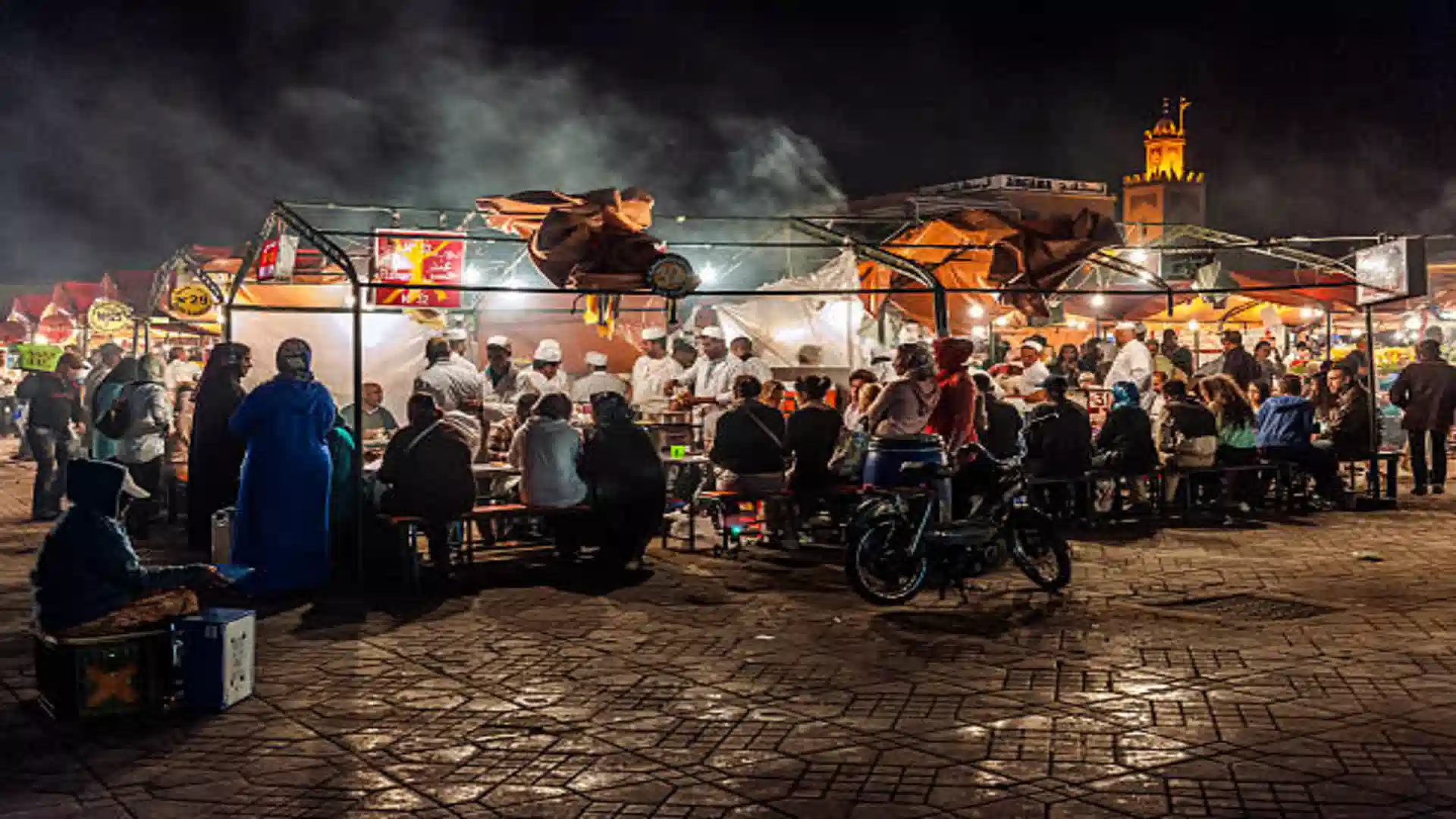
At the center of Marrakech’s old medina itself a Morocco UNESCO World Heritage Site lies Djemaa el-Fna , the city’s famous main square and one of the most extraordinary public spaces in the world, transforming from a relatively quiet daytime market area into a sprawling, sensory spectacle each evening as food stalls, musicians, storytellers, and performers fill the square until late into the night. The surrounding souks form one of the largest and most labyrinthine traditional markets in Morocco, organized historically by craft guild separate quarters for leatherwork, metalwork, textiles, and spices each retain distinct characters.
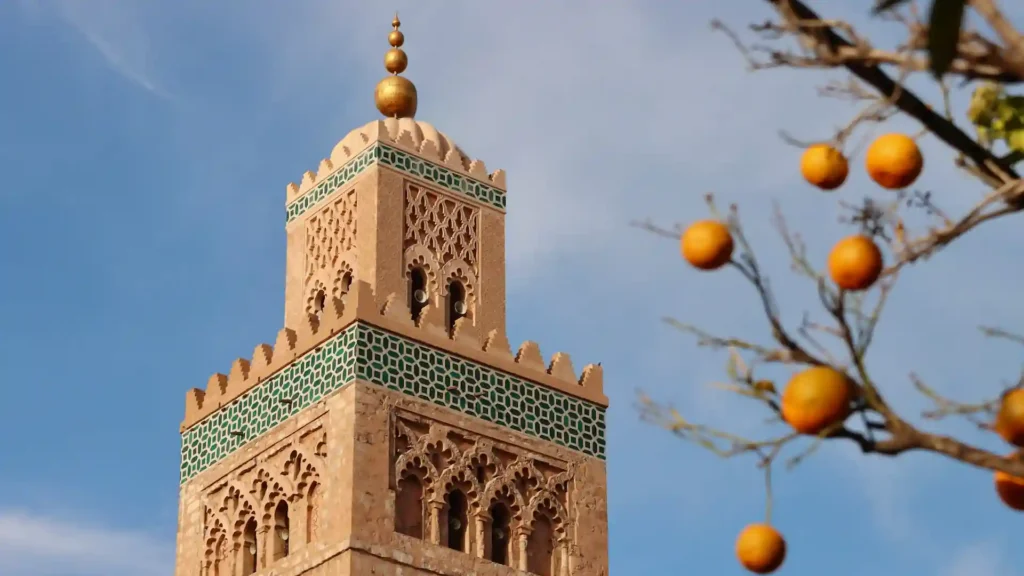
The Bahia Palace Marrakech stands as one of the city’s architectural masterpieces, a 19th-century palace complex commissioned by Si Moussa , grand vizier to the Alaouite sultan, and later expanded by his son Bou Ahmed , featuring an extensive sequence of courtyards, gardens, and reception rooms decorated with elaborate carved cedar ceilings, painted stucco, and zellige tilework that exemplify the height of late-19th-century Moroccan craftsmanship. Nearby, the ruins of the El Badi Palace , built in the 16th century by the Saadian sultan Ahmad al-Mansur following his decisive victory at the Battle of the Three Kings, once rivaled the grandest palaces of the Islamic world before being largely stripped of its decorative materials by a later dynasty — its surviving walls and sunken gardens still convey the immense scale of Saadian ambition. The Koutoubia Mosque , with its 12th-century minaret rising nearly 70 meters above the medina, serves as both the spiritual center of the old city and its most prominent visual landmark, visible from numerous points across Marrakech.
Meknes With Morocco Imperial Cities: The Underestimated Versailles of Morocco
Meknes Morocco History: Sultan Moulay Ismail’s Military Masterpiece
Meknes Morocco history centers overwhelmingly on a single transformative figure: Sultan Moulay Ismail , who ruled from 1672 to 1727 and selected Meknes as his imperial capital, embarking on an extraordinary, decades-long building campaign that earned the city its enduring nickname, “the Versailles of Morocco.” Moulay Ismail’s vision for Meknes was explicitly imperial in scale — vast fortified walls, monumental gates, royal stables capable of housing tens of thousands of horses, and palace complexes designed to project the wealth and might of the Alaouite dynasty to rival the European courts of the period. Meknes is now recognized as a UNESCO World Heritage Site, and unlike Marrakech and Fes, it remains comparatively under-visited by international tourism — a quality that, for travelers seeking an authentic and quieter imperial-city experience, has become one of its strongest draws.
What to See in Meknes: Bab Mansour and the Mausoleum
Bab Mansour Meknes stands as the undisputed architectural centerpiece of the city — a monumental gate widely considered among the finest examples of Moroccan gate architecture, its surface covered in elaborate zellige tilework in deep greens and golds, framed by towering marble columns reportedly salvaged from the Roman ruins of nearby Volubilis. Completed under Moulay Ismail’s son, the gate served as the ceremonial entrance to the royal palace complex and remains the defining image of Meknes today. Nearby, the Mausoleum of Moulay Ismail houses the tomb of the sultan himself, and uniquely among Moroccan royal mausoleums, remains open to visitors of all faiths — a rare opportunity to view the interior of an active royal Islamic funerary monument, decorated with the same intensity of tilework, carved plaster, and painted wood that characterizes the finest Alaouite-era craftsmanship.
Volubilis Roman Ruins Morocco: A Day Trip from Meknes
No visit to Meknes is complete without the short journey to Volubilis Roman ruins Morocco , located approximately 30 kilometers north of the city and recognized as a UNESCO World Heritage Site in its own right. Volubilis preserves the remains of a substantial Roman settlement that flourished from the 1st century BCE through the 3rd century CE as an administrative center of the Roman province of Mauretania Tingitana, before continuing to be inhabited, in diminished form, well into the Islamic period. The site retains an exceptionally well-preserved triumphal arch, the remains of a basilica, and — most strikingly — an extensive collection of in-situ floor mosaics depicting mythological scenes, animals, and geometric patterns that have survived in remarkably vivid condition. Combined with Meknes, Volubilis forms one of the most rewarding half-day cultural excursions in northern Morocco, offering a layer of pre-Islamic history that none of the other imperial cities directly provide.
Visit Rabat Morocco Imperial Cities: The Modern Capital
Rabat Imperial City: From Almohad Fortress to Modern Capital
Rabat imperial city status has the most complex and layered timeline of the four. The city’s imperial origins trace to the 12th century, when it was founded by the Almohad dynasty , with the ruler Yaqub al-Mansur initiating an ambitious building program intended to make Rabat the greatest capital in the Islamic world — an ambition cut short by his death, leaving several of the city’s most significant monuments permanently unfinished. Rabat’s status fluctuated considerably across subsequent centuries, but the city’s modern imperial role was cemented in the 20th century, when it became the administrative capital under the French Protectorate, and was confirmed as Morocco’s official capital upon the country’s independence in 1955 making Rabat, somewhat uniquely among the four imperial cities, both an ancient and a thoroughly contemporary seat of power.
What to See in Rabat: Hassan Tower and the Modern Capital
The Hassan Tower Rabat is the most powerful physical reminder of Yaqub al-Mansur’s unrealized ambition the incomplete minaret of what was intended to be one of the largest mosques in the Islamic world, left standing at roughly half its planned height following the sultan’s death and an unfinished construction program. The surrounding forest of unfinished columns, alongside the modern Mausoleum of Mohammed V that now stands adjacent to the tower, creates one of the most visually striking historical sites in Morocco ancient ambition and modern royal commemoration sharing the same plaza. Nearby, the Chellah Necropolis offers a walled complex containing both Roman ruins (predating the Islamic city, similarly to Volubilis) and a medieval Merinid-era royal necropolis, its grounds now partially overtaken by storks’ nests and dense vegetation that lend the site an unusually atmospheric, partially reclaimed-by-nature quality rare among Morocco’s major monuments.
Beyond its historical core, Rabat distinguishes itself from the other imperial cities through its genuinely contemporary character: the Mohammed VI Tower , Africa’s tallest building upon its completion, anchors a skyline that signals Morocco’s modern economic ambitions, while institutions such as the Mohammed VI Museum of Modern and Contemporary Art reflect the capital’s role as a center of present-day Moroccan cultural production, not merely historical preservation. For travelers who want to understand both imperial Morocco and the country as it exists today, Rabat offers a perspective the other three cities, however magnificent, cannot fully provide.
Morocco Imperial Cities Itinerary: How to Plan Your Visit
Which Imperial City to Visit in Morocco If You Only Have Time for One
Which imperial city to visit in Morocco depends substantially on what kind of experience you are seeking. Travelers prioritizing the single most internationally iconic Moroccan city experience vibrant souks, dramatic architecture, and the energy of Djemaa el-Fna should choose Marrakech , which also offers the best flight connectivity and the most natural onward connection to a Sahara desert tour. Travelers seeking the deepest immersion in Islamic scholarship and architectural history, and the most atmospheric and extensive historic medina, should choose Fes . Travelers who prioritize a quieter, less tourist experience with extraordinary single-dynasty architectural coherence, paired with an easy excursion to genuine Roman ruins, should choose Meknes . And travelers wanting to understand the throughline from ancient Almohad ambition to Morocco’s contemporary politics and cultural identity should choose Rabat .
The Classic 4 Morocco Imperial Cities Trip:
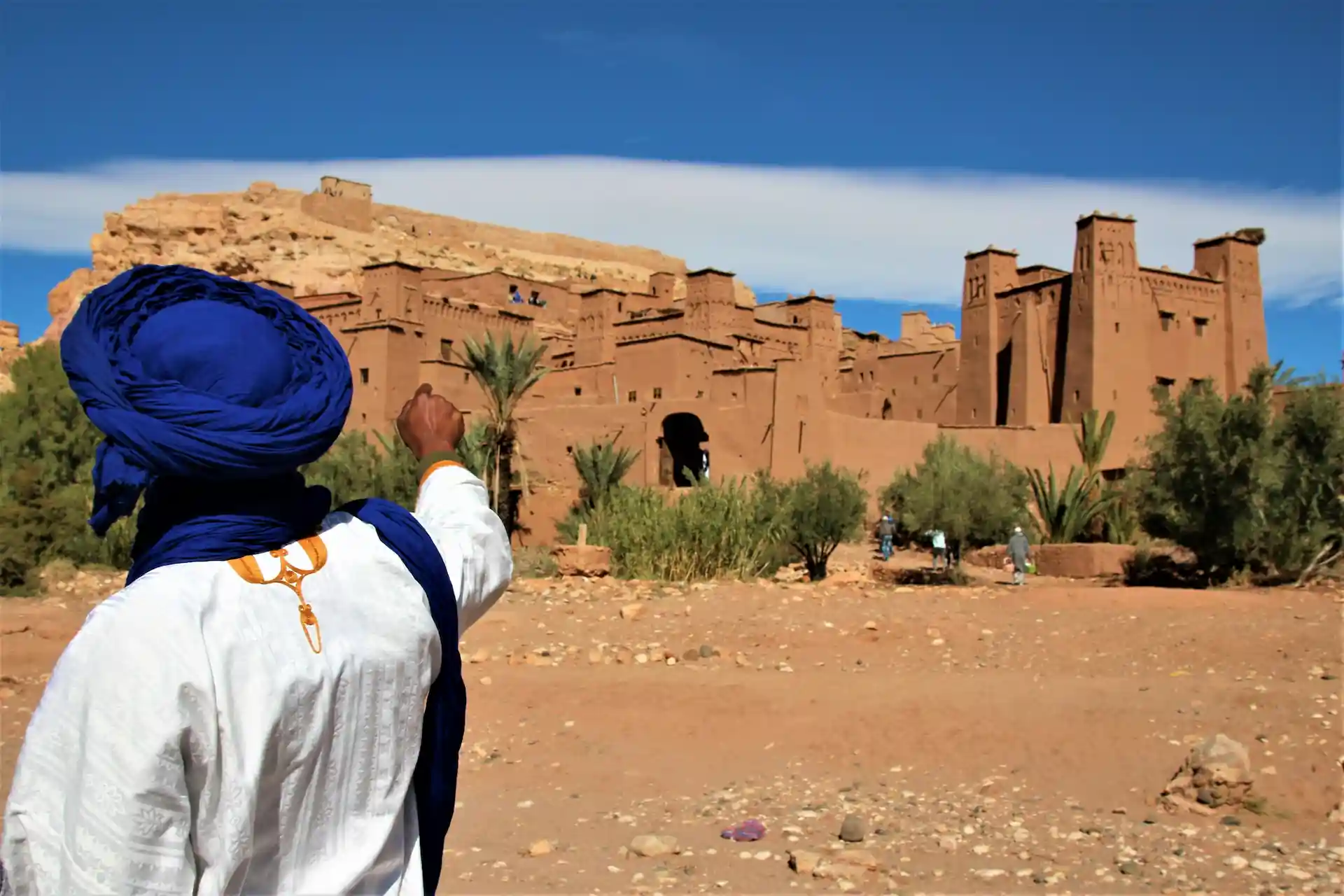
For travelers with sufficient time, visiting all 4 Morocco imperial cities in a single circuit remains one of the most rewarding ways to understand the full arc of the country’s dynastic history. A well-paced Morocco imperial cities of Morocco tour typically allocates 2-3 days in Marrakech , 2-3 days in Fes , a half to full day in Meknes (often combined with the Volubilis excursion as a single extended day trip), and 1-2 days in Rabat — totaling roughly 7-10 days for a thorough circuit that allows genuine time to absorb each city rather than rushing between monuments. Many travelers logically combine an imperial cities itinerary with a Marrakech to Fes desert circuit , using the imperial cities as bookends around a 2-3 day detour through the High Atlas, Aït Benhaddou, and the Sahara dunes of Merzouga — a combination that delivers both Morocco’s monumental architectural history and its most extraordinary natural landscape within a single, efficient itinerary.
Morocco UNESCO World Heritage Sites: The Complete Imperial Cities List
Morocco UNESCO World Heritage sites connected to the imperial cities circuit include several of the country’s most significant designations:
| Site | City | UNESCO Inscription |
|---|---|---|
| Medina of Fes (Fes el-Bali) | Fez | 1981 |
| Medina of Marrakech | Marrakech | 1985 |
| Historic City of Meknes | Meknes | 1996 |
| Archaeological Site of Volubilis | Near Meknes | 1997 |
| Rabat, Modern Capital and Historic City | Rabat | 2012 |
This concentration of UNESCO designations across a relatively compact travel circuit is one of the strongest arguments for prioritizing the imperial cities within a broader Morocco itinerary few countries offer this density of distinct World Heritage sites within a single, manageable road trip route.
Important Tip from Our Guides: The Imperial City Mistakes Most Travelers Make
“The biggest mistake we see is travelers trying to ‘do’ all four imperial cities properly in 4 or 5 days. It simply isn’t enough time — you end up rushing through Fes medina in two hours when it genuinely needs a full day, and Meknes gets skipped entirely because everyone runs out of time after Marrakech and Fes. If you only have a week, we usually recommend picking two imperial cities and doing them properly, rather than four cities done badly.
Our favorite combination for guests who also want the desert is Marrakech and Fes as bookends, with the Sahara crossing through Aït Benhaddou, the Dades Valley, and Merzouga in between. You get the two most rewarding imperial cities, plus the single best landscape journey in the country, in a single coherent route. Meknes and Rabat are extraordinary, but they reward travelers who are doing a dedicated imperial-cities-only trip rather than combining everything into one short visit.”
Over Morocco Tours Guide Team , Marrakech and Fes route specialists
Frequently Asked Questions: Morocco’s Imperial Cities
What are the four imperial cities of Morocco?
The four imperial cities of Morocco are Fes, Marrakech, Meknes, and Rabat. Each served as the capital of a different ruling dynasty at different points in Moroccan history, from the founding of Fes in the 8th century through Rabat’s confirmation as the modern capital at independence in 1955.
Which is the oldest imperial city in Morocco?
Fes is the oldest of Morocco’s imperial cities, founded in the 8th century by Idris I of the Idrisid dynasty. It is home to the Al Quaraouiyine University, recognized as the oldest continuously operating institution of higher learning in the world.
Is Marrakech or Fes better for first-time visitors?
Marrakech is generally recommended for first-time visitors prioritizing flight connectivity, vibrant souks, and an easy onward connection to the Sahara desert. Fes is recommended for travelers prioritizing historical depth and the most extensive, atmospheric medieval medina in Morocco. Many travelers visit both as part of a single circuit.
How many days do you need to visit all four imperial cities of Morocco?
A thorough imperial cities circuit takes approximately 7-10 days, allocating 2-3 days each to Marrakech and Fes, a half to full day for Meknes (often combined with Volubilis), and 1-2 days for Rabat. Shorter trips of 4-5 days are possible but typically require prioritizing two or three cities rather than all four.
What is the Versailles of Morocco?
Meknes is known as the “Versailles of Morocco,” a nickname earned through Sultan Moulay Ismail’s extensive 17th and 18th-century building campaign, which included monumental gates, vast royal stables, and palace complexes designed to rival the grand European courts of the period.
Can I combine an imperial cities tour with a Sahara desert tour?
Yes this is one of the most popular and rewarding Morocco itinerary structures. A common route uses Marrakech and Fes as bookends, with a 2/3 day desert crossing through Aït Benhaddou, the Dades Valley, and Merzouga connecting the two imperial cities. Over Morocco Tours runs this exact circuit as a standard private or group itinerary.
Are all four imperial cities of Morocco UNESCO World Heritage Sites?
Yes. The medinas of Fes, Marrakech, and the historic city of Meknes are each individually inscribed as Morocco UNESCO World Heritage Sites, as is Rabat (inscribed in 2012 as a modern capital and historic city), and the nearby archaeological site of Volubilis near Meknes.
Plan Your Morocco Imperial Cities Tour
Over Morocco Tours runs private and small-group itineraries connecting Morocco’s imperial cities with the Sahara desert, the High Atlas mountains, and the kasbah route of the south. Whether you want a dedicated imperial cities circuit or a combined route through Marrakech, Fes, and Erg Chebbi, our locally based guides bring first-hand historical and cultural knowledge to every stop. Contact our team today to start planning your route through Morocco’s four imperial capitals.
Written by the Over Morocco Tours team, Morocco. Our guides have led private and group tours through Fes, Marrakech, Meknes, and Rabat for over a decade.