Getting Around Morocco: The Complete Morocco Transportation Guide
Quick Answer: How to Get Around Morocco
- Between the northern imperial cities: Train (Casablanca–Rabat–Fes–Tangier) is fast, comfortable, and reliable for getting around Morocco
- Marrakech to the Atlas Mountains and Sahara: Private driver or organized tour is the standard choice when figuring out how to travel in Morocco’s remote regions
- Within a city: Petit taxi cheap everywhere and metered (insist on the meter)
- Between smaller towns: CTM or Supratours buses, or shared grand taxis for practical Morocco transportation
- Long distances on a tight schedule: Domestic flights (e.g., Casablanca–Dakhla, Marrakech–Tangier)
- Self-driving: Workable for confident drivers, but mountain roads and inconsistent signage make it a unique way to travel around Morocco
Trains: The Best Way for Getting Around Morocco’s Northern Cities
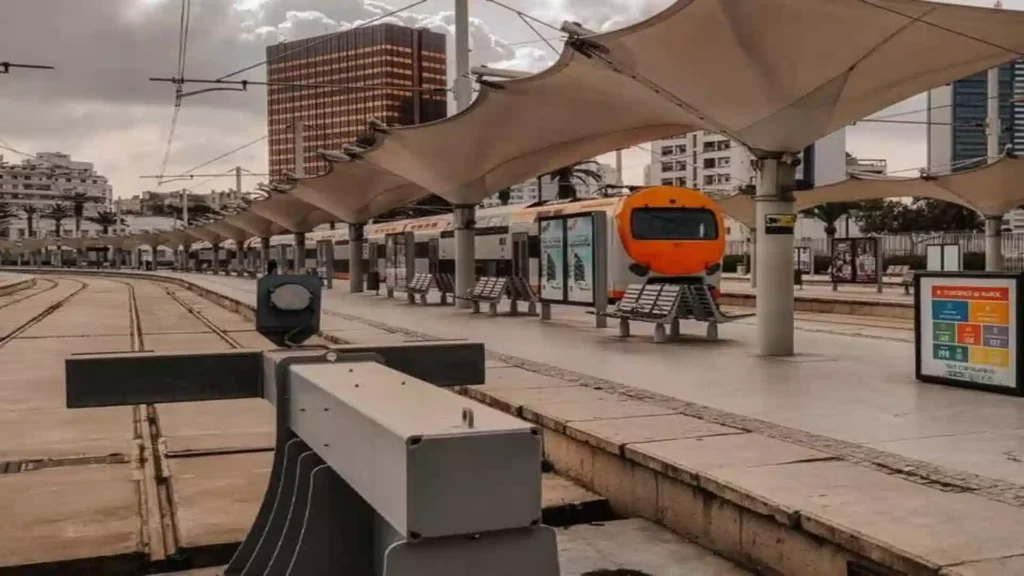
Modern tram networks in cities like Casablanca and Rabat make urban transit effortless when deciding how to get around Morocco.
Morocco’s national rail operator, ONCF, runs a genuinely excellent network connecting Casablanca, Rabat, Fes, Meknes, Kenitra, and Tangier, plus a high-speed Al Boraq line between Tangier and Casablanca that cuts what used to be a long drive down to a couple of hours. When exploring how to get around Morocco along the northern coast and imperial belt, trains are hard to beat. They come in first and second class, both comfortable, air-conditioned, and considerably more relaxing than a long-distance bus or shared taxi.
| Route | Approx. Journey Time | Notes |
|---|---|---|
| Casablanca – Rabat | ~1 hour | Frequent departures, easy day-trip connection |
| Casablanca–Tangier (Al Boraq high-speed) | ~2 hours | Morocco’s high-speed line, the fastest way north |
| Casablanca – Fes | ~3.5–4 hours | Comfortable and scenic through the Middle Atlas approach |
| Marrakech – Casablanca | ~2.5–3 hours | Regular service, useful for airport connections |
The catch: the rail network doesn’t reach the Atlas Mountains or the Sahara, or most of the south. Marrakech is currently the southern end of the line, so trains work brilliantly for the Casablanca–Rabat–Fes–Tangier corridor but stop being useful the moment your route heads toward Ouarzazate or Merzouga.
Buses: CTM and Supratours for Travel Around Morocco
Where the train network stops, Morocco’s two main intercity bus companies pick up. CTM and Supratours both run modern, air-conditioned coaches with assigned seating and a genuinely reliable schedule, reaching towns the train never will, including Essaouira, Agadir, Ouarzazate, and Zagora. They are a core element of long-distance Morocco transportation, serving as the standard budget-friendly way to cover longer distances without a private driver.
- CTM: Generally considered the most comfortable and reliable operator for getting around Morocco by road, offering online booking and fixed departure hubs.
- Supratours: Operated by ONCF (the rail company) and timed to connect directly with train arrivals, making it seamless when planning how to travel in Morocco across mixed train and bus routes.
- Local buses: Cheaper but less predictable for short regional hops, less ideal for a multi-day cross-country leg.
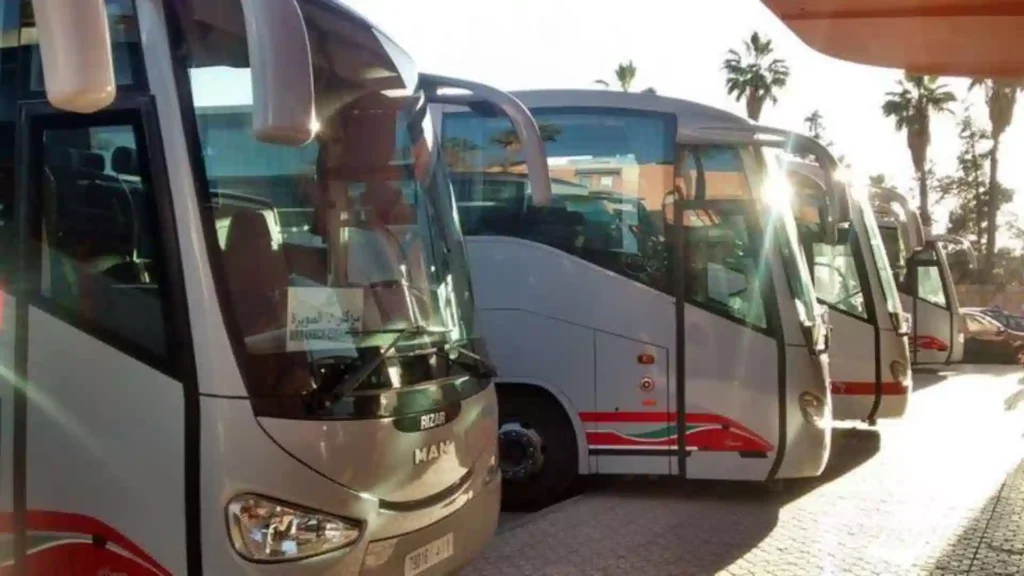
Long-distance buses like CTM and Supratours offer an affordable, reliable way when figuring out how to get around Morocco between major cities.
Petit Taxis and Grand Taxis: Local Morocco Transportation
Morocco has two distinct taxi systems, and understanding the difference avoids both overpaying and confusion when figuring out how to get around Morocco daily.
Petit Taxis: For Getting Around Within a City
Petit taxis are small, city-specific (blue in Marrakech, red in Casablanca, and mustard yellow in Midelt) and carry up to three passengers; they are the main form of transportation around Morocco’s cities. They are legally obliged to use a meter and will insist it is turned on, as the flat rates quoted up front are nearly always inflated for tourists.
Grand Taxis: Regional Links Between Towns
Larger sedans and minivans that run fixed routes between towns and grand taxis operate on a shared basis; the driver waits until all six seats are filled before departing. Alternatively, the whole vehicle can be hired privately for a higher agreed price. They represent an authentic form of local Morocco transportation for shorter regional trips, such as traveling from Ouarzazate to Ait Ben Haddou.
Private Drivers: The Premier Option for How to Travel in Morocco’s Desert & Mountains
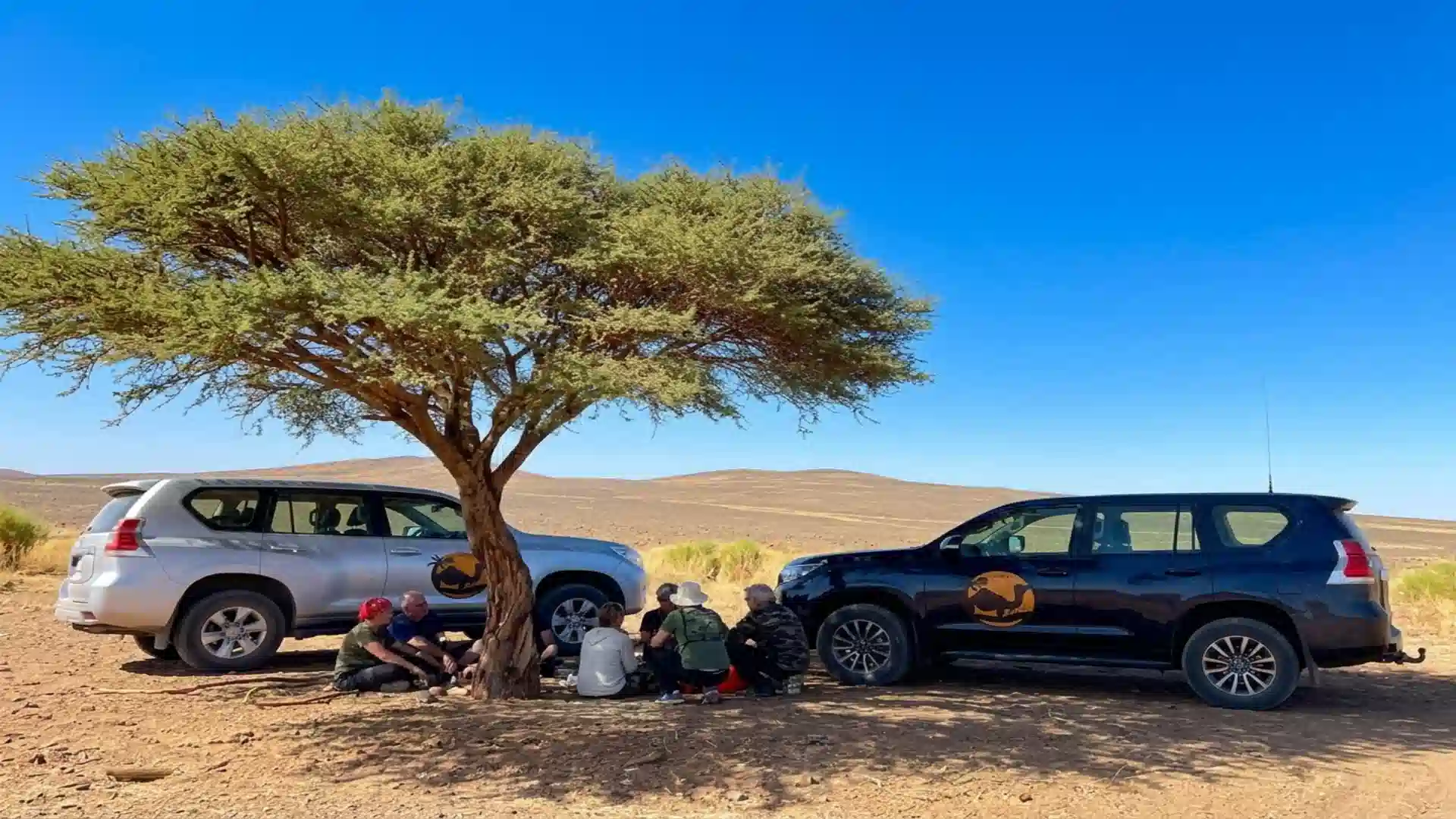
For the classic Marrakech–Atlas Mountains–Sahara route, hiring a private driver or taking an organized tour isn’t just the most comfortable option it’s genuinely the most practical way when deciding how to travel in Morocco across varied terrain. Public buses don’t stop at Ait Ben Haddou, the Dades and Todra Gorges, or hidden kasbahs along the way, and self-driving the Tizi n’Tichka mountain pass for the first time adds real stress to what should be a scenic trip.
A private driver handles the mountain roads, knows which scenic stops are worth your time, and offers flexibility that fixed public Morocco transportation cannot match. For a full breakdown of this exact route, check out our Atlas Mountains and Merzouga desert itinerary guide.

Domestic Flights: Fast Morocco Transportation for Long Distances
Morocco is larger than most first-time visitors expect, and key routes make a strong case for flying rather than driving. Royal Air Maroc and Air Arabia Maroc operate a reliable domestic network. If you want to travel around Morocco from the northern hubs down to southern destinations like Dakhla or Laayoune, a two-hour flight replaces what would otherwise be a 15- to 20-hour overland journey.
Self-Driving: Freedom and Independence When Travel Around Morocco
Renting a car offers complete schedule freedom and works well for travelers sticking to modern highways between major cities. Where it becomes challenging is along mountain passes and remote rural routes, winding tracks with sharp switchbacks, inconsistent signage once off the main roads, and local driving habits that require quick adaptation.
If you’re evaluating how to get around Morocco independently, self-driving suit experienced drivers are comfortable navigating secondary roads. However, for first-timers or those tackling the High Atlas and Sahara legs, hiring a private vehicle and driver removes significant stress.
Mastering Morocco Transportation: Arrival Routes, Costs, and Route Planning
Navigating a country with such diverse topography requires a clear understanding of your arrival options, regional transit networks, and ticketing systems. Whether you arrive by air, sea, or overland, mastering the logistics of getting around Morocco ensures a smooth, stress-free journey from start to finish.
How to Get to Morocco: International Entry Points
Before planning your internal itinerary, you need to establish how to get to Morocco efficiently based on your starting point, budget, and schedule.
1. Arriving by Air
Flying is the most direct method for international travelers. The country is served by several international airports spread strategically across its regions:
- Mohammed V International Airport (CMN) – Casablanca: The primary international gateway into North Africa. It handles long-haul direct flights from North America, the Middle East, and Europe. It connects directly to the national rail network via an underground train station located in Terminal 1.
- Marrakech Menara Airport (RAK): Ideal for travelers heading straight to southern Morocco, the High Atlas, or the Sahara. It receives numerous direct flights from major European capitals and budget carriers like Ryanair and EasyJet.
- Tangier Ibn Battouta Airport (TNG): The key northern arrival point, providing quick access to Chefchaouen, the Rif Mountains, and the high-speed rail line.
- Fes-Saïss Airport (FEZ) and Agadir–Al Massira Airport (AGA): Excellent regional entry points for exploring the northern cultural heartland or the southern Atlantic coastline, respectively.
2. Arriving by Ferry Across the Strait of Gibraltar
If you are combining European travel with North Africa, taking a ferry across the Strait of Gibraltar is a classic way for how to get to Morocco.
- Tarifa to Tangier Ville: The fastest passenger ferry route (approx. 60 minutes). It drops you directly at the harbor in Tangier city, steps away from the historic Medina.
- Algeciras to Tangier Med: The main commercial vehicle and passenger route (approx. 90 minutes). Note that Tangier Med port is located roughly 45 kilometers northeast of Tangier city center; you will need to take a connecting grand taxi, bus, or train to reach the city.
- Long-Distance Ferries: Slower passenger routes link Barcelona (Spain), Sète (France), and Genoa (Italy) directly to Tanger Med and Nador.
Complete Breakdown of Internal Morocco Transportation Networks
Once you have arrived, picking the best mode of internal transit depends on your destination’s geography. The guide below breaks down how each transport system operates on the ground.
1. The National Rail Network (ONCF & Al Boraq)
Morocco operates one of Africa’s most modern rail systems. Train transit is reliable, punctual, and highly recommended for North-South travel along the main coastal and interior plains.
Ticket Classes & Amenities:
- First Class (1ère Classe): Features assigned seat numbers, broader reclining chairs, individual power outlets, and quieter cars. On Al Boraq high-speed trains, First Class includes access to lounge seating at major stations.
- Second Class (2ème Classe): Open unreserved seating on standard conventional trains (seats are assigned on Al Boraq trains). It is clean, air-conditioned, and comfortable, though cars can get crowded during peak commuting hours.
Buying Tickets: Train tickets can be purchased at station ticket counters, via automated kiosks, or online on the official ONCF website (oncf-voyages.ma). Note that non-Moroccan credit cards can occasionally trigger fraud-prevention flags on the ONCF payment gateway; buying tickets directly at the station a day prior or using local cash at the counter is a reliable backup plan.
2. Premium Intercity Bus Lines (CTM & Supratours)
When evaluating how to travel in Morocco off the rail grid, premium intercity buses offer safety, comfort, and vast coverage.
CTM (Compagnie de Transports au Maroc): CTM operates its own dedicated terminals in major cities, distinct from chaotic central municipal bus stations (Gare Routière). Buses run on strict schedules, feature luggage tagging (a small extra fee of 5–10 MAD per bag applies), and provide cold air conditioning. Booking tickets online up to a week in advance is highly recommended for popular routes like Marrakech to Essaouira or Fes to Chefchaouen.
Supratours: As an official subsidiary of ONCF rail, Supratours coordinates its timetables with train arrivals. For instance, you can buy a single combined train-and-bus ticket from Casablanca to Essaouira; the train takes you to Marrakech station, where a Supratours coach waits directly outside to complete the drive to the coast.
3. City Taxis & Ride-Hailing Apps
Urban transport relies heavily on taxis. Understanding local customs helps avoid misunderstandings over pricing.
Petit Taxi Etiquette & Rules:
- Petit taxis only operate within official city municipal boundaries. They are legally prohibited from traveling outside city limits (e.g., a Marrakech petit taxi cannot take you to the Ourika Valley).
- Drivers use a meter (called the compteur). When entering, say politely in French or Darija: “Acheghel el-compteur, afak” (Please turn on the meter).
- Petit taxis operate on a shared basis (up to 3 individual passengers heading in the same general direction). The driver may pick up additional passengers along your route; each passenger pays their own metered fare.
- A minimum fare applies (usually 7–10 MAD depending on the city), and a night surcharge (typically 50%) is added legally after 8:00 PM or 9:00 PM.
Ride-Hailing Services: Ride-hailing platforms such as Careem, Roby, and InDrive operate in larger cities like Casablanca, Rabat, Marrakech, and Tangier. They offer cashless payments or upfront cash pricing, providing a useful alternative if you prefer to avoid meter negotiations.
4. Self-Driving: Rules, Police Checkpoints & Road Conditions
If you opt to rent a car to travel around Morocco on your own terms, keep these road realities in mind:
- Toll Highways (Autoroutes du Maroc): High-speed toll highways (marked as ‘A’ routes, such as A1 or A2) connect Tangier, Rabat, Casablanca, Marrakech, Agadir, and Fes. They are in excellent condition with modern service plazas. You pay toll fees in cash (MAD) or using a prepaid Jawaz electronic pass card.
- National Roads (Routes Nationales): Single-carriageway roads (marked as ‘N’ routes) connect secondary towns. They see heavy mixed traffic, including slow trucks, agricultural equipment, scooters, and pedestrians. Passing requires extreme caution.
- Police Checkpoints: Fixed police and gendarmerie checkpoints are situated at city entrances, major intersections, and province boundaries. Always slow down completely when approaching a checkpoint sign (Halte Gendarmerie or Halte Police). Do not pass the stop sign until the officer explicitly waves you forward. Keep your passport, driver’s license, and rental agreement accessible.
- Speed Enforcement: Speed cameras and handheld radar traps are widespread throughout the country. Speed limits are strictly enforced: 60 km/h in urban areas, 80–100 km/h on national roads, and 120 km/h on toll highways. On-the-spot fines for speeding must be paid in cash in local currency.
Step-by-Step Route Planning & Regional Transport Choices
When structuring your overall travel plan, breaking down Morocco by geographic zones makes selecting the best Morocco transportation straightforward:
Zone 1: Northern Imperial Route (Tangier – Rabat – Casablanca – Fes)
Optimal Choice: ONCF Train / Al Boraq High-Speed Rail.
Why: The rail line connects city centers directly, bypassing urban traffic and eliminating parking hassles in dense historical medinas.
Zone 2: Coastal Escapes (Marrakech to Essaouira / Agadir)
Optimal Choice: CTM / Supratours Bus or Private Driver.
Why: The highway west of Marrakech is smooth and well-maintained. Buses run multiple times daily and offer an economical 3-hour connection to the coast.
Zone 3: The Atlas Mountains, Kasbah Route & Sahara Desert (Merzouga / Erg Chigaga)
Optimal Choice: Private Driver or 4×4 Guided Tour.
Why: Public buses travel between major towns (e.g., Marrakech to Ouarzazate or Errachidia) but bypass remote scenic viewings across mountain passes, palmeraies, and desert dunes. A private driver provides flexibility for photo stops, local dining, and village detours.
Zone 4: Deep Southern Sahara & Atlantic Coast (Dakhla & Beyond)
Optimal Choice: Domestic Flights (Royal Air Maroc).
Why: Overland driving from Casablanca or Marrakech to Dakhla requires over 20 hours across desert highways. Flying saves entire travel days.
Budgeting for Morocco Transportation (Estimated Costs in MAD)
To help you budget accurately, here is a realistic guide to transport costs across Morocco (prices in Moroccan Dirhams, MAD; 10 MAD is roughly equivalent to 1 USD / 0.90 EUR):
| Transport Type | Sample Route / Usage | Estimated Cost (MAD) |
|---|---|---|
| Al Boraq High-Speed Train | Tangier to Casablanca (2nd Class / 1st Class) | 150 – 300 MAD |
| Standard ONCF Train | Casablanca to Fes (2nd Class) | 120 – 180 MAD |
| CTM Intercity Bus | Marrakech to Essaouira | 100 – 130 MAD |
| City Petit Taxi | Inner-city trip (3–5 km ride) | 15 – 35 MAD |
| Shared Grand Taxi | Regional trip per seat (e.g., Fes to Sefrou) | 20 – 40 MAD |
| Rental Car (Economy) | Per day rental cost (excluding fuel & tolls) | 250 – 450 MAD / day |
| Private Driver & Vehicle | Multi-day touring per day (includes fuel and driver expenses) | 1,500 – 2,500 MAD / day |
Which Option Fits Your Trip?
| Your Route | Best Morocco Transportation Option |
|---|---|
| Casablanca, Rabat, Fes, Meknes, Tangier | Train ideal for getting around Morocco’s main cities |
| Marrakech to Essaouira or Agadir | CTM/Supratours bus, or private driver for total flexibility |
| Marrakech to the Atlas Mountains and Sahara | Private driver or organized tour best way when figuring out how to travel in Morocco’s south |
| Within any single city | Petit taxi (insist on using the meter) |
| Short regional hops (e.g., Ouarzazate to Ait Ben Haddou) | Grand taxi |
| Far north to far south in a limited timeframe | Domestic flight |
Practical Tips for Getting Around Morocco
- Book trains and CTM buses online in advance: Popular routes and holiday periods sell out quickly. Advance booking online guarantees your seats.
- Always confirm the petit taxi meter is running: If a driver refuses to turn it on, negotiate a clear price upfront or take another cab.
- Don’t underestimate mountain driving times: A stretch that looks short on a map, such as Marrakech to Merzouga, takes 2 to 3 full days of driving once you account for mountain passes.
- Keep small cash bills handy: Drivers and taxi operators often lack change for 100 or 200 MAD bills, especially outside major cities.
- Pack for climate shifts: Moving from coastal cities into the mountains or desert involves sharp temperature changes; see our Morocco packing list for recommendations.
Frequently Asked Questions About How to Travel in Morocco
What’s the best way to travel between Morocco’s major cities?
For northern cities (Casablanca, Rabat, Fes, Meknes, and Tangier), the ONCF train is the fastest and most reliable choice. For routes connecting Marrakech to the Atlas Mountains or Sahara, hiring a private driver is the most practical solution.
Is it easy for tourists getting around Morocco without a car?
Yes, combining trains, CTM/Supratours buses, city taxis, and private drivers allows you to travel around Morocco efficiently without renting a car.
Can I take a train from Marrakech to the Sahara Desert?
No, the national rail network stops at Marrakech. Reaching Merzouga or Erg Chigaga requires taking a bus, hiring a private driver, or self-driving across the High Atlas passes.
Is it safe to rent a car and self-drive in Morocco?
Self-driving is safe along modern toll highways and major roads, but winding mountain passes, limited rural lighting, and unpredictable local traffic mean it suits confident drivers.
What’s the difference between a petit taxi and a grand taxi in Morocco transportation?
Petit taxis are small, metered vehicles restricted to city boundaries for up to 3 passengers. Grand taxis are larger shared vehicles running fixed intercity or regional routes between neighboring towns.
Are domestic flights worth it when evaluating how to get around Morocco?
Yes, especially for long north-to-south trips like Casablanca to Dakhla. Taking a short domestic flight saves entire days of road travel.
Do I need a private driver for the Marrakech to Merzouga route?
While not legally required, hiring a private driver is the most convenient way to enjoy the journey. It allows you to stop at key landmarks like Ait Ben Haddou, Dades Gorge, and Todra Gorge along the route.
Related Guides
- What to Do in Morocco: The Complete Guide to Where to Go & What to See
- Atlas Morocco Map: The Complete Guide to the Atlas Mountains & Desert Routes
- Cities in Morocco: The Complete Guide to Where to Go, City by City
- Is Marrakech Worth Visiting? An Honest Answer
- The Best Time to Visit Morocco: A Month-by-Month Guide
- The Complete Morocco Packing List for 2026
Skip the Logistics: Let a Local Driver Handle It
Trains and buses cover the major cities, but the most memorable legs of travel around Morocco mountain passes, kasbah routes, and desert dunes are best experienced with an experienced local driver.
Explore our private tour itineraries and let us manage every transfer and scenic stop along the way.