Is Morocco an African Country? The Complete Answer for 2026/2027
Yes — Morocco is an African country, and has been since its foundation as a unified kingdom in the 8th century CE. It is one of 55 member states of the African Union, competes internationally as an African nation in sports, was a founding member of the Organisation of African Unity in 1963, and its indigenous Amazigh (Berber) people represent one of Africa’s oldest continuous cultural traditions, predating Arab, Roman, and Phoenician contact by thousands of years.
That said, the question deserves a thorough answer — because Morocco’s African identity is more layered, more historically contested, and more politically complex than a simple yes conveys. Morocco is simultaneously African, Arab, and Amazigh. It was absent from the African Union for 33 years over a territorial dispute. Its economy is more deeply integrated with Europe than with sub-Saharan Africa. And its geographic position — 14 km from Spain, at the edge of the Saharan desert, between the Atlantic and the Mediterranean — makes it genuinely unlike any other African country.
This guide explores all of it: the geographic reality, the political identity, the cultural heritage, the historical African connections, and why Morocco’s answer to “are you an African country?” is both simply yes and fascinatingly complicated.
Is Morocco an African Country? Quick Facts
| Question | Answer |
|---|---|
| Is Morocco in Africa geographically? | Yes — northwestern corner of the African continent |
| Is Morocco a member of the African Union? | Yes — rejoined January 30, 2017 as the 55th member state |
| Was Morocco a founding African Union member? | Yes — founding member of the OAU in 1963 |
| Does Morocco compete in African sports? | Yes — member of CAF (football), ANOCA (Olympics) |
| Is Morocco part of the Arab world? | Yes — and the Arab League |
| Is Morocco part of the Maghreb? | Yes — the northwesternmost Maghreb country |
| Does Morocco have the Sahara Desert? | Yes — Erg Chebbi and Erg Chigaga in the southeast |
| Is Morocco considered a North African country? | Yes — classified as North Africa by all international bodies |
| Is Morocco in the Middle East? | No — over 4,000 km west of the Middle East |
Morocco Is an African Country: The Geographic Foundation
Morocco is an African country because it sits on the African continental plate, its territory is entirely within Africa, and it shares the continent with 54 other African Union member states — a geographic reality that no cultural, linguistic, or political characteristic changes.
The African geographic credentials:
- Continental plate: Morocco sits on the African tectonic plate — the geological foundation of the African continent
- Land borders: Morocco’s only land borders are with Algeria and Mauritania (via Western Sahara) — both African countries
- No land connection to any other continent: Unlike some countries that straddle continental boundaries, Morocco has no land bridge to Europe or the Middle East
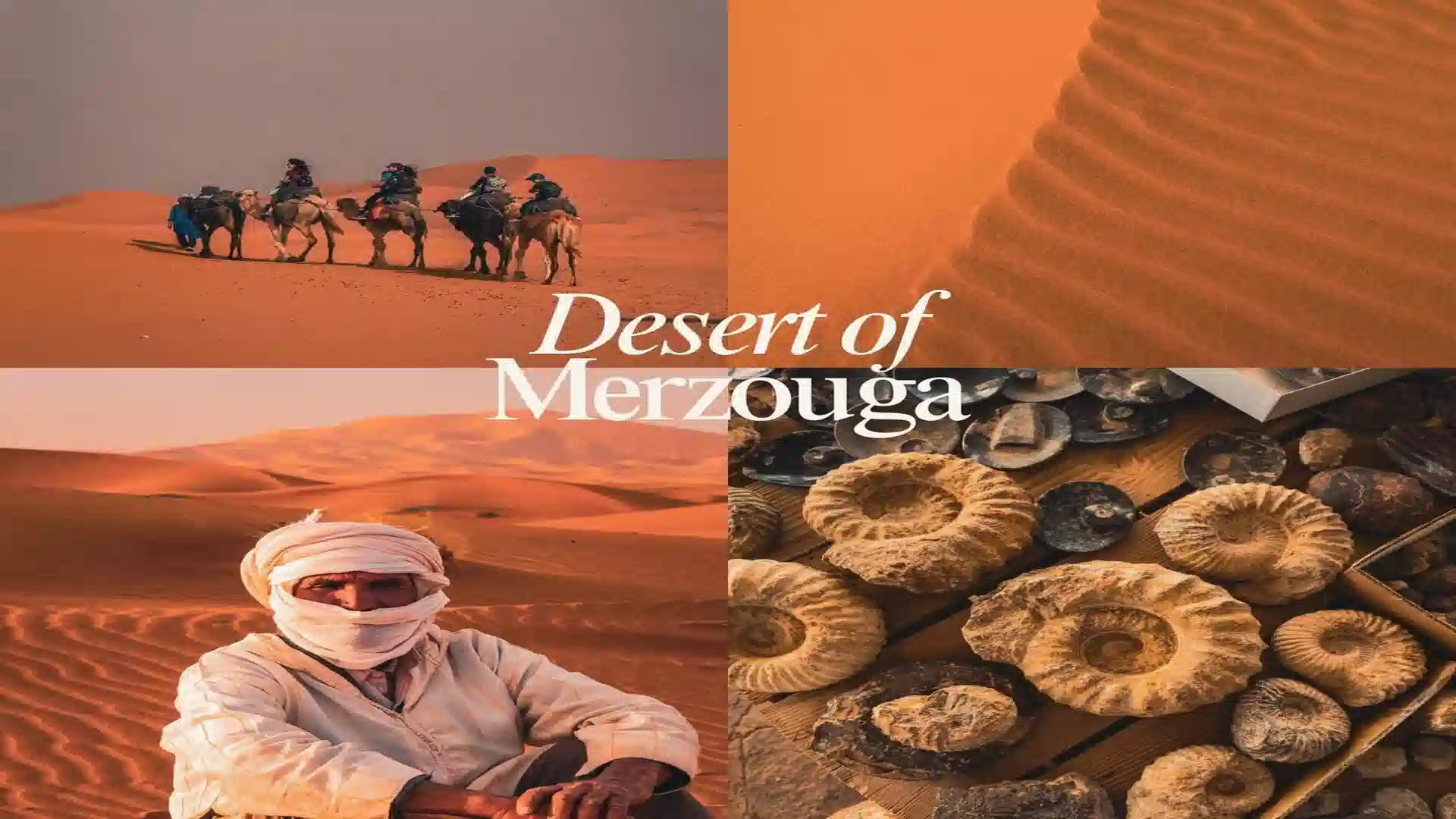
- Sahara Desert: Morocco contains two of Africa’s great dune fields — Erg Chebbi and Erg Chigaga — and its southeastern landscape is continuous with the Algerian and Saharan desert that defines the continent’s geographic interior
- African coastline: Over 3,500 km of Atlantic and Mediterranean coastline — the shores of Africa facing Europe and the ocean
What makes Morocco unusual within Africa — but not less African — is its proximity to Europe. On a clear day you can see Spain from the Moroccan coast, and ferries cross the Strait of Gibraltar in about an hour, but the country itself is entirely on the African continent.
Morocco and the African Union: A Complex Political History
Morocco is currently a full member of the African Union — the 55th member state, readmitted on January 30, 2017 after a 33-year absence — but its African Union history is one of the most politically interesting of any African country, revealing the tensions between its African geographic identity and its specific territorial claims.
Understanding this history is essential to understanding what Morocco’s African identity actually means:
Founding Member (1963)
Morocco was a founding member of the Organisation of African Unity (OAU) in 1963 — the pan-African body created in the immediate aftermath of African decolonisation, designed to coordinate the newly independent African states’ political and economic cooperation. Morocco’s founding membership placed it firmly within the project of African continental solidarity from the beginning.
Withdrawal (1984)
Morocco withdrew because the OAU admitted the Sahrawi Arab Democratic Republic (SADR) — the political entity representing the indigenous Sahrawi people of Western Sahara, a territory Morocco claims and administers as its “Southern Provinces.” Remaining in an organisation that recognised a state Morocco considers part of its own territory was, for Rabat, politically untenable.
This 33-year absence was not a rejection of African identity — it was a specific geopolitical dispute over one territory. Throughout this period, Morocco maintained deep bilateral relationships with African states and continued participating in African economic and cultural life.
Return (2017)
On January 30, 2017, the number of member states of the African Union rose from 54 to 55 when nearly 40 members supported Morocco’s readmission. King Mohammed VI sent a message to the AU summit saying his country “should not remain outside its African institutional family, and it should regain its natural, rightful place within the AU.” This return was a deliberate strategic choice to re-engage with the African continental body.
Morocco in the African Union Today
Morocco has chaired the rotating presidency of the Peace and Security Council (PSC) of the African Union, responsible for monitoring peace, security, and stability on the African continent. Since rejoining the AU, Morocco has strengthened its diplomatic influence, advocating for economic integration and cooperation, as well as enhancing peace and stability, particularly in regions like the Sahel, central Africa, and the Great Lakes region.
Morocco has also applied to join ECOWAS (the Economic Community of West African States) — a bid submitted in 2017 that remains under discussion and would, if successful, make Morocco the only North African country with membership in a West African regional body.
Morocco’s Amazigh Heritage: Africa’s Indigenous Roots
Morocco’s African identity is most deeply expressed not in its Arab or Islamic characteristics but in its Amazigh (Berber) cultural heritage — an indigenous North African civilisation that predates the Arab conquest by thousands of years, shares common roots with Berber communities from Morocco to Egypt, and represents one of Africa’s oldest continuous cultural traditions.
The Amazigh people are the original indigenous inhabitants of North Africa:
- Pre-Arab: Amazigh presence across Morocco predates the Arab conquest of the 7th century CE by millennia — rock art, Libyco-Berber inscriptions, and archaeological evidence confirm continuous Berber cultural presence going back thousands of years
- Pan-African indigenous network: Amazigh communities extend from Morocco’s Atlantic coast to Egypt’s Siwa Oasis — a 5,000 km cultural arc across northern Africa
- Tuareg connection: The Tuareg people of the Sahara — including communities in Mali, Niger, Algeria, and Libya — are an Amazigh people, part of the same broader Berber cultural family that constitutes Morocco’s indigenous foundation
- Tamazight official language: Morocco recognised Tamazight (Berber) as an official language in its 2011 constitution — a constitutional affirmation of indigenous African heritage
- Tifinagh script: Morocco’s Amazigh writing system, officially adopted in 2003, is one of the oldest scripts in continuous use in Africa
Approximately 40% of Morocco’s population identifies primarily as Amazigh, and over 60% has some degree of Berber ancestry. This indigenous African heritage is the deepest and oldest layer of Morocco’s identity — older than Arab Morocco, older than Islamic Morocco, and older than any of the empire-building dynasties that shaped the country’s medieval history.
Morocco’s Saharan African Connections
Morocco’s southeastern geography connects it directly and physically to the Saharan and sub-Saharan African world — through the same desert trade routes that connected Morocco to Mali, Senegal, and the Niger River basin for over a thousand years of trans-Saharan commerce. This is one dimension of Morocco’s African identity that is completely invisible from a European perspective but fundamental to understanding what Morocco actually is.
The trans-Saharan connection in practice:
- Sijilmassa: Near modern Rissani (35 km from Merzouga), the medieval city of Sijilmassa was for centuries the most important northern terminus of the trans-Saharan trade — a city that existed entirely to connect sub-Saharan gold, salt, ivory, and enslaved people to North African and Mediterranean markets. The Moroccan economy was deeply entangled with sub-Saharan Africa long before European contact.
- Saadian conquest of Timbuktu (1591): Sultan Ahmad al-Mansur sent a Moroccan army across 2,000 km of Sahara to conquer the Songhai Empire at Timbuktu — establishing Moroccan political authority over the greatest centre of Islamic scholarship in sub-Saharan Africa for several decades
- Gnawa people: Morocco’s Gnawa community — whose music traditions are now a significant part of Moroccan cultural identity — descends from enslaved West Africans brought north along the trans-Saharan routes. Khamlia village near Merzouga is a living example of this sub-Saharan African heritage within Morocco’s desert territory.
- Tafilalet date palms: The date palms that line the Ziz Valley and Draa Valley between Merzouga and Zagora are a cultivation tradition shared with the oasis communities of the Saharan interior — a living agricultural connection to the broader Saharan African world
Morocco’s African Economic Identity
Morocco is Africa’s 5th or 6th largest economy (by GDP), one of the continent’s leading foreign direct investors in sub-Saharan Africa, and a growing infrastructure hub with ambitions to position itself as a gateway between Europe and the rest of Africa. Moroccan firms have been actively reducing their dependence on Europe and investing directly in fast-growing African economies.
Morocco’s African economic footprint:
- Bank of Africa (formerly BMCE Bank): Morocco’s second-largest private bank operates across 32 African countries — one of the largest pan-African banking presences on the continent
- Attijariwafa Bank: Morocco’s largest bank has operations across 15 African countries, managing financial infrastructure in Senegal, Ivory Coast, Cameroon, and beyond
- OCP Group (Office Chérifien des Phosphates): Morocco controls roughly 70% of the world’s phosphate reserves — a resource critical for African agricultural fertiliser production. OCP has been developing African fertiliser supply partnerships as a deliberate pan-African agricultural investment.
- Royal Air Maroc: The national carrier has been aggressively expanding African routes, establishing Casablanca as a hub for intra-African connections
- Infrastructure investment: Morocco has invested in undersea Atlantic cables, port infrastructure, and the proposed Nigeria-Morocco Gas Pipeline — a 6,000 km pipeline that would connect Nigeria’s natural gas reserves to Europe via Morocco, the most ambitious single infrastructure project on the African continent
Morocco as an African Country in Sport
Morocco’s African identity is unambiguous in international sport — the country competes as a member of the Confederation of African Football (CAF), participates in the Africa Cup of Nations, and sent its athletes to represent Africa at every Olympic Games. The most significant recent demonstration was the 2022 FIFA World Cup in Qatar, where Morocco became the first African country to reach the semi-finals of a World Cup — a historic achievement celebrated across the African continent.
| Sport | Organisation | Morocco’s Position |
|---|---|---|
| Football | CAF (Confederation of African Football) | Full member, hosts AFCON tournaments |
| Olympics | ANOCA (Association of National Olympic Committees of Africa) | Competes as African nation |
| Athletics | Athletics Africa | Member federation |
| Basketball | FIBA Africa | Member federation |
| Tennis | CAT (Confederation of African Tennis) | Member federation |
Morocco is also co-hosting the 2030 FIFA World Cup alongside Spain and Portugal — the first time the tournament has been co-hosted across two continents simultaneously, with Morocco representing Africa’s portion of the hosting arrangement.
Why Some People Don’t Think of Morocco as “African”
The perception that Morocco is not fully African — or is more Middle Eastern than African — is a product of four specific factors: its Arabic language, its Islamic religion, its physical proximity to Europe, and the tendency in Western popular culture to associate “African” exclusively with sub-Saharan African characteristics. None of these factors changes Morocco’s geographic or political status as an African country, but understanding them explains why the question gets asked.
The “African” Stereotype Problem
In many Western popular culture contexts, “African” has become coded as specifically sub-Saharan African in appearance, culture, and landscape — the savanna, the wildlife, the visual imagery of equatorial and southern Africa that dominates Western media representation of the continent. Morocco’s medina cities, Arabic language, Atlas Mountains, and Atlantic coast don’t fit this mental image — leading some people to instinctively place Morocco elsewhere.
This is a limitation of the stereotype, not a fact about Morocco. Africa contains 54 countries spanning an enormous range of environments, cultures, languages, and peoples. North Africa’s Mediterranean and Saharan characteristics are as authentically African as East Africa’s savannas or West Africa’s forests.
The Arab League Factor
Morocco’s membership in the Arab League — alongside 21 other countries — contributes to the perception of Arab-world or Middle Eastern identity. But as noted earlier, the Arab League is a cultural and linguistic organisation, not a geographic one. Mauritania, Somalia, and Djibouti are also Arab League members, and all are unambiguously African countries.
The European Proximity Factor
Morocco’s 14 km distance from Spain, and the daily ferry traffic across the Strait of Gibraltar, create a mental geography in which Morocco seems “closer” to Europe than to “Africa” for many European visitors. Physically, of course, Morocco is entirely on the African side of the water. The proximity is real but it does not move the continent.
Morocco’s African Cultural Contributions
Morocco has made specific, traceable contributions to African cultural heritage — from the Amazigh carpet weaving and silversmithing traditions shared across North Africa, to the Gnawa musical tradition rooted in sub-Saharan African heritage, to Morocco’s role as a preserver of Islamic African scholarship in the historic libraries of Fes.
Key Moroccan contributions to African cultural heritage:
- Al Quaraouiyine University in Fes: Founded in 859 CE by Fatima al-Fihri, Al Quaraouiyine University is recognised as the world’s oldest continuously operating university. For centuries, it attracted scholars from across Africa, shaping the intellectual life of the Islamic world from Morocco to Mali.
- Gnawa music tradition: Morocco’s Gnawa music — performed at the annual Gnawa and World Music Festival in Essaouira — is a living cultural bridge between Morocco and West Africa, rooted in the spiritual and musical traditions of enslaved sub-Saharan Africans brought north along the trans-Saharan routes
- Amazigh textile art: Traditional Berber carpet weaving — practised across Morocco, Algeria, and Tunisia — is one of the most significant indigenous art forms in North Africa, with designs encoding thousands of years of Amazigh cultural memory
- Moroccan cuisine in Africa: Tagine cooking, couscous preparation, and preserved lemon and harissa condiments — all originating in North Africa — are now part of the culinary vocabulary of multiple African countries
Is Morocco More African or More Arab?
Morocco is both — and reducing it to either identity alone misses the full picture. The question “is Morocco more African or Arab” contains a false premise: that being Arab and being African are mutually exclusive identities.
Egypt is both African and Arab. Libya is both African and Arab. Tunisia, Algeria, and Mauritania are all simultaneously African countries and Arab-world countries. Morocco belongs to this same category — African by geography and political membership, Arab by linguistic and cultural identity, and Amazigh by indigenous heritage.
| Layer of Identity | Evidence |
|---|---|
| African | African continental geography, African Union member, CAF football, Saharan territory, Amazigh indigenous people |
| Arab | Arabic official language, Arab League member, Arab cultural heritage since 7th century CE |
| Amazigh (Berber) | 40%+ of population, Tamazight official language since 2011, Tifinagh script official since 2003 |
| Mediterranean | Northern coastline, Andalusian architectural heritage, European proximity |
| Saharan | Erg Chebbi, Erg Chigaga, Draa Valley, trans-Saharan trade history |
| Atlantic | 2,500 km Atlantic coast, Casablanca, Agadir, Essaouira |
Morocco does not choose between these identities. It holds all of them simultaneously — and has done so, in various combinations, for the entire course of its history.
Frequently Asked Questions: Is Morocco an African Country?
Is Morocco an African country?
Yes — Morocco is an African country in every meaningful sense: geographic (located on the African continental plate in the northwestern corner of the continent), political (member of the African Union since 2017 and founding member of the OAU in 1963), sporting (competes under CAF in football and as an African nation in the Olympics), and cultural (home to the Amazigh people, one of Africa’s indigenous populations).
Is Morocco part of Africa?
Yes — Morocco is part of Africa, specifically the North African sub-region known as the Maghreb. It borders Algeria to the east (also an African country) and Mauritania to the south.
Why do some people think Morocco is not in Africa?
The confusion typically stems from Morocco’s Arabic language and Islamic religion — characteristics shared with Middle Eastern countries — combined with a tendency in Western popular culture to associate “Africa” exclusively with sub-Saharan African characteristics. Morocco is geographically in Africa regardless of these cultural characteristics.
Is Morocco a member of the African Union?
Yes — Morocco is the 55th member of the African Union, readmitted on January 30, 2017 after a 33-year absence (1984–2017) caused by a territorial dispute over Western Sahara. Morocco was also a founding member of the African Union’s predecessor, the Organisation of African Unity, in 1963.
Does Morocco compete as an African country in the FIFA World Cup?
Yes — Morocco competes in the African zone qualifiers (CAF) for the FIFA World Cup. Morocco made history at the 2022 World Cup in Qatar by becoming the first African country to reach the semi-finals.
Is Morocco going to host the FIFA World Cup as an African country?
Yes — Morocco will co-host the 2030 FIFA World Cup alongside Spain and Portugal, in the first-ever intercontinental hosting arrangement. Morocco will represent Africa’s portion of the tournament.
What makes Morocco uniquely positioned within Africa?
Morocco is the African country closest to Europe (14 km across the Strait of Gibraltar), the only African country with coastlines on both the Atlantic Ocean and the Mediterranean Sea, and one of Africa’s largest economies. This position makes it a natural bridge between Africa and Europe — a role King Mohammed VI has explicitly positioned Morocco to develop through African Union diplomacy, infrastructure investment, and the 2030 World Cup co-hosting arrangement.
Is Morocco considered a developing country within Africa?
Morocco is classified as a lower-middle-income developing country by the World Bank and is one of Africa’s larger economies — typically ranked 5th or 6th largest by GDP. It performs better than the African average on most development indicators, while still maintaining significant room for improvement relative to global standards.
Visiting Morocco: An African Country Unlike Any Other
Morocco is an African country in the fullest sense — Saharan desert in the south, Atlantic surf on the west, ancient medina cities across the centre, and Amazigh Berber villages clinging to the High Atlas. What makes it exceptional within Africa is the specific combination: all of these elements within a country you can reach from London in 3.5 hours.
At Over Morocco Tours, Morocco is not an abstract geographic classification — it is the country we were born in, grew up in, and guide travelers through every single week of the year. Our drivers cross the Tizi n’Tichka pass into the Saharan south. Our guides walked the Fes medina as children. Our camp hosts in Merzouga are Berber families who have lived at the edge of Erg Chebbi for generations.
This is Africa. Come and see it.
Our most popular routes showing Morocco’s African range:
- Marrakech → Atlas Mountains → Sahara Desert at Merzouga (3 days): From imperial city to sand dunes — the full North African range in one circuit
- Casablanca → Fes → Chefchaouen → Sahara → Marrakech (7–10 days): Morocco’s complete geography, north to south
- Custom itineraries: Built around your arrival city and priorities
Contact Us to Plan Your Trip →
*Based in Merzouga, Morocco, Africa. Running private tours since 2012.*