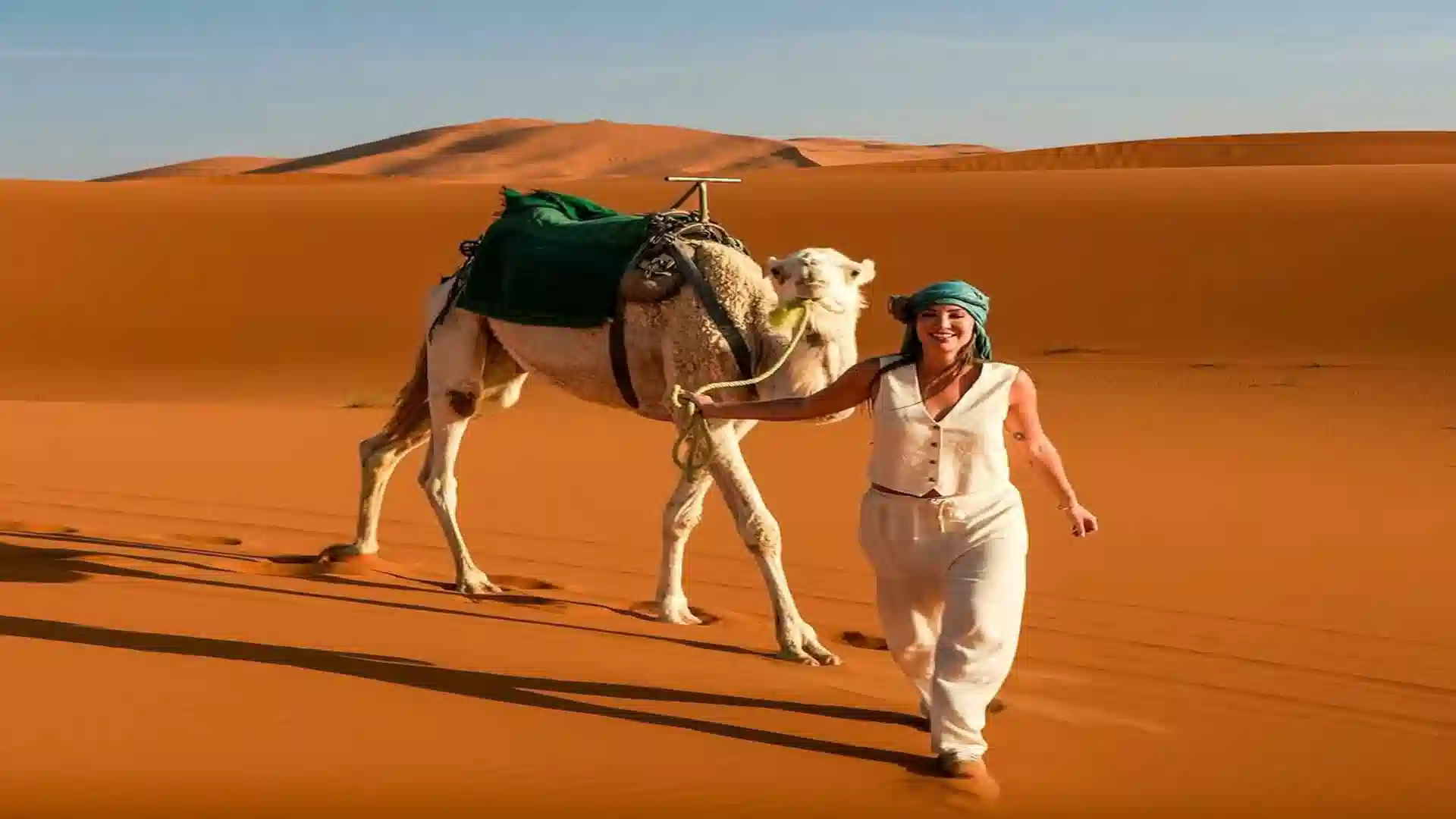
Is Morocco Safe to Visit in 2026? An Honest Answer from a Local Operator
This is a question we get asked before almost every single booking. Sometimes it’s a simple question: “Is Morocco safe to visit? “My sister says she heard Morocco is dangerous is that true?” Sometimes it comes disguised as something else. And sometimes it sounds like pure anxiety: “We’ve always wanted to go but we keep postponing it.
We know it all too well. You deserve a real answer before you book flights, accommodation and a tour of a country you’ve never set foot in – not a marketing answer designed to sell you a trip, and not a worst-case scenario designed to justify charging more for ‘safety services’.
Over Morocco Tours is a local operator based on the edge of the Sahara Desert in Merzouga. Our drivers and guides are on the roads of Morocco every week. Our team lives in these cities, walks these medinas and knows the difference between the headlines and what is really happening on the ground. This is what we actually tell our clients, before they book not after.
In short, yes it’s safe to travel to Morocco in 2026. But “safe” is something that needs to be broken down honestly, because Morocco is not a resort bubble, but a real, working country with its own rhythms and social codes, and understanding both the real risks and the overblown ones will make your trip dramatically better.
Table of Contents
What Is the Morocco Travel Advisory 2026 Actually Saying?
But first, let’s consult the government sources because these are the primary documents that your family members will google the moment you tell them you’re going.
Morocco Travel Advisory 2026 by Country
| Government | Rating | What It Means |
|---|---|---|
| USA (State Dept.) | Level 2 — Exercise Increased Caution | Same rating as France, Germany, Italy, Spain, and the UK. |
| UK (FCDO) | Generally safe — normal precautions | No advisory against travel to any tourist destination. |
| Australia (Smart Traveller) | Exercise a high degree of caution | Terrorism risk noted; avoid within 30km of the Berm in Western Sahara. |
| Canada | Exercise a high degree of caution | Avoid all travel within 20km of Algerian border. |
What this actually means, in plain English: Major Western governments say Morocco is open to tourism. The USA rates Morocco at the same Level 2 as France, the United Kingdom, Germany and Spain, all countries no one hesitates to visit. Australia and Canada’s “high degree of caution” advisories reference the remote Algerian border and the militarized Western Sahara berm areas no tourist itinerary ever visits.
Morocco travel advisory 2026 consensus is clear: The tourist cities of Marrakech, Fes, Chefchaouen, Casablanca, Tangier and Essaouira and the Sahara Desert around Merzouga are all approved for travel with normal awareness. No active advisory for any visiting destination on a normal Morocco tour itinerary.
Morocco received a record 19.8 million international visitors in 2025, which represented a 19.3% increase in tourism revenue year-on-year. Countries don’t post those kind of numbers on real security problems. The market gives an honest answer to the safety question: visitor demand.
The Real Risks in Morocco And The Ones That Are Blown Out of Proportion
That’s where most articles about travel safety go wrong, and they do so in one of two directions. They either dismiss your concerns entirely, or they list every possible risk as if it were a daily occurrence. We will be specific.
Low risk in Morocco is not what it seems.
Violent crime against tourists is uncommon. Morocco’s homicide rate is around 1.2 per 100,000 inhabitants, a lower rate than the United States (6.3), similar to Portugal, and far below the world average. Armed robbery, assault and serious crime against visitors is not part of normal Moroccan tourism. The Brigade Touristique, a specialized tourist police force found in all major cities, is present in medinas, at main sites and around Djemaa el-Fna in Marrakech. They wear distinctive uniforms, speak English and French, and are there only to help visitors.
Terrorism is referred to in the government advice, but there has not been a major incident affecting tourists since 2011. Moroccan security services are widely recognized as effective and proactive, and the country’s status as a US Major Non-NATO Ally is a testament to the depth of its security cooperation with Western governments.
The Sahara Desert around Merzouga is politically stable, well policed and receives large numbers of international visitors without incident. This is a common question for people booking desert tours and we cover it specifically below.
What Is a Real but Managed Risk in Morocco?
Petty theft and pickpocketing are problems in busy medinas, crowded souks and popular squares like Djemaa el-Fna in Marrakech and the Bab Bou Jeloud area of Fes. This is totally comparable to Barcelona, Rome or Paris – cities where no one will say no to a visit but everyone knows to keep their bag safe. So no wallet in a back pocket, a crossbody bag worn in front and good old crowd awareness takes care of this all the way.
In every big city taxis are notorious for overcharging. Small taxis (small red or blue city taxis) are legally required to use a meter. Many drivers will try to bargain for a fixed rate instead – sometimes reasonable, sometimes not. The fix: insist on the meter, or agree on the price upfront before going in. By 2026, the Careem and inDrive ride-hailing apps are in Marrakech and Casablanca and eliminate this friction altogether.
The greatest practical safety risk for tourists in Morocco is road traffic, not crime. The standard of driving varies, particularly on rural mountain roads and after dark. If you drive yourself, drive defensively, and avoid driving on the N13 and mountain passes at night and in rural areas, expect animals to appear on the road without warning. If you are on a private tour with a professional driver, this risk is largely mitigated for you — our drivers have extensive experience on all the main routes in Morocco.
Complete 2026 Guide to Morocco Tourist Scams to Avoid and Watch Out For
It’s no accident that one of the most searched Morocco phrases is “Morocco tourist scams to avoid”. The scams in Morocco are not dangerous but they can be stressful and costly if you are not prepared. All of them can be avoided with a single page of advance knowledge.
Morocco tourist scams to avoid the most common ones
The Scam of the Fake Guide, A man approaches you near a medina gate, says he is a “student” or “local friend” and offers to show you around for free. After 30-60 minutes they will then take you to a carpet shop or leather goods store (for which they get 20-40% commission on whatever you buy) and then ask you to pay for their ‘free’ tour. The fix: Refuse any unsolicited guide offers at the entrances to medina. Book guides through your riad or licensed guides from tour operator. The cost of a licensed guide is transparent and reasonable, usually 400-600 MAD for half a day.
The “Street Closed” Detour, You’re headed for a particular landmark and a friendly local tells you the street is closed today – festival, construction, prayer time – and offers to show you an alternative route. The other path led to a shop. The street was never shut. The fix: Just trust your downloaded Google Maps offline. A short “no thanks” and you’re back to your original path, and the interaction is over.
The Henna Trap: A woman in a medina will offer to do a small henna design on your hand for free, or for a small fee. The design becomes complicated and large and the demand at the end is 200-500 MAD or more. The fix: never put your hand out to a random henna artist. If you want henna, make sure you agree on the whole design and price in writing before anything starts.
The Gap in Restaurant Prices, You sit down at a restaurant without looking at the price on the menu, you have a meal, and you get a bill that is way higher than the food seems to justify. The fix: always check the menu before taking a seat. Tourist areas of Marrakech and Fes should have menus in a visible place for tourists – ask if not. You’ll find restaurants a block or two off the main tourist drag that charge half as much for the same or better food.
The Argan Oil “Cooperative”, Your driver, who is often unlicensed, will pull up at what is advertised as a women’s co-operative making argan oil, where you will be shown the production process and then asked to buy hugely overpriced products. There are genuine argan cooperatives worth a visit – but these are organised in advance by bona fide operators, not impromptu stops by the side of the road.
The Cheat Sheet, In Djemaa el-Fna in Marrakech, performers with trained monkeys, snakes and dressed animals invite you to take photos, then surround you and demand large payments. The fix: If you want the photograph, agree on a price before any camera is made.
Your strongest phrase in Morocco: Vocabulary: “La, shukran” (No, thank you). Say it firmly . No prolonged eye contact . Keep walking . Ends about 95 % of unwanted interactions . They stretch them out each time: engaging, explaining, negotiating.
Morocco Safety For Solo Female Travelers Tips: The Real Talk
The answer to safety for solo female travelers in Morocco is not a simple one, and it’s important to be honest because the experience of solo female travel in Morocco is truly different from solo male travel, and different from travel in most Western countries.
The key point is the difference: Morocco is low risk for women. Morocco is moderate to high risk for women harassment. These are different things and to blur them in either direction does a disservice to the thousands of women who travel Morocco alone every year and have extraordinary experiences.
The Realities of c Travelling Verbal attention and catcalling are common in medinas and tourist areas, particularly in Marrakech and Fes. It ranges from something mild (“Welcome, where are you from?”) to persistent and uncomfortable. It is mainly verbal rather than physical. Women tell us consistently that modest dress (covering shoulders and knees, loose-fitting clothing) greatly reduces this attention. This is not a suggestion about what women should wear, but a practical observation about what reduces unwanted interaction in a socially conservative environment.
By consistent ratings, Chefchaouen is the most relaxed and comfortable city for solo female travelers in Morocco. It’s a really nice, no-hassle experience, thanks to the town’s calm, artistic, mountain-town vibe. The Atlantic coast city of Essaouira also has a similarly laid-back, cosmopolitan vibe. More active awareness is required in the medinas of Marrakech and Fes, particularly in the evenings.
After dark it is advisable to get a taxi back to your riad rather than walking the quiet medina alleyways . Not so much because you are likely to encounter violent crime, but because dark narrow alleyways in any city are just not comfortable to navigate alone at 11pm.
Morocco Safety For Solo Female Travelers: Helpful
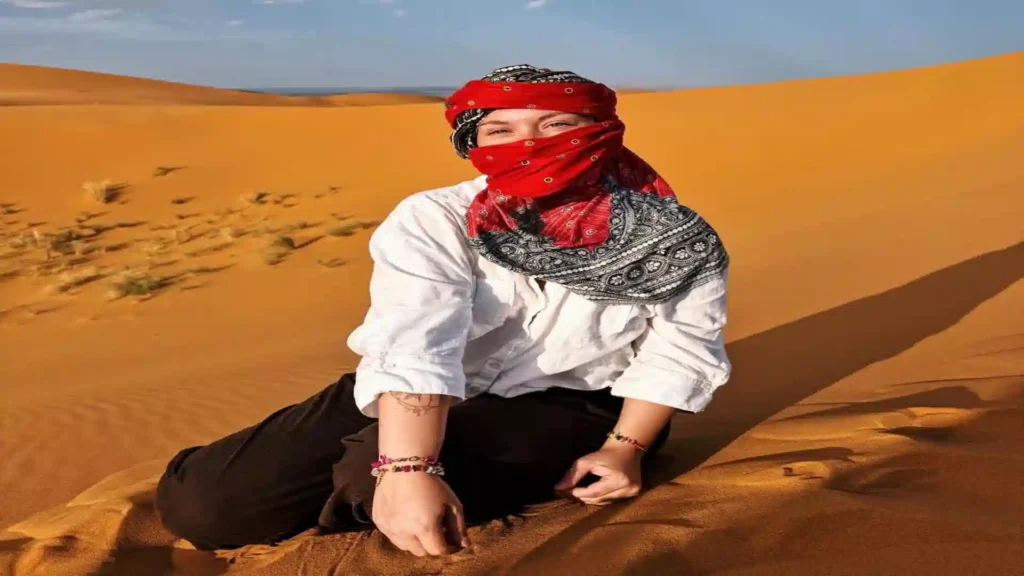
Here are some comman things that makes Morocco safety for solo female travelers best to follow:
- Dress respectfully in medinas, holy sites and rural areas – loose trousers or a maxi skirt and a top covering the shoulders is enough
- Book guides through your accommodation – a licensed local guide adds safety and cultural depth, especially in Fes
- In busy squares and souks, sling your bag across your body
- In Marrakech and Casablanca, use metered taxis or Careem/inDrive, or ask your riad to call a trusted driver.
- Download Google Maps offline for your destination cities before you travel – getting obviously lost is what prompts the majority of medina approaches
- If someone crosses a line, say “Hashouma” (roughly translated: “shame on you”) – it carries real social weight in Moroccan culture and generally halts the behavior immediately
- Travel with a reputable licensed operator for the Sahara desert – desert camps are professionally managed, and Berber communities in Merzouga are some of the most genuinely hospitable in Morocco.
From the women who travel with us: Female solo travelers on our desert tours always tell us that the Sahara experience is one of the safest and most welcoming of their entire Morocco trip. The Berber communities in Merzouga are worlds away from the medinas facing tourists in their social dynamics: hospitality here is not transactional but genuine.
Is the Sahara Desert Safe in Morocco?
Is the Sahara desert safe in Morocco? answer the question directly, because it is the destination at the heart of our tours. The question refers to the Erg Chebbi area around Merzouga.
Yes. The Merzouga area is safe for foreign tourists.
The Erg Chebbi dune field is on the Moroccan side of the border with Algeria. The Algerian border itself is closed and militarized, and no legitimate tour itinerary gets anywhere near it. The area to avoid, noted in the Australian and Canadian Morocco travel advisory 2026, is the Western Sahara Berm, which is some 800 km southwest of Merzouga and totally off any standard tourist circuit.
The Merzouga village and the surrounding desert are:
- Politically stable and well policed by the Moroccan Gendarmerie
- Home to Berber communities with centuries of tradition, welcoming travelers crossing the Sahara.
- Yearly arrival of tens of thousands of foreign travellers with no major incident
\not a remote or exposed route accessible only by the N13 paved highway
The practical safety considerations for desert travel are environmental, not security:
- Heat – 45°C+ in summer. 9 AM-5 PM in June-August for all purposeful outdoor activity
- Sun exposure – the desert is nearly 100% UV reflective. Sunscreen, a hat and a scarf are non-negotiable
- Hydration – carry way more water than you think you need. 3 liters minimum per person per day, all year, more in summer.
- Navigation – no trails in the interior of the dunes. Never walk alone out of sight of your camp or guide
- Wildlife – desert scorpions are present in the Merzouga area. Shake out clothes and shoes left on the ground overnight. While there are no reports of deaths from scorpion bites among tourists in the Merzouga area, the bites are painful and sometimes require medical attention
Our guarantee on desert trips with Over Morocco Tours: All the guides are local Merzouga residents and have personal knowledge of the Erg Chebbi dunes to take guests into the dunes. We never take guests onto the dunes without a licensed guide. All excursions are equipped with basic first aid supplies. All guides have the emergency number of the gendarmerie of Merzouga in their phones.
Is Morocco safe to Visit ?Health and Safety Tips Food, Water, and Medical Care
For most travelers, health and safety tips for Morocco is the safety concern that will impact the day-to-day comfort of a trip the most — even more so than crime or terrorism.
Water and Food Security in Morocco.
Don’t drink the tap water in Morocco. This is the constant, universal advice of all medical authorities, travel clinics and experienced travellers. Tap water in Morocco is treated and safe by local standards but it contains bacteria strains that are not part of a Western traveller’s gut microbiome – causing the “traveller’s diarrhea” that can ruin 2-3 days of a 10-day trip. Bottled water is 5–10 MAD per litre and can be found everywhere.
If you have a sensitive stomach, brush your teeth with bottled water. Avoid drinking ice from outside of hotels and restaurants. Ask if salads and raw vegetables are washed in tap or filtered water: high-end restaurants will confirm filtered; street stalls cannot.
Street food in Morocco is great, and usually safe if the food is hot and freshly prepared and sold from a busy stall with a high turnover. Keep processed foods out of room temperature. Morocco’s best street food is served hot and made to order: msemen flatbreads, bissara bean soup, harira, fresh-squeezed orange juice.
Pharmacies and Medical Assistance
Pharmacies in Morocco are excellent and are available in all cities and most large towns. They have a green crescent sign. Pharmacies generally open from 9 AM to 9 PM, and there is at least one pharmacie de garde (duty pharmacy) open overnight in each city. You can buy a lot of medicines over the counter without a prescription that would need a prescription in the UK, USA or Australia including antibiotics, antiparasitics and most pain medicines.
In Casablanca, Rabat, Marrakesh and Fes there are major hospitals. In tourist areas there are also private clinics, usually quicker for non-emergency treatment. Emergency Numbers Police 190 Ambulance 150 Fire 150
Recommended vaccinations for Morocco (see your travel clinic 6-8 weeks before departure):
- Hepatitis A (food- and waterborne – strongly recommended)
- Typhoid (via food and water recommended)
- Tetanus, Diphtheria, Polio (routine booster if needed)
- Hepatitis B (recommended for long-term travelers or those who may have medical exposure)
- Rabies (recommended for travelers heading to rural areas or who will be handling animals)
Morocco requires no vaccinations for US, UK, EU, Canada and Australian citizens to enter.
Travel Insurance to Morocco
Skip travel insurance at your own peril. It’s a must-have. If you aren’t covered, a medical evacuation from rural Morocco can run between $30,000 and $80,000. For a two week trip from the US, UK or Australia, a basic travel insurance policy covering medical evacuation, trip cancellation and theft will typically cost $50–$120. Both World Nomads and SafetyWing are popular with travelers to Morocco and have a good claims history.
| Risk | Risk Level | Prevention |
|---|---|---|
| Tap water | High | Drink bottled water only. |
| Traveller’s diarrhea | Moderate | Avoid raw salads, uncooked street food. |
| Heat/sunstroke | High (in Sahara) | Hat, SPF 50+, 3L water/day minimum. |
| Petty theft | Moderate (in cities) | Crossbody bag, valuables in riad safe. |
| Road traffic | Moderate | Avoid night driving, hire professional driver. |
| Scorpions | Low (desert) | Shake out shoes, don’t walk barefoot at night. |
| Serious illness | Low | Travel insurance with evacuation coverage. |
Is Morocco Safe to Visit City by City: A Quick Reference Guide
| City | Safety Rating | Main Concern | Our Verdict |
|---|---|---|---|
| Marrakech | ★ ★ ★ ★ ★ | Medina touts & taxi fares | Safe. Normal awareness required in souks. |
| Fez | ★ ★ ★ ★ ★ | Medina navigation & fake guides | Safe. Licensed guide recommended for first visit. |
| Chefchaouen | ★ ★ ★ ★ ★ | Almost none | Exceptional — most relaxed city in Morocco. |
| Casablanca | ★ ★ ★ ★ ★ | Standard urban petty crime | Safe. Modern city, easy to navigate. |
| Tangier | ★ ★ ★ ★ ★ | Port area hustle | Safe. Much improved in past decade. |
| Essaouira | ★ ★ ★ ★ ★ | Almost none | Very relaxed; Atlantic wind keeps temperatures down. |
| Merzouga / Sahara | ★ ★ ★ ★ ★ | Environmental (heat, sun) | Extremely safe — security risk essentially zero. |
Is Morocco Safe for Families with Children?
Yes – and families are always among the keenest visitors to Morocco. The children react with incredible enthusiasm to the camels at Merzouga, the macaque monkeys in the Azrou cedar forest, the blue alleyways of Chefchaouen and the sensory overload of the medina souks. Moroccan culture is very family-oriented and people in Morocco are very warm and genuine with children.
Practical tips to keep your family safe With Morocco Tourist Scams To Avoid:
- Sun and heat management—Children dehydrate faster than adults in desert heat. Factor this into Sahara trip timing (morning activity only in summer) and always bring more water than you think you’ll need.
- Food sensitivity – Moroccan cooking uses a lot of spices that may be too strong for young palates and sensitive stomachs. Ask most riads and restaurants will make plain rice, bread or eggs for you.
Medina navigation with luggage or strollers: medinas are pedestrian only but lanes are narrow, uneven and sometimes stepped. In the narrower parts of the Medina, strollers are a real challenge, a baby carrier is better suited for children under 2
Camel trekking – children under 4 normally ride with an adult, over 4 they can ride by themselves with a cameleer walking beside them. Please advise ages on booking so we can advise accordingly
Is Morocco Safe to Visit? FAQs
Is Morocco safe to visit in 2026?
Yeah. Morocco is open for tourism from June 2026 with no active advisories against visiting any tourist destination. The Morocco travel advisory 2026 from the US, UK, Australia, and Canada all confirms Morocco as a standard-caution destination — similar to popular European countries. The record numbers of visitors in 2025 and the continued growth in 2026 show that international travellers are not being deterred.
What are the no-go zones in Morocco?
The government advisories specify the following areas: within 20–30 km of the Algerian border (depending on your government’s advisory) and within 30 km of the Western Sahara Berm, which is a militarized boundary well south of Merzouga in the contested Western Sahara territory. You won’t find these spots on any regular tourist trail. All destinations on a regular Morocco tour Tangier, Chefchaouen, Fes, Meknes, Marrakech, Essaouira, Agadir, Merzouga are confirmed safe to travel.
Is Morocco safe to visit for solo female travel?
Yes, if you prepare in earnest. Violent crime against solo female tourists is uncommon. The real problem is verbal harassment in the medinas, which can be handled by dressing modestly, walking confidently, and saying “La, shukran.” Chefchaouen & Essaouira are the most comfortable cities for solo women. Marrakech and Fes need more awareness on the medina. The Sahara in Merzouga is very safe and one of the most hospitable places in Morocco.
What Tourist Scams Exist in Morocco?
Big Morocco tourist scams to avoid: fake guides offering free help near medina gates, the “closed street” detour to commission shops, unsolicited henna artists, photo opportunities with animals followed by aggressive payment demands, and unmetered taxis. Each could be avoided with a single piece of knowledge, and none presented any physical danger.
Do I need travel insurance for Morocco?
Yes, all of them. Basic travel insurance including medical evacuation, theft and trip cancellation is essential. Without insurance, medical evacuations out of rural Morocco can cost tens of thousands of dollars. A basic policy is $50-120 for two weeks and covers realistic risks (stomach bug, minor injury, stolen phone) as well as rare serious ones.
Is the Sahara desert safe in Morocco for tourists?
Yes. The Merzouga and Erg Chebbi area is politically stable, well-policed and receives large numbers of international tourists each year without significant incident. The only safety concerns are environmental: heat, sun, hydration, and don’t go into the dunes alone. All of these are taken care of on any professional licensed tour. The areas mentioned in government desert safety warnings are hundreds of kilometers southwest of Merzouga in the Western Sahara — not on any tourist circuit.
Why Booking with a Licensed Local Operator Is the Easiest Decision You Can Make
Booking through a good licensed local operator removes in one go most of the things that make Morocco a difficult destination for tourists, such as fake guides, overpriced taxis, badly situated desert camps, or confusing medina navigation.
When you travel with Over Morocco Tours, you get to every city with:
- A driver who knows which cabs are good and which to shun
- Fes, Marrakech City tours with pre-booked licensed tour guide
- Our team has personally visited and verified the accommodation.
- A WhatsApp contact who will answer within the hour if anything goes wrong
- We have walked, inspected and stood behind desert camps
We are not saying you need to be hand held to go to Morocco you don’t. It is definitely possible to travel independently in Morocco and it is an enriching experience. But for first-timers, families and couples who want the experience, not the logistics, a local operator removes the friction that triggers 90 percent of the safety concerns people arrive with.
WhatsApp: +212 673 952 695
Email: Overmoroccotrip@gmail.com
Based in: Center of Merzouga, N13, Morocco
Message us with your travel dates and group. We will send a transparent itinerary and quote within 24 hours and you can ask us anything about safety, logistics, or what Morocco is actually like right now before you commit to a single booking.
“Is Morocco safe to visit” Published by Over Morocco Tours a local operator based in Merzouga, Morocco. Safety information verified against official government advisories from the US State Department, UK FCDO, and Australian Smart Traveler as of June 2026. Always check your own government’s current advisory before travel.