Visiting Morocco During Ramadan: The Complete Traveler’s Guide (2027 Dates & Tips)
Table of Contents
Is It OK to Visit Morocco During Ramadan? The Short Answer
Is it OK to visit Morocco during Ramadan? Yes and for many travelers, it turns out to be one of the most memorable times to experience the country. Unlike some destinations where the holy month significantly restricts tourist activity, Morocco during Ramadan remains fully open to visitors: hotels, riads, and tourist-oriented restaurants continue normal service, major attractions stay open (often with slightly adjusted hours), and the evening transformation of cities into lively, food-filled, communal celebrations is something many guests describe as a genuine highlight of their trip. At Over Morocco Tours , we run desert tours and city itineraries throughout Ramadan every year, and the honest, on-the-ground answer to whether you should travel during this period comes down to understanding what changes during the day, what stays exactly the same, and how to adapt your itinerary respectfully and comfortably. This guide covers all of it.
Ramadan in Morocco Dates: When Does It Fall?
Ramadan in Morocco dates shift each year because Ramadan follows the Islamic lunar calendar, moving approximately 10-11 days earlier annually relative to the Gregorian calendar. For travelers planning ahead, Ramadan 2027 in Morocco is expected to run from approximately February 7 to March 8, 2027 , though the precise start and end dates are confirmed only a day or two in advance based on the official moon sighting, in keeping with traditional Islamic practice. This means travelers planning a Morocco trip around these dates should treat early-to-mid February through early March 2027 as the relevant Ramadan window for itinerary planning purposes, while understanding that exact dates can shift by a day in either direction.
The month concludes with Eid al-Fitr Morocco celebrations a major, joyous family holiday marking the end of the fasting period, comparable in tone and significance to Christmas Day in many Western cultures. Eid al-Fitr typically falls on the day immediately following the final day of Ramadan, and travelers should be aware that some shops, government offices, and smaller businesses close for one to two days around this specific date, even though the broader Ramadan period itself causes comparatively minor disruption to tourism infrastructure.
What Actually Changes: Morocco Ramadan Opening Hours
Daily Rhythm: How the Day Shifts During Ramadan
Morocco Ramadan opening hours shift across nearly every sector of daily life, and understanding this rhythm in advance prevents the most common tourist frustrations. During Ramadan, observing Muslims fast from dawn to sunset abstaining from food, drink, and smoking during daylight hours which means the entire rhythm of the working day adjusts to accommodate this. Government offices typically shift to a continuous schedule of approximately 9:00 AM to 3:00 PM , rather than the standard split-shift hours used the rest of the year, and banks generally close earlier, by 2:00 PM or 3:00 PM . Souks and shops within the medinas may open later than usual often around 10:00 AM and close in the mid-afternoon, before reopening again after sunset and often remaining busy until well past midnight as the community emerges to shop, eat, and socialize once the daily fast has ended.
The visible energy of Moroccan cities during Ramadan daylight hours is noticeably lower than at other times of year streets are quieter, particularly in the medinas away from major tourist zones, and the late afternoon in particular can feel subdued as the community conserves energy ahead of the breaking of the fast. This is a normal and expected part of the Ramadan rhythm, not a sign that destinations are inaccessible, and most experienced Morocco travelers come to appreciate the contrast between the calm of the day and the genuine explosion of energy that arrives each evening at iftar (the sunset meal that breaks the daily fast).
Morocco During Ramadan Restaurants Open: What You Can Actually Expect
Morocco Ramadan restaurants open status is one of the most practical concerns for visiting travelers, and the honest answer varies meaningfully by city and venue type. In the major tourist hubs Marrakech, Fes, Essaouira, Tangier, and Agadir restaurants and cafés catering specifically to international visitors generally remain open throughout the day, including international chains, hotel restaurants, and riads accustomed to hosting non-fasting guests. Supermarkets such as Marjane and Carrefour maintain largely normal hours and represent a reliable source of daytime food and supplies for self-catering travelers. By contrast, the majority of local, non-tourist-oriented restaurants and street food stalls close entirely during daylight hours and reopen specifically for the iftar meal, remaining busy and vibrant well into the evening.
Casablanca, as Morocco’s primary commercial city rather than a leisure-tourism hub, sees a somewhat more pronounced daytime closure pattern outside hotel and commercial districts, meaning travelers there should plan daytime meals around hotel dining or supermarket provisions rather than expecting consistently available street-level options. For travelers joining an Over Morocco Tours desert circuit during Ramadan, our team arranges meals in advance through partner hotels and riads, and adapts sightseeing schedules to ensure guests are never left without reliable food access during daylight hours, regardless of how individual local establishments are operating that day.
Ramadan Etiquette for Tourists in Morocco
What Non Muslim Visitors Are Expected to Do
Ramadan etiquette for tourists Morocco centers on a single core principle: visitors are not required to fast, but discretion and respect in public spaces are genuinely appreciated. Non-Muslim tourists can eat, drink, and smoke as normal, and tourist-oriented establishments are set up specifically to accommodate this. However, the broadly observed cultural norm — and, notably, a provision of Moroccan law (Article 222 of the Penal Code, which technically applies to Muslims rather than tourists but reflects the underlying social expectation) — is that eating, drinking, or smoking openly and visibly in public spaces, particularly outside designated tourist establishments and in smaller towns and villages, should be avoided as a matter of basic courtesy toward those who are fasting around you.
The practical advice that experienced guides give every Ramadan-season guest is straightforward: eat and drink freely within restaurants, riads, hotels, and other enclosed or designated spaces, but avoid eating a sandwich while walking through a residential Medina street, or drinking visibly from a water bottle while standing in a crowded local market during the middle of the afternoon. This costs visitors very little in practical terms and is consistently appreciated by Moroccan hosts, many of whom go out of their way to ensure tourists feel comfortable and welcome regardless.
MoroccoDuring Ramadan Alcohol: What to Expect
Morocco Ramadan alcohol availability is significantly reduced compared to the rest of the year, and travelers for whom this matters should plan accordingly. Most supermarkets and licensed liquor stores stop selling alcohol entirely for the duration of the month, and many standalone bars and clubs close. However, licensed hotel bars and restaurants catering specifically to international tourists typically continue to serve alcohol to non-Muslim guests, generally in a more discreet, indoor manner than during the rest of the year. If alcohol availability is an important part of your trip planning, confirming your specific hotel or riad’s Ramadan policy in advance is the most reliable approach, rather than assuming consistent availability across all venue types.
What to Know Before Visiting Morocco During Ramadan: Practical Trip Planning
Adapting Your Sightseeing Schedule
What to know before visiting Morocco during Ramadan for itinerary planning purposes comes down to working with the day’s natural rhythm rather than against it. Major tourist attractions, monuments, and museums generally maintain their normal opening hours during Ramadan, though some operate slightly reduced hours or close somewhat earlier than usual in the late afternoon. The most effective approach one that Over Morocco Tours builds directly into our Ramadan-season itineraries is to schedule the most active sightseeing, walking tours, and physically demanding activities for the morning and early afternoon, when energy levels (both yours and that of the local community around you) are at their highest, and to deliberately build in flexibility around the late afternoon and early evening, when the city’s rhythm naturally slows ahead of iftar.
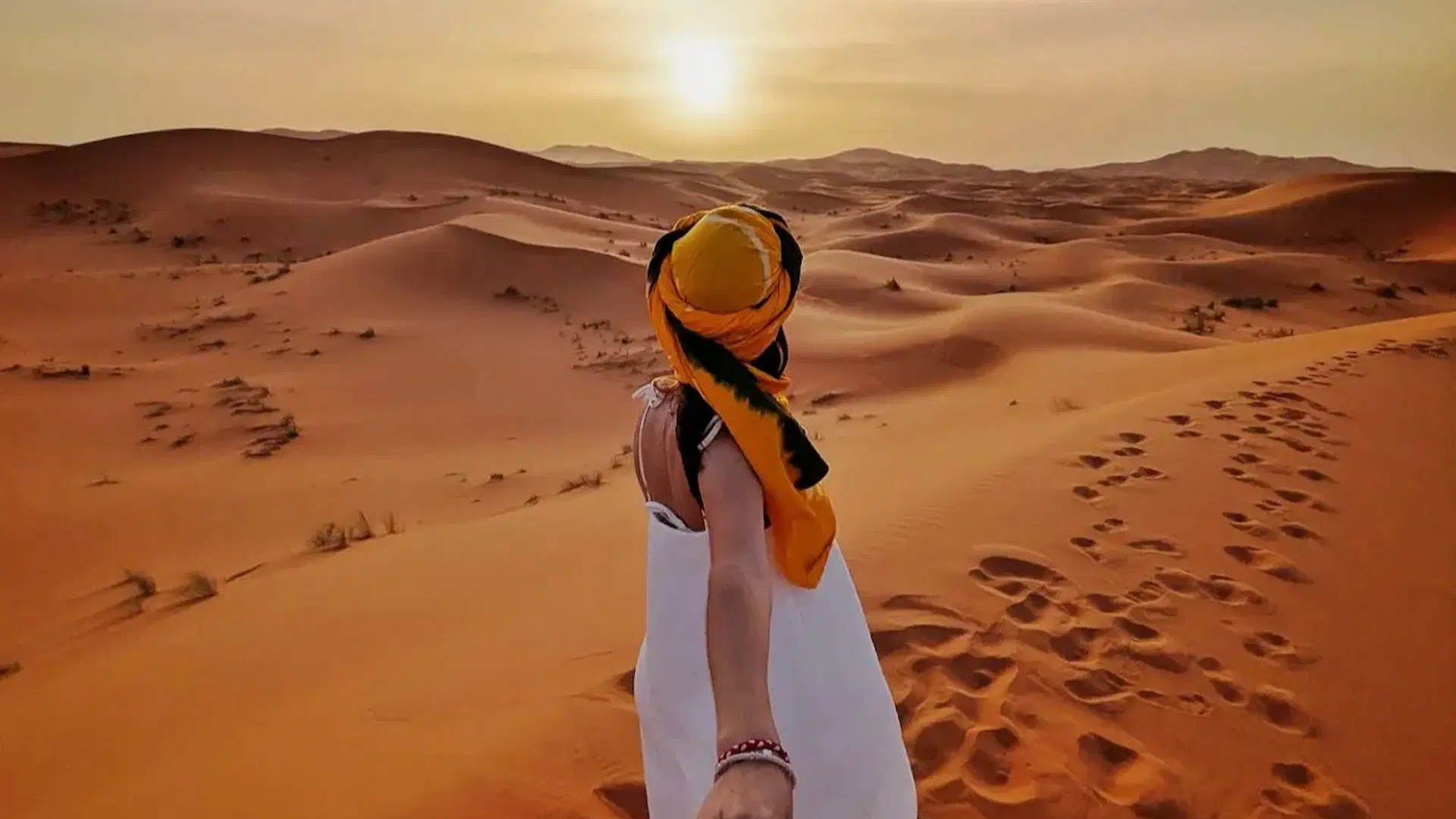
For travelers booking a Ramadan desert tour Morocco specifically, the Sahara experience adapts particularly well to the Ramadan calendar. Camel treks are easily scheduled for the cooler morning or late-afternoon hours, desert camps can arrange iftar meals at the appropriate sunset time for any fasting staff or guests, and the naturally quiet, contemplative atmosphere of the desert at dusk pairs unexpectedly well with the spiritual character of the season. Several of our guests over the years have specifically requested Ramadan-period desert tours precisely because of this atmospheric alignment.
The Genuine Upsides of Traveling to Morocco During Ramadan
Beyond the adaptations required, traveling to Morocco during Ramadan carries real, practical advantages that many travelers do not anticipate before booking. Tourist numbers are noticeably lower throughout the month, meaning major attractions, medinas, and even popular desert routes are quieter and less crowded than during peak season. Accommodation prices, particularly during the first two to three weeks of Ramadan, are often meaningfully lower than equivalent dates outside the holy month, reflecting reduced demand from a portion of the international leisure travel market that avoids this period unnecessarily. And the cultural experience itself witnessing the nightly transformation of a medina from quiet daytime streets into bustling, food-filled celebration at iftar, the chance to be invited into genuine Moroccan hospitality, and the availability of Ramadan-specific seasonal foods offers a dimension of Moroccan culture that simply does not exist at any other time of year.
Iftar Morocco Experience: What Happens at Sunset
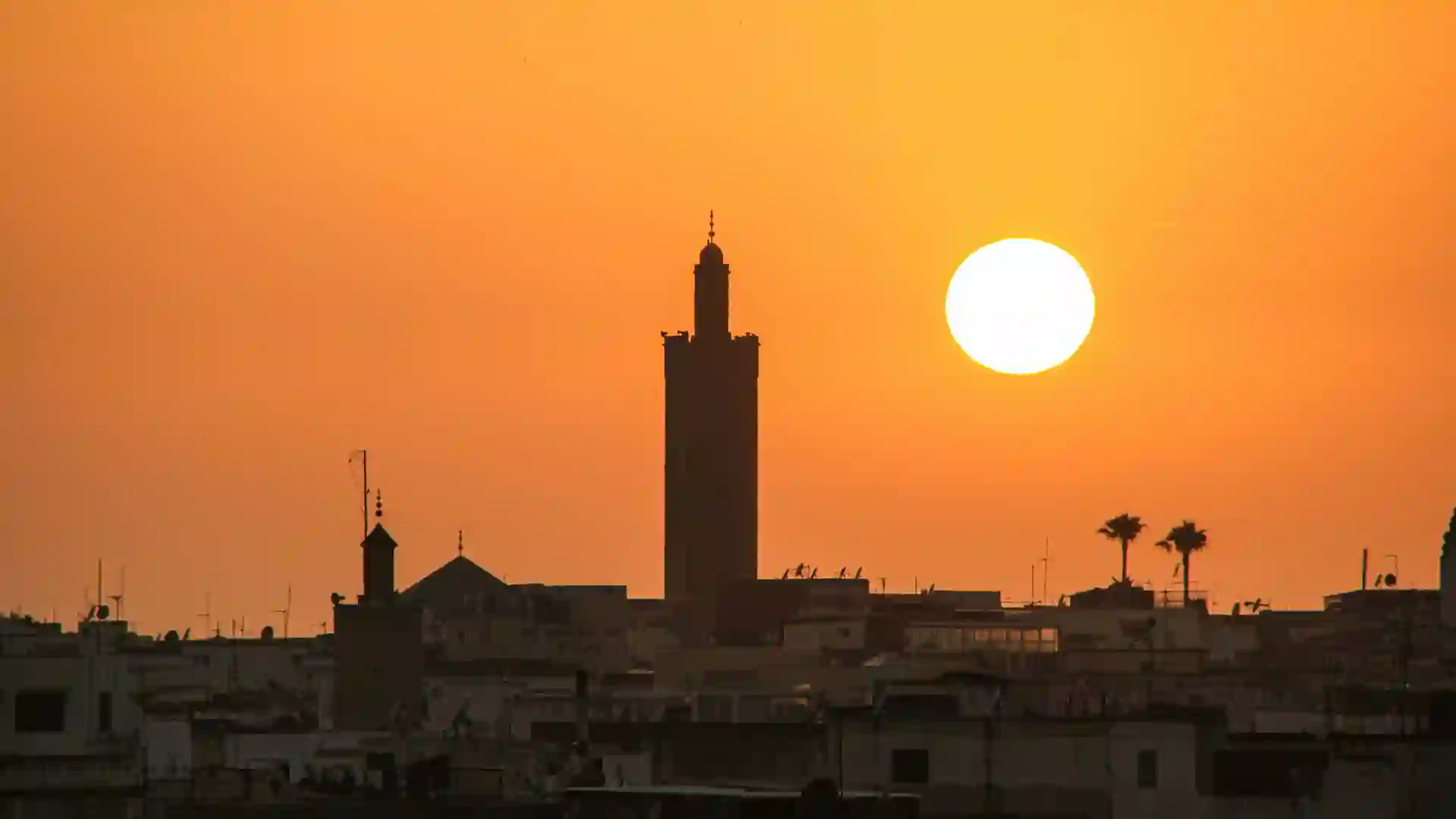
The iftar Morocco experience is, by near-universal consensus among travelers who have witnessed it, the single most memorable cultural moment of visiting during Ramadan. As the call to prayer signals sunset, the entire rhythm of the country shifts within minutes: streets that were quiet moments before filling with families and groups breaking their daily fast together, often starting with dates and a glass of milk or water in keeping with traditional practice, followed by harira a rich, hearty tomato-based soup that is the signature dish of Ramadan throughout Morocco alongside chebakia (a distinctive sesame-and-honey pastry shaped into a flower-like coil, traditionally prepared in large batches in the weeks before Ramadan begins) and other sweet, energy-restoring foods designed to gently break a full day’s fast.
In Marrakech specifically, the evening transformation of Djemaa el-Fna during Ramadan has become a genuinely renowned spectacle in its own right the main square fills rapidly with families and vendors at the moment of iftar, creating a concentrated, joyful burst of activity that many experienced Morocco guides consider one of the most authentic and moving cultural scenes available to travelers anywhere in the country. Visitors who happen to be invited to join a family’s iftar meal — an invitation that does genuinely occur, reflecting the strong cultural emphasis on hospitality during Ramadan — frequently describe it as the standout memory of their entire Morocco trip.
Morocco During Ramadan Food: What to Try
Morocco Ramadan food extends well beyond the iftar table itself into a distinct seasonal culinary culture worth actively seeking out. Beyond harira and chebakia, travelers during this period will encounter briouats (small, crisp pastry parcels filled with sweet or savory fillings, particularly popular during Ramadan evenings), fresh dates in abundant supply throughout markets in the weeks leading up to and during the month, and a range of fresh juices and milk-based drinks served specifically to ease the transition out of a full day’s fast. Night markets and street food stalls that may be entirely absent or minimal during the rest of the year often appear specifically for the Ramadan season, particularly in the hours after iftar, offering a genuinely seasonal food culture that rewards travelers willing to explore after dark.
City by City: How Ramadan Affects Marrakech, Fes, and the Desert
Ramadan Marrakech Fes Hours: What Differs Between the Two
Ramadan Marrakech Fes hours follow broadly similar patterns, though each city’s character shifts the experience somewhat. Marrakech, with its larger international tourism infrastructure, maintains more consistent daytime food and service availability for visitors, and the Djemaa el-Fna iftar transformation described above makes it a particularly compelling Ramadan destination. Fes, with its more residential, less explicitly tourist-oriented medina, sees a more pronounced daytime quietness, but rewards visitors with what many guides consider a more intimate, authentic experience of how Ramadan is actually lived by the local population, away from the more performance-oriented elements of heavily touristed squares.
Morocco during Ramadan in the Sahara Desert
The Merzouga and Erg Chebbi desert region experiences Ramadan with a particular character of its own. Desert camps and guesthouses, accustomed to hosting international guests year-round, maintain normal food service for tourists throughout the day, while adapting the timing of staff meals and any cultural programming around the fasting schedule of local guides and camp staff. The naturally quiet, contemplative atmosphere of the Sahara desert — already a defining feature of the destination regardless of season — takes on an additional layer of resonance during Ramadan for travelers interested in the spiritual dimension of the experience, and several guests have noted that breaking the day’s heat and activity with a sunset desert iftar, surrounded by the silence of the dunes, is unlike any other iftar experience available in Morocco.
Important Tip from Our Guide Team: How We Run Tours in Morocco during Ramadan?
“The thing we tell every guest booking during Ramadan is: don’t panic about restaurants. People read online that ‘everything closes’ and arrive nervous about going hungry, but that’s not really the reality in the cities and routes we operate. We always know which restaurants, hotels, and riads along our routes stay open and serve tourists normally throughout the day, and we build every Ramadan-season itinerary around those options from the start our guests are never left wondering where their next meal is coming from.
What we actually love about Ramadan tours is the evening. We try to time our desert camp arrivals and our city stops so that guests experience at least one proper iftar moment — whether that’s sitting down to harira and dates in a riad as the call to prayer sounds, or watching Djemaa el-Fna transform in front of them in Marrakech. We’ve had guests tell us afterward that this single moment, more than any monument or dune, was the part of the trip they think about most. If you’re flexible and a little curious rather than worried about disruption, Ramadan can genuinely be the best time to visit Morocco, not the most difficult.”
Over Morocco Tours Guide Team
Frequently Asked Questions: Visiting Morocco During Ramadan
When is Ramadan in Morocco in 2027?
Ramadan 2027 in Morocco is expected to run from approximately February 7 to March 8, 2027, based on the Islamic lunar calendar. Exact dates are confirmed only a day or two in advance based on official moon sighting, so travelers should treat early February to early March as the relevant planning window and verify closer to their travel dates.
Is it OK for tourists to visit Morocco during Ramadan?
Yes. Tourists are welcomed throughout Morocco during Ramadan, and hotels, riads, and tourist-oriented restaurants continue normal service. Non-Muslim visitors are not required to fast and can eat and drink as normal, though discretion in public spaces avoiding eating or drinking visibly on the street, particularly in smaller towns is appreciated as a matter of courtesy.
Are restaurants open in Morocco during Ramadan?
Restaurants in major tourist cities (Marrakech, Fes, Essaouira, Tangier, Agadir) catering to international visitors generally remain open throughout the day during Ramadan. Local, non-tourist-oriented restaurants and street food stalls typically close during daylight hours and reopen at sunset for iftar. Supermarkets maintain largely normal hours for self-catering travelers.
Is alcohol available in Morocco during Ramadan?
Alcohol availability is significantly reduced. Most supermarkets and liquor stores stop selling alcohol for the month, and many bars close. Licensed hotel bars and restaurants serving international tourists typically continue to serve alcohol, usually in a more discreet manner than during the rest of the year. Confirm your specific hotel’s policy in advance if this matters to your trip.
What is the best time to visit Morocco during Ramadan or not?
Both have genuine advantages. Visiting during Ramadan offers lower tourist numbers, often reduced accommodation prices, and a uniquely rich cultural experience centered on the evening iftar transformation. Visiting outside Ramadan offers fully normal daytime restaurant and shop hours with no schedule adaptation required. Neither is objectively “better” the right choice depends on whether the cultural immersion or the convenience of unrestricted daytime services matters more to your trip.
Can I do a desert tour in Morocco during Ramadan?
Yes. Desert tours operate normally during Ramadan, with camel treks easily scheduled for cooler morning or late-afternoon hours and desert camps maintaining normal food service for tourist guests. Many travelers find that experiencing iftar in the quiet of the Sahara desert is one of the most memorable versions of the Ramadan experience available in Morocco.
What happens during Eid al-Fitr in Morocco?
Eid al-Fitr marks the end of Ramadan and is a major family celebration comparable in tone to Christmas Day. It typically falls the day after Ramadan’s final day. Some shops, government offices, and smaller businesses close for one to two days around this date, though major tourist infrastructure generally continues operating for visitors.
Plan Your Trip to Morocco During Ramadan With Local Experts
Over Morocco Tours runs private and small-group tours throughout Ramadan every year, with itineraries specifically adapted around the season’s rhythm reliable daytime dining, well-timed sightseeing, and the chance to experience an authentic iftar in the medina or the Sahara desert. Contact our team today to start planning your trip to Morocco during Ramadan season, or any other time of year.
Written by the Over Morocco Tours team, Morocco during Ramadan dates are estimates based on the Islamic lunar calendar and are confirmed closer to the date via official moon sighting; please verify exact dates before finalizing travel plans.