Authentic street food vs restaurant dining in Morocco experience in Marrakech Medina
Table of Contents
The Great Debate: Street Food vs Restaurant Dining in Morocco
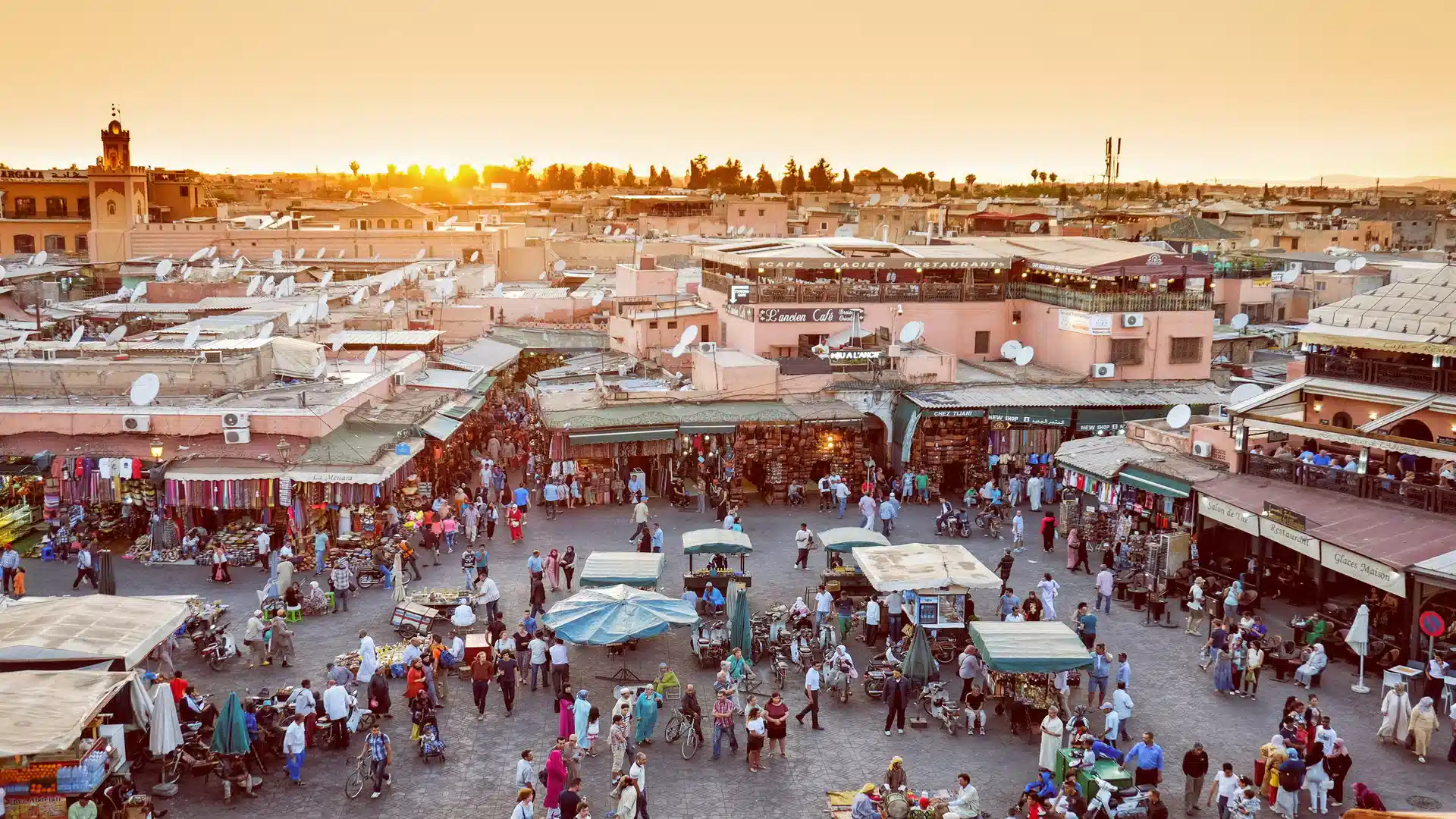
For many travelers, the most difficult decision of the day is choosing between street food vs restaurant dining in Morocco. Street food is the true pulse of the medina; it’s where you find 7:00 AM B’ssara (fava bean soup) or late-night Ma’qooda (potato cakes) served with a smile. Choosing street food offers an immediate, high-energy connection to the local community at a fraction of the cost.
On the other side of the coin, street food vs restaurant dining in Morocco is often a choice between speed and ceremony. Restaurant dining in Morocco, particularly in luxury Riads or the “Zero-Kilometer” establishments of 2026, is a slow, three-hour ritual. Whether you are enjoying a lamb tagine with prunes or the traditional Friday couscous, the contrast in street food vs restaurant dining in Morocco allows you to experience the full spectrum of Moroccan hospitality.
Best Time: March–May or Sept–Nov.
Key Phrase: “La, Shokran” (No, thank you).
Top Tip: Always carry small change (dirhams) for tips and street food.
Mastering the Market: How to Negotiate Prices Like a Local?
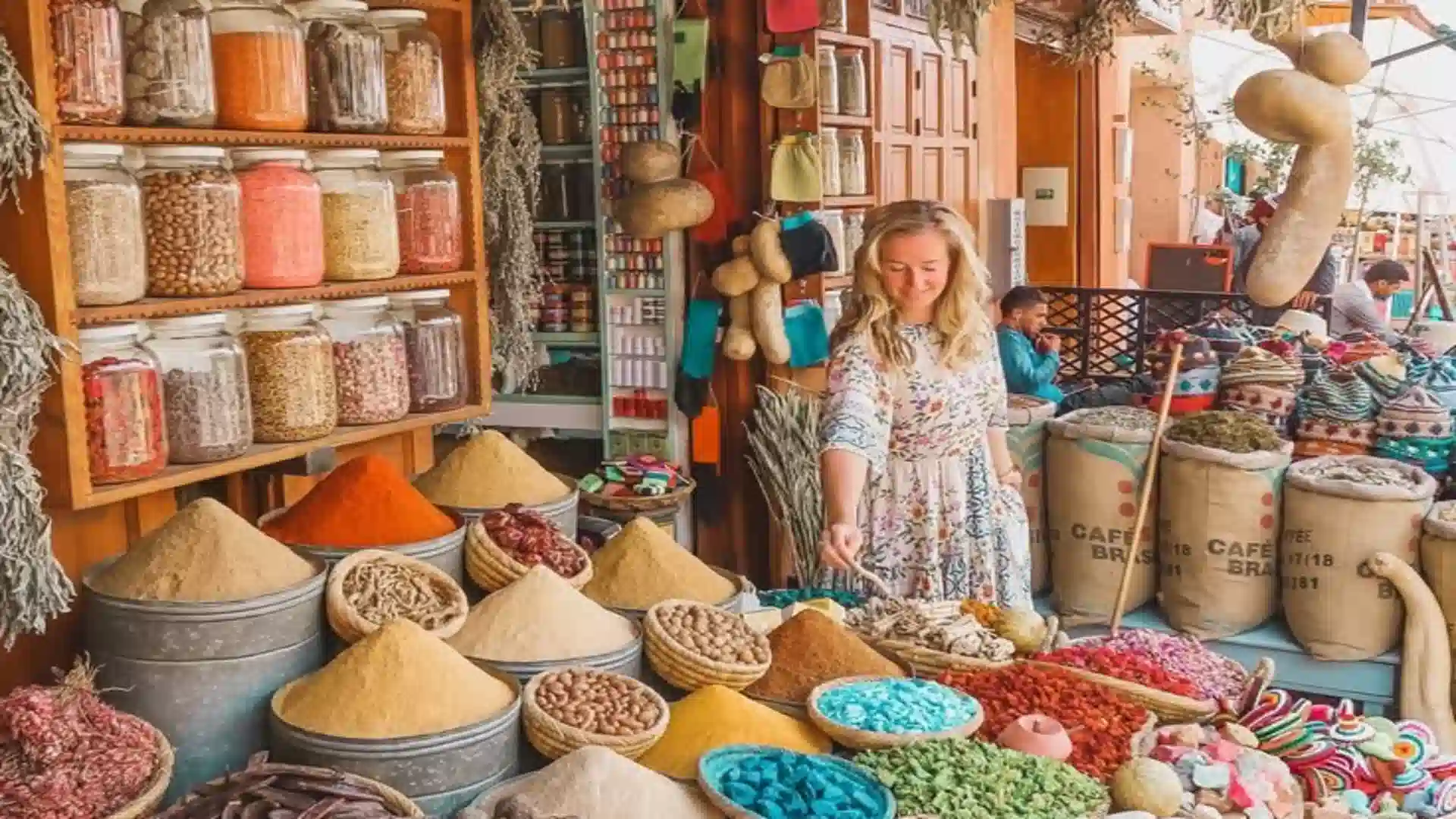
If you plan to bring home a Beni Ourain rug or a leather bag, you must learn how to negotiate prices like a local. In the souks, a price is merely an invitation to a conversation. To truly master how to negotiate prices like a local, you should remain friendly, accept the offered tea, and start your counter-bid at about 40-50% of the initial price. Remember, how to negotiate prices like a local is an art form based on mutual respect, not a confrontation.
Living the Local Rhythm: Understanding Moroccan Time and Scheduling
One of the biggest shifts for visitors is understanding Moroccan time and scheduling. In the Kingdom, time is governed by the sun and the call to prayer rather than a strict digital clock. By understanding Moroccan time and scheduling, you learn that “Insha’Allah” (God willing) is not an excuse for a delay, but a cultural acknowledgement that life is unpredictable. Embracing this mindset is the first step in understanding Moroccan time and scheduling without stress.
Travel with Respect: Religious Customs to Respect While Traveling
Morocco is a deeply spiritual country, and knowing the religious customs to respect while traveling is essential for any guest. Most mosques are closed to non-Muslims, and dressing modestly—covering shoulders and knees—is the most important of the religious customs to respect while traveling. During the holy month of Ramadan, these religious customs to respect while traveling become even more significant, as locals fast from dawn to sunset.
Authentic Immersion: How to Use Public Hammams (Bathhouses)?
If you want to feel truly “Moroccan,” you must learn how to use public hammams (bathhouses). This is not a standard spa experience; it is a community cleansing ritual. When figuring out how to use public hammams, remember to bring your own black soap (Sabon Beldi) and a scrubbing mitt (Kessa). Knowing how to use public hammams properly allows you to participate in a tradition that has unified Moroccan neighborhoods for centuries.
The Ethical Lens: Photography Etiquette in Morocco
With the high-resolution cameras of 2026, photography etiquette in Morocco has never been more important. Always ask “Mousmouh?” (Is it allowed?) before taking a photo of a person or their shop. Proper photography etiquette in Morocco means respecting the privacy of those in prayer and understanding that a small tip is often expected if you photograph street performers. Following photography etiquette in Morocco ensures you leave a positive impression behind.
Where to Call Home: Best Neighborhoods to Stay in Major Cities
Selecting the best neighborhoods to stay in major cities defines your travel experience. In Marrakech, the Medina is for history lovers, while Gueliz is for those seeking modern luxury. In Casablanca, Gauthier is among the best neighborhoods to stay in major cities for foodies. Finding the best neighborhoods to stay in major cities provides a safe and comfortable “home base” for your adventures.
Celebrating the Kingdom: Local Festivals and Celebrations
Your 2026 itinerary should always include room for local festivals and celebrations. From the Gnaoua World Music Festival in Essaouira to the Imilchil Marriage Festival, these events are cultural peaks. Witnessing local festivals and celebrations provides an “Information Gain” that typical sightseeing simply cannot match.
The Goal of Travel: How to Connect with Local Experiences?
Finally, the true purpose of any journey is learning how to connect with local experiences. This means stepping off the main road to have tea with a nomad family or visiting a mountain weaving cooperative. At Over Morocco Tours, we specialize in showing you how to connect with local experiences by introducing you to our personal friends and family. Once you know how to connect with local experiences, you stop being a tourist and become a guest of the Kingdom.
Content Overview: Your 2026 Travel Blueprint
| |Guide Topic| | |Key Insider Insight| |
| |Dining Strategy| | |Balance the energy of street food with the elegance of Riad dining.| |
| |Haggling| | |The “Walk-Away” is your most powerful tool in the souks.| |
| |Etiquette| | |Modest dress and asking permission for photos are non-negotiable.| |
| |Immersion| | |The Hammam is the best place to witness real community life.| |
Ready to Experience the Real Morocco?
At Over Morocco Tours, we don’t just provide transportation; we provide access. Whether you want to master how to use public hammams or find the best neighborhoods to stay in major cities, Ali and Yidir Odo are ready to lead the way.
Book Your Private 2026 Morocco Journey with Over Morocco Tours
Frequently Asked Questions: Navigating Moroccan Dining in 2026
Is it safe to eat street food in Morocco?
Yes, Moroccan street food is remarkably safe if you follow the “High-Turnover” rule. Look for stalls with long queues of locals, as this ensures the food is cooked fresh to order and hasn’t been sitting out. In 2026, health standards in major medinas like Marrakech and Fes are strictly monitored, but we always suggest avoiding raw salads at low-traffic stalls.
Can I drink tap water in Moroccan restaurants?
While Morocco has modernized its water infrastructure, international health authorities still recommend that travelers stick to bottled or purified water. Even in 4-star hotels, the local mineral content can cause minor stomach upset for those not accustomed to it. Always ask for “L’eau minérale” and ensure the seal is broken in front of you.
How much should I tip at a restaurant in Morocco?
Tipping (Baksheesh) is a deeply ingrained part of the culture. In high-end restaurants, a tip of 10% to 15% is standard. In local “popular” restaurants, rounding up the bill or leaving 5 to 10 Dirhams is a generous and appreciated gesture. At street food stalls, tipping is not expected, but rounding up the change is always welcomed.
Are there vegetarian or vegan options in Moroccan street food?
Absolutely yes. While Morocco is famous for its meat, street food staples like B’ssara (fava bean soup), Ma’qooda (potato cakes), and Sfenj (donuts) are naturally vegetarian. In restaurants, you can almost always request a “Vegetarian Tagine” or “Vegetarian Couscous,” though we recommend confirming that no meat stock was used.
What is the best time to eat at the Jemaa el-Fnaa food stalls?
The stalls at Marrakech’s main square begin setting up around 6:00 PM. For the best experience, arrive by 7:30 PM. This is when the atmosphere is at its peak, the grills are at their hottest, and the food turnover is at its fastest. Look for the stalls favored by locals rather than the ones with the most aggressive “promoters.”
How do I pay at street food stalls?
Cash is king. Most street vendors do not accept credit cards. Always carry small denominations of Moroccan Dirhams (5, 10, and 20 DH notes) to make transactions easier. High-end restaurants in 2026 will almost always accept major credit cards, but it’s a good idea to keep some cash for a tip.
Book Your Private 2026 Morocco Journey with Over Morocco Tours