Is Morocco an African or Arab? The Surprising Truth About Its Identity
For any traveler or curious mind, Morocco is a land of deep intrigue. Situated at the crossroads of the Atlantic, the Mediterranean, and the Sahara, it often sparks a fundamental question of identity. Whether you are planning a journey to the blue streets of Chefchaouen or looking into the country’s unique civil laws, understanding the soul of this nation requires looking past the surface.
In this guide, we dive into the heart of Moroccan identity, culture, and practical travel safety.
Table of Contents
Is Morocco an African or Arab?
The short answer is both, but the reality is beautifully complex. Geographically, Morocco is undeniably African, perched on the northwestern tip of the continent. Politically and culturally, it is a key member of the Arab world and the Arab League.
However, many Moroccans prefer the term Maghrebi. This reflects a unique blend of indigenous heritage, Islamic influence, and Mediterranean location. To call Morocco “just” one or the other misses the vibrant “Mosaïque” that makes the country what it is today.
Are Moroccans Considered Arabs or Africans?
If you ask a local, the answer often depends on who you are talking to. Moroccans are Africans by soil and primarily Arab-Berber by heritage. While the official languages are Arabic and Amazigh (Berber), the soul of the country is rooted in both.
Morocco is a founding member of the African Union and has deep-rooted ties with Sub-Saharan Africa. At the same time, the Moroccan dialect, Darija, and the country’s religious traditions link it firmly to the Middle East and North Africa (MENA) region.
What Race is Mostly in Morocco?
Demographically, Morocco is incredibly diverse. The vast majority of the population (about 99%) identifies as Arab-Berber.
The Constitutional Mosaic: Beyond the Arab-African Binary
The debate over whether the Kingdom is purely African or Arab is often settled by looking at Morocco’s Plural Identity 2026. According to the preamble of the Moroccan Constitution, the national identity is a “unified whole” formed by the convergence of its Arabo-Islamic, Amazigh, and Saharo-Hassani components. This is not just a political statement; it is a lived reality. For the traveler, this means that while the call to prayer echoes through the Arabesque arches of Fes, the heartbeat of the country remains rooted in the ancient soil of Africa. By recognizing these multiple layers, the Kingdom positions itself as a North African Cultural Mosaic, refusing to choose one continent over the other, but instead acting as a bridge between the Mediterranean, the Middle East, and Sub-Saharan Africa.
The Indigenous Foundation: Amazigh vs Arab Heritage
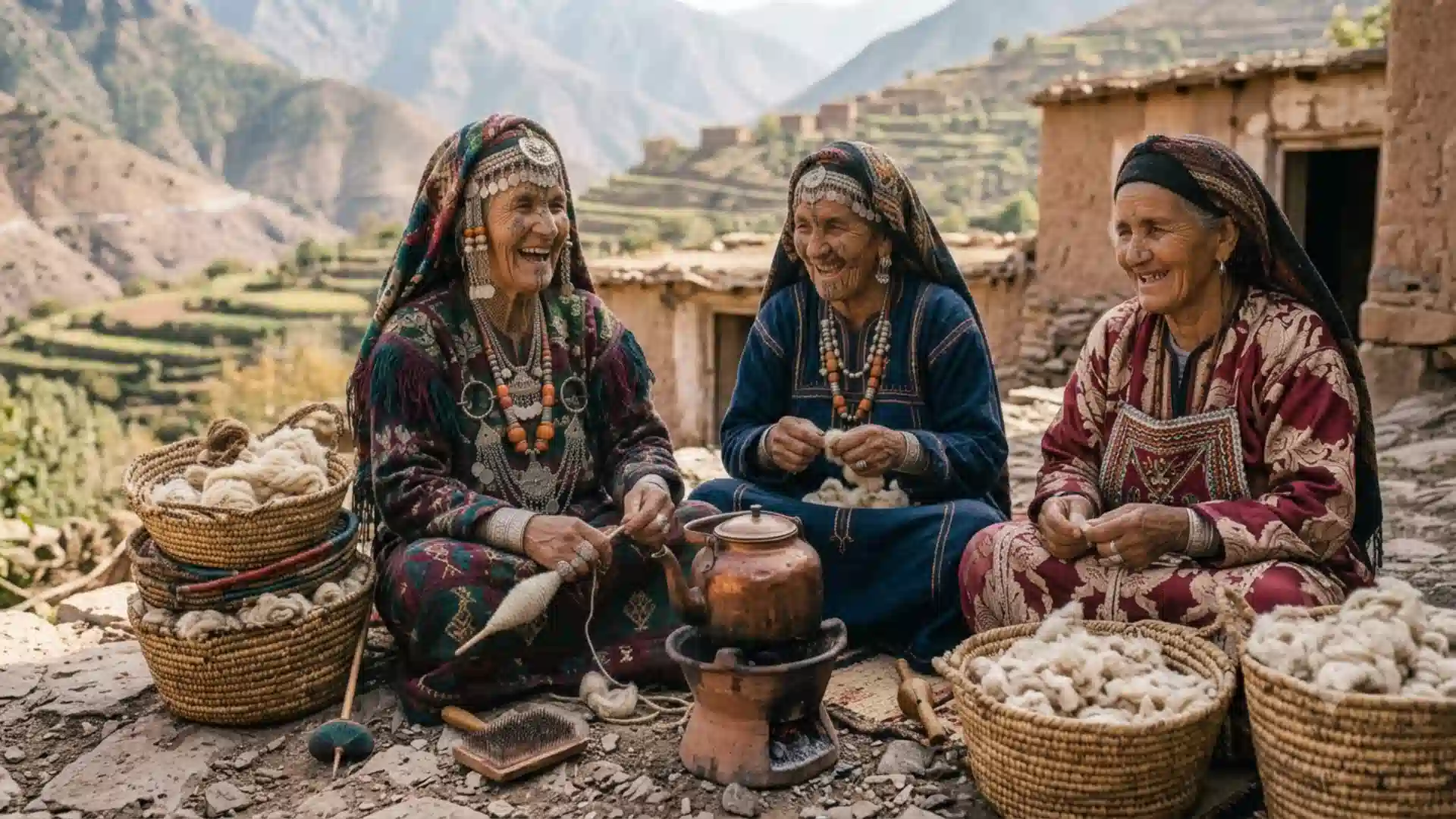
To understand the soul of the country, one must navigate the nuances of Amazigh vs Arab Heritage. While the Arab arrivals in the 7th century brought the gift of Islam and the Arabic language, they met a deeply established civilization: the Imazighen (Berbers). This indigenous African heritage is what gives the country its distinct “Maghrebi” flavor. In 2026, the resurgence of Tamazight as an official language and the nationwide celebration of Yennayer (Amazigh New Year) have solidified the African roots of the nation. When you walk through a mountain village in the High Atlas, you aren’t just in an “Arab country”; you are in the heart of an African mountain kingdom where tribal traditions, unique geometry, and the Tamazight language have survived for millennia.
The Hidden Pillars: Jewish-Hebraic and Andalusian Legacies
A truly optimized look at this topic must also address the often-overlooked Jewish-Hebraic Influence in Morocco. Uniquely in the Arab-speaking world, Morocco’s constitution specifically acknowledges its Hebraic component as a core part of its national character. This history dates back over 2,000 years, creating a Judeo-Moroccan culture that influenced everything from jewelry design to culinary spices. Coupled with the Andalusian Legacy in Morocco—brought by those fleeing the Reconquista in Spain—the country became a sanctuary for a blend of faiths and art forms. From the blue streets of Chefchaouen to the classical Al-Ala music of Tetouan, these influences prove that the Kingdom is a complex tapestry that transcends simple geographic labels.
A Sovereign African Identity with an Arab Voice
In 2026, the answer to “Is Morocco African or Arab?” is a resounding “Both, and more.” It is a sovereign African nation that expresses its spirituality through the Arab language and its history through a Mediterranean and Andalusian lens. For the modern tourist, this pluralism is the greatest luxury. It allows you to experience the hospitality of the desert, the intellectual depth of Islamic history, and the vibrant resilience of African indigenous culture in a single 14-day trip. Morocco isn’t a country you visit to see one culture; it’s a destination where you witness the harmonious convergence of humanity’s greatest migrations.
Understanding Moroccan Laws and Society
Morocco is a country of tradition, but it is also a modernizing state with specific civil codes that can sometimes surprise outsiders.
Why Can’t You Name Your Child Sarah in Morocco?
There is a common myth that the name “Sarah” is banned. This isn’t strictly true. The confusion stems from the Civil Status Law, which requires names to have a “Moroccan character.”
In the past, civil registers were strict about spellings. “Sarah” (with an ‘h’) was often associated with Hebrew or Western spellings, whereas “Sara” is the traditional Arabic spelling and is perfectly legal and very common. Recent reforms in 2021 have made the law much more flexible, allowing for more foreign and Amazigh names, but the “Moroccan identity” rule still guides the official registry.
Is LGBT Allowed in Morocco?
This is a sensitive topic for travelers. Legally, same-sex relations are not allowed in Morocco. Under Article 489 of the Penal Code, “unnatural acts” can lead to prison sentences of six months to three years. While the law is primarily enforced among locals, the social climate remains conservative. For LGBTQ+ travelers, the general advice is to practice discretion. Public displays of affection (regardless of orientation) are generally frowned upon in many parts of the country, so keeping a low profile is the best way to ensure a smooth trip.
Staying Healthy and Safe with our Morocco an African or Arab blog:
A trip to Morocco is a feast for the senses, but you want to make sure your stomach stays as happy as your eyes.
What to Eat in Morocco to Not Get Sick?
“Traveler’s diarrhea” is the most common complaint, but it is avoidable. Follow these golden rules:
1) – Water is Key: Do not drink tap water. Always stick to bottled water (brands like Sidi Ali or Ain Saiss). Use it for brushing your teeth, too.
2) – Peel it or Cook it: Stick to fruits you can peel (oranges, bananas) and avoid raw salads that might have been washed in tap water.
3) – The “Busy” Rule: When eating street food, look for stalls with a high turnover of local customers. If the locals are eating there, the food is fresh.
4) – Drink the Tea: Moroccan Mint Tea is boiled, making it one of the safest (and most delicious) things to drink.
What is the Most Common Crime in Morocco?
Morocco is generally very safe for tourists, and violent crime is rare. The most common issue travelers face is petty theft and scams, particularly in crowded souks, you should stay alert. What is the most common crime in Morocco? It is petty theft and “distraction scams.”
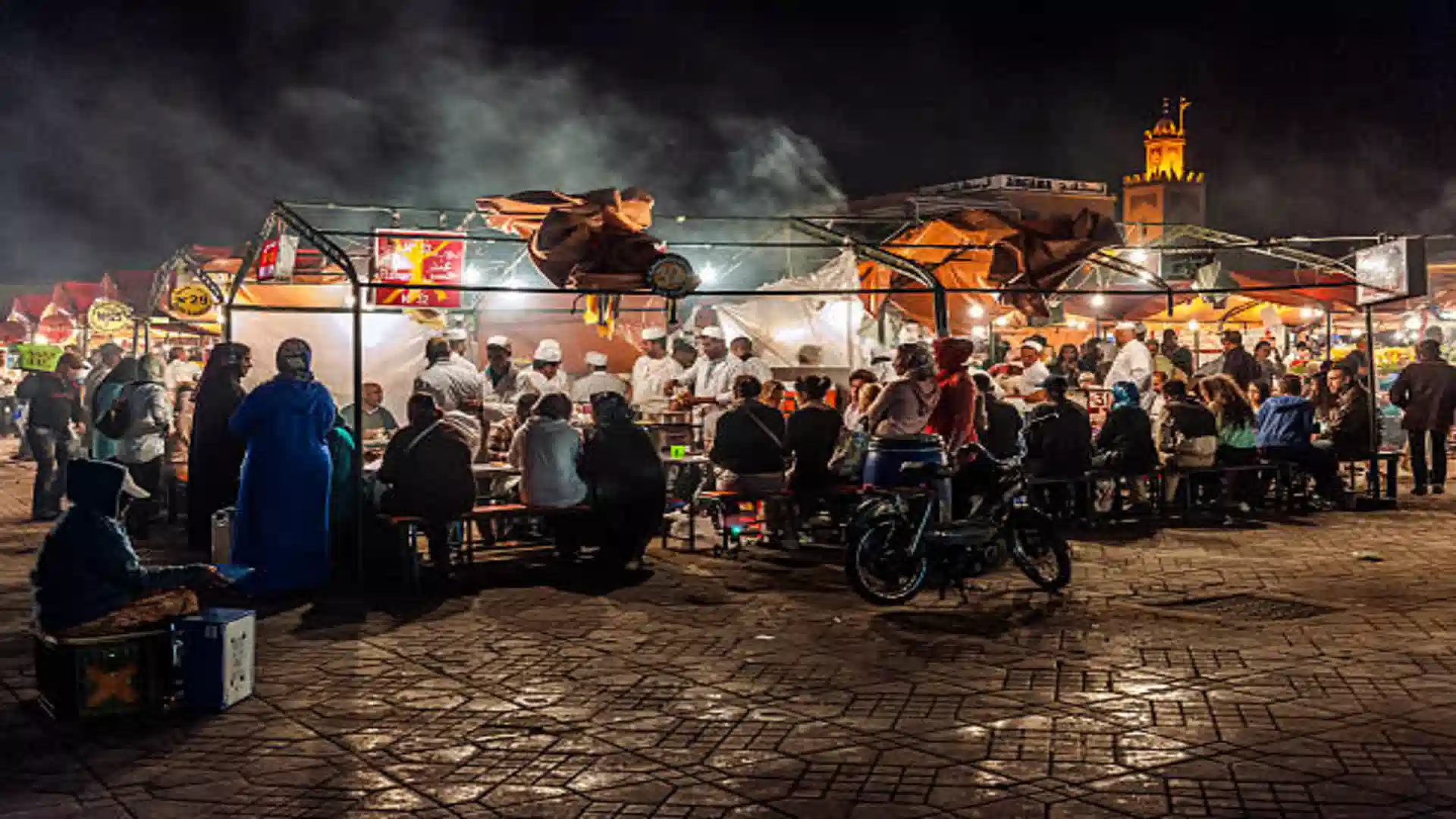
Pickpocketing in crowded areas like the Jemaa el-Fnaa in Marrakech is the main concern. You might also encounter “fake guides” who offer “free” directions only to lead you to a carpet shop or demand a tip. A polite but firm “No, thank you” (or “La, Shokran”) usually does the trick.
- Pickpocketing: Keep your bags in front of you in busy areas like Marrakech’s Jemaa el-Fnaa.
- “Unofficial Guides”: Be wary of locals offering “free” tours or directions, as they will often demand a tip at the end.
- Overcharging: Always agree on a price for a taxi or a souvenir before you commit.
Ready to start your Moroccan adventure? From the heights of the Atlas to the dunes of the Sahara, the road is open.
Morocco an African or Arab:
So, is Morocco an African or Arab nation? It is a country that refuses to be put in a single box. It is the indigenous strength of the Berbers, the spiritual depth of the Arabs, and the vibrant energy of the African continent all wrapped into one.
May 2026 Travel Alert: Festivals and Infrastructure Milestones
As we move through May 2026, the Kingdom is vibrating with energy. For those planning a weekend getaway Morocco, this month offers a unique “Cultural Double-Feature.” Right now, from May 6 to 9, 2026, the Dades Valley is hosting the legendary Rose Festival in Kelaat M’Gouna. This event is a cornerstone of Amazigh vs Arab heritage, where ancient Berber traditions celebrate the Damask rose harvest. Immediately following this, the Fez Festival of World Sacred Music (May 13–22, 2026) begins, transforming the historic medina into a global stage for spiritual art. These events are peak examples of Morocco’s Plural Identity 2026, offering travelers a chance to see how indigenous African roots and Arabo-Islamic traditions harmonize in real-time.
The 2030 Roadmap: High-Speed Rail and Sustainable Luxury
The most significant shift for travelers this year is the massive infrastructure surge tied to the 2030 FIFA World Cup preparations. The famous Al Boraq High-Speed Train is currently being extended from Casablanca to Marrakech, with the 2026 phase focusing on new LGV corridors that will eventually cut travel time between Tangier and Marrakech to just over two and a half hours. This “Infrastructure Boom” is paired with a move toward Sustainable Travel Morocco 2026. Modern visitors are now bypassing traditional crowds for “Regenerative” experiences in the UNESCO M’Goun Geopark or the aspiring Geopark in Chefchaouen, where eco-lodges and water-conservation initiatives are setting a new standard for luxury.
Navigating the 2026 “Direct Flight Boom” Logistics
With the Morocco direct flight boom Italy 2026 and similar surges from Germany and the UK, the country has never been more accessible. However, this popularity means that Marrakech to Sahara road trip logistics must be booked further in advance than in previous years. In May 2026, air connectivity has increased by 30% compared to pre-2020 levels, particularly into regional hubs like Nador and Ouarzazate. Whether you are hunting for hidden gems in Morocco for Italians or seeking the Instagrammable sunset spots in Marrakesh, the 2026 landscape is defined by a blend of high-speed modernity and deeply preserved ancient culture.