Best Time to Visit Merzouga Desert: Month-by-Month Guide for 2026
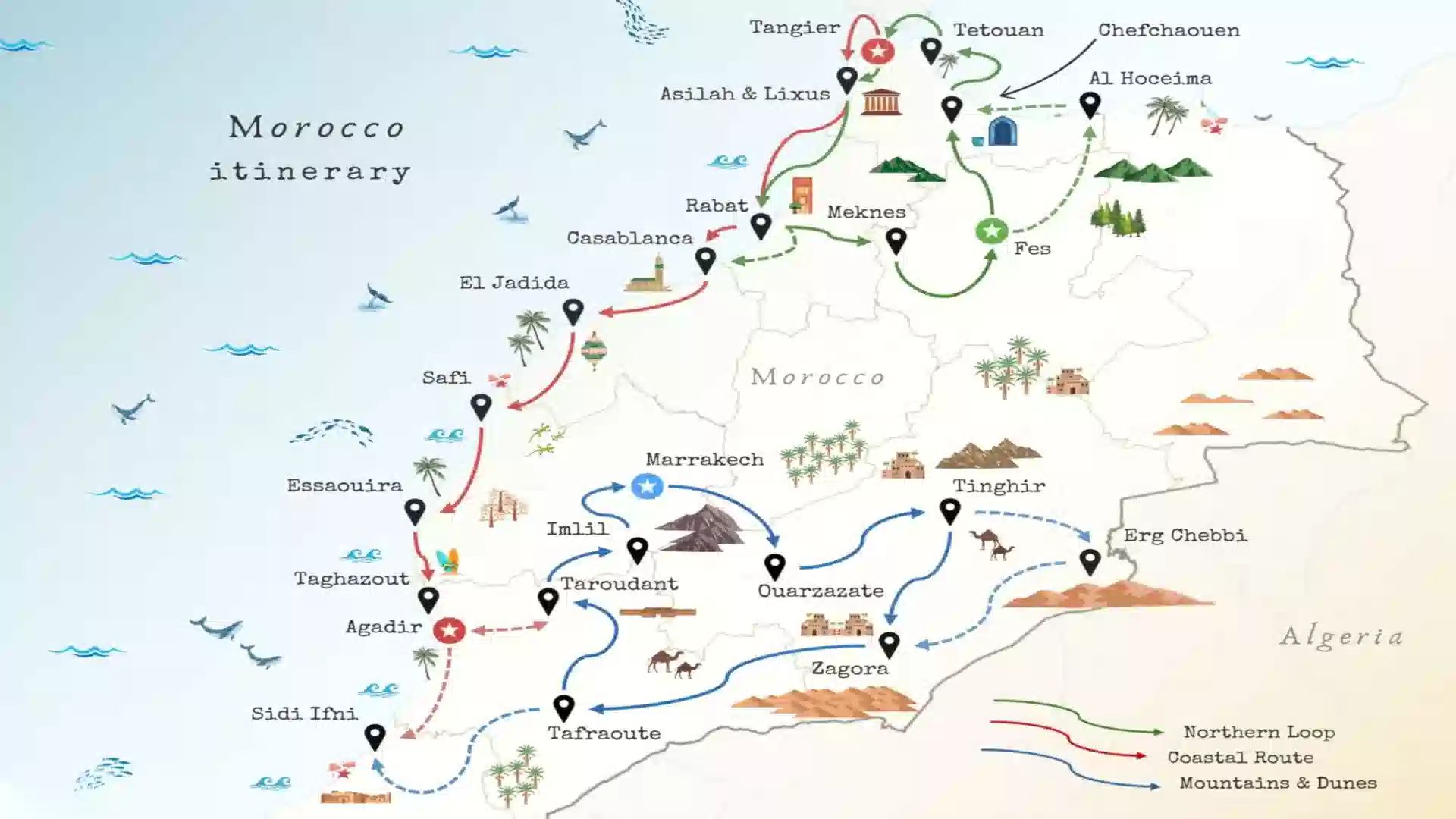
Choosing the best time to visit Merzouga desert is the single most important planning decision you will make for a Morocco trip because the Sahara is not the same place in January as it is in August. Erg Chebbi, the magnificent sand sea that rises to over 150 meters on the edge of the Saharan hammada near the Algerian border, transforms dramatically across the seasons: from a frost-edged, crystalline wilderness in mid-winter, to a blazing, shimmering furnace in high summer, and to a warm, golden paradise in autumn and spring that most experienced travelers agree represents the true sweet spot. Merzouga desert weather follows a pattern unlike anywhere else in Morocco, shaped by its position at an elevation of 1,100 meters on the pre-Saharan plateau, which creates temperature swings that can exceed 25°C between midnight and midday on the same day. At Over Morocco Tours, our guides have led camel treks and desert camps through every month of the year, and this guide gives you the honest, month-by-month picture so you can decide when to visit the Sahara of Morocco for your own travel style, budget, and priorities.
Table of Contents
Why Merzouga Desert Weather Is Unlike the Rest of Morocco?
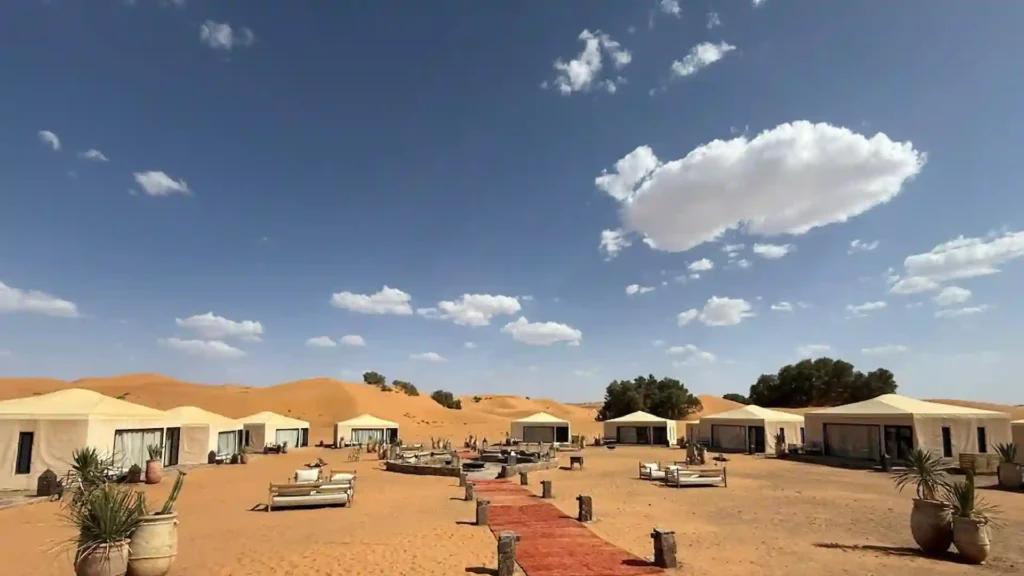
Before diving into the seasonal breakdown, it is worth understanding what makes Erg Chebbi and the Merzouga region climatically distinct. Most of Morocco is classified as Mediterranean or semi-arid, with mild winters and hot, dry summers, but the Merzouga plateau sits in a transitional zone where true Saharan conditions begin. Rainfall across the year averages a mere 50–70 mm annually—less than a quarter of what falls on Marrakech—meaning the landscape changes almost not at all from season to season in terms of vegetation, but changes enormously in terms of temperature and wind. The Chergui, a dry, sand-laden wind that blows from the southeast out of the Algerian Sahara, can roll through at any time of year, reducing visibility to near zero and sandblasting any exposed skin. However, experienced local guides know when these winds are most and least likely—knowledge that is worth far more than any weather app.
The other key factor is altitude. At 1,100 meters, Merzouga is significantly cooler at night than coastal or lowland Saharan destinations. This is what makes it comfortable for camping even in summer—the heat breaks after sunset—but it also means winter nights are genuinely cold, sometimes dropping below 0°C in December and January. Understanding this is essential for packing and for deciding what kind of camp experience you want.
The Best Time to visit Merzouga Desert: Season by Season Breakdown Merzouga desert weather:
Spring (March to May) — The Finest Season for Most Travelers
Spring is widely regarded as the best overall season for a Merzouga desert weather tour, and it is the period our guides most frequently recommend to first-time visitors. Daytime temperatures in March sit comfortably between 18°C and 26°C, rising to 22°C–32°C by May — warm enough for short sleeves in the dunes during the day, but still cool enough for active exploration, long camel treks, and sunrise hikes to the dune crests without risking heat exhaustion. Nighttime temperatures remain mild (12°C–18°C), meaning you can sleep in the camp with the tent open and wake to a perfectly cool Saharan dawn.
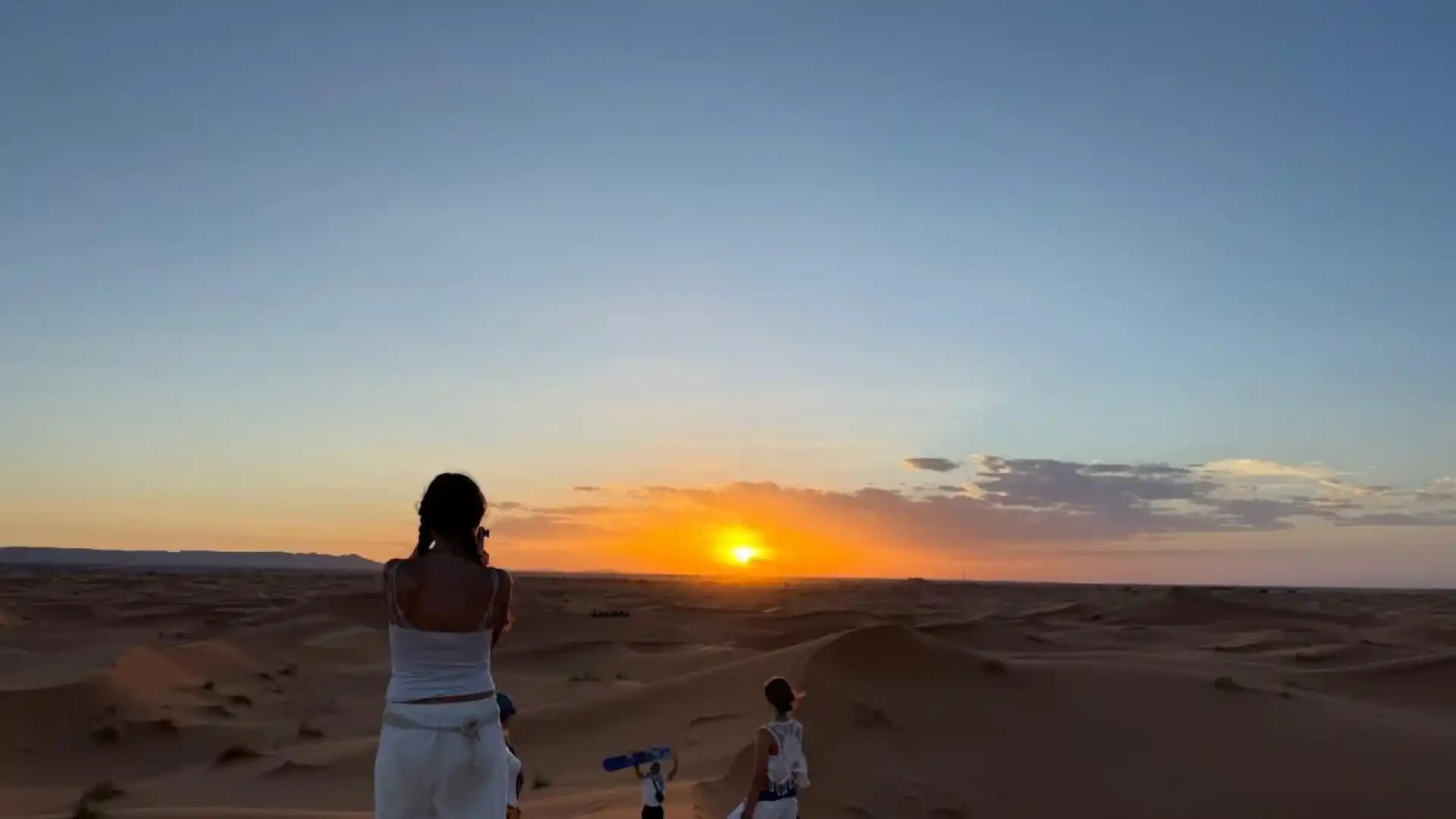
Spring is also one of the best times for Erg Chebbi photography because the light quality in March and April is exceptional — softer and more golden than the harsh summer sun, with occasional clouds that add drama to the dune skylines. The Moussem of Merzouga, an annual gathering that celebrates the nomadic Berber culture of the region with music, camel racing, and traditional dress, typically falls in spring, offering a rare window into living Saharan culture that few tour itineraries include. Crowd levels in spring are moderate — higher than winter but without the peak congestion of October and November. Booking 2–4 weeks in advance is sufficient for most spring departures.
Summer (June to August) — For Heat Lovers and Budget Travelers
Summer is the most misunderstood season in the Merzouga desert in summer travel planning. Yes, daytime temperatures regularly exceed 42°C–45°C between 11:00 AM and 4:00 PM, and yes, the midday Sahara in July feels like standing inside a convection oven. But the summer desert is not inaccessible — it simply requires a different rhythm. All camel treks are moved to early morning (5:30–7:30 AM) to catch the sunrise and the coolest part of the day, after which guests return to the camp or guesthouse for a long, shaded afternoon rest in the traditional Moroccan style. Evenings from 6:00 PM onward are entirely comfortable, with temperatures dropping to 28°C–30°C after sunset — perfect for outdoor dining, live Gnawa music, and stargazing.
The practical advantages of summer are significant. Morocco desert tour prices in June, July, and August are typically 20–30% lower than peak season, and availability is high, meaning you can book our tours with as little as a week’s notice. The dunes themselves are also at their most vivid in summer — the sand is bone-dry and flows beautifully in the breeze, creating the sharp, photogenic dune ridgelines that define the classic Sahara image. If you are a photographer, a budget-conscious traveler, or someone who genuinely thrives in the heat, summer in Merzouga offers an experience that feels more authentically Saharan than any other time of year.
Autumn (September to November) — Peak Season and the Best Crowds
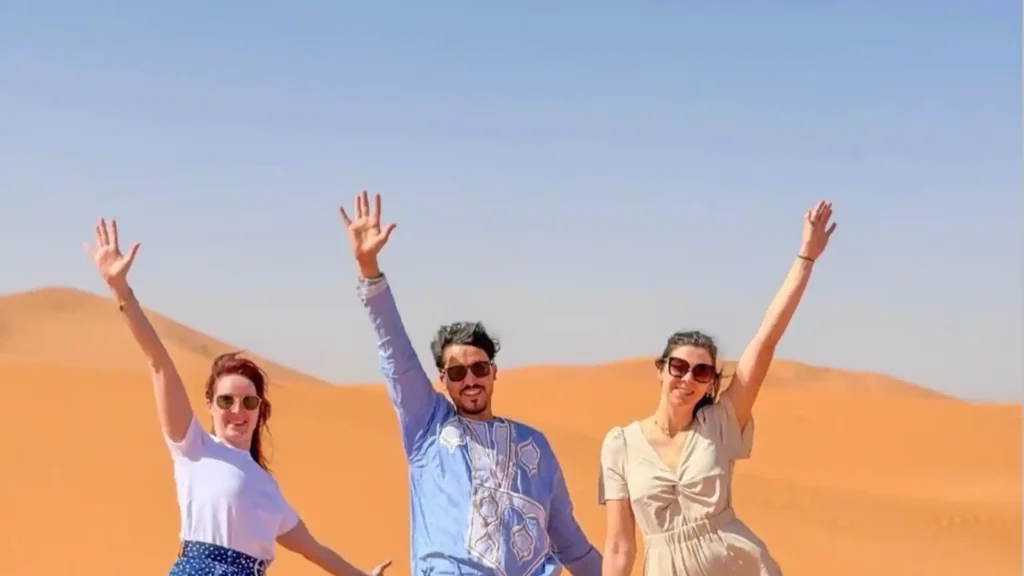
Autumn is the peak season for Morocco desert tours, and for good reason—it combines near-perfect temperatures, vivid dune light, and the post-summer freshness of the desert. September begins the transition, with daytime highs dropping from summer extremes to a more manageable 32°C–36°C, while October and November settle into the ideal range of 22°C–30°C during the day and 10°C–15°C at night. The Erg Chebbi best season for pure comfort is unquestionably October—the dunes are golden, the skies are a deep, uninterrupted blue, and the pre-Saharan landscape is at its most photogenic.
Autumn is also when the Erfoud Date Festival takes place in early October, celebrating the harvest of the famous Medjool and Medjhoul dates grown in the Tafilalet palm oasis—one of the largest date palm groves in Morocco, stretching for over 40 kilometers along the Oued Ziz south of Erfoud. This is an excellent addition to any Merzouga desert itinerary in October, offering a deeply Moroccan cultural experience that few international travelers know to include. The one caveat for autumn: it is the busiest booking season, and popular desert camps—particularly those with private tent options and en-suite bathrooms—fill up 6–8 weeks in advance. Book early.
Winter (December to February) — Raw, Dramatic, and Surprisingly Rewarding
Merzouga desert weather in winter is an experience that completely polarizes travelers. Those who go in expecting mild desert warmth are often shocked — December and January nights regularly drop to 2°C–5°C, and an occasional cold front can push temperatures below 0°C at the dune crests. In exceptional years, a light dusting of snow on Erg Chebbi creates one of the most surreal natural spectacles Morocco has to offer: orange Saharan dunes edged in white — a sight that the internet collectively loses its mind over every time it happens, roughly once every 5–8 years.
But here is the truth that experienced desert travelers know: winter days in Merzouga desert weather are magnificent. Clear skies, low-angle sun, and near-zero humidity create the best photography conditions of any season, with long shadows raking across the dune faces from mid-morning to mid-afternoon. Daytime temperatures of 15°C–20°C make walking and camel trekking genuinely pleasant — cooler than spring but bracing in a way that feels invigorating rather than uncomfortable. Our desert camps provide thick blankets and optional hammam facilities for winter guests, and the campfire under the Saharan winter sky, surrounded by silence and cold desert air, is arguably the most atmospheric version of the Merzouga experience. Morocco desert tour best month prices in winter are at their lowest, making December an excellent choice for travelers who want luxury desert camps at moderate prices.
Best time to Visit Merzouga Desert Month-by-Month Quick Reference:
| Month | Avg. Day (°C) | Avg. Night (°C) | Crowds | Best For |
|---|---|---|---|---|
| January | 18°C | 3°C | Low | Budget, solitude, photography |
| February | 20°C | 5°C | Low | Budget, spring preview |
| March | 23°C | 9°C | Medium | First-timers, ideal all-round |
| April | 27°C | 13°C | Medium | Photography, cultural events |
| May | 32°C | 17°C | Medium | Warm weather lovers |
| June | 38°C | 22°C | Low | Budget-friendly, early-morning treks |
| July | 43°C | 26°C | Low | Heat lovers, budget |
| August | 43°C | 25°C | Low | Budget, vivid dune photography |
| September | 37°C | 20°C | Medium | Shoulder season value |
| October | 29°C | 14°C | High | Best all-round, peak season |
| November | 22°C | 8°C | High | Comfortable, book early |
| December | 18°C | 3°C | Low | Dramatic skies, budget luxury |
Insider Tip: The Best Time for a Merzouga Camel Ride
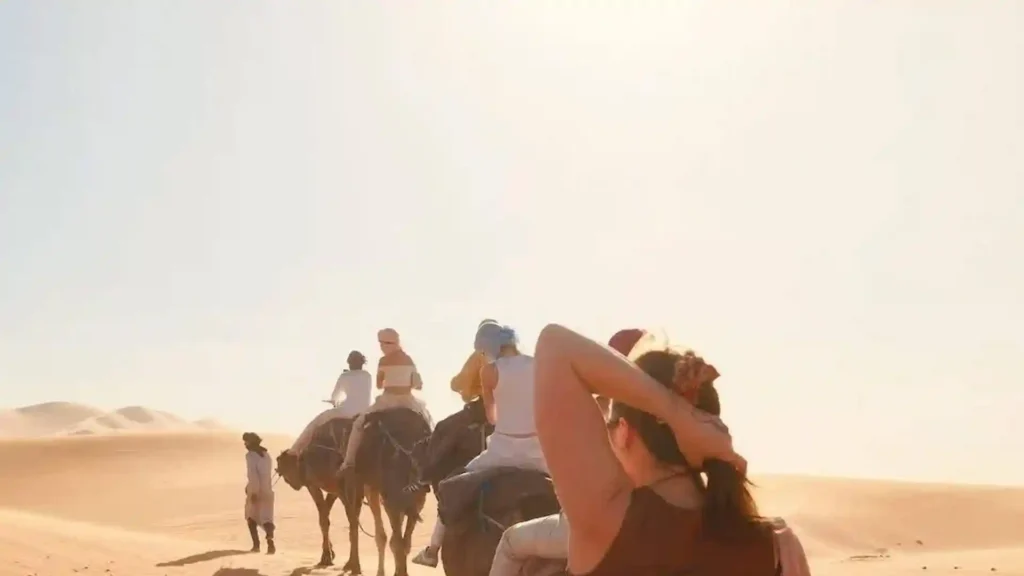
The best time to visit Merzouga Desert for camel ride significantly impacts the experience, extending beyond just the season. As our senior guide, Ali, explains:
“Everyone asks about the best month, but the most crucial factor is the time of day, regardless of the season. The optimal Merzouga camel ride occurs either 90 minutes before sunset or 45 minutes before sunrise — not at 4:00 PM when every group typically departs the village. For instance, in October and November, with sunset around 6:15 PM, the ideal departure from the dune edge is 4:45 PM. This timing ensures you reach the dune crest exactly as the sun casts an amber glow, allowing you to enjoy the summit in solitude while other groups are still ascending.
In summer, a 5:30 AM sunrise departure is essential. The reward, however, is a Sahara at dawn in July that is completely deserted, utterly silent, and filled with cool, sweet air. Some of our guests describe the summer sunrise as the most beautiful sight they have ever witnessed, and we wholeheartedly agree.”
— Ali and Hassan, Senior Desert Guide, Over Morocco Tours (Merzouga-based since 2012)
When to Visit Sahara Morocco: Practical Booking Tips
The best time to visit Merzouga desert ultimately depends on your priorities, but here is the framework our team uses when advising guests:
Choose October–November if: this is your first Morocco trip and you want the safest bet for perfect weather, comfortable temperatures, and a full cultural experience. Book at least 6 weeks in advance .
Choose March–April if: you want near-identical conditions to autumn with slightly fewer crowds and the possibility of spring wildflowers in the Ziz Valley. Book 3–4 weeks in advance .
Choose December–February if: you want dramatic skies, the lowest prices of the year, and the possibility of extraordinary weather phenomena (fog, frost, or the once-in-a-decade snow on the dunes). Book 1–2 weeks in advance .
Choose June–August if: you are comfortable with heat, have a flexible budget, and want the most authentic Saharan experience — the kind where you are in the dunes at sunrise with almost no one else around. Book 1 week in advance for most dates.
Frequently Asked Questions: Merzouga Desert Weather & Planning
What is the best month to visit the Merzouga desert?
October is consistently the best month when to visit Sahara Morocco. Daytime temperatures average 29°C, nights cool to around 14°C, the light on the dunes is exceptional, and the region is fully operational after the summer slowdown. November is an excellent second choice with slightly cooler temperatures and fewer crowds.
Is the Merzouga desert too hot in summer?
Merzouga is hot in summer, regularly exceeding 42°C during the day, but it is manageable with the right approach. Over Morocco Tours moves all camel treks to early morning (5:30–7:00 AM) in summer, and afternoon temperatures in camp become comfortable after 6:00 PM. Summer is also the cheapest and least crowded season, making it a genuine option for heat-tolerant travelers.
Does it get cold in the Merzouga desert weather?
Yes. Merzouga sits at 1,100 meters elevation, and winter nights (December–February) regularly drop to 2°C–5°C, occasionally falling below freezing. Desert camps provide thick blankets and heated facilities, but guests should bring warm layers for the sunrise camel trek and evening campfire.
Is it safe to visit the Merzouga desert in winter?
Absolutely. Winter is one of the safest and most beautiful times to visit Erg Chebbi. The main road (Route Nationale 13) is always accessible, daytime conditions are mild and clear, and the reduced crowds mean you get a more personal desert experience. Snow is extremely rare (occurring once every 5–8 years) and never affects road safety.
How far in advance should I book a Merzouga desert tour?
For October and November travel, book 6–8 weeks in advance as luxury camps fill quickly. For spring (March–May), 3–4 weeks is sufficient. For summer and winter travel, 1–2 weeks is usually adequate, though private tours with specific camp preferences should always be booked earlier.
Book the Right Morocco Merzouga Desert weather Tour for Your Season
At Over Morocco Tours , we run Fes to Merzouga desert tours , Marrakech to Merzouga desert tours , and full Morocco circuits departing year-round, with itineraries adapted to the season. Our local knowledge means we adjust camp positions, camel trek timings, and route stops based on current conditions — not a fixed template. Contact our team to get a personalized recommendation for your travel dates.
Written by the Over Morocco Tours team. Our guides live and work in Merzouga year-round, giving us first-hand knowledge of Erg Chebbi desert conditions across every season.